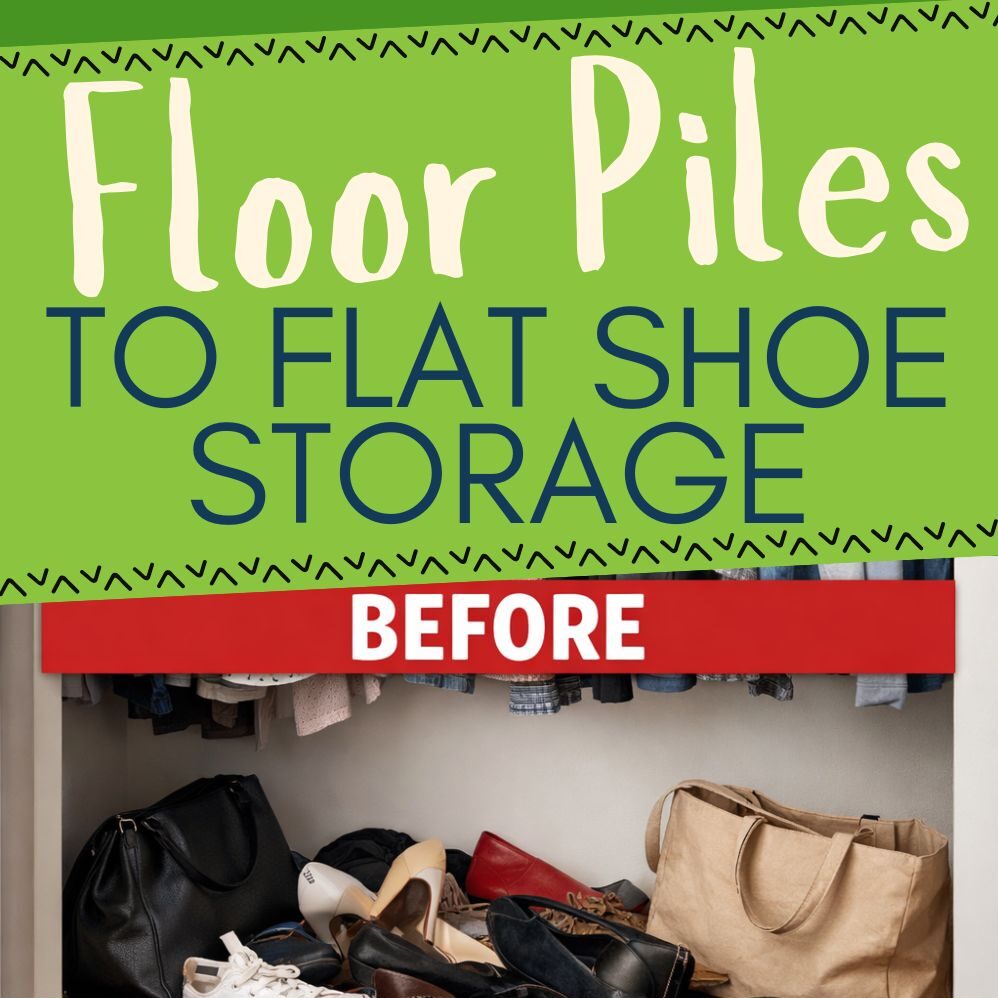
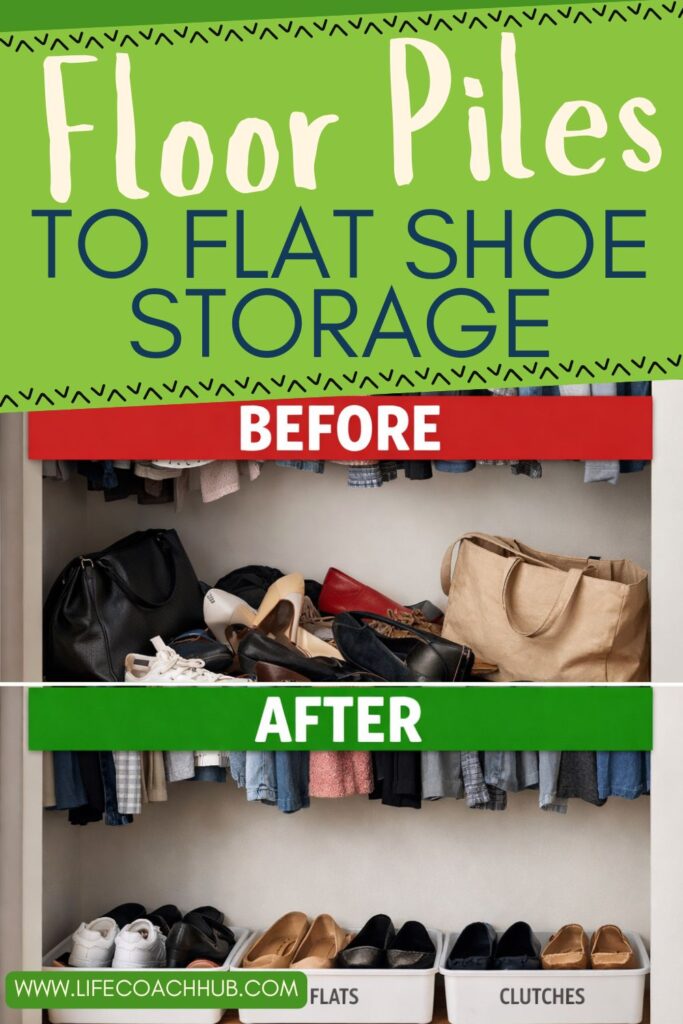
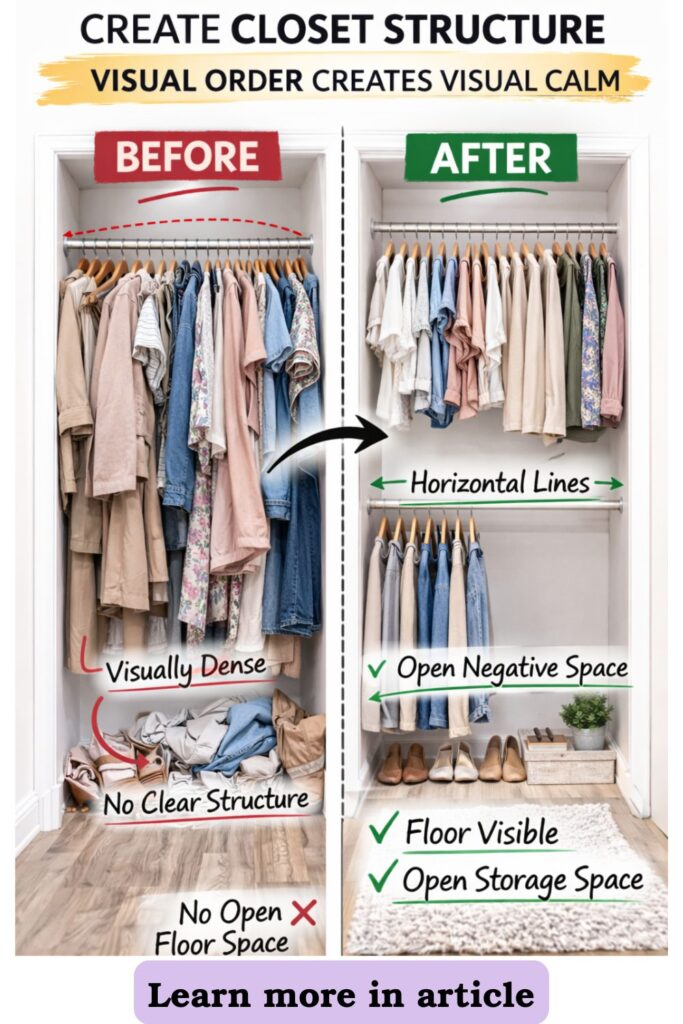
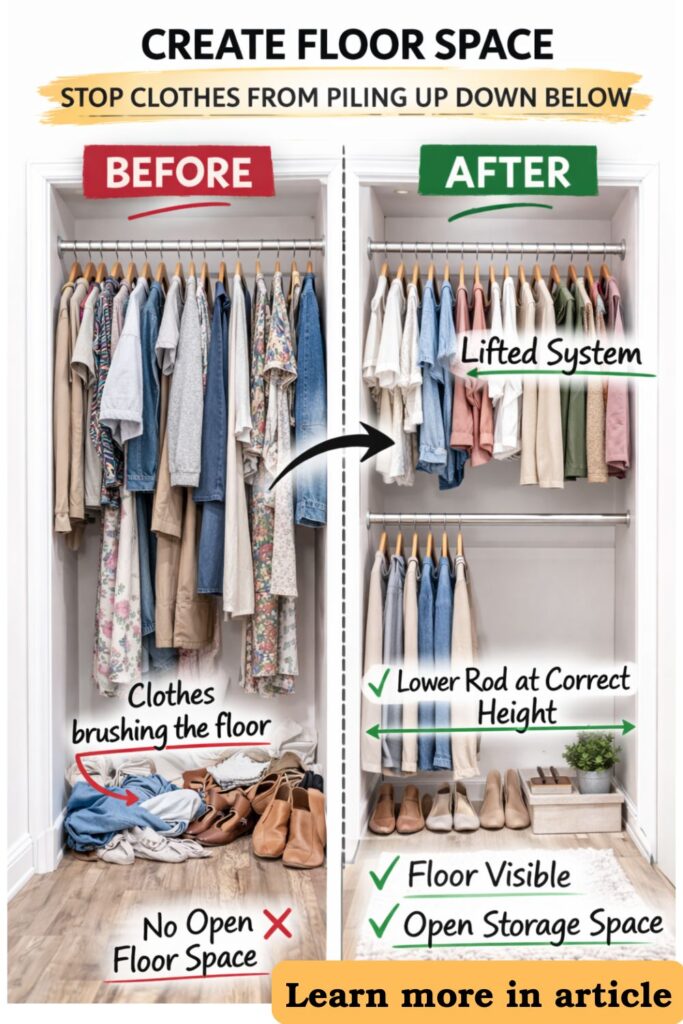
If your closet floor constantly turns into a landing zone for shoes and handbags, the problem isn’t that you own too much.
It’s that nothing has a flat, defined place to land.
When shoes and bags don’t have structure, they collapse into piles. Heels tangle. Totes slump. Sneakers stack unevenly. The floor disappears — and the entire closet feels smaller.
You can’t create flat storage around an existing pile. The reset has to start from zero.
Remove every shoe and bag from the closet floor: Pull everything out so you can see the base of the closet clearly. This gives you a clean visual starting point instead of reorganizing around clutter.
Decide what truly belongs in this closet: Separate daily-use items from rarely worn or seasonal pieces. Not every pair needs to live in this space year-round.
2. Use Slim, Low-Profile Bins Under Hanging Clothes
The area beneath your hanging clothes often has shallow clearance that goes unused or becomes messy.
Measure the vertical clearance under your rod: Determine the distance from the floor to the hem of your longest garments. Choose bins that fit comfortably within that space without brushing against fabric.
Assign one category per bin and keep them aligned: Store sandals in one bin, flats in another, small clutches in another. Slide bins flush to the back wall and keep their fronts even so the space looks structured rather than crowded.
Slim bins create clean horizontal lines instead of chaotic stacks.
3. Add Vertical Dividers for Upright Bag Storage
Stacked handbags quickly collapse into slumped piles. Vertical dividers eliminate that issue.
Store bags upright like books rather than stacked: Place structured bags between dividers so each one stands independently. Position heavier or larger bags at the ends for stability.
Upright storage protects shape and prevents sliding.
4. Use Under-Rod Shoe Trays for Daily Pairs
Daily shoes don’t need height — they need containment.
Choose a shallow tray that fits under your clothing hem: A flat tray 1–3 inches tall keeps shoes contained without blocking airflow or brushing garments.
Line shoes in a single, forward-facing row: Avoid stacking or overlapping pairs. Keeping them visible and aligned makes the tray feel intentional instead of crowded.
Store lighter shoes on the upper tier and heavier ones below: This prevents instability and keeps pairs visible rather than hidden behind each other.
Layering flat surfaces is more stable than stacking pairs directly.
How to Keep the Floor Clear Long-Term
Flat systems only work if you maintain boundaries.
Set a maximum number of pairs for this closet: Decide how many shoes the bins and trays can comfortably hold. Once that limit is reached, something must rotate out before something new comes in.
Perform a weekly quick reset: Straighten trays, realign bins, and remove any shoes that have drifted outside their container. Five minutes of maintenance prevents another pile from forming.
Containment prevents clutter creep.
When to Move Shoes or Bags Outside the Closet
Sometimes the best solution is relocation, not rearrangement.
Create a secondary storage zone elsewhere: Use an entryway rack for daily sneakers or a slim cabinet in another room for off-season bags. Keep the closet focused on what you wear most frequently.
The closet should serve your daily routine — not store your entire collection.
Are you all about style, decor and organization? Download a copy of our Decluttering Workbook. *****
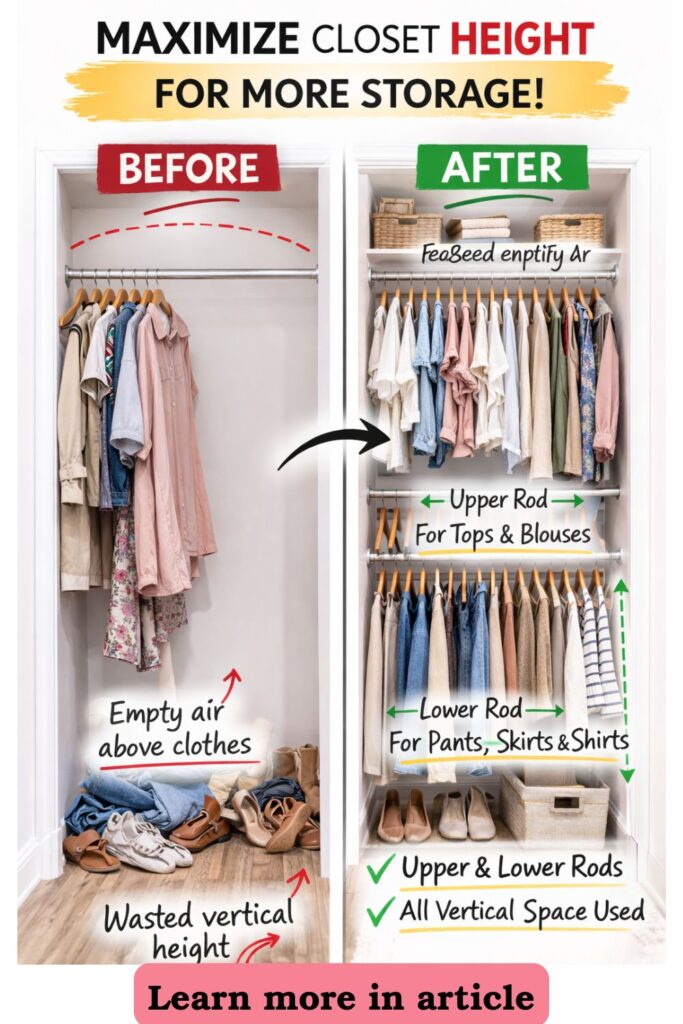
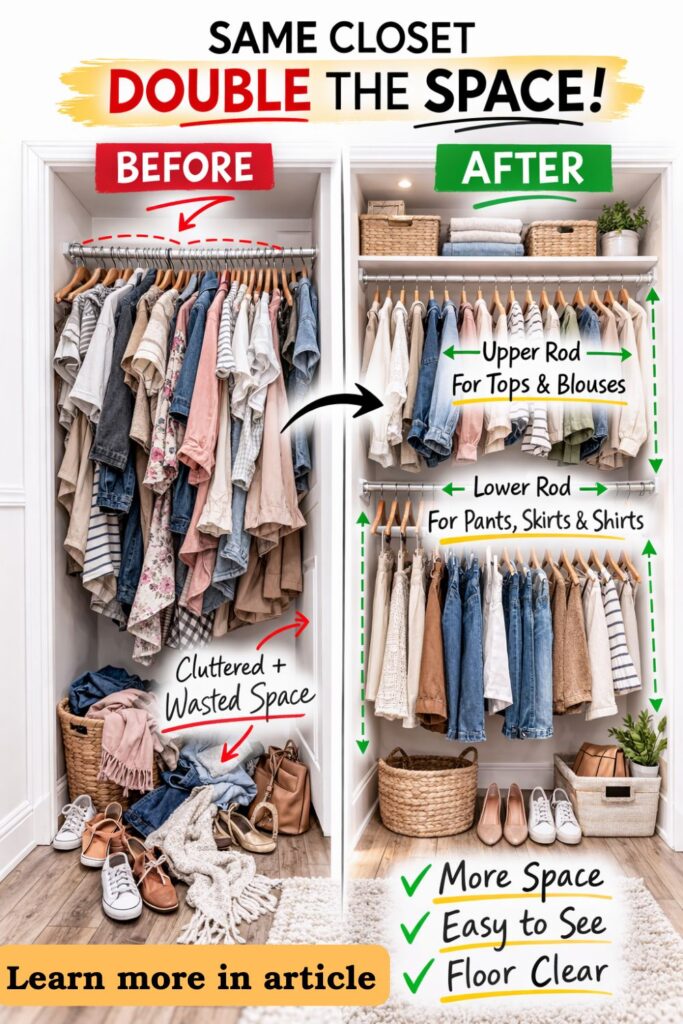
If your small closet feels cramped but you still see empty air above your clothes, you’re not out of space — you’re underusing height.
Adding a second hanging level can nearly double your hanging capacity without expanding the footprint. But it only works when the measurements are right. Install it too low and clothes drag. Too high and you can’t reach it. Too tight and everything bunches.
This guide walks you through the logic step by step so your second rod feels intentional, not crammed.
Measure floor to ceiling and floor to existing rod: Use a tape measure to record the full ceiling height, then measure from the floor to your current rod. Write both numbers down so you can calculate spacing clearly.
Calculate the available vertical gap: Subtract the floor-to-rod measurement from the total ceiling height. If you have at least 72 inches of total usable height, you can usually create two short-hang sections of about 36 inches each.
If you can’t fit two 36-inch sections, double hanging may not be your best option.
2. Sort Clothing by Length Before You Install Anything
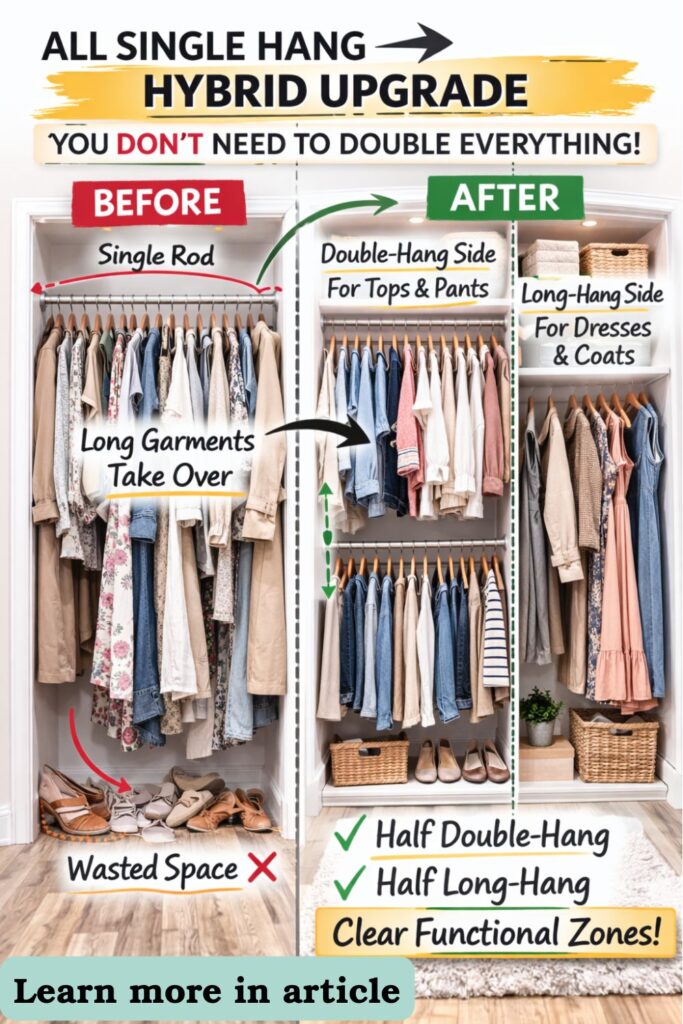
Confirm that most items are short-hang: If 60–70% of your wardrobe falls into the short-hang category, adding a second rod makes sense. If most items are long, you may need to keep part of the closet single-hang.
Precise placement is what prevents a cramped result. Two rods need breathing room.
Mark the bottom rod height first: Measure approximately 36–40 inches up from the floor and mark that line with painter’s tape. This gives enough clearance for shirts and folded pants.
Mark the upper rod with equal spacing above: Measure another 36–40 inches above the lower rod mark. That becomes the height of your second rod. Use a level to ensure both lines are straight before installing hardware.
This spacing ensures that garments on both rods hang freely without overlapping.
4. Choose the Right Installation Method
Not every closet requires drilling into studs, but stability matters. A second rod holds weight, and weight increases over time.
Select your rod and support system: Choose between a fixed wood or metal rod with brackets (most stable), an adjustable tension rod (renter-friendly), or an add-on rod that attaches beneath your current one.
Secure brackets at the correct anchor points: If installing permanent hardware, locate wall studs for maximum strength. Use anchors if studs aren’t available. Always test the rod with several garments before fully loading it.
The rod should feel solid when you apply gentle downward pressure.
Place frequently worn items on the lower rod: Keep daily tops, work shirts, and grab-and-go pieces at eye level for easy access.
Use the upper rod for secondary or seasonal items: Store less frequently worn tops, backups, or off-season pieces above. Keep long garments together in a single-hang section if needed.
Double hanging should reduce friction, not create a visual pile-up.
How to Keep the Space From Feeling Crowded
Two rods can look visually busy if not styled carefully.
Switch to slim, uniform hangers: Matching hangers reduce visual noise and free up horizontal inches instantly. Thin hangers also prevent rods from overfilling too quickly.
Use upper shelves for the remaining vertical space: If ceiling height is limited, keep one rod and add shelving above instead of forcing two hanging levels.
Flexibility is often more efficient than symmetry.
Budget-Friendly DIY Organization Hacks: How to Save Big with Clever Tricks
We all dream of a Pinterest-worthy home where every item has its place, but getting organized can often feel expensive. Between custom storage bins, acrylic drawer systems, and built-in shelving, […]
Having two closets in one room sounds like a dream. Until both slowly turn into half-organized, half-random storage zones that never quite feel finished.
If you’ve ever opened both doors and thought, “Why does this still feel crowded?”, the issue probably isn’t space. It’s purpose.
When each closet has a clear job, the entire room feels more intentional. Mornings move faster. Visual clutter drops. You stop shifting hangers around just to make things fit.
This method is perfect if your biggest frustration is visual overload. Too many coats in summer. Too many sundresses in winter. When everything lives together year-round, your closet always feels overstuffed.
Separating by season instantly cuts what you see in half.
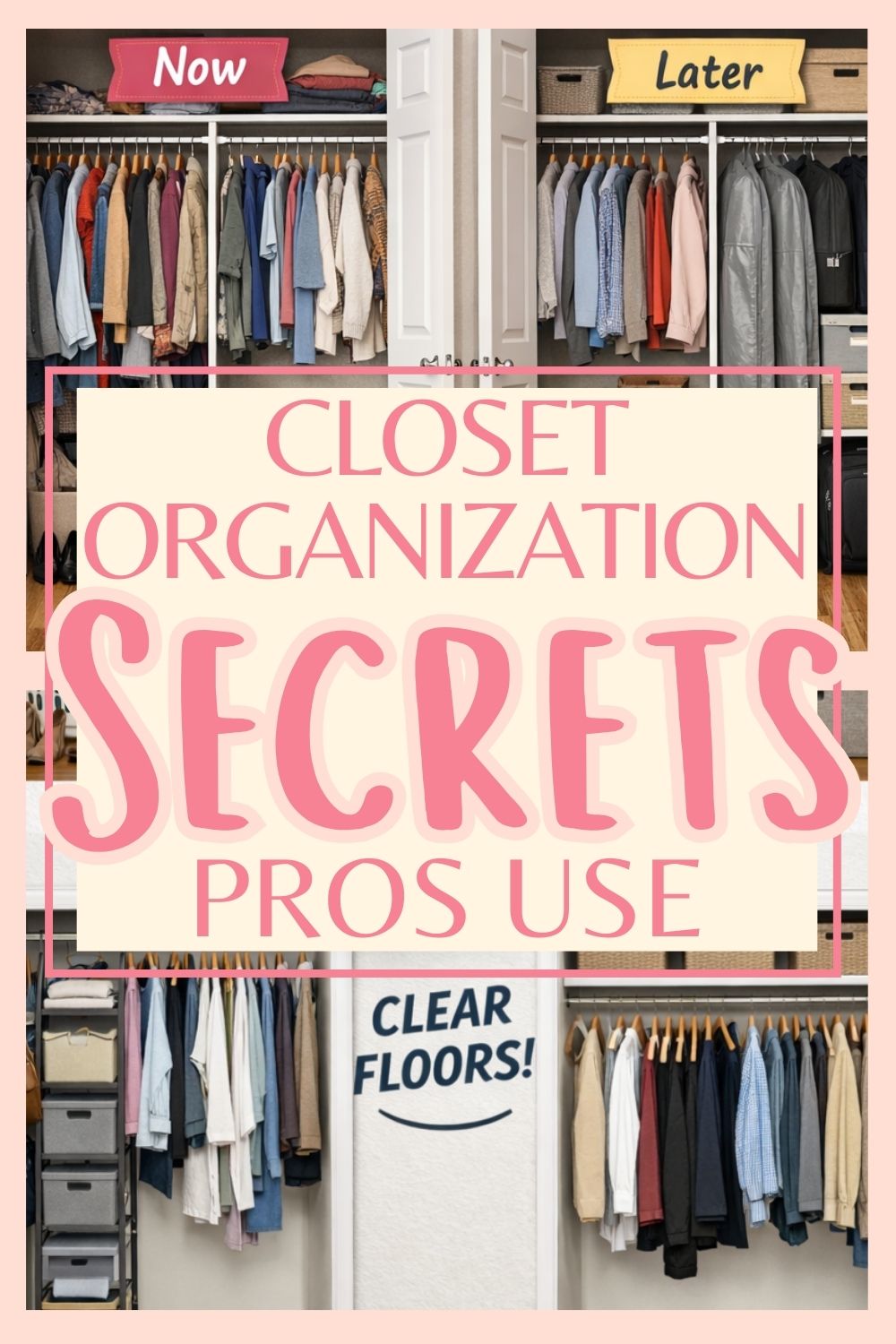
Decide which closet will hold the current season: Stand in the room and choose the more accessible or better-lit closet for daily wear. This becomes your “Now” closet. The other becomes your “Later” closet for off-season storage.
Move only in-season items into the daily closet: Pull out everything you’re actively wearing and hang it in the primary closet. Place off-season clothing in the second closet using garment bags, labeled bins, or upper shelves. Keep it organized, but don’t over-style it — this space is storage, not display.
Optional rotation tip: Set a calendar reminder every 3–6 months to swap closets. The reset feels like a mini wardrobe refresh without buying anything new.
2. Split by Person: Mine vs Theirs
If you share a room, shared closet space can quietly create tension. Hangers creep across rods. Shoes spill over. No one feels fully “settled.”
Assigning one closet per person creates immediate boundaries.
Assign full ownership of each closet: Choose which closet belongs to whom and commit to that division. Avoid splitting rods inside each closet; give one entire space to each person so there’s no confusion.
If space feels uneven, compensate with vertical storage or door hooks — not by blurring the boundary.
This approach works especially well in kids’ rooms or guest rooms where clear ownership reduces daily friction.
3. Split by Clothing Type: Everyday vs Occasion
Sometimes both closets belong to one person, but they still feel chaotic. In that case, function-based zoning is the cleanest solution.
You’re not dividing by person or season — you’re dividing by purpose.
Define your “daily driver” closet: Choose one closet to hold everything you reach for weekly — workwear, lounge sets, jeans, school-run outfits. This closet should be easy to access and visually simple.
Use the second closet for specialty items: Move formalwear, seasonal coats, travel pieces, and rarely worn items into the second closet. Group them intentionally: occasion dresses together, heavy coats together, event bags together.
When daily wear isn’t competing with once-a-year outfits, your primary closet instantly feels more breathable.
If you struggle with decision fatigue in the mornings, this split alone can shave minutes off your routine.
4. The 30-Minute Purpose Reset Plan
If both closets currently feel mixed and messy, don’t overthink it. You can reset them quickly.
Assign its role before putting anything back: Decide in one sentence what this closet is for. For example: “This is my everyday closet” or “This is off-season storage.” Only return items that fit that description. Everything else goes to the second closet.
Assigning purpose is step one. Making it obvious is step two.
If both closets look identical, it’s easy to drift back into mixing.
Create visual cues for each closet: Use matching hangers in one closet and storage bins in the other. Or keep one closet minimalist and the other more utilitarian. Even small visual differences reinforce their roles.
Keep floors as clear as possible: Floor clutter blurs boundaries. Use upper shelves or slim baskets instead of letting overflow gather at the bottom. When each closet looks distinct at a glance, your brain remembers its function.
The goal is that you can open both doors and instantly tell which one serves what purpose.
What to Do If One Closet Is Bigger
Uneven closets are common, and they can make splitting feel awkward. The solution isn’t to abandon structure — it’s to assign roles strategically.
Use vertical space in the smaller closet intentionally: Add a second rod, stackable bins, or upper shelves to maximize height. Smaller doesn’t mean useless — it just means more focused.
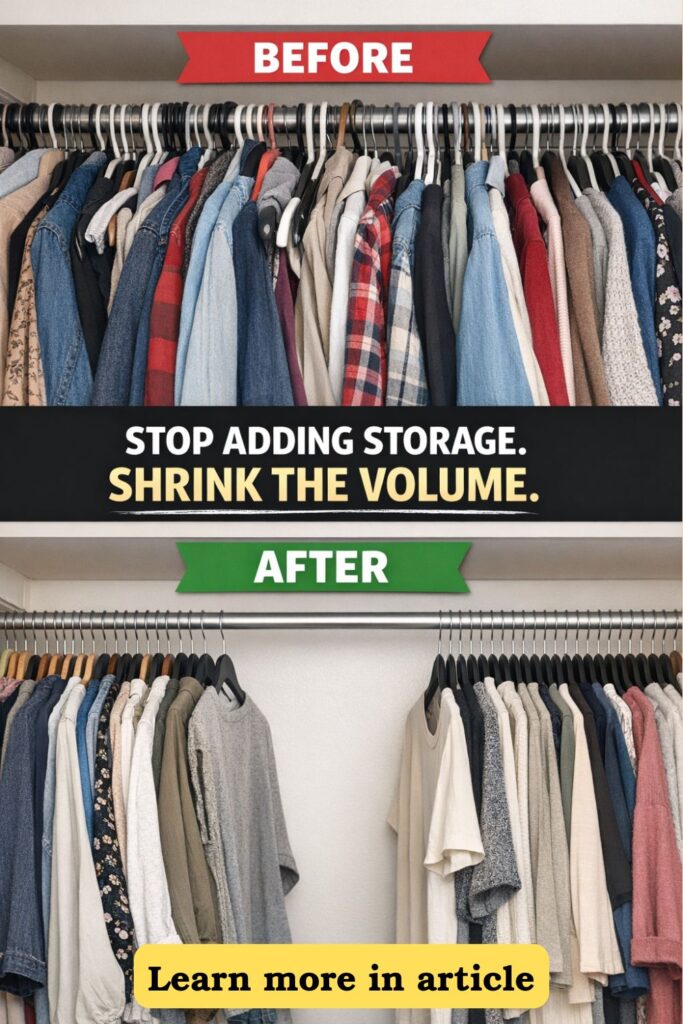
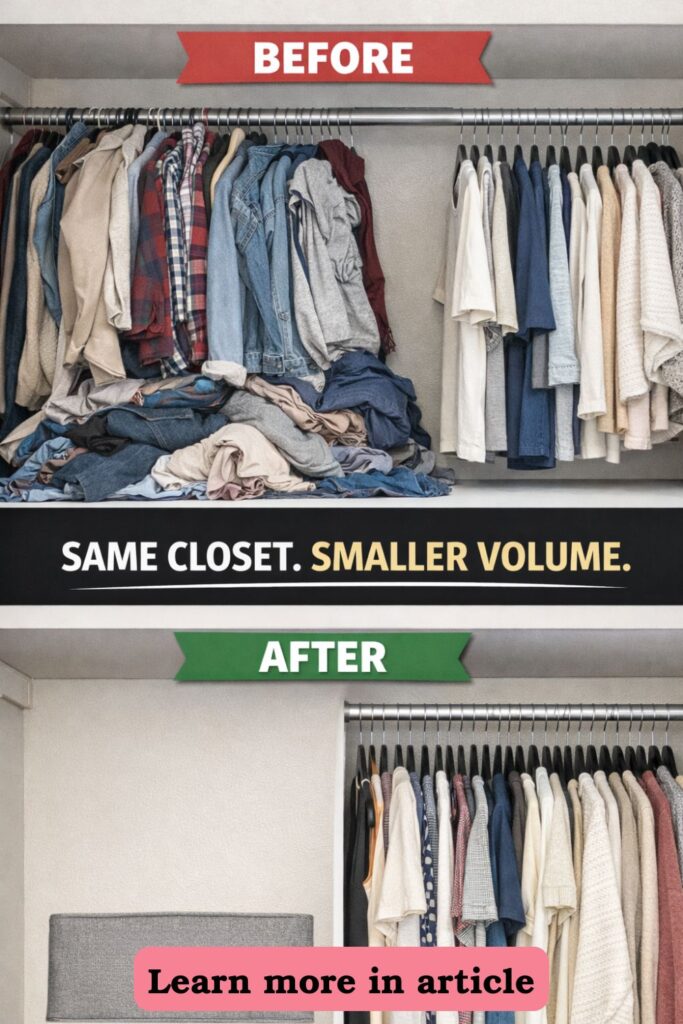
Before you shrink anything, you need a clear starting point. Most people underestimate how much is actually hanging in their closet.
Count your current hangers: Remove everything from your main rod and count each hanger. This gives you a measurable baseline. Take a photo of the “before” state so you can compare later.
Clear the rod completely before rebuilding: Do not sort while items are still hanging. An empty rod forces you to rebuild intentionally instead of adjusting around old clutter.
This number is your starting volume. Compression begins with clarity.
Measure your rod width: Use a measuring tape to calculate the usable inches across your closet rod. Divide that number by 1.25 to 1.5 inches per hanger to estimate a comfortable capacity.
Choose a firm hanger cap: If your rod measures 48 inches wide, you may land around 32–38 items. Pick a number within that range and commit to it as your new maximum. This is your compression boundary.
When hangers can slide easily without friction, you are within capacity. If they’re tight, you’ve exceeded it.
Pull your daily drivers first: Choose the clothes you reach for weekly — workwear, jeans, everyday tops, go-to layers. Place those back on the rod before considering anything else.
Stop when you hit your hanger cap: As soon as you reach your chosen number, stop adding. Everything remaining automatically becomes secondary storage, even if you like it.
This isn’t about favorites. It’s about frequency of wear.
Your rod should look intentionally spaced — not full.
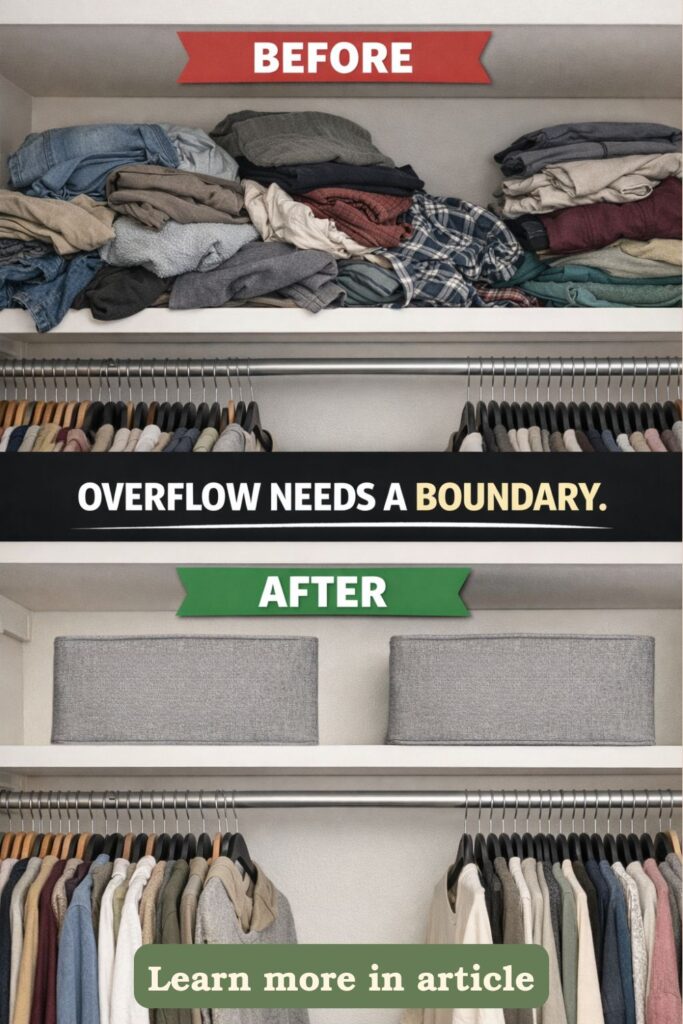
Enforce a one-in, one-out rule within overflow: If the overflow space fills up, something must leave before something new enters. This keeps compression intact over time.
Overflow is not an extension of your main closet. It is a holding zone with limits.
5. Standardize Your Hangers for Visual Compression
Switch to one hanger style and thickness: Uniform hangers create visual calm and allow more accurate spacing. Slim hangers often free up inches instantly.
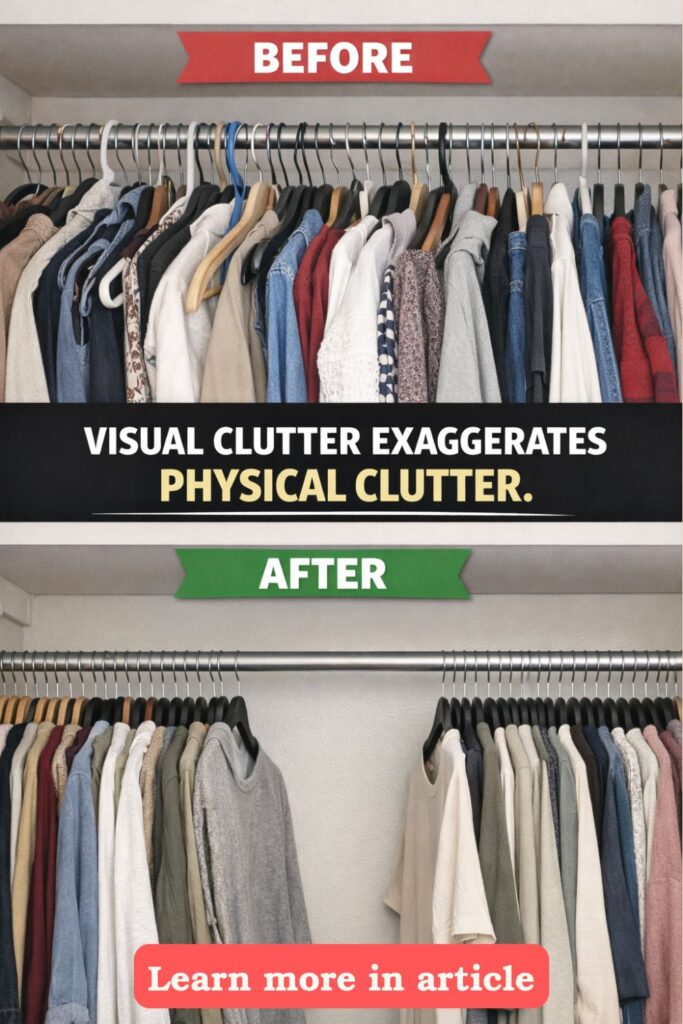
Space items intentionally rather than packing tightly: Group similar items together and leave subtle breathing room between categories. The goal is air, not density.
Air space is what makes a small closet feel larger — even when the square footage hasn’t changed.
How to Rotate Seasons Without Expanding
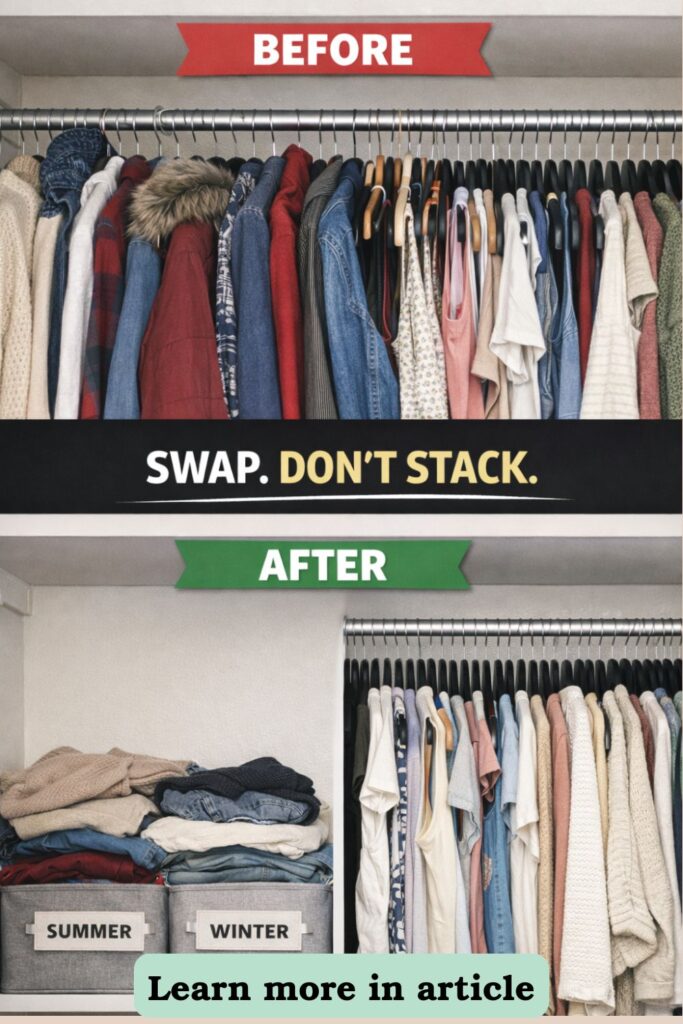
Compression doesn’t mean ignoring seasonal needs. It means swapping, not stacking.
Rotate items instead of increasing your hanger count: When the season changes, remove 5–10 items at a time and replace them with seasonal pieces. Keep the total number of hangers the same.
Store off-season clothing fully out of sight: Use bins, vacuum bags, or a secondary closet if available. Do not allow seasonal layering to increase your rod capacity.
Your hanger cap never changes — only the contents rotate.
When to Add Storage — and When Not To
It can be tempting to add shelves, rods, or organizers immediately. But expansion should only happen after compression.
Evaluate vertical space only after reducing volume: If you’ve compressed to your hanger cap and still lack function, then consider adding a second rod or upper shelf.
Avoid adding storage to avoid decision-making: More bins won’t solve overcrowding if you haven’t reduced active volume first. Compression must come before expansion.
Storage supports structure. It does not replace it.
The Capsule Compression Shift
A 100-hanger closet feels chaotic because it exceeds its natural limits. A 40-hanger closet feels intentional because it fits its boundaries.
The space didn’t grow. The volume shrank.
When your wardrobe matches your closet’s capacity, the room feels lighter — and your mornings feel simpler.
Are you all about style, decor and organization? Download a copy of our Decluttering Workbook. *****
The world of work is changing fast. More than 75 million Americans worked as freelancers last year, and that number keeps growing.
Whether you want to leave your office job or just make extra side hustle money, online jobs offer real opportunities toearn income from anywhere.
Remote jobs and work from home positions give you the freedom to build your schedule around your life instead of the other way around.
Maybe you need to make money from home while you care for little children. Or maybe you want a night time job to make extra cash.
You can find everything from customer service roles to creative work like writing and design. Some jobs need specific skills or experience, while others are open to beginners who are willing to learn.
This guide will walk you through the best online jobs available right now and show you where to find legitimate opportunities.
Best Online Jobs You Can Start Today
Many online work from home jobs require minimal startup costs and let you begin earning quickly.
These online positions range from entry-level roles that need basic computer skills to specialized work that pays higher rates for expertise.
Related reading:
1. Virtual Assistant
Virtual assistants handle administrative tasks for businesses and entrepreneurs from anywhere instead of by going into an offict.
You’ll manage emails, schedule appointments, book travel, and organize files. Some virtual assistants also handle social media posting, basic bookkeeping, or customer inquiries.
The work is flexible. You can start with just a few hours per week and build up to full-time hours as you take on more clients.
Most virtual assistant positions pay between $14 and $30 per hour. You don’t need special certifications to get started. Strong organizational skills and good communication are the main requirements.
You can find virtual assistant jobs on platforms like Fiverr , Upwork or FlexJobs. Many small business owners post openings on general job boards too.
Looking for a quick way to earn extra cash with your phone?
Branded Surveys:Make money fast for simple surveys. Try this super easy way to earn real money, from a trusted source. $10 sign up bonus!
Freelance writers create content for websites, blogs, magazines, and businesses. You might write articles, product descriptions, email campaigns, or social media posts.
Companies need writers to explain their products and connect with customers, making it an ideal remote work from home job.
The pay varies widely based on your experience and the type of writing. Rates typically range from $15 to $100 per hour. Beginners often start at lower rates and increase their prices as they build a portfolio.
You don’t need a journalism degree to become a freelance writer. Good grammar and the ability to research topics thoroughly matter most. Many successful writers learn on the job.
Find freelance writing jobs on ProBlogger Jobs, FlexJobs, and Upwork. You can also reach out directly to businesses that might need content.
3. Customer Service Representative
Customer service representatives help customers solve problems through phone, email, or chat.
You’ll answer questions about products, process returns, and handle complaints. Many companies hire remote customer service reps who work from home.
The job requires patience and good communication skills. You need to stay calm when customers are frustrated and find solutions quickly.
Most customer service rep positions pay between $8 and $20 per hour. Some companies offer higher rates for specialized knowledge or evening shifts.
Many provide training when you start, so you don’t need previous experience.
Look for these jobs on Glassdoor, We Work Remotely, and Indeed. Large companies often list remote customer service positions on their own career pages.
4. Data Entry Jobs
Data entry jobs involve typing information into computer systems or databases. You might enter customer details, update inventory records, or transfer data from paper documents to digital formats. This legit work from home job is straightforward but requires attention to detail.
These are some of the easiest legitimate online jobs to start. You mainly need basic typing skills and a computer. The pay is usually between $10 and $20 per hour.
Online data entry positions let you work on your own schedule in many cases. Some jobs pay per project instead of hourly.
A data entry clerk might handle hundreds of records in a day, so accuracy matters more than speed.
Transcriptionists listen to audio recordings and type out what they hear. You might transcribe interviews, meetings, podcasts, or medical dictations.
The job requires fast typing and good listening skills but is really an easy online job to make money from!
General transcription work from home jobs pay between $15 and $25 per hour for beginners. Medical and legal transcription pay more but require specialized training. You’ll need a computer, headphones, and a quiet place to work.
The one downside is the work can be repetitive, but it’s flexible. You can often choose which projects to take and when to work on them.
TranscribeMe and Rev are popular platforms for finding transcription work. Some companies hire transcriptionists as employees with set schedules.
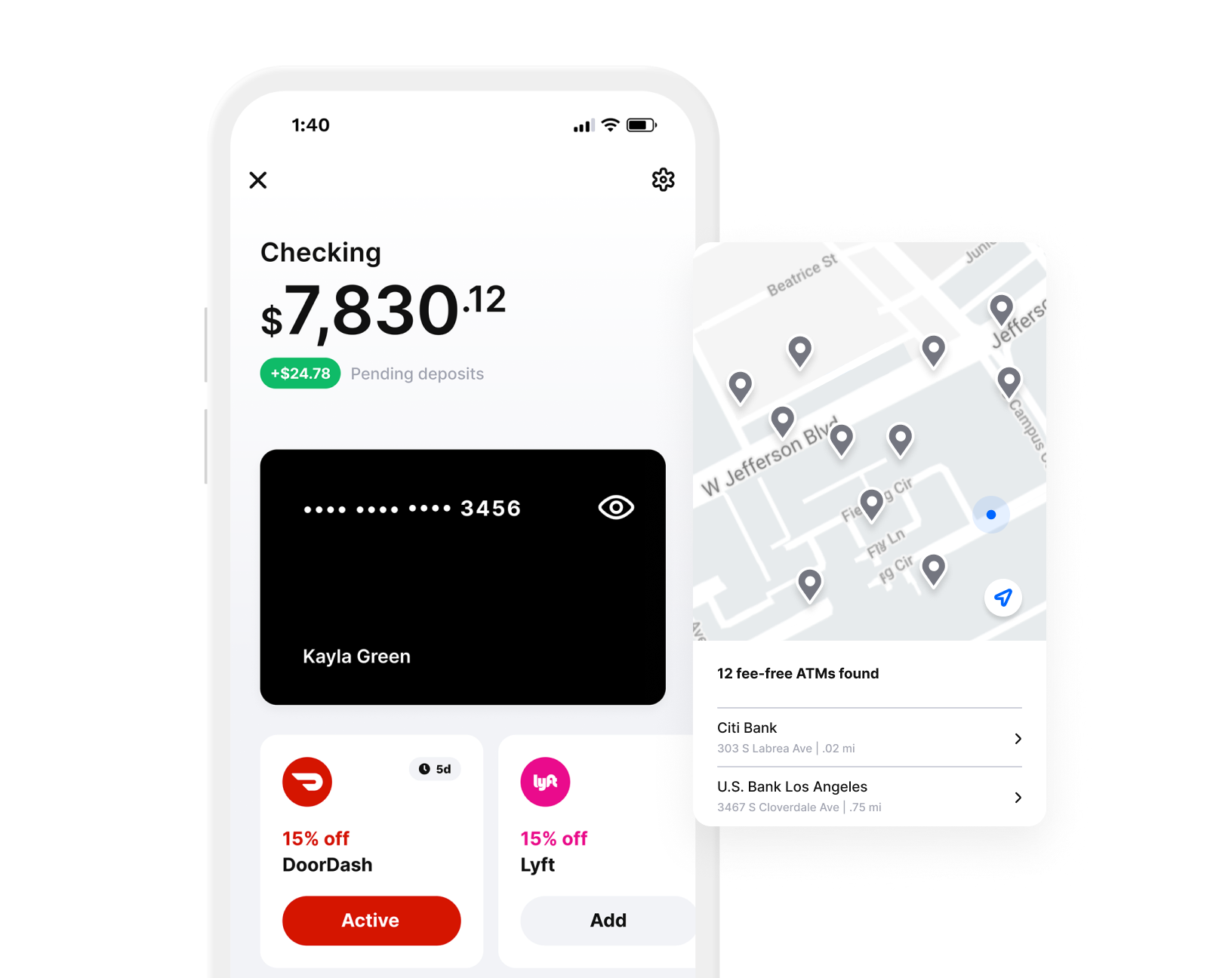
Albert Banking & Money App
Get up to $1,000 Instantly!
Albert:The only all-in-one banking and money app you need. Automatic saving and investing. 20% cash back on purchases and more!
6. Graphic Designer
Graphic designers create visual content for businesses. You’ll design logos, social media graphics, website images, and marketing materials.
The job combines creativity with technical skills in design software.
You need to know programs like Adobe Photoshop, Illustrator, or Canva. Canva is actually a much easier design software that pretty much anyone can learn to lose.
Many graphic designers are self-taught through online tutorials. A portfolio showing your best work is more important than a degree.
Graphic design jobs typically pay between $25 and $50 per hour. Specialized designers who work with specific industries can earn more.
Find work on 99designs, Dribbble, and Upwork. Many designers also get clients through Instagram by posting their work regularly.
7. Social Media Manager
If you love spending time on social media, then this might be the best online job for you!
Social media managers handle a company’s presence on platforms like Instagram, Facebook, TikTok, and LinkedIn.
You’ll create posts, respond to comments, and plan content calendars. The goal is to grow followers and increase engagement. You can earn extra money doing something fun.
This job works well if you already spend time on social media and understand what makes content shareable.
You need to know when to post, which hashtags to use, and how to write captions that get attention. But there are a lot of tools out there that can help like social media schedulers and AI content creators.
Pay ranges from $16 to $50 per hour depending on your experience and the size of the business. Small businesses might pay less but give you more creative freedom.
Check Indeed, Upwork, and PeoplePerHour for social media manager positions. You can also reach out to local businesses that have weak social media presence.
You can also find generic social media support jobs here.
8. Video Editor
One of the more unique online jobs you can is to become a video editor.
Video editors cut and arrange footage to create final videos for YouTube, social media, advertisements, and websites.
You’ll remove mistakes, add transitions, include music, and make sure the pacing keeps viewers interested.
The demand for video content keeps growing. Businesses need editors who can turn raw footage into polished videos that tell a story.
You need editing software like Adobe Premiere Pro, Final Cut Pro, or DaVinci Resolve. Many tutorials online can teach you the basics for free. Building a portfolio with sample edits helps you land your first clients.
Video editing typically pays between $20 and $75 per hour making it one of the more high-oaying online jobs. More complex projects like documentary editing or commercial work pay higher rates.
9. Online Tutor
Tutoring has always been a great side hustle and way to make extra cash. But in this day and age, you can actually tutor online instead of in-person.
Which means a much bigger marketplace of potential customers! Online tutors teach students through video calls.
You might help with math homework, teach English to non-native speakers, or prepare students for tests.
The work is rewarding if you enjoy teaching and have expertise in a subject.
Most tutoring positions require a bachelor’s degree. Teaching certifications help but aren’t always necessary. You need a reliable internet connection and a quiet space for sessions.
Online tutors earn between $10 and $25 per hour on average. Specialized subjects like advanced math or test prep pay more. You can work as little or as much as your schedule allows.
Tutor.com and VIPKid are popular platforms for finding students. You can also advertise tutoring services locally or on social media.
10. Proofreader
Proofreaders review written content to catch errors before publication. This is another solid line of remote work you can do and get paid.
Of course, you need to understand grammar and have an eye for details or you won’t be good at it!
Check out this in-depth guide on how to become a proofreader. The average proofreader makes around $25 an hour.
Online jobs can be something more creative like selling your own online course. Online courses are one of the most profitable digital products you can create to make money online.
Platforms like Teachable, Udemy, and Skillshare make it easy to sell a course online since they handle payment processing, and course hosting.
You can record your course once and sell it forever online which make this passive income. You only have to work once, when you create the course!
You can create a course on anything from business skills, to technology training, creative arts, or even personal development.
Whatever your skills or experience is in, you can likely create a course to sell and make money with
Udemy courses typically sell for $10-200, with instructors earning 37-97% depending on how students find the course.
Here are sites where you can sell your own online course:
12. Moderating groups/forums
From Facebook groups to forums, there are lots of places that people meet online to chat.
But, as someone running one of these things, you need to act as a moderator and make sure everything stays on topic and well behaved.
Another great online job you can work from home is to offer services moderating groups or forums for their owners.
This allows owners to focus their time on other online business activities while you keep the peace online in their absence. You can do this job from home and still be there when your kids get back from school.
Helpful resources
Upwork – another place to locate this kind of work
The Social Element – regularly looks for moderators and community managers
FlexJobs – work site where you can find moderation tasks and ongoing jobs
13. Testing and reviewing websites
Testing websites is a little like market research but based online.
You may be asked to complete a specific task. Or, you may have to follow a number of steps and give feedback on what you find.
You may be asked to document your general experience on a website. Companies will use this information to help improve their website.
All you need is a computer and a good Wi-Fi connection with no particular education or background which makes it an ideal work from home job for a housewife.
Most of the time, the companies are interested in honest feedback from the general public so the less you know about their field, the better!
Helpful resources
UserTesting – paid work to visit websites or apps, complete tasks, and then give a verbal report about your experiences
Userlytics – part time work checking apps or websites to test their function
TryMyUI – test websites to help improve user experience
14. Online chat support
More and more types of businesses now offer online chat as a customer support option. However, not everyone has someone within the business who can sit there, waiting to chat as needed.
You can get paid to be a Chat Assistant. This online job starts at $30 per hour. Work as a live chat customer support assistant on your own time.
That means many small and medium businesses outsource this work to someone like you, making it an easy online job to do.
The jobs tend to still be reasonably flexible and there’s no minimum work requirements. You may need to sign up for certain time slots so they know who is available when.
Or, you could work through a company that allows you to simply sign on and answer queries, rather than directly for the company you are offering support for.
While you can’t earn as much from these, you can earn doing simple and even fun tasks online and with your phone. Watching ads, videos, answering questions and even playing games will get cash deposited into your bank account.
Branded Surveys: Quickly earn extra money for completing easy surveys
Where to Find Legitimate Online Jobs
Finding real online jobs requires knowing which platforms to trust and how to spot warning signs of the wrong ones.
The right job boards connect you with verified employers, while smart search habits keep you safe from scams.
Top Job Boards and Marketplaces
FlexJobs stands out as a premium option that screens every job posting before it goes live. You’ll pay a subscription fee, but you won’t waste time sorting through fake listings.
It is a great site to find jobs to help you earn money from home. The site focuses on remote, part-time, and flexible positions across many industries.
We Work Remotely is one of the largest remote job boards available. Companies pay to post positions here, which helps filter out scammers. You’ll find tech jobs, marketing roles, customer service positions, and more.
Remote.co offers a curated list of remote positions and includes company profiles so you can research employers. The site also provides resources about remote work culture and best practices.
General job boards like Indeed and LinkedIn have dedicated remote job filters. These platforms let you set up job alerts and apply directly through their systems.
Specialized sites like Upwork and Fiverr work well for freelance projects, though they take a percentage of your earnings.
Here are some free sites and work from home companies that will help you find online jobs:
Look for job posts with clear role descriptions and specific requirements. Legitimate employers explain the work duties, required skills, and expected hours upfront.
Check if the company has a real website and active social media presence. Search for employee reviews on sites like Glassdoor. A straightforward application process that asks for your resume and relevant experience is a good sign.
Be careful with jobs that seem too easy for high pay. Real employers want qualified candidates and have normal hiring processes. They’ll interview you and ask about your background.
Final Thoughts on Remote Jobs
There are so many types of online jobs out there! Find one that works with your skills, interests and schedule and get started making money from home today!
We will receive a commission if you make a purchase through our affiliate link at no extra cost to you. Please read our disclosure policy for more information.
Many legitimate side hustles can help you make money. However, what if I told you there is a way to get paid for doing something you do daily?
Be it work mail or endless marketing content, we are checking our emails multiple times a day. It’s a mindless task that we generally do while watching Netflix or probably waiting for a bus. But what you might not know is that by simply changing the platform you read emails on, you can build an awesome side hustle! This is the perfect opportunity to make extra money without working extra hours daily.
If I have piqued your curiosity enough, let’s look at some of the best non-scammy ways to get paid to read emails.
PIN THIS: I’ll be updating this post so make sure to pin this image here and save it to your Pinterest board. That way you’ll be able to come back to this page and learn how to get paid to read emails!
Why Do Companies Pay You to Read Emails?
It’s good to be cautious, especially for a too-good-to-be-true-sounding opportunity. Let me put your mind at ease, as this is perfectly safe and legitimate to earn a few extra bucks. It’s not a get-rich-quick scheme because while it doesn’t take much effort, you won’t get rich just by reading emails.
Companies often pay individuals to read their emails (advertisements, surveys, or product recommendations) to encourage engagement. It is basically a marketing strategy where companies incentivize reading their emails to get your attention and promote their products. It’s a win-win situation as you get paid, and the companies can potentially make more sales.
How much can I earn from reading emails?
To make money reading emails, “Get-Paid-To” (GPT) websites such as Swagbucks or InboxDollars, are your best friends. These platforms pay users to read emails and the money you make will vary from platform to platform. However, on average, you can make $0.10 for every email you read. As I said, reading emails won’t make you rich. But it is a great way to supplement your income without extra effort.
1. Swagbucks
If you are anything like me, you might also find unread emails sitting in the inbox bothersome. In that case, you might want to take a look at Swagbucks. It is one of the best survey sites that pays people in many ways. One of these ways is to read promotional emails and earn SB (Swagbuck points). Some of these emails might ask you to complete a quick task or click a link, but even that would only take a few minutes.
The SB points you earn depend on the type of tasks you complete. They can be converted to USD, which is paid through PayPal and gift cards for Starbucks, Amazon, and Walmart.
2. InboxDollars
InboxDollars is one of the best sites to get paid to read emails, has an easy-to-use interface, and lets you create a free account. Start by confirming your email, and opt-in for paid emails (also called PaidEmails). You can find and read these emails in the website’s “Emails” section.
Like Swagbucks, all you need to do is open emails, read the content, and perform any required action like visiting a website through the given link or watching a video. This is a solid side hustle where you make a few cents for every email with potential bonuses for watching a video or completing a survey. InboxDollars also pays through PayPal and retail or Visa gift cards, all without you needing to get off your couch!
3. MyPoints
The next in line is MyPoints, which has a BonusMails program that rewards you for every email you read. The process to get paid is not much different for MyPoints, and all you need to do is sign up and opt for promotional emails. You will get paid via points that you can redeem for PayPal cash or gift cards. However, what separates MyPoints from the rest is that it allows you to redeem your earnings as travel miles!
Like most platforms, MyPoints also pays a few cents on every mail you read as points. However, that’s not the only way to rack up these points. For example, MyPoints lets you play games and watch videos to earn as well!
4. Paid To Read Email
Paid To Read Email, as the name suggests, is a platform that pays you to read emails. However, there is more than one way to make money from this platform. For example, the platform has a referral program that pays you when someone signs up using your referral link. Besides that, taking surveys and completing offers are a few other ways to make money from this platform.
With Paid To Read Emails, you can make as much as $0.05 from sales emails. You might be asked to complete small tasks like completing a survey or visiting a website. However, you don’t need to worry as they only take a few minutes and are completely safe. Like other platforms, it also pays only in USD via PayPal or as gift cards.
Jobs Where You Can Get Paid To Read Emails
I think you would agree that life’s simpler when you know where your next paycheck is coming from. Luckily, I have found the best remote jobs to read emails, which are more reliable with a scope of regular paychecks.
5. Virtual Assistant
A virtual assistant email management job is one of the best work-from-home jobs that pay for reading emails. As a virtual assistant, you will handle and categorize a client’s emails, respond to routine inquiries, and forward the important ones.
All you need is a basic resume and good organizational skills. Unlike the GPT platforms mentioned above, you will get paid by the hour. Depending on your experience, virtual assistants can make up to $30 per hour.
6. Customer Support Representative
Having people skills is undoubtedly a blessing in disguise. It lets you make friends easily and opens doors to exciting new opportunities like becoming a customer support representative (CSR). As a CSR, you will manage customer inquiries and provide quick solutions via email, whenever possible. Although you will work more as a CSR, you will also be compensated fairly.
Beginner CSRs can make up to $25 per hour by working at companies like Amazon and American Express. While this is the average pay, you can make more by demonstrating your ability to handle a high volume of emails effectively. If you are looking for a non-phone work-from-home job, this might be the perfect fit for you!
7. Email Marketer
By now, you must know how to earn money by reading emails. Similarly, it’s obvious that reading is not the only way to get paid through them. If you are a great copywriter or have experience working in digital marketing, you can earn your bread as an email marketer. An experienced and talented email marketer can make over $40 per hour.
Your job as an email marketer is to create, send, and analyze the performance of marketing emails. The best part about being an email marketer is that you have the freedom to work full-time or as a side income. To give you an example, companies like HubSpot prefer full-time email marketers, while marketplaces like MailerLite generally hire freelancers.
8. Social Media Manager
Anyone who has ever searched for work-from-home jobs like a Pinterest Virtual Assistant will have at least once come across a posting for a social media manager. It is one of the most profitable and fun jobs. Trust me, I am not making any baseless claims here. Many influencers, bloggers, and celebrities hire people to manage their emails and social media accounts like Instagram.
Working as a social media manager is both fun and challenging as you might be the one bartering the next deal between Johnny Depp and Dior. But we have never been afraid of challenges, have we?
The Galentine’s Decor Trick That Makes Any Space Feel Pulled Together
Are you all about style, decor and organization? Download a copy of our Decluttering Workbook.**** A Galentine’s gathering should look warm, personal, and effortless — not like it came straight […]