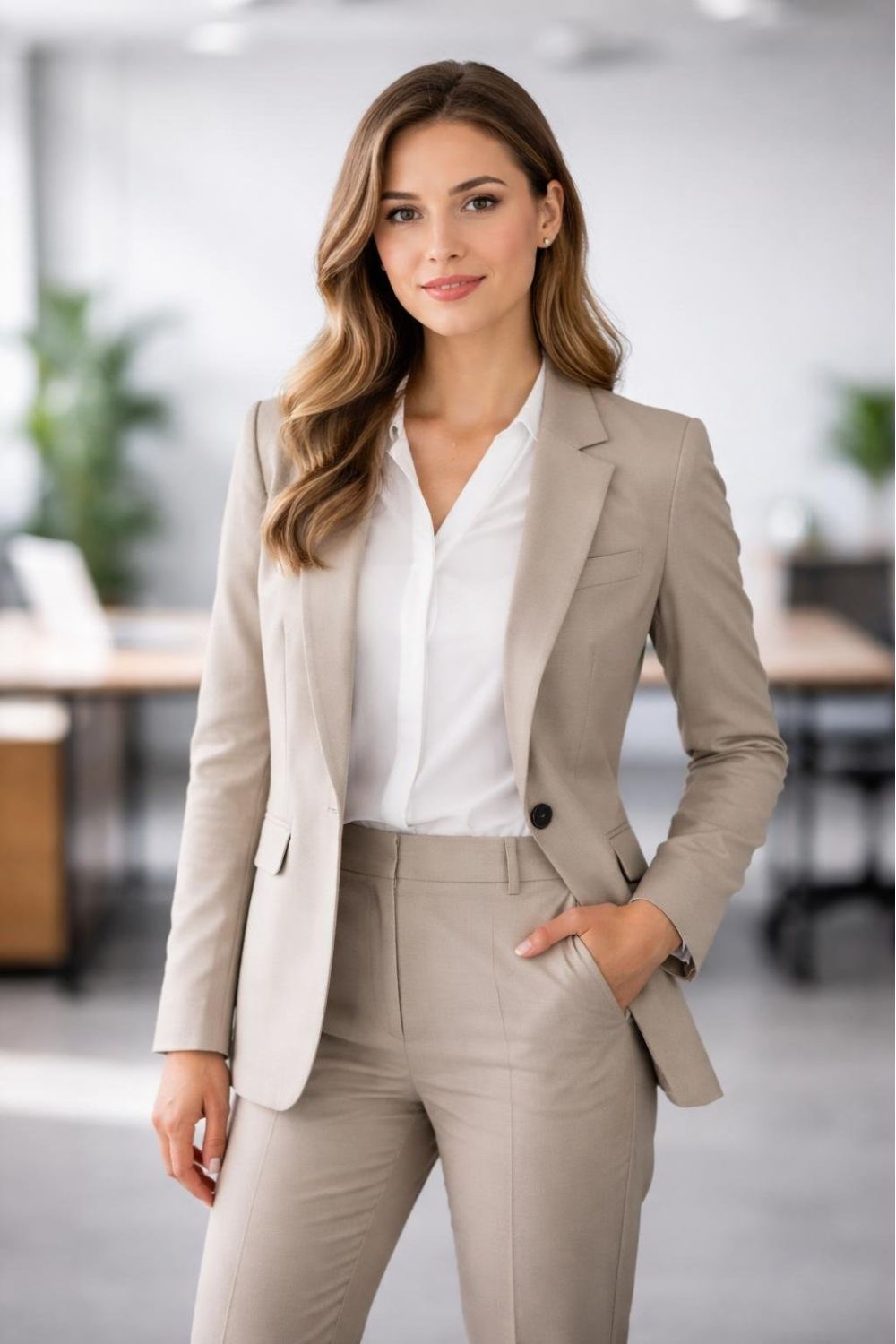
Getting dressed for an interview shouldn’t feel like solving a puzzle. You want to look put-together and confident, but you also don’t want to overthink every detail or spend hours staring at your closet.
The three-piece interview outfit formula gives you a simple way to look polished and intentional every time: a base piece, a layering piece, and a finishing touch that pulls everything together.
Need some style or career guidance? Drop on by our directories choc full of image coaches and career coaches to get your look and career on point. Or click here to have us match you to the best.

This approach works because it takes the guesswork out of getting dressed while still letting your personality show through. You don’t need a huge wardrobe or expensive clothes to make it work.
The key is knowing which pieces to combine and how to adjust the formula based on where you’re interviewing.
Whether you’re heading to a corporate office or a creative startup, this formula helps you walk into any interview looking like you belong there. You’ll learn how to pick the right pieces and add those small details that make a big difference.
Key Takeaways
- The three-piece formula combines a base, a layer, and a finishing touch to create polished interview looks without overthinking
- Matching your outfit to the company culture while keeping it intentional shows you understand the role and take it seriously
- Small details like color choices, accessories, and how your clothes fit can boost your confidence and leave a strong impression
Core Elements of a Polished Three-Piece Ensemble
The foundation of any interview outfit starts with three essential pieces that work together. Your blazer provides structure, your top adds personality, and your bottom anchors the entire ensemble.
Choosing the Right Blazer or Jacket
Your blazer pulls everything together and signals professionalism. Look for a fit that sits smoothly across your shoulders without pulling or gapping.
The best interview blazers hit right at your hip bone or just below. Anything shorter can look too casual, while anything longer can make you appear shorter.
Navy, black, and charcoal gray are safe choices. They work for most industries.
Make sure you can button the blazer comfortably. When you sit down, you should have enough room to move your arms freely.
A single-breasted style with one or two buttons works for most body types and interview settings.
Check these fit points:
- Shoulder seams align with your natural shoulder line
- Sleeves end at your wrist bone
- Back stays smooth when you move
- No pulling when buttoned
Finding the Best Blouse or Top
Your blouse creates the base layer and adds a touch of your style. Stick with solid colors or subtle patterns that won’t distract from what you’re saying.
White, cream, light blue, and soft pink are classic choices. They photograph well and look fresh under a blazer.
The neckline matters more than you might think. A crew neck, modest V-neck, or simple collar keeps the focus on your face.
Choose fabrics that won’t wrinkle easily or show sweat. Cotton blends, polyester crepe, and silk work well for interviews.
Your top should fit close to your body without being tight or showing any gaps between buttons. Avoid anything too low-cut, sheer, or sleeveless for traditional interviews.

Perfecting Your Trouser or Skirt Selection
Your bottom half should be comfortable enough to sit in for extended periods. Trousers work for almost any interview setting and give you more freedom of movement.
Look for pants with a mid-rise waist that sits at or just below your natural waistline. The hem should barely touch the top of your shoe when you’re standing.
Avoid anything too tight in the hips or thighs, as you’ll be sitting for most of your interview. If you prefer skirts, choose one that hits at or just below the knee.
When you sit down, the skirt should still cover your thighs. A-line and pencil styles both work, depending on your comfort and body type.
Go for structured fabrics like wool blends or ponte that hold their shape throughout the day.
Mixing Colors and Patterns with Intention

Building a polished interview outfit means making smart choices about how colors and patterns work together. The right combinations create a professional look that feels confident and put-together.
Neutral Versus Statement Pieces
Your interview outfit should have a clear color hierarchy. Neutrals like navy, gray, black, or cream work best as your base pieces. These colors take up the most visual space in your outfit.
Statement pieces add personality through bolder colors like burgundy, forest green, or jewel tones. Limit yourself to one statement piece per outfit.
This might be a colored blazer, a patterned blouse, or a bold accessory. The 3-color rule keeps your outfit looking intentional.
Pick three colors total and stick to them. For example, you might pair a navy suit with a white blouse and burgundy heels. Or try gray pants with a cream top and a navy blazer.
When you choose your colors, make sure they work well together. Navy pairs well with cream, burgundy, or light pink. Gray looks good with white, navy, or purple tones. Black works with almost anything but looks especially sharp with white, gray, or burgundy.
Balancing Prints and Solids
Patterns can add interest to your interview outfit if you use them carefully. The safest approach pairs one patterned piece with solid colors everywhere else.
Subtle patterns work best for interviews. Think thin pinstripes, small geometric prints, or tiny polka dots. These patterns read as professional and don’t distract from what you’re saying.

If you wear a patterned piece, pull one color from that pattern for your other items. A striped navy and white shirt pairs well with solid navy pants. A blouse with a small burgundy print looks great under a burgundy or cream blazer.
Skip busy patterns like large florals, animal prints, or bright geometric designs. These patterns can look too casual or distracting for interview settings.
Layering Without Overwhelm
Layering adds dimension to your outfit without making it look complicated. Start with your base layer and add only one or two layers on top.
A classic three-piece formula includes pants or a skirt, a blouse, and a blazer. Each layer should work in your chosen color scheme.
Keep patterns to just one layer if you use them at all. Your layers should fit well together.
A fitted blouse looks sharp under a structured blazer. Make sure sleeves don’t bunch up and collars lay flat. Each piece should be visible but not competing for attention.
Accessorizing for the Modern Interview

The right accessories complete your interview outfit and show attention to detail. Your shoes, jewelry, and bag each play a specific role in creating a polished, professional appearance.
Selecting Professional Footwear
Your shoes should be clean, polished, and appropriate for the role you’re seeking. Closed-toe pumps with a 2-3 inch heel work well for most professional settings, but you can also wear flats, loafers, or low block heels if they’re more comfortable.
Choose neutral colors like black, navy, or brown that match your outfit. Make sure your shoes are in good condition without scuffs or worn heels.
Break in new shoes before your interview day to avoid discomfort. You want to walk confidently without worrying about blisters or unstable footing.
Your footwear should let you focus on the conversation, not your feet.
Incorporating Statement Jewelry
Keep jewelry simple and minimal for interviews. One or two quality pieces work better than multiple items that might distract from your conversation.
Good jewelry choices include:
- Small stud earrings or simple hoops
- A thin necklace or small pendant
- One ring per hand
- A classic watch with a leather or metal band
Avoid pieces that make noise when you move, like jangling bracelets or large dangling earrings. Your jewelry should add polish without drawing too much attention.
Skip anything too trendy or colorful unless you’re interviewing in a creative field where personal style matters more.
The Role of Bags and Portfolios
Bring a structured tote, briefcase, or portfolio that can hold your resume, notebook, and personal items. A professional bag shows you’re organized and prepared for the role.
Choose a bag in leather or quality fabric in black, brown, or navy. It should sit neatly on the floor beside your chair without tipping over.
Make sure it’s large enough for a standard folder but not so big that it looks bulky. Your bag replaces a casual purse during the interview.
Keep everything you need inside it so you’re not juggling multiple items when you arrive.
Dressing for Different Industries and Company Cultures

The 3-piece formula adapts differently depending on where you’re interviewing. Financial firms expect polished suits while tech startups value a more relaxed approach, and virtual interviews require strategic choices that work on camera.
Corporate and Formal Environments
Traditional industries like finance, law, and consulting expect formal business attire. Your 3-piece formula should include a tailored blazer, dress pants or a pencil skirt, and a crisp button-down shirt.
Stick with neutral colors like navy, black, gray, or white. These colors signal professionalism and show you understand the conservative dress code.
Men should wear a full suit with a tie. Women can choose between a pantsuit or a skirt suit with closed-toe heels.
Both options work equally well in these settings. Pay attention to the details.
Polish your shoes until they shine. Make sure your clothes are pressed without wrinkles.
Keep jewelry minimal and professional. These environments value tradition and formality.
Dressing one level above the daily office dress code shows respect for the interview process and the company culture.
Creative and Startup Workplaces
Creative industries and tech startups allow more flexibility with interview outfits. You can still use the 3-piece formula but make it less formal.
Replace the blazer with a structured cardigan or casual jacket. Swap dress pants for well-fitted dark jeans or chinos.
Add a quality polo shirt or a clean sweater instead of a button-down. The goal is looking put-together without appearing stiff or out of touch.
You want to show you fit the company culture while still taking the interview seriously.
Avoid going too casual. Even at relaxed companies, skip graphic tees, shorts, or worn-out sneakers.
Clean leather sneakers or loafers work better than athletic shoes. Research the company’s social media and website to see how current employees dress.
This gives you a good baseline for your interview outfit. When in doubt, dress slightly more polished than the everyday office look.
Remote and Hybrid Interview Settings
Video interviews bring their own set of challenges when it comes to what you wear. Your 3-piece formula? It really centers on what shows up on camera.
Focus on your top half—that’s all most interviewers will see. Go for solid colors or subtle patterns that don’t get weird on screen.
Skip bright whites; they can glare. Busy patterns? They tend to blur and distract.
Your blazer or cardigan is the star for video calls. Make sure it fits right in the shoulders and doesn’t bunch up when you sit.
Pair it with a shirt in a color that goes well, but don’t overthink it. Sometimes, simple works best.
Try your outfit on camera before the big day. Check how the colors play with your background and lighting.
If something looks off or distracting, swap it out. You want to look sharp but not overdone.
And yeah, don’t ignore your bottom half. Wear professional pants—you never know if you’ll need to stand up.
It’s just safer, and honestly, you’ll feel more put together.
Confidence-Boosting Finishing Touches
Your hair and makeup should polish your look, not steal the show. These last steps pull your outfit together and help you feel ready to impress.
Styling Hair for a Polished Look
Clean, well-kept hair signals you care. If your hair’s long, try a low ponytail, bun, or even a half-up style—just something that keeps it out of your face.
These looks stay neat and let you focus on the conversation, not your hair.
Short hair? Just make sure it’s freshly washed and styled. A quick blow-dry with a bit of smoothing product can work wonders.
Don’t experiment with new hairstyles on interview day. You want to feel like yourself, not worry about how your hair’s holding up.
Keep your hair in place with bobby pins, ties, or a light mist of hairspray. Natural, understated styles usually beat anything too trendy or casual for interviews.

Minimal Yet Impactful Makeup
A natural makeup look usually works best for interviews, no matter the industry. Start with a light foundation or maybe just a tinted moisturizer to even out your skin tone.
If you need it, dab on a bit of concealer to cover dark circles or blemishes. The idea is to look fresh and awake, not overly made up.
Try a neutral eyeshadow—taupe or soft brown is usually safe. Just a single coat of mascara can open up your eyes without making things look too dramatic.
Pick a lipstick or gloss that’s close to your natural lip color. Soft pinks, nudes, or mauves keep the attention on what you’re saying, not your lips.
Bright reds or dark shades? Maybe skip those, unless you’re in a creative field where bold choices are the norm.
Keep some blotting papers or a bit of powder in your bag for a quick touch-up before you walk in. That way, you can handle shine without piling on more makeup.
You want to walk into an interview looking calm, confident, and put-together.
Six Top 3- Piece Formula Looks
Now let’s put this in action with some high-caliber looks that will help you nail your next interview, following our simple 3-piece formula
1) Charcoal suit jacket + silk blouse + midi pencil skirt

Charcoal suit jackets always set the right tone. They feel formal but not too severe.
Slip on a silk blouse underneath for a soft, polished contrast. The fabric sits nicely and avoids that stiff, boxy look.
Pick a midi pencil skirt that lands below the knee. Modern, professional, and not stuffy at all.
Don’t overdo accessories—let the main pieces do the talking.
2) Soft grey cardigan + patterned blouse + navy cigarette pants

Soft grey cardigans just calm everything down. Toss it over a patterned blouse for a bit of interest—nothing too wild, though.
Navy cigarette pants keep the lines crisp. They’re modern and perfect for interviews.
Stick with small prints, nothing loud. Neutral shoes keep things balanced.
3) Structured black blazer + neutral shell top + high-waist trousers

A structured black blazer is a go-to for sharpness. The clean fit and strong shoulders do all the work.
Add a neutral shell top—white, beige, soft gray, whatever feels right. It keeps everything simple and neat.
High-waist trousers finish the look. They define your waist and make your legs look a mile long.
4) Camel coat + ivory knit + pleated midi skirt

Camel coats just make you look put-together. Layer one over an ivory knit for a soft, clean base.
Pleated midi skirts add movement without making things too casual. Stick to neutral shades like beige or soft brown.
Ankle boots or low heels work best. There’s no need to fuss with the shoes.
5) Olive utility jacket + white button-down + black straight-leg jeans

Olive utility jackets add structure but don’t feel uptight. You’ll look ready, not rigid.
Pair it with a crisp white button-down. Tuck it into black straight-leg jeans for a tidy, grounded look.
Go for black loafers or low heels. Minimal jewelry and a neat bag finish it off.
6) Textured tweed jacket + silk camisole + tailored black trousers

Need some style or career guidance? Drop on by our directories choc full of image coaches and career coaches to get your look and career on point. Or click here to have us match you to the best.
A textured tweed jacket just gives your look some structure and depth. It feels polished, but honestly, it’s not too stiff.
You’ll look like you pay attention to details, but you’re not trying too hard. That’s a sweet spot, right?
Slip a silk camisole underneath for a clean base. Keep the neckline simple and smooth—nothing fussy here.
This soft layer balances out the jacket’s texture. It’s a combo that just works.
Then, go for tailored black trousers. They ground the whole outfit and keep things focused.
Add low heels or sleek flats if you want to stay comfortable and still look sharp. Your feet will thank you.
The post The 3-Piece Interview Outfit Formula That Always Looks Intentional appeared first on Life Coach Hub.
Leave a Reply