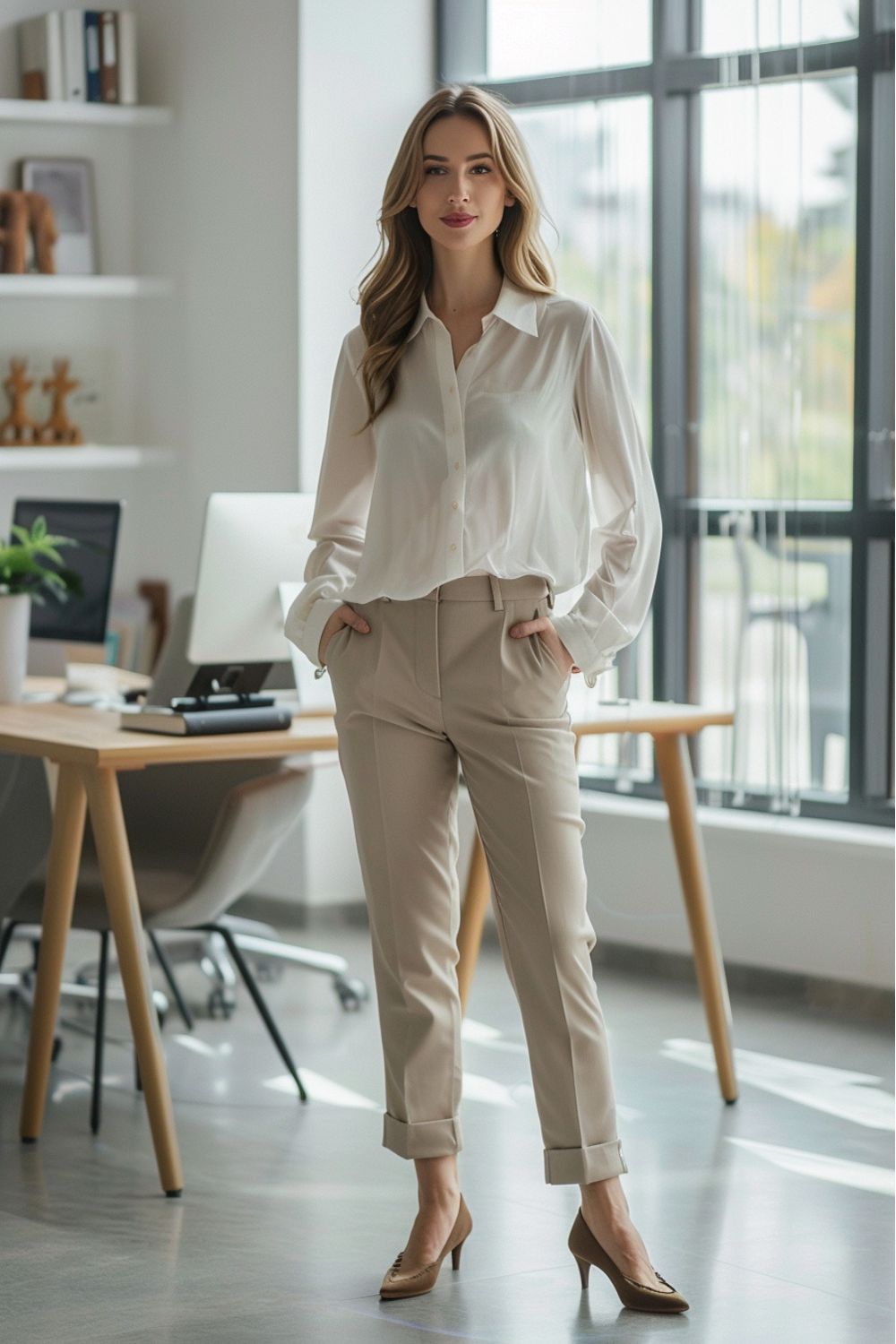
Business casual interviews can be strangely tricky. A formal corporate interview often feels easier because the dress code is obvious. You wear the polished version of professional and move on. But when the office is more relaxed, the line between too formal and too casual gets a lot blurrier.
That is where most of the stress comes from. You are not just trying to look good. You are trying to send the right signal. You want to look capable, thoughtful, and polished without looking like you dressed for the wrong company.
The good news is that you do not need a huge wardrobe or perfect fashion instincts to get this right. What helps most is having a clear process. Once you know how to read the company vibe, choose a solid outfit formula, and make a few smart swaps, business casual starts to feel much less vague.
This article walks you through exactly how to do that. The goal is not to turn you into someone else for an interview. The goal is to help you show up looking like yourself, just a little sharper, more intentional, and ready for the room you are walking into.
Need some style or career guidance? Drop on by our directories choc full of image coaches and career coaches to get your look and career on point. Or click here to have us match you to the best.

Read the office dress code before you get dressed
The first thing to know about business casual is that it can mean very different things depending on the company. At one office, it might mean tailored trousers, loafers, and a blazer. At another, it might mean dark jeans, a knit top, and clean sneakers on a normal day. That is why guessing can backfire.
Before you build your outfit, spend time gathering visual clues. This gives you a much better read on what the company actually means by polished. You are not looking for one perfect answer. You are looking for patterns.
Start with places that show real employees:
- Company website team pages
- LinkedIn staff profiles
- Office event photos
- Instagram or behind the scenes content
- Recruiting pages and culture pages
Pay attention to the overall feel of what people wear. Look at how structured the outfits are. Notice whether people wear blazers, trousers, denim, dresses, heels, flats, or sneakers. Try to spot whether the environment feels more creative, more traditional, or somewhere in between.
It also helps to think about the role itself. A client-facing role, management position, or office-based role often calls for a slightly more polished version of business casual. A creative role or startup environment may allow more personality and softness in the outfit.

A good rule is to dress one step above the company’s everyday norm. If people seem very relaxed, add one structured piece. If the office already looks fairly polished, keep the whole outfit neat and streamlined.
This part matters because the best interview outfit is not just attractive. It looks like it belongs in the company while still making you feel confident in it.
Build from a simple interview outfit formula
Once you understand the company vibe, the next step is to stop treating the outfit like a random collection of pieces. You will make faster, better decisions if you work from a reliable formula. That way, you are not reinventing the wheel every time you try something on.
The easiest interview outfits usually start with one of a few dependable combinations. These formulas work because they already have balance built in. They give you structure without making the outfit feel stiff.
A few strong starting points:
- Blouse + tailored trousers + flats or loafers
- Fine knit top + blazer + ankle-length trousers
- Simple midi dress + structured cardigan or blazer
- Shell top + cropped pants + polished flat shoes
- Soft button-up + straight-leg pants + low heel or loafer

The key is to choose a formula that feels natural on you. If you rarely wear blazers, you do not need to force yourself into a super sharp, corporate-looking one unless the job clearly calls for it. A clean knit layered under a more relaxed jacket can still look polished and interview-ready.
Balance matters too. If your pants are wide-leg or looser, keep the top cleaner and more fitted. If your blouse has detail, keep the rest of the outfit simpler. When too many pieces compete, the outfit feels harder to read.
Comfort deserves more attention than people usually give it. You need to be able to sit, walk, gesture, and move through the interview without adjusting your clothes every few minutes. If a shoe pinches, a top pulls, or a hem keeps shifting, it will be harder to stay present.
The best formula is one that does three things at once:
- Looks intentional
- Feels comfortable
- Matches the office tone
That is the sweet spot you are aiming for.

Make it feel like you without losing polish
A lot of women get stuck here. They know they want to look professional, but they do not want to feel like they borrowed someone else’s personality for the day. That tension is real, especially if your everyday style is softer, more creative, more relaxed, or less traditional than classic office wear.
The goal is not to erase your style. It is to edit it. You want the outfit to still feel familiar when you look in the mirror, just cleaner and more intentional. That usually works better than trying to copy a version of “professional” that feels forced on your body.
One easy way to do this is to keep one personal style cue and simplify everything around it. That cue could be:
- A color family you always feel good in
- A softer silhouette instead of something rigid
- Minimal jewelry you wear often
- Loafers instead of heels
- A blouse shape that feels more like you than a button-up

This helps the outfit stay grounded in your own taste while still reading interview-appropriate. It also makes confidence come more naturally because you are not fighting the clothes.
Texture and shape can help show personality in a quieter way. A fine ribbed knit, a drapey blouse, a soft neutral print, or relaxed tailoring can all add style without feeling loud. These details let the outfit feel thoughtful without turning into a statement.
It helps to avoid anything that makes you feel like you are performing. If something looks polished but makes you feel stiff, overly formal, or self-conscious, it may not be the right choice for this kind of interview. You want to look prepared, not disguised.
A good check is this: if the outfit feels like a believable version of you on a very important day, you are probably on the right track. That is usually what makes someone come across as both polished and genuine.
Use easy swaps to dress the look up or down

This is where business casual becomes much easier. You do not need dozens of separate interview outfits. What helps more is knowing how to shift the same basic outfit up or down depending on the company. Small swaps can completely change how formal or relaxed a look feels.
Let’s say your base outfit is a blouse and trousers. That can go in several directions without needing a full reset. Add a blazer and sleek loafers, and it looks sharper. Swap the blazer for a cardigan or structured knit jacket, and the look softens.
These are some of the easiest swaps:
- Blazer instead of cardigan for more polish
- Loafers or low heels instead of sneakers or casual flats
- Trousers instead of jeans for a safer interview look
- Crisp blouse instead of casual knit top
- Structured bag instead of slouchy tote
- Simple jewelry instead of bold accessories
This is especially useful when the company falls into that uncertain middle zone. Maybe it is a relaxed office, but the role still has some authority. Or maybe it is a creative team, but you still want to look serious and prepared. A few well-chosen swaps let you fine-tune the message your outfit sends.

You can also soften an outfit that feels too formal. If you put everything on and feel like you are headed into a boardroom instead of a relaxed office, try removing one high-polish element. Keep the clean lines, but loosen the tone a little.
For example:
- Swap a stiff blazer for a softer layer
- Choose a more relaxed trouser shape
- Switch a very formal pump for a polished flat
- Keep the blouse simple instead of overly crisp or severe
The best part is that this makes getting dressed much less all-or-nothing. You do not have to nail some invisible perfect outfit from scratch. You just need a strong base and a few smart ways to adjust it.
Avoid the business casual mistakes that create mixed signals
One reason business casual feels hard is that small details can change the message of an outfit quickly. Something can look fine in theory, but once it is all on together, it reads either too casual or too formal for the setting. That is what creates mixed signals.
A common mistake is leaning too far into casual because the company seems relaxed. Relaxed does not mean careless. Even in softer office cultures, an interview outfit still needs to look clean, intentional, and a little more elevated than everyday wear.
Pieces that can easily read too casual:
- Distressed or obviously casual denim
- Sporty sneakers
- Thin clingy knits
- Wrinkled fabrics
- Very casual tees
- Overly trendy pieces that distract from the interview

On the other side, it is also possible to overshoot. Full matching suiting, very severe styling, or high-formality shoes can make you look disconnected from the actual culture of a relaxed workplace. That does not mean these pieces are bad. It just means they may not fit the tone you are trying to match.
Things that can push the outfit too formal:
- Stiff full suits in very casual settings
- Very high heels
- Overly rigid tailoring
- Heavy formal accessories
- Sharp corporate styling with no softness
Fit is another place where problems hide. A blouse that gaps, pants that bunch oddly at the ankle, or shoes that look polished but are hard to walk in can all make the outfit feel off. Even strong pieces will not help much if they do not sit well on your body.
One of the smartest things you can do is test the outfit in motion. Sit down in it. Walk in it. Carry your bag. Put on your outer layer. Look at the full effect, not just the standing mirror view.
That quick reality check catches a lot.

Create a last-minute confidence check the morning of the interview
Even if you planned the outfit ahead of time, the morning of an interview can make everything feel strangely uncertain. Suddenly you are second-guessing the shoes, wondering whether the blouse feels too plain, or thinking the whole outfit looked better yesterday. That is why a simple confidence check helps.
You do not need a long ritual. You just need a quick system that gets you out of panic mode and back into clear decision-making. This is less about chasing perfection and more about making sure nothing feels distracting.
A simple five-point check:
- Does the outfit fit well right now?
- Can you move comfortably in it?
- Do the shoes still feel practical?
- Does the outfit match the company tone you researched?
- Do you feel like yourself in it?

If the answer is yes across the board, stop adjusting. The goal is not to keep improving it until you spiral. The goal is to confirm that it works and move on.
It also helps to take a quick photo in natural light. Photos catch proportions, wrinkles, shoe issues, and odd layering choices much faster than a mirror does. Sometimes a look feels uncertain in your head but looks completely fine in a photo. That can calm a lot of unnecessary doubt.
Try to choose calm over complicated. If you are between two outfits and one is slightly more fashionable but one feels easier and more grounded, the easier one is often the better choice for an interview. Confidence shows more clearly when you are not busy managing your clothes.
A good interview outfit should let you forget about it once you walk out the door. That is the real test. If it allows you to focus on the conversation instead of your hemline, neckline, or shoes, it is doing its job.
Build a mini interview outfit rotation so future interviews feel easier
One of the best things you can do for yourself is stop treating every interview like a brand new wardrobe problem. Once you find a few combinations that work, turn them into a mini interview rotation. That way, the next opportunity does not start with panic and a pile of rejected clothes on the bed.
This does not need to be elaborate. In fact, simpler is better. You are just building a small set of dependable formulas that can flex for different workplaces. Think of it as your personal interview toolkit.
A useful rotation might include:
- One sharper outfit for more traditional offices
- One softer business casual look for relaxed workplaces
- One in-between option that can be dressed up or down with swaps

For example, maybe your sharper look includes tailored trousers, a clean blouse, and a blazer. Your softer version might be ankle pants, a knit top, and polished loafers. Your in-between option could be a dress with a structured cardigan that can shift depending on shoes and accessories.
What matters most is that these outfits are already tested. You know they fit. You know they photograph well. You know you can sit, walk, and think clearly in them. That removes a huge amount of stress later.
It also helps to keep your best interview pieces together. Hang them in one section of your closet. Store the right shoes nearby. Keep a backup pair of tights, a lint roller, and simple jewelry in the same place. Future-you will be grateful.
After each interview, make a quick mental note. Which outfit felt the most comfortable? Which shoes worked best? Did anything feel too formal or not polished enough? Over time, you will build a system that feels much more solid than guessing from scratch every time.
That is when interview dressing starts to feel less like a fashion puzzle and more like a routine you can trust.
How a career coach or image coach could help if you keep second-guessing your outfits

If interview dressing consistently throws you into doubt, it may not just be about clothes. Sometimes the real issue is uncertainty about the role, the workplace culture, or how you want to come across. That is where outside support can help more than endless outfit try-ons.
A career coach can be useful when the question is really about positioning. They can help you think through the type of impression you want to make, how formal the role is likely to be, and how to align your overall presentation with the level of the opportunity. This is especially helpful if you are changing industries or applying in environments that feel unfamiliar.
An image coach can help in a more practical style-focused way. Instead of telling you to buy a whole new wardrobe, a good one can help you see patterns in what already works for you. That often leads to much more useful outfit formulas.
A coach might help you:
- Decode how polished the role needs you to look
- Build 2 to 3 repeatable interview formulas
- Identify which cuts, layers, and shoes work best on you
- Narrow down what feels professional without feeling forced
- Reduce overthinking before important meetings
This kind of support can be especially helpful if you often feel caught between wanting to look credible and wanting to feel like yourself. That tension is common. Sometimes you just need someone objective to say, yes, this reads polished and still feels aligned with you.
It is also worth remembering that confidence is not created by clothes alone. But the right outfit can support confidence by removing friction. It can make you feel more settled before you even answer the first question.
If you keep second-guessing every choice, getting help is not excessive. It can actually save time, money, and a lot of mental energy.
Bring the look together without overthinking it
Need some style or career guidance? Drop on by our directories choc full of image coaches and career coaches to get your look and career on point. Or click here to have us match you to the best.

The easiest way to think about business casual interview style is as a spectrum, not a fixed rule. You are not trying to unlock one perfect formula that works everywhere. You are trying to choose a polished base, read the room well, and adjust with intention.
That is what keeps you from showing up overdressed or underdone. It is also what makes the outfit feel more natural. You do not need to force yourself into the sharpest possible version of professional unless the workplace clearly calls for it. In many cases, a softer, cleaner, more personal version of polished is exactly right.
What matters most is this:
- The outfit fits well
- It feels comfortable to move in
- It reflects the office tone
- It still feels like you
That last part matters more than people think. When your outfit feels believable on you, confidence comes through more easily. You are less distracted. You speak more naturally. You are able to focus on the actual conversation instead of wondering whether your clothes are saying the wrong thing.
The goal is not to impress through fashion alone. The goal is to make your outfit support your presence. It should help people see you as capable, thoughtful, and ready, without becoming the main event.
So if business casual has felt confusing, take that as a sign to simplify, not to overcomplicate. Read the company. Start with a strong formula. Make a few smart swaps. Then stop there.
You do not need an interview outfit that feels like a costume. You need one that helps you walk in feeling polished, confident, and fully like yourself.
The post Business Casual Interview Outfits for Women That Still Feel Like You appeared first on Life Coach Hub.
Leave a Reply