Category: Uncategorized

  • How to Use the Cash Envelope System to Control Your Spending

    How to Use the Cash Envelope System to Control Your Spending


    We will receive a commission if you make a purchase through our affiliate link at no extra cost to you. Please read our disclosure policy for more information.

    I know we all have our challenges in budgeting. While I like to think of myself as the budgeting queen in my family, I sometimes get confused with my finances!

    That is, until I started learning about the cash envelope system. This is also called the cash stuffing envelope system, which has helped a lot when it comes to organizing my income and expenses. It’s become way easier to budget, and I now know exactly where my money goes.

    This budgeting system is making rounds on TikTok, with tons of people talking about how simple it’s become to fix their monthly finances and get out of debt! While you can use an envelope, you can also use digital methods, whatever works for you.

    So, if you’re learning how to stop living paycheck to paycheck, read on to learn more about how this budgeting system works! I’ll be showing you exactly how it works and the steps you should follow.


    PIN THIS: I’ll be updating this post so make sure to pin this image here and save it to your Pinterest board. That way you’ll be able to come back to this page for steps on how to budget with the cash envelope system!

     

    Cash-envelope-systemCash-envelope-system


    1. How the Cash Envelope System Works

    Before anything else, what is the cash envelope system in the first place?

    Basically, you’ll be splitting how much money will go into specific categories for the month. For example, you’ll withdraw $1,000 for the month and divide the cash into envelopes, like $400 for groceries, $150 for gas, $100 for family outings, $50 for emergencies, and so on. The budgeting system is also great for saving $10,000 in a year, as you can also allot a certain amount for your piggy bank!

    Rather than simply listing things down on your phone or notebook, your budget now becomes more visual and tangible. This can make things easier for you and your family by giving you a clear view of where your money goes, helping you avoid unplanned purchases and overspending!


    2. Best Categories to Start With

    Now that you know how the envelope budgeting method works, the first step is to determine what your monthly expenses are. That way, you can start sorting those expenses into categories. This will make it easier to know how much should go where.

    Here are helpful categories you can start out with when learning how to make a budget!

    For starters, groceries and household supplies. This is one of the largest expenses in any household, as well as the easiest we can overspend on. I know I sometimes end up overspending a bit on my snacks! Speaking of snacking, dining out is another important category, which should include your weekend treats, takeout, and coffee runs.

    Next up is transportation expenses, such as gas or your daily commute. Another necessary expense category is your kids’ needs, if you have any. This includes their school supplies, birthday gifts, and extracurricular activities, among others.

    Of course, we can’t forget about family fun, like movie nights, attending events, and other seasonal activities like Easter Sunday lunches or Christmas celebrations. I also recommend having a miscellaneous category for any unexpected expenses, like emergency vet visits.


    3. Step-by-Step: How to Set Up Your First Cash Envelope Budget

    The next burning question: How will you know exactly how much you should be putting into each category?

    First off, how much did you spend on these categories in the past 2 months? Track your past spending so you have an idea of how much you should be allocating. Make sure you set realistic limits. If possible, try to see what expenses you can cut down, or use the 50/30/20 rule budget!

    For instance, maybe you can cancel your subscription to a streaming platform, or go out for dinner once a week instead of twice. If you usually spend $400 a month on groceries, lessen it to $350 and find ways to spend less when at the supermarket.

    From there, you can label and organize your envelopes to put your cash in. Make sure to place it in a safe and secure area!


    4. What to Do When an Envelope Is Empty

    The cash envelope system is similar to the zero-based budget, where all of what you earn is spent on a specific purpose, such as rent, utilities, groceries, savings, travel funds, or getting out of debt.

    With that said, what happens if you run out of cash in one of your envelopes?

    Well, what you shouldn’t do is borrow from other envelopes! The only time you should do this is if it’s absolutely necessary, such as extra groceries in case you run out of food. You want to avoid repeating bad spending habits in the future. The goal is to stick to your budget and follow frugal living tips, not to continuously overspend!

    For example, if you run out of cash in your ‘Dining Out’ envelope, find ways around it without spending more money. Plan a pizza night at home, use cashback or loyalty points to buy takeout, or whip something up in the kitchen and watch a movie at home!


    5. How to Track Spending Without a Spreadsheet

    We all know those TikTok reels of people who take budgeting to the next level with detailed spreadsheets! As cool as that looks, I understand not everyone can do this. Heck, even I can’t!

    Don’t worry, with the right money-saving tips, you can still track your spending without using spreadsheets.

    Start by writing down all your purchases on the back of each envelope to keep track of what you’re spending on. I also recommend keeping or taking photos of your receipts. At the end of the week, you can add up how much you’ve spent.

    Another tip is to use a printable budget tracker for the entire household to see. Place it on the fridge or somewhere visible, so everyone knows how much is left to spend on groceries, takeout, gas, and the like.


    6. Pros and Cons of the Cash Envelope System

    Are you still considering using the cash-only budgeting system? Here are some pros and cons to help you out!

    One of the biggest advantages of the cash envelope system is that it can physically limit the whole family from spending on unnecessary things. If you run out of cash in your shopping envelope, then you’ll need to wait next month rather than use your card for more purchases! It can also make you more aware of what you’re spending and the things you can cut back on to save money. That way, you won’t incur debt or experience overdrafts.

    That said, budgeting with cash does have its minor challenges.

    It might be a tad inconvenient if you’re dealing with online purchases. Some restaurants or stores might also be completely cashless, so you’ll need to prepare for that, too. Fortunately, there are digital envelope systems you can take advantage of!


    7. Digital Envelope System Alternatives

    What if you prefer not to use cash? We’re on the same boat, I prefer digital payments since it’s sometimes a pain using cash! Plus, I like getting cashback and rewards when using payment methods like credit cards.

    If that’s the case, there are easy-to-use apps that mimic envelope budgeting digitally, like You Need a Budget, Goodbudget, and RealBudget. You can create digital envelopes for various spending categories, and even share the budget with other people.

    Some apps, like Envelope, even have their own banking app with built-in budgeting. Other apps even have extra features to take budgeting to the next level, such as sending alerts or spending tracking.


    8. Tips to Make It Work Long-Term

    It’s one thing to learn about the cash envelope system, but it’s another to stay consistent! Sure, it might be a bit difficult at first, but as long as you stick to a routine, you’ll be able to budget even better in the long run.

    Set a day to withdraw cash each month and do weekly envelope check-ins to track your current spending. This can help you stick to the budgeting system and be more aware of your expenses.

    Besides sticking to the cash envelope system, look for ways to save even more to free up your budget for other categories. For instance, save on groceries through meal planning and using coupons. Shopping expenses can also be reduced by taking advantage of the best cashback apps, and listing down the things you should stop buying to save money!
     

    Enjoyed this post? Don’t forget to pin the image below! Also, don’t forget to follow me on Pinterest over here! 🙂



    Source link

  • How to Lower Your Car Insurance Bill (Without Cutting Coverage)

    How to Lower Your Car Insurance Bill (Without Cutting Coverage)


    We will receive a commission if you make a purchase through our affiliate link at no extra cost to you. Please read our disclosure policy for more information.

    We all know driving isn’t cheap anymore. Between gas, maintenance, and those sneaky car payments, the last thing you need is a sky-high insurance bill piling on top. Yet, full coverage car insurance in the U.S. now averages over $2,000 a year, and this number keeps creeping up. If you live in a state like Florida, you might even have to pay up to $3,500 just for insurance.

    With numbers like that, it’s no wonder new car owners feel the pinch. But don’t stress. You can still have solid coverage and find ways to cut the cost. It’s not about ditching protection. It’s about finding the little things that make a big difference.

    This guide walks you through how to save money on car insurance without doing anything extreme. That means doing simple things like asking for car insurance discounts, changing your provider at the right time, or just tweaking your daily routine a little.


    PIN THIS: I’ll be updating this post so make sure to pin this image here and save it to your Pinterest board. That way you’ll be able to come back to this page and learn how to save on car insurance.


    save money on car insurancesave money on car insurance


    1. Compare Quotes Regularly

    Car insurance rates don’t stay the same forever, which can be a good thing or a bad thing. They can jump down or up every six months, depending on the company. And no, sticking with your insurer for five years doesn’t always mean you’re getting the best deal.

    Every provider uses its own formula to calculate rates, which vary based on several factors. A plan that’s cheaper for a Subaru driver might cost more if you drive something like a Tesla or Ford F-350.

    So, one of the best ways to lower car insurance is to shop around, especially if something big just changed, like you moved, got married, or paid off your car loan. Alternatively, an independent insurance agent can make this process easier by comparing quotes for you. At the end of the day, it’s all about saving money.


    2. Bundle Your Policies

    One of the simplest car insurance hacks that people often overlook is bundling. That just means you combine different insurance policies — like auto and home or renters — with the same provider. It’s a quick way to save money by unlocking a multi-policy discount without changing much on your end.

    Most companies like State Farm, Progressive, and Allstate offer this perk, and the savings can be anywhere from 5% to 25% on both policies.

    If your household has more than one car, ask about their multi-vehicle discounts. You’d be surprised how much you can save by just keeping everything under one roof. So, before renewing anything, check with your insurer to see what kind of bundles they provide.


    3. Increase Your Deductible

    Raising your deductible is one of the quickest ways to lower your monthly car insurance bill. That’s the amount you’ll pay out of pocket before your coverage kicks in. For example, switching from $250 deductible to $1,000 deductible can trim your premium by about 10 to 25 percent.

    Of course, it only works if you’ve got a little cash saved up, are a confident driver, and rarely file claims. Don’t worry, you don’t need to be as skilled as Lewis Hamilton behind the wheel to up your deductibles and save a good chunk of money over time. Just a few years of experience behind the wheel will do the trick.

    Just don’t set the deductibles higher than what you could comfortably afford in a pinch.


    4. Ask About Discounts

    You might be surprised, but insurance companies love giving discounts but rarely advertise them. So, give your insurance company a call or check online for available discounts. Who knows, this might be the best hack for you to save money, making it a perfect little addition to your frugal living tips.

    Common discounts include good driver, good student, military, teacher, multi-policy, low mileage, anti-theft, and autopay. For instance, driving a low-mileage Honda CR-V or having an anti-theft system could mean big savings.

    Certain jobs come with special deals – teachers, nurses, and alumni members may qualify. Using your car for work, like hauling gear in a Toyota Tacoma, can also lead to job-related discounts.


    5. Take a Defensive Driving Course

    Think of a defensive driving course as your driving Jedi training — no lightsabers, but plenty of skills to dodge accidents like a pro. Insurers like Progressive (Snapshot), Allstate (Drivewise), and AAA love these courses because they mean fewer claims to handle. Finish one, and you could get a sweet 5 to 10% discount that sticks around for about three years.

    Plus, you can do most courses online, like through iDriveSafely, for just $20 to $50. Just make sure your state or insurer gives the course a thumbs-up. After all, there’s no use learning Jedi moves if they don’t count!

    Being a responsible adult and driving like one is easily one of the best car insurance hacks to save money without changing your daily routine.


    6. Drop Unnecessary Coverage

    Driving a car older than your Spotify playlist favorites? You might not need all that extra insurance. Comprehensive and collision coverage pays to repair or replace your car after stuff like accidents, theft, or storm damage, but they come at a cost.

    For older cars like a 2006 Honda Civic or a rusty Ford Focus, that cost can be more than the car is actually worth. Once your vehicle’s value dips below $2,000 (check Kelley Blue Book for the estimated value), keeping those coverages doesn’t always make sense. Paying $500 a year to insure a $1,500 car is like buying a designer raincoat for a scarecrow.

    Liability-only coverage is often all you really need in these cases. Dropping the extras could knock a few hundred off your premium. Plus, the money you save will add up fast, especially when you’ve got more exciting things to spend it on than your ancient ride.


    7. Drive Less and Use Telematics

    One of the most efficient ways to reduce car insurance premiums is by letting your insurer track your driving with telematics. This tech uses a plug-in device or app to track how, when, and how far you drive. The safer you are behind the wheel, the more you save (up to 30% with some providers).

    Progressive’s Snapshot, Allstate’s Drivewise, and Liberty Mutual’s RightTrack are all solid picks. They track sudden braking, how quickly you hit the gas, your speed, what time you’re on the road (yep, those late-night Taco Bell runs don’t help), and how many miles you drive.

    Say you drive a Honda Civic for short commutes and rarely hit the roads past 9 P.M. That kind of low-risk behavior can unlock a sweet discount from insurers without switching up your routine.


    8. Choose a Car That’s Cheaper to Insure

    Insurance rates don’t just depend on how you drive. What you drive plays a bigger role in your insurance costs than most people expect. A flashy BMW M4 or tricked-out Dodge Challenger looks great in the driveway, but they’ll make your wallet cry at renewal time. That’s because insurers factor in repair costs, theft risk, and overall safety ratings as well.

    Before signing the paperwork on your dream ride, check what it’ll cost to insure. Some cars are known for keeping premiums low, like a Honda CR-V, Mazda CX-5, or Toyota RAV4. They’re not just practical, they also tend to be cheaper and safer to drive. 

    Frugal people know better than to spend money on unnecessary extras, especially when those “upgrades” quietly raise long-term costs. If affordable auto insurance is part of your game plan, choosing a vehicle with a good track record can save you hundreds every year.


    9. Limit Claims and Avoid Small Ones

    Making a small claim may seem like an easy choice, but it can quietly raise your insurance premiums over time. Even if your insurance covers it, handling minor damage (under $1,000) yourself could leave more money in your pocket later on.

    Too many claims in a short time, like within three years, can tag you as high-risk and send your premiums climbing. Some insurers, like GEICO or State Farm, offer “accident forgiveness,” which usually protects long-term customers from rate hikes on their first claim.

    So, before you hit “submit” on a claim, weigh the short-term payout against potential long-term premium hikes. Sometimes, the best cheap car insurance tip is simply keeping your record clean.


    10. Improve Your Credit Score

    Did you know that most insurers across the U.S. (except California, Hawaii, and Massachusetts) use credit-based insurance scores to decide your rates? That means having a better credit score can lead to noticeably lower premiums over time. Drivers with excellent credit often pay 20 to 50% less than those with poor credit.

    What you can do is focus on paying bills on time, keeping your credit card balances low, and disputing any errors on your reports. These habits will also help you get out of debt fast. It’s not magic, of course, just consistent good habits. Plus, you can easily track your credit for free using tools like Experian or Credit Karma.

    Remember, better credit doesn’t just open doors for loans or apartments — it can seriously slash your car insurance bills too.


    Enjoyed this post? Don’t forget to pin the image below! Also, don’t forget to follow me on Pinterest over here! 🙂


    Source link

  • How to Set Goals

    How to Set Goals


    Writing down your goals is the first step to achieving them.

    Sure, you have goals. Everyone does. There is a big difference, however, between goals and goal setting. Without concrete goals with a plan of action, your goals are actually only dreams. If you don’t know how you will reach your goals, you simply won’t. These follow tips are designed to help you properly set goals and make almost anything attainable.

    Know what you want

    It sounds simple enough, but you need to determine exactly what it is you would like. It might be that you want to lose 10 pounds, or you might desire a promotion at work. Whatever it is, you need to know what you want in order to work toward it.

    To use the example of a weight loss goal, it isn’t enough to simply say that your goal is to lose weight. Be concrete and definite in how much you want to lose. If your only goal is to lose weight, you could take off an ounce and be successful in a sense, but I highly doubt that is what you really want.

    Set smaller “milestone” goals along the way

    Now that you know what you want, you have to figure out how you’ll get there! Set smaller goals to work toward that take you in the direction of your larger goal. It’s like you are making a map to your success. As you reach theses milestones, you will advance to your greater goal and you will be able to track your progress. As you reach these smaller goals, you will be inspired and motivated to keep going, getting ever closer to your ultimate, greater goal!

    For example, if you are trying to buy a home, saving the first $1,000 for a downpayment could be a milestone. Your next milestone could be the next $1,000 and so on.

    Please note that you should keep these milestone small and realistic. Your overall goal should be the big one, and it can even seem impossible until you look at all the smaller goals along the way that can get you there. If you don’t keep these milestone goals attainable, and maybe even easy, you will hinder your progress. If you goal is to run a restaurant and you are currently a dishwasher, making your first milestone to become the assistant manager will probably discourage you very quickly,

    Keep these milestone goals little, doable, and plot them out in advance.

    Be adaptable in your goal attainment

    Sometimes your milestones need to change to keep your motivation up. If your hours are cut at work and you are only making $1,000 month, a savings of that entire amount for your downpayment on a home will seem huge, and it might make more sense, at least for the time being, to aim for a savings of $100 for each milestone.

    Our lives aren’t fixed paths, things happen that take us on different courses. Your goal shouldn’t be a fixed path either. Keep heading in the direction of your goal, but if need be, change the way you are trying to get there.

    Be realistic in your goal-setting

    While it is a shame to not dream big or set your goals high, it can be disappointing, depressing and completely unmotivating when you are reaching for something that is, frankly, unreachable. Don’t tell yourself that you can become a teen pop sensation when you are tone deaf. Don’t decide that you are going to become a professional football star when you are in your 50s.

    Please aim high, but be honest with yourself and realistic about your goals.

    Conclusion

    Without goals, success is impossible. By setting goals and appropriate smaller milestones, you can give yourself a greater sense of purpose, staying more motivated along the way. You goal is a journey that you succeed in by reaching smaller goals as you strive to get to where you want to be.

    Set goals that challenge you and help make your dreams a reality, but be rational and don’t set yourself up for failure. Keep yourself on the right path through milestones, and be adaptable – when life puts you off course, chart a new path.

    The post How to Set Goals appeared first on Life Coach Hub.


    Source link

  • Why Journaling Is One of the Most Underrated Client Retention Tools in Coaching

    Why Journaling Is One of the Most Underrated Client Retention Tools in Coaching


    New Amazing Coaching Techniques Of 2018

    A compilation of new coaching techniques from 2018 that will come in handy for beginner coaches as well as for professionals.


    Read More


    Source link

  • Keeping Resolutions – Life Coach Hub

    Keeping Resolutions – Life Coach Hub


    Living Life On Purpose: Stop Being A Sleepwalker!

    Most people go through the motions of life, but they’re clueless about where they’re going.  They aren’t even sure what they want in life. The world is full of “sleepwalkers.”  […]


    Read More


    Source link

  • What’s Your Personality Type? Understand Yourself for Better Communication

    What’s Your Personality Type? Understand Yourself for Better Communication


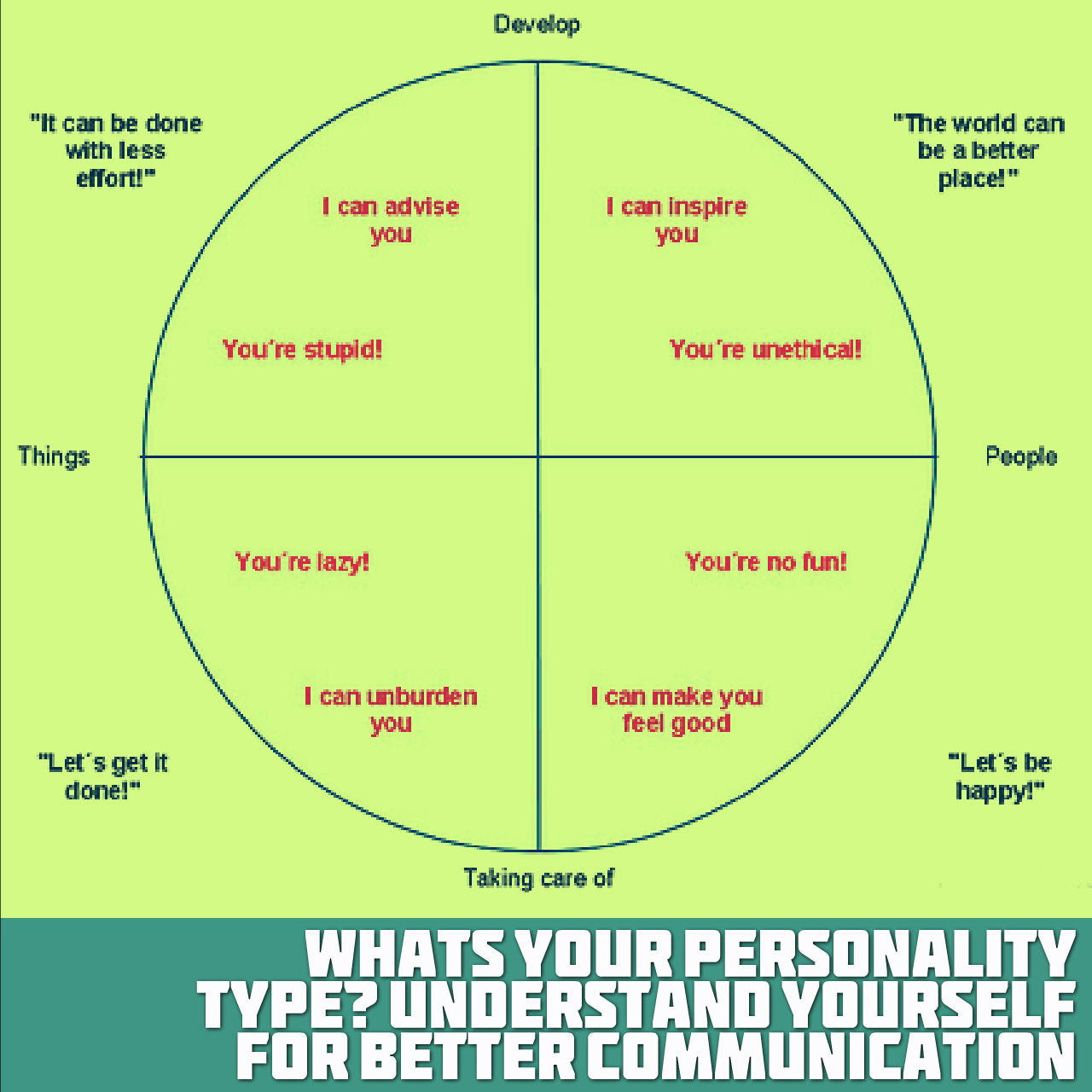
    The basic ingredients of a personality can be put together to create a full representation of an individual.

    How your communication is received is just as important as what you are saying. Understanding your personality will assist you in communicating better.

    We all have the capacity to build our interpersonal communication skills. A great mirror for the self is to understand your own personality type, and how you come off to others. Only then can you learn how to interact most effectively with the other personality types.

    Why understand your personality type?

    Personality type has been studied for thousands of years. Roots of Western personality development begin with Hippocrates (ca. 460 BC – ca. 370 BC) who divided individuals into four groups based on fluid volumes in the body:

    • Phlegmatic
    • Melancholic
    • Sanguine
    • Choleric

    Understanding your personality type will assist you in understanding your motivations, and why others are not always on the same page. The insight into why others act the way they do gives you an edge in all situations.

    Personality dimensions

    Personality Dimensions is the best personality assessment to begin with, as it divides all people into four different colours:

    • Inquiring Green
    • Organized Gold
    • Authentic Blue
    • Resourceful Orange

    We are all a blend of the four colours; however, we all have a preference that dictates our communication style. These four designations relate to the four used by Hippocrates, but with a modern perspective. Personality Dimensions is completed with an assessment using cards and questionnaire.

    Myers-Briggs Type Indicator (MBTI)

    The Myers-Briggs Type Indicator (MBTI) divides the population into sixteen different personality types. These sixteen personality types further expand the four personality dimensions groups into four groups of four, though with different verbiage.


    If you want to get more from your life, and are looking for concrete action steps to get you there, check out our
    Request a Coach page. It’s a “cut the fence-sitting and take action” way to tackle your issues and actually find success.
    To get off the fence and start to take action,
    click or tap here.


    The indicators used to define type are:

    • Introversion vs. Extraversion
    • Intuition vs. Sensing
    • Thinking vs. Feeling
    • Perceiving vs. Judging

    A fundamental understanding of personality types is beneficial when understanding the MBTI results. A previous assessment in Personality Dimensions is useful if you do not have education in fundamental psychology principles.

    Enneagram

    The Enneagram is built from another ancient symbolic system. The Enneagram has nine personality types that do not map to Personality Dimensions or MBTI as easily as those two work with each other.

    The nine personalities found in the Enneagram are:

    • The Reformer
    • The Helper
    • The Achiever
    • The Individualist
    • The Investigator
    • The Loyalist
    • The Enthusiast
    • The Challenger
    • The Peacemaker.

    These nine represent the strengths and challenges of the assessed. For example, The Investigator may be great at solving issues in the office. The downside for this type is that they are always uncovering problems that need to be solved. If The Investigator can not learn to hold back their opinions some of the time, they distance themselves from others.

    Once you have a framework

    Use the understanding of personality to assess the individuals around you. You will make mistakes to learn from. Look at members of your family and match them to personality types. You may find that it was your lack of understanding of others that caused conflict, and that it was your expectations of others that were the issue. Promote better communication strategies for better communication and relationships.

    Understanding yourself is the first step in better communication. Gaining insight into your own intrinsic needs and values, and how the needs and values of others are different, not wrong. Work with a coach trained in personality assessment to help guide you in this process.

    Where personality models actually help (and where they don’t)

    Personality models are best at explaining communication preferences, not competence, values, or intent.
    They tell you how someone is likely to process information, not why they care or whether they are right.


    If you want to get more from your life, and are looking for concrete action steps to get you there, check out our
    Request a Coach page. It’s a “cut the fence-sitting and take action” way to tackle your issues and actually find success.
    To get off the fence and start to take action,
    click or tap here.


    A common failure point is using a label as an explanation.
    “He’s a Thinking type” becomes a reason to tolerate bluntness instead of addressing its impact.

    In practice, the useful move is narrower.
    You notice patterns in how someone asks questions, reacts to detail, or responds under pressure. Then you adjust your delivery.

    A communication coach will often slow this process down.
    Noticing behavior first. Naming preference second. Deciding what to do differently last.

    Translating Personality Dimensions into real communication choices

    The four Personality Dimensions colors show up most clearly in pace, detail, and framing.

    • Inquiring Green wants logic first. Data, reasons, trade-offs.
    • Organized Gold wants structure. Steps, timelines, clear ownership.
    • Authentic Blue wants meaning. How this affects people and relationships.
    • Resourceful Orange wants movement. Options, flexibility, quick wins.

    Picture giving feedback at work.
    A Gold type may shut down if you speak in broad strokes. An Orange type may disengage if you over-specify.

    The adjustment is concrete.
    You change the order of information, not the message itself.

    In coaching sessions, this often turns into practice.
    Same feedback, delivered four ways, until you feel the difference land.

    MBTI preferences in live conversations

    MBTI preferences are easiest to spot mid-conversation, not on a test result.


    If you want to get more from your life, and are looking for concrete action steps to get you there, check out our
    Request a Coach page. It’s a “cut the fence-sitting and take action” way to tackle your issues and actually find success.
    To get off the fence and start to take action,
    click or tap here.


    • Introversion vs Extraversion shows up in thinking time. Some people need silence before they answer.
    • Sensing vs Intuition shows up in focus. Details versus patterns.
    • Thinking vs Feeling shows up in decision language. Logic versus impact.
    • Judging vs Perceiving shows up in closure. Decisions versus options.

    A classic breakdown happens in meetings.
    An intuitive speaker jumps to the future. A sensing listener is still trying to understand the current facts.

    The fix is behavioral.
    You pause and anchor the idea in something concrete before moving on.

    Career and leadership coaches often work on this exact skill.
    Not changing personality. Changing timing and translation.

    When different models describe the same person differently

    It’s common for one model to describe someone as analytical and another to describe them as relational.
    That’s not a contradiction. It’s a difference in lens.

    Personality Dimensions highlights communication style.
    MBTI highlights cognitive preferences.
    The Enneagram highlights motivation under stress.

    So someone might speak logically, prefer structure, and still react emotionally when their core concern is triggered.

    The mistake is trying to reconcile the models into a single identity.
    The useful move is asking which lens explains the current behavior.

    Coaches often help clients stop chasing the “right” type and start using the right tool for the situation in front of them.


    If you want to get more from your life, and are looking for concrete action steps to get you there, check out our
    Request a Coach page. It’s a “cut the fence-sitting and take action” way to tackle your issues and actually find success.
    To get off the fence and start to take action,
    click or tap here.


    Enneagram patterns that drive communication breakdowns

    The Enneagram shows up most clearly when communication goes sideways.

    An Investigator may flood a conversation with problems without noticing the relational cost.
    A Challenger may push for clarity and create fear instead.
    A Peacemaker may agree outwardly and disengage later.

    These are not wording problems.
    They are motivation problems surfacing through communication.

    You can hear it in what gets emphasized, avoided, or repeated.

    Relationship and leadership coaches often work here.
    Spotting triggers. Naming patterns. Practicing new responses before the next blow-up.

    Predictable breakdowns between common type pairings

    Some clashes repeat with boring consistency.

    Thinking-oriented speakers may sound cold to Feeling-oriented listeners.
    Fast-moving Oranges may frustrate methodical Golds.
    Big-picture Intuitives may overwhelm detail-driven Sensors.

    The damage usually comes from misinterpretation.
    One side hears resistance. The other hears recklessness.


    If you want to get more from your life, and are looking for concrete action steps to get you there, check out our
    Request a Coach page. It’s a “cut the fence-sitting and take action” way to tackle your issues and actually find success.
    To get off the fence and start to take action,
    click or tap here.


    The fix is expectation management.
    You stop expecting alignment and start planning translation.

    In mediation-style coaching, this often becomes explicit.
    Who needs what first. Who needs reassurance. Who needs permission to slow down or speed up.

    From awareness to skill

    Knowing a personality framework changes very little on its own.
    Behavior changes outcomes.

    You notice when you interrupt.
    You change how you give feedback.
    You stop assuming silence means agreement.

    That’s where coaching earns its keep.
    Practice, feedback, accountability.

    Insight points you in the right direction.
    Skill is what actually improves communication.


    If you want to get more from your life, and are looking for concrete action steps to get you there, check out our
    Request a Coach page. It’s a “cut the fence-sitting and take action” way to tackle your issues and actually find success.
    To get off the fence and start to take action,
    click or tap here.


    Source link

  • Replacing The Negative With The Positive

    Replacing The Negative With The Positive


    Overcoming challenges

    Have you ever wondered why you cannot get past life’s barriers that hold you back? Take a look at your belief systems. This does not have anything to do with religion. The belief systems I am talking about is the daily rituals and habits that rule your life. This comes from our map of our world. In other words, how we view…

    Need some in depth help with goal settings, motivation or productivity ? Drop on by our directories choc full of productivity coaches, accountability coaches, and goal-setting coaches, and start reaching those goals! Or click here to have us match you to the best.

    • What we can accomplish
    • What we deserve  
    • The way we live our lives

    If we struggle, we have to think about what we are focusing on. For example: there are two different people, one person loses his job.

    1. He looks at it as one door closes so a better one can open. He is positive and looks at it as a positive situation. He focuses on positive solutions and proceeds to act accordingly.. Because of this he finds a better job that pays more. Why? Because he gets what he focuses on.
    2. On the other hand, another person loses a job and feels and acts like a victim. He feels like the world is against him and proceeds to act accordly. He goes into depression, feels sorry for himself and gives up even looking for a job, and spirals down.

    What do you think his outcome is? What we focus on is what we get.

    Changing your mindset

    You may ask well, how can I change what I focus on. It is simple.

    • Try this, when you start to feel down, think about something you have been able to accomplish that filled your heart with joy. Feel that feeling all over. Be aware of the smile on your face.
    • Put a great song with that feeling, see a color that makes you feel empowered. Now anchor that feeling with a physical gesture, such as putting your pointing finger and thumb together.
    • When you feel down. Just take a few minutes and do what I have taught you. Notice the difference in your attitude, physical stance, facial features, mood and feelings.

    Yes it is just that simple, and it is effective. Just the way we aquire other habits, from continued doing, doing, doing. We can change our lives with this simple, effective and lasting habit.

    Training our brains

    I read an article that was very profound. Some scientist followed around s 3 year old children. They heard negative comments and positive comments. The negative comments were 432 comments the positive were 32. Later in life the children were on their way to college. They were asked to list their strengths and weaknesses. Alarmingly enough they pointed out many more weaknesses and character flaws than strengths.

    What does this say? In essense we become what we hear, it becomes our map of our world. How do we change this? The exercise I have taught you is the first step. It helps you to reframe your thinking process.


    If you want to get more from your life, and are looking for concrete action steps to get you there, check out our
    Request a Coach page. It’s a “cut the fence-sitting and take action” way to tackle your issues and actually find success.
    To get off the fence and start to take action,
    click or tap here.


    Just as negative habits can be made by negative enviornments, we can also turn that around to do just the opposite. We can train our brains to adapt positive habits and positive rituals. This will have a profound positive change in your life.

    Motivating yourself to change

    What does this require? Motivation for change. Self-discipline, and a burning desire for a better life. No one can do it for you. When I work with my clients, I do an free initial consultation. I do that for a few reasons. Number one ultimately is to see if they are committed to change. The second is to see if they will do what it takes, and the third is to set the path for them to be able to move forward. I tell my client’s I am the road map you are the driver. Are you willing to get behind the wheel of life and change to move forward?

    I specialize in working with divorced women. We deal with so many emotions all sometimes at the same time, such as:

    • Confusion
    • Fear
    • Anger
    • Frustration
    • Anxiety
    • Overwhelmed
    • Lonliness
    • Guilt

    If we have children, we end up having more emotions to deal with because you have to think about your children’s emotions as well.

    How wonderful would it be to have this emotional tool not only for ourselves, but also to be able to teach our children. If it is a young child make a game of it. It works, it works, it works.

    • We as women tend to be so engrossed with helping everyone else.
    • We tend to lose our denity.
    • When a divorce comes we may feel lose, lose of our husbands, but also loss of ourselves.
    • We have become everyting for everyone else.
    • We grieve for not only the loss of our significant other but also the loss of ourselves.

    Picking up the peaces can be overwhelming. It does not get any better for a women that is mature. Our entire lives have been structured around family lives. Now the door is closed to not only our careers but also to the structure we had in place.

    Building our lives again can be a daunting process. But as I pointed out earlier, it is how we look at it. Getting past emotional barreirs is the first order of business. I teach you how to take control of your emotions again so you can help yourself heal, feel whole again and start to live a fullfilled life. We again attract what we think and put out there. So be aware of what you are thinking and feeling. We govern our lives by what we feel, not only what we think. 

    Feel free to contact me if you have any questions. 


    If you want to get more from your life, and are looking for concrete action steps to get you there, check out our
    Request a Coach page. It’s a “cut the fence-sitting and take action” way to tackle your issues and actually find success.
    To get off the fence and start to take action,
    click or tap here.


    Stacey Giovanni Cox CHt, CC, NLPCht


    If you want to get more from your life, and are looking for concrete action steps to get you there, check out our
    Request a Coach page. It’s a “cut the fence-sitting and take action” way to tackle your issues and actually find success.
    To get off the fence and start to take action,
    click or tap here.


    Source link

  • Focus on the Goal, Not the Problem

    Focus on the Goal, Not the Problem


    Focus on the goal ahead of you

    Want to try this at home? No worries! Download a copy of our SMART Goals PDF Worksheet.

    Need some in depth help with goal settings, motivation or productivity ? Drop on by our directories choc full of productivity coaches, accountability coaches, and goal-setting coaches, and start reaching those goals! Or click here to have us match you to the best.

    What are you focusing on?

    When I first meet with clients, they tend to want to focus on their current state (or the organization’s) and specific challenges. They want to vent. Sometimes venting helps them decompress, but too much venting can result in defeatism and paradigm paralysis. They visualize former failures and predict future ones. They get caught in what Daniel Kahnema calls System 1 thinking: fast, instinctive, and emotional.

    Need some in depth help with goal settings, motivation or productivity ? Drop on by our directories choc full of productivity coaches, accountability coaches, and goal-setting coaches, and start reaching those goals! Or click here to have us match you to the best.

    My first goal as a coach is to establish the client’s goal. Seeking a goal creates an active mindset and an optimistic vision for the future. It produces System 2 thinking: slower, more deliberate, and logical.

    Questions to Ask when Goal Seeking

    • What is the ideal future state?
    • What would you like more of and less of?
    • What do you want to accomplish?
    • What does winning look like to you?
    • What provides you meaning?
    • What provides you happiness?

    Naturally, clients don’t always jump into a super-positive state and stay there. They can slip back into old ruts. They may ask, “Why do I keep getting into these situations?” When they do, I encourage them to reframe the question and ask instead, “How might I accomplish X goal?”

    Shifting the question dramatically shifts the answer. It puts the focus on the goal, not the problem.


    If you want to get more from your life, and are looking for concrete action steps to get you there, check out our
    Request a Coach page. It’s a “cut the fence-sitting and take action” way to tackle your issues and actually find success.
    To get off the fence and start to take action,
    click or tap here.


    The New Year as a Natural Reset Point

    The transition into a new year gives clients a psychological “fresh start effect.” Research shows that temporal milestones—birthdays, Mondays, new months, and especially New Year’s—create a sense of separation between the “old self” and a “clean slate” version of the future self. This is why January feels like such a strong moment for change. People believe they can leave old patterns behind and step into a more intentional identity.

    As a coach, I help clients harness this reset without relying on the quick rush of New Year motivation. Instead of saying, “This year will be different,” we translate that energy into clarity: “What do you want this year to stand for?” The New Year becomes a doorway, not a deadline—an entry point into more grounded, sustainable goal-focused thinking.

    Reframing the Year Ahead Through a Goal-Focused Lens

    A goal-focused New Year isn’t about reinventing yourself; it’s about intentionally choosing what you want to move toward. When clients feel discouraged by past setbacks, I invite them to look at the coming year not as a test, but as a canvas. The question is no longer, “What went wrong last year?” but, “What do I want to create this year?”

    This reframe encourages clients to:

    • Notice strengths they want to build on
    • Identify the environments, people, and habits that support their goals
    • Let go of past narratives that no longer match the future they’re working toward

    The more they practice this mindset, the more the year ahead becomes a landscape of possibilities rather than a list of pressures. They start approaching challenges with curiosity instead of frustration, and their goals become guiding stars rather than obligations.

    Want to try this at home? No worries! Download a copy of our SMART Goals PDF Worksheet.

    Need some in depth help with goal settings, motivation or productivity ? Drop on by our directories choc full of productivity coaches, accountability coaches, and goal-setting coaches, and start reaching those goals! Or click here to have us match you to the best.


    If you want to get more from your life, and are looking for concrete action steps to get you there, check out our
    Request a Coach page. It’s a “cut the fence-sitting and take action” way to tackle your issues and actually find success.
    To get off the fence and start to take action,
    click or tap here.


    Source link

  • 10 Low-Stress Jobs That Pay Well Without Burnout

    10 Low-Stress Jobs That Pay Well Without Burnout


    We will receive a commission if you make a purchase through our affiliate link at no extra cost to you. Please read our disclosure policy for more information.

    We often think that a high-stress job equals better pay and job satisfaction. However, that’s rarely true, at least not for everyone. People generally have different stress tolerance, but that doesn’t mean that someone who prefers a low-stress job can’t be successful. There are several high-paying low-stress jobs that won’t make you anxious, and are extremely fulfilling and rewarding!

    The trick lies in doing something you enjoy, so the work doesn’t feel like work. If you are doing something you love, you won’t just be successful and make more money, but also have a better work-life balance.

    Whether you are an extrovert or an introvert, there is something for everyone with or without a degree. Here are the best low-stress careers that fit different lifestyles and personal goals.


    PIN THIS: I’ll be updating this post so make sure to pin this image here and save it to your Pinterest board. That way you’ll be able to come back to this page and learn about the best low-stress jobs that pay well.


    low stress jobslow stress jobs


    1. Massage Therapist

    Are you someone with magic hands who is the unofficial masseuse of your friend group? Then, being a massage therapist might be the perfect opportunity for you to help other people through their stress and anxiety. It is one of the best no-degree jobs with low stress and an average salary of $71,679 per year.

    While you don’t need a degree to become a massage therapist, you’ll have to complete an accredited massage therapy program and pass the Massage and Bodywork Licensing Examination (MBLEx). The entire process takes a year to get certified, and less time if you can spare multiple hours daily.

    Once you are a certified massage therapist, you have the freedom to work part-time or full-time. Additionally, you get tips on top of your hourly fee, making it one of the best opportunities for people who enjoy physical, hands-on work!


    2. Electrician

    Being skilled at household maintenance not only saves money but also pays well. It is hands-on work where you won’t have to deal with meetings or sit at a desk all day long. Being an electrician can be a fun job where you help people with maintenance or lay the electrical work for new construction.

    To become an electrician, you will need a high school diploma or GED. Some may even attend trade school, but that is not mandatory. Instead, you will need to complete an apprenticeship program, which will help you learn the necessary skills.

    Handymen like electricians can easily make up to $40 per hour, depending on where you live and how good you are at your job! This pay also varies if you are working independently or with a contractor.


    3. IT Analyst

    The Russian writer Leo Tolstoy once said, “True life is lived when tiny changes occur.” This quote also fits professionally, as sometimes change is the only way to grow. For example, there is more than one way to utilize your years of experience working in the IT sector. Instead of working at a stressful job like a software engineer, you can switch careers and work as an IT analyst.

    This works well for someone with a tech background and who likes having a daily routine. Even if you don’t have prior experience, you can still become an IT analyst by completing a bachelor’s degree in computer science or information technology.

    An IT analyst focuses on problem-solving, system maintenance, and improving tech processes instead of sitting on a computer and coding all day. Moreover, you mostly work behind the scenes and won’t have to deal with client pressure or chaos directly. So, if you want low-stress jobs that pay well (approx. $85,868 per year), you might want to consider becoming an IT analyst.


    4. Blogger

    Some of the best relaxing jobs that make money include creative jobs like blogging. Here, I can say with personal experience that becoming a blogger is one of the best decisions of my life. I love every minute of what I do and have never been as fulfilled. It is a highly flexible job that lets me work according to my own timeline and from the comfort of my home. So, I wouldn’t be wrong when I say that blogging is a great way to follow your passion for writing and build your brand while getting paid for it!

    Statistics will tell you that you can make approximately $23 per hour as a blogger. However, this number does not account for different means of getting paid as a blogger. For example, Finsavyy Panda helps me get paid through affiliate marketing, sponsorships, and advertisements. Granted, these methods take time and effort to build, but you will transition from $0 to 6 figures within a year or two if you keep trusting the process.


    5. Dental Hygienist

    A dental hygienist is different from a dentist in many ways. Dental hygienists are not doctors and do not operate on patients. Instead, they clean patients’ teeth, educate them on proper tooth care, and take diagnostic images when needed.

    Moreover, you do not necessarily need to work 8 hours a day for 5 days a week to make good money. You can make up to $143,803 yearly by working just 3 to 4 days a week, depending on where you live. That’s because places like San Diego and Lexington have higher hourly wages relative to others like Chicago or New York.

    The best part about being a dental hygienist is that you won’t have to deal with many surprises. Dental hygienist work is mostly routine, making it a good choice for individuals who want to work in the healthcare industry without its added stress.


    6. Photographer

    Photography, like writing, is an art, and it is well-known that art helps reduce stress and anxiety. Just imagine being able to capture countless beautiful moments. Not only that, but you can choose between working alone, with a friend, or with your significant other. It doesn’t get any more stress-free than this.

    There are many photography niches for you to choose from. Besides the high-paying niches like wedding photography, you can become a product, portrait, or lifestyle photographer, among others. A photographer typically makes $53,626 a year. However, the actual pay varies depending on your preferred niche and where you live.


    7. Virtual Assistant

    Working as a virtual assistant is one of the best low-stress remote jobs, where you help busy professionals and businesses with administrative tasks. You are basically working as an assistant to someone without physically going to the office. It is a work-from-home job that includes handling tasks like email management, scheduling, researching, and data entry.

    You don’t need any certifications or a specific degree to become a virtual assistant. A simple high school diploma or GED, along with a basic resume, will do the job. But that doesn’t mean you won’t be paid fairly. A virtual assistant makes an average of $27.95 per hour, with areas like New York paying up to $31.91 per hour.

    You can further supplement your income by taking two or more clients simultaneously. While it should only take a couple of hours to complete the tasks, you also have the option to take roles tailored to your strengths for better efficiency. For example, if you are a wiz at spreadsheets, data entry tasks will be easier for you.


    8. Commercial Pilot (Charters or Cargo)

    I know you might be thinking, how on Earth are flying jobs low-stress, right? Well, I am not talking about flying passenger flights, which is a challenge in itself. On the other hand, working as a commercial pilot is much less stressful, as you only fly charter and cargo planes and won’t have to interact with passengers as much.

    It should be a simple transition for you if you are already a pilot, as you just need to obtain a commercial pilot license (CPL). However, you will need at least 250 hours of flight time and specific hours as pilot-in-command, in addition to the license, if just starting out. As a commercial pilot, you essentially get paid to travel. Moreover, it is one of the highest-paying jobs on the list, and once you have built up the hours, you can make as much as $200,000 yearly.


    9. Librarian

    When I picture a library, I am immediately reminded of its calm environment and structured routine. As far as low-stress jobs go, nothing beats being a librarian, as your workplace is meant to be quiet and peaceful.

    You are basically making money by reading and recommending books, which you might do anyway if you love reading. Besides that, your job includes simple tasks such as managing archives, holding talks, and overseeing day-to-day operations. A librarian basically works alone, spends their day in a calm environment, and gets paid for it.


    10. Landscaper or Groundskeeper

    No matter how you look at it, spending your days staring at a screen and handling meetings is stressful. Our minds and bodies need fresh air and sunlight to function properly. This is why working as a landscaper or groundskeeper is one of the best low-stress jobs for someone who loves to be outside.

    Not beating around the bush, but as a landscaper, your job includes taking care of the bushes. Besides that, you will maintain lawns, gardens, and outdoor environments for commercial or residential properties.

    It can also be a great summer side hustle, where you take a much-needed break from your regular 9-to-5 job. Experimenting with these seasonal gigs will give you the clarity and experience you might need to make a full-time switch. If that wasn’t enough, listen to this – a groundskeeper can make as much as $70,904 yearly in areas like San Diego and Phoenix.


    Enjoyed this post? Don’t forget to pin the image below! Also, don’t forget to follow me on Pinterest over here! 🙂


    Source link

  • How to Save Money for Your Child’s College Education Without Stress

    How to Save Money for Your Child’s College Education Without Stress


    We will receive a commission if you make a purchase through our affiliate link at no extra cost to you. Please read our disclosure policy for more information.

    Thinking about college costs feels a bit like hiking a mountain in flip-flops — awkward, stressful, and probably not your best idea. The average price tag for a four-year degree in the U.S. is around $38,270. That doesn’t even cover your kid’s overpriced campus coffee runs or their daily expenses! It’s rough no matter how you look at it!

    It’s no surprise that “how to save for college” comes up almost as often as “Did you even sleep last night?” But here’s the silver lining — saving for your child’s education doesn’t mean winning the lottery or skipping every latte forever.

    This guide is packed with realistic college saving tips that even the busiest, most sleep-deprived parents can pull off. I’m talking about things like setting up automatic transfers, making the most of a 529 plan, and turning birthday gift money into future tuition instead of more plastic toys. Start small now, and in the future, you will give yourself a fist bump for it.


    PIN THIS: I’ll be updating this post so make sure to pin this image here and save it to your Pinterest board. That way you’ll be able to come back to this page and learn how to save money for your child’s college education.


    how to save money for child's collegehow to save money for child's college


    1. Open a 529 College Savings Plan

    First and foremost, open a 529 plan for college. Think of a 529 plan as a college piggy bank that grows without the taxman taking a cut. Most states offer their own plans, and some even throw in tax deductions as a bonus.

    Plus, even small payments can lead to big savings in these accounts. Skipping just two takeout dinners a month and putting that $125 into a 529 plan could grow to nearly $28,000 by the time your little one’s ready for college tours.


    2. Set Up Automatic Transfers to a Savings Account

    Setting up automatic transfers after getting your paycheck is like putting your savings on autopilot. By setting aside $40 monthly, the cost of a few coffees, a mom in Florida quietly grew over $8,000 for college without breaking a sweat. Honestly, it’s a simple move that makes saving for your child’s education feel way less like a chore and way more like a smart habit.


    3. Ask Family to Contribute to College Funds Instead of Toys

    Instead of another toy that’ll end up lost under the couch, why not ask the grandparents and relatives to chip in to your child’s college fund? Suggest a contribution to a 529 plan or savings account for birthdays and holidays.

    Like my friend who ditched plastic toys for her nephew Adam and now adds $80 to his college fund every Thanksgiving. It’s a sweet frugal living tip and one that actually grows with your kid, not out of style in six months.


    4. Take Advantage of State Incentives and Grants

    Some states provide free money (yep, actual free money) to help you save for college. Minnesota’s College Savings Plan rewards consistent monthly deposits with bonus contributions and sweepstakes entries. While a few programs, like Kansas’s K.I.D.S Matching grant program, match your contribution up to the first $600.

    These programs vary by state, so it’s worth checking your state’s education savings site. Taking advantage of these incentives is one of the smartest college saving tips most families overlook. No point in leaving free money sitting on the table.


    5. Use a Roth IRA (Strategically)

    A Roth IRA isn’t just for retirement. It can also be used to cover qualified education expenses without penalties. You can take out the money you’ve put in without paying taxes, which helps when those tuition bills start showing up at your door.

    And if college costs don’t eat it up, that money can still be used to pay your mortgage or maybe buy a new Tesla. It’s a flexible way to start investing early and securing your and your child’s future.


    6. Earn Cashback with College-Specific Savings Apps

    Cashback apps like Upromise turn your everyday spending into college savings without any extra effort. Just link your credit card, and a small chunk of your grocery runs or online shopping gets funneled straight into your 529 plan.

    This way, every cereal run turns into a little win for your kid’s college fund. Even your weekly Target runs or late-night Amazon scroll can chip in for your kid’s future behind the scenes.


    7. Sell Unused Items and Put the Money in a College Fund

    Clearing out clutter is one of the best ways to save for college. Selling old toys, clothes, or gadgets online on Facebook Marketplace or at a garage sale turns forgotten stuff into cash.

    A friend of mine sold her kids’ outgrown clothes and games online, earning enough in a weekend to cover a semester’s books. So before you toss that old stuff, sell it and stash the cash for tuition. Bonus points if you win “Most Responsible Parent” at dinner.


    8. Take Advantage of Employer Benefits

    Many employers often sweeten the deal by helping with your kid’s college savings. Big companies offer 529 plan contributions or financial advice to make saving a bit easier for you.

    At Vanderbilt, for example, staff with five years of service get up to 70% off their child’s tuition at Penn or sister schools. Check if your employer offers perks that can quietly grow your child’s college fund while you focus on other things.


    9. Cut One Monthly Expense and Redirect It

    Cutting one monthly expense can make a bigger difference than you might expect. Even skipping a subscription or cancelling an old membership, and putting that money toward an education savings account.

    Swapping that rarely-used $40 gym pass for free YouTube workouts frees up more cash for your kid’s college fund. Cut dining out to once a week, and you’ll stay healthy while your savings quietly grow.


    10. Apply for Scholarships Before College Starts

    Scholarships aren’t just for high school seniors. Many of these actually start early, so get your kids in the game sooner rather than later. One mom I know signed her son up for a youth soccer league, and by middle school, he snagged a local sports scholarship worth $2,500. Early applications mean more chances at free tuition money and fewer student loan headaches later.


    11. Encourage Your Teen to Get a Part-Time Job

    Getting a part-time job in high school isn’t just about the extra few bucks every day. It also helps make them smart and build their resume when applying for college. Some employers even help pay for college.

    Did you know Starbucks covers up to 100% of tuition for employees earning their first bachelor’s degree online through Arizona State University? It’s like free college perks while you sip and serve a latte.


    12. Use Windfalls Wisely

    Windfalls, like tax refunds, bonuses, or even stimulus checks, can slip through your fingers faster than sand at the beach.

    So, that $2000 bonus check? Instead of blowing it on a giant inflatable pool you’ll use twice, slide it into the college fund.

    Plus, putting away just $2000 a year can turn into over $30,000 in 15 years thanks to compound interest. It’s like time and a little math working together in the background while you focus on life’s other chaos.


    13. Buy Used Instead of New and Save the Difference

    Buying secondhand clothes, toys, and baby gear from places like Facebook Marketplace or thrift stores can save you a lot of money. Instead of splurging on brand-new stuff, put that extra cash right into your kid’s college fund.

    Saving $150 on that diaper genie or baby stroller? Toss that $150 into their 529 plan. Plus, secondhand finds mean fewer toys and baby gear ending up in landfills — so your wallet and the planet both win.


    14. Start a Side Hustle with a Dedicated College Fund Goal

    You can stash extra earnings from a side hustle straight into your child’s college fund without touching your main income.

    Maybe you can help with your neighbor’s backyard or sell your grandmother’s special apple pie at the farmer’s market over the weekend. This is probably one of the easiest ways to start a college fund, especially if you enjoy creative gigs.


    15. Teach Kids About Money Early

    Kids who know how money works are less likely to face plant into student debt later on. Start with simple budgeting and saving lessons. Teaching them about compound interest makes saving feel less like a lecture and more like a cheat code for life.

    After all, a teen who gets saving early is more likely to chase scholarships, avoid loans, and save money while still in school.


    Enjoyed this post? Don’t forget to pin the image below! Also, don’t forget to follow me on Pinterest over here! 🙂


    Source link