Is your marriage over? key considerations for a troubled relationship In the realm of marital struggles, a common question that surfaces is: “Is my marriage over?” This query, often posed […]
Practical and inexpensive gift ideas targeted to dads who value function over fuss.
You know that weirdly hard moment when you want to get Dad something thoughtful, but every gift idea feels either too expensive, too random, or destined to sit in a drawer forever?
Maybe he says he does not need anything. Maybe he already buys what he wants. Maybe you are trying to help the kids give him something sweet without turning the whole thing into a giant craft-store production.
So what do you give a dad who values function over fuss?
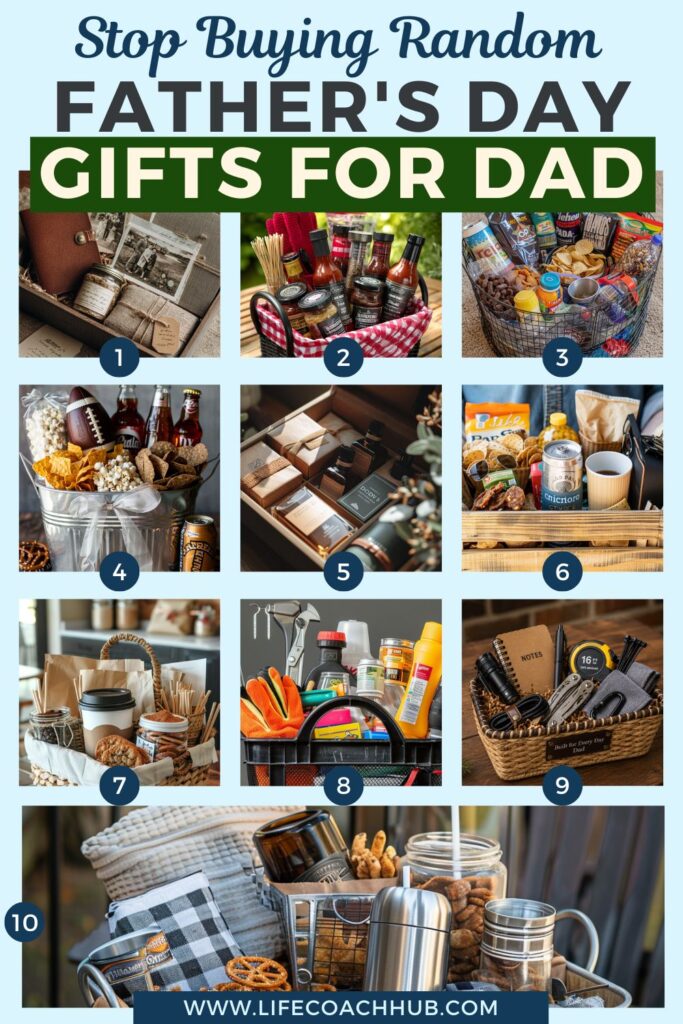
Honestly, something he can actually use. Something that fits into his real life. His car, his coffee, his grill, his garage, his game day, his quiet evening outside. Pick the one that sounds most like your dad, then build from there.
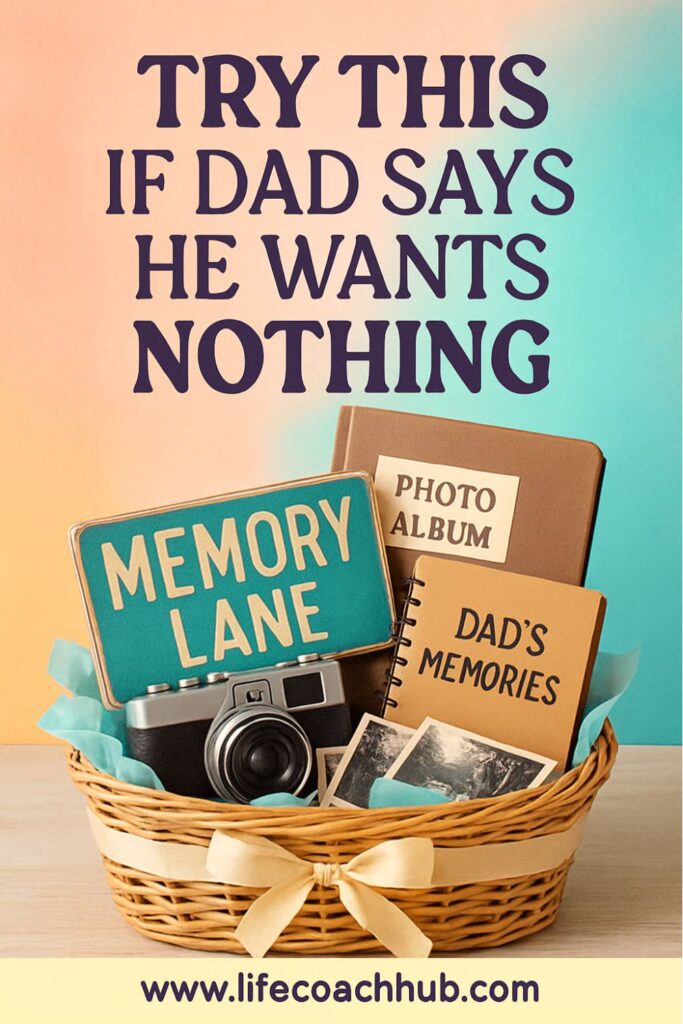
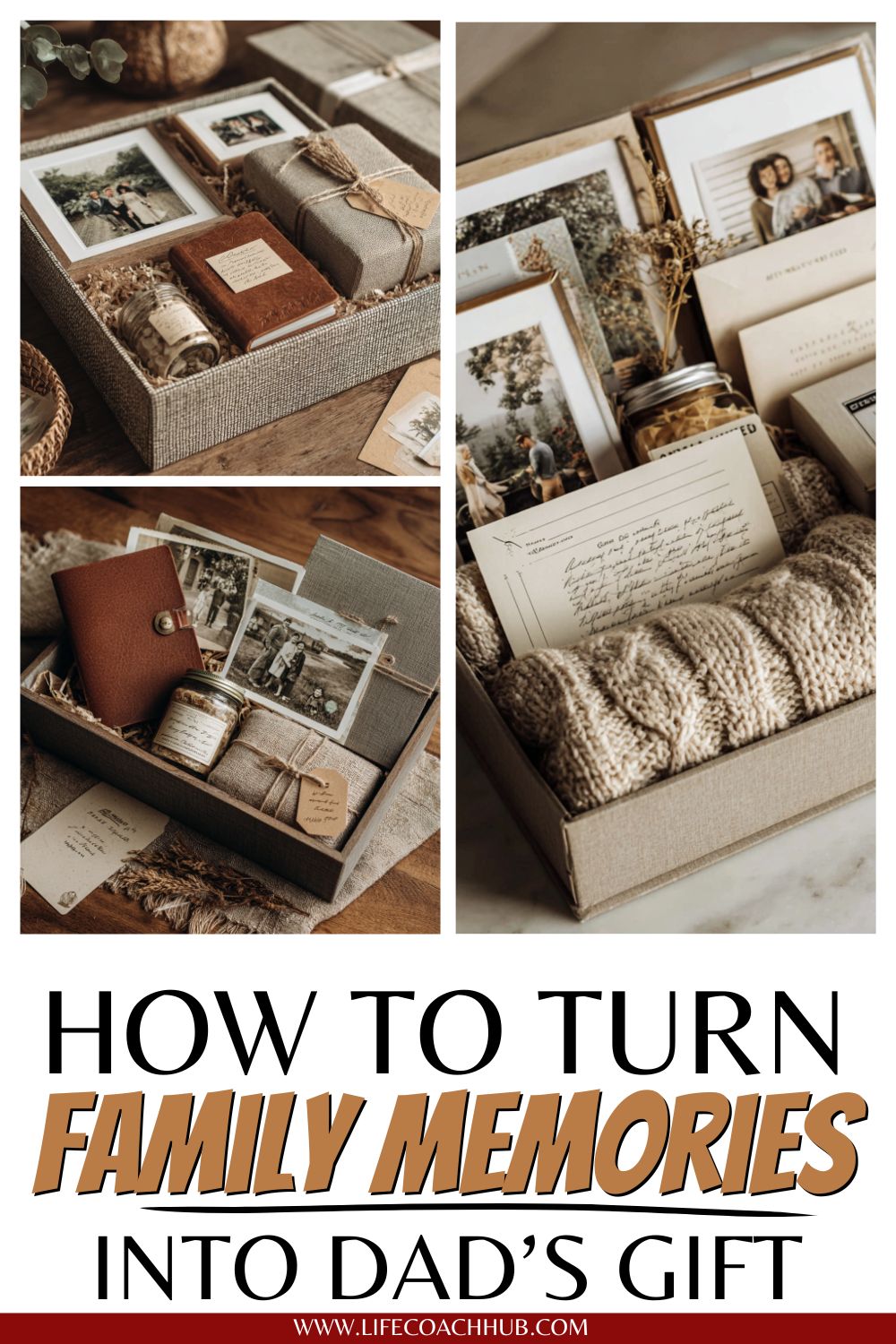
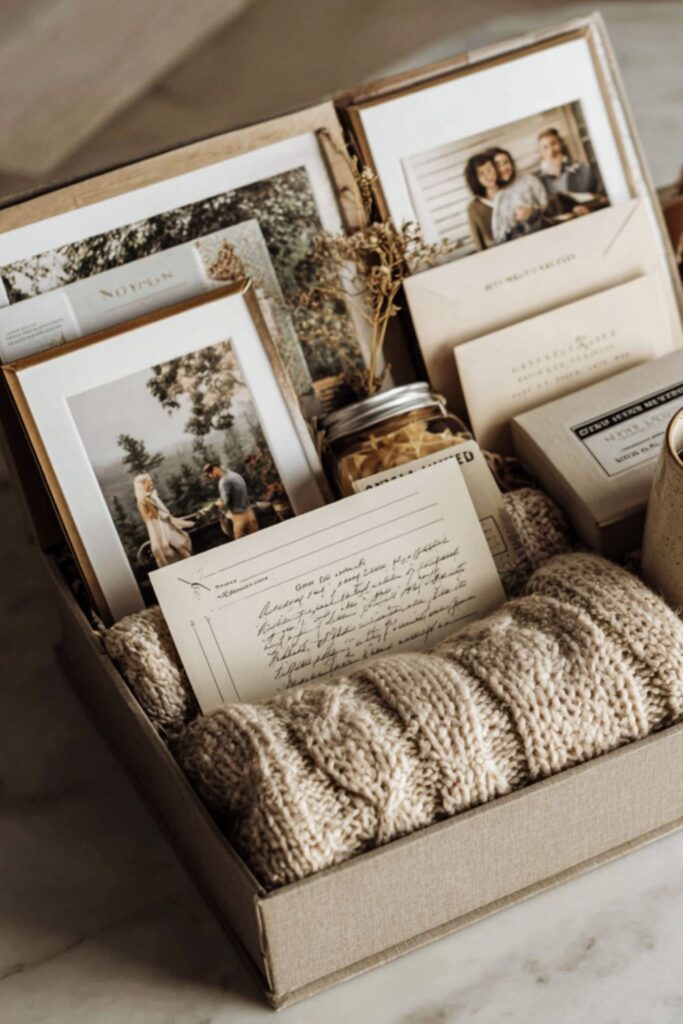
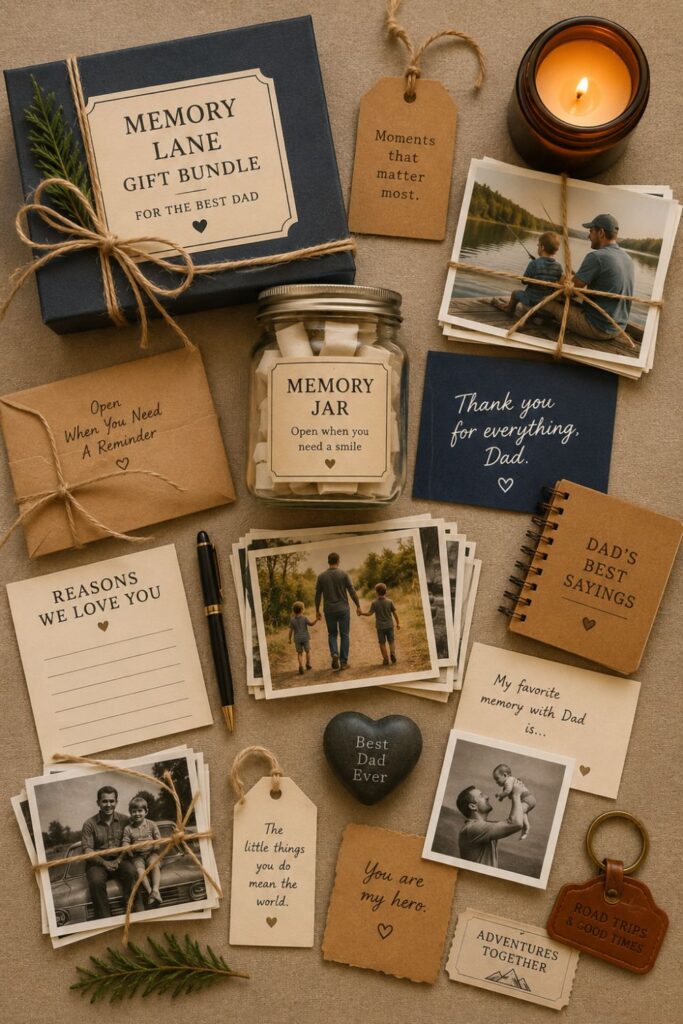
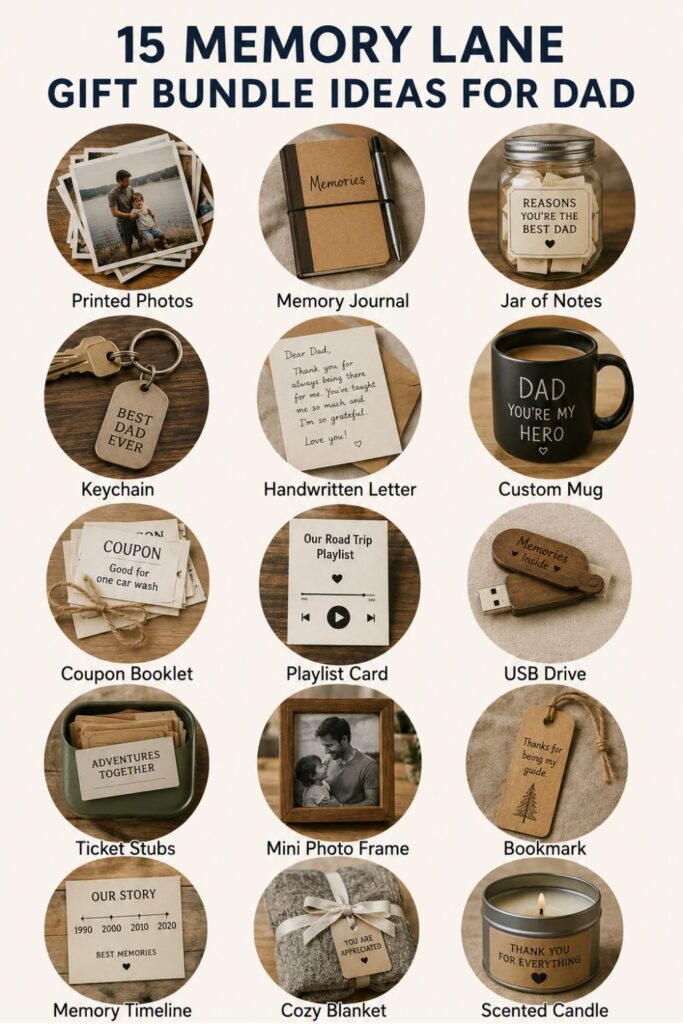
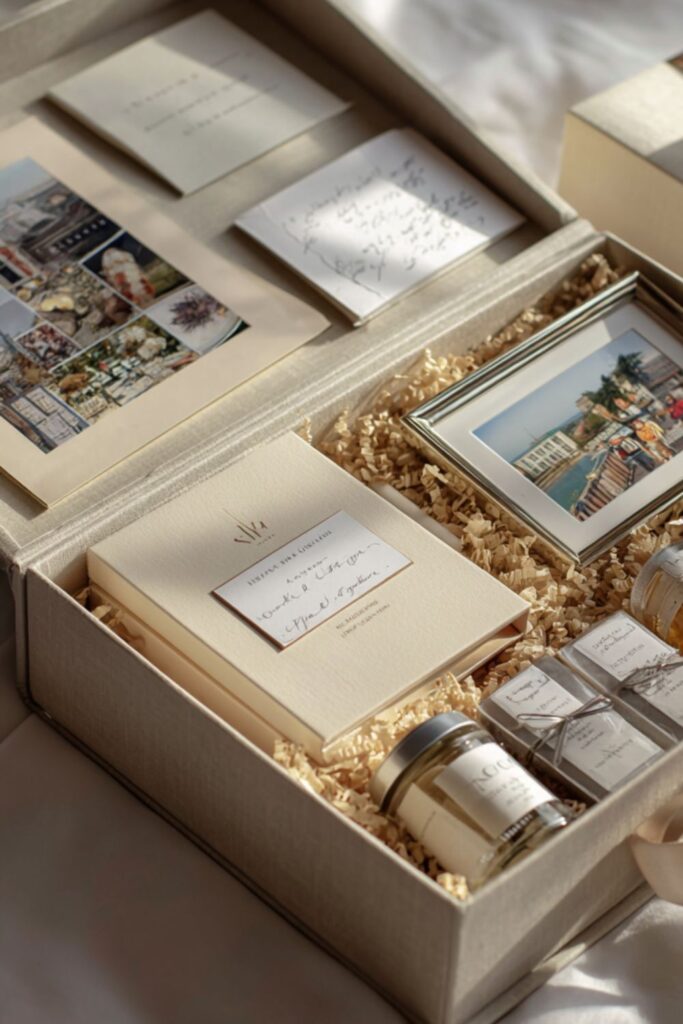
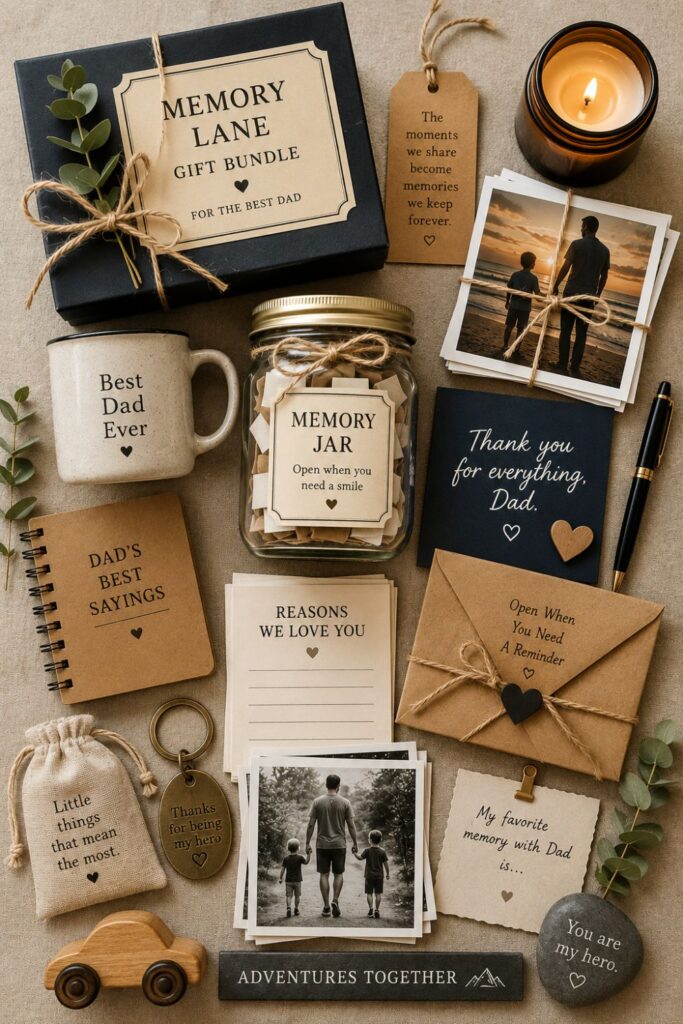
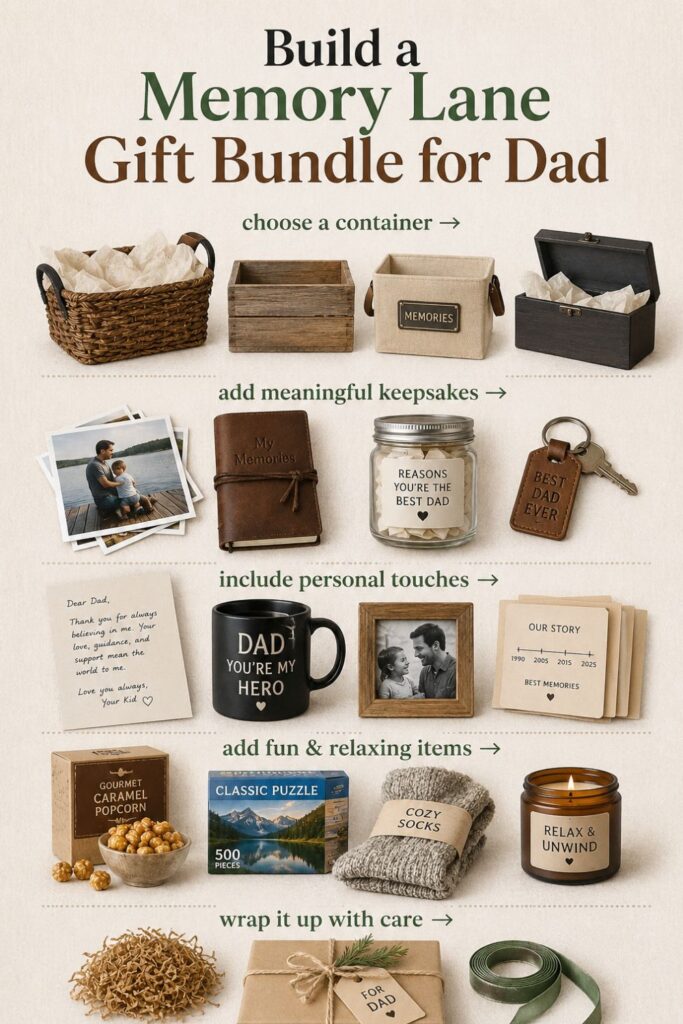
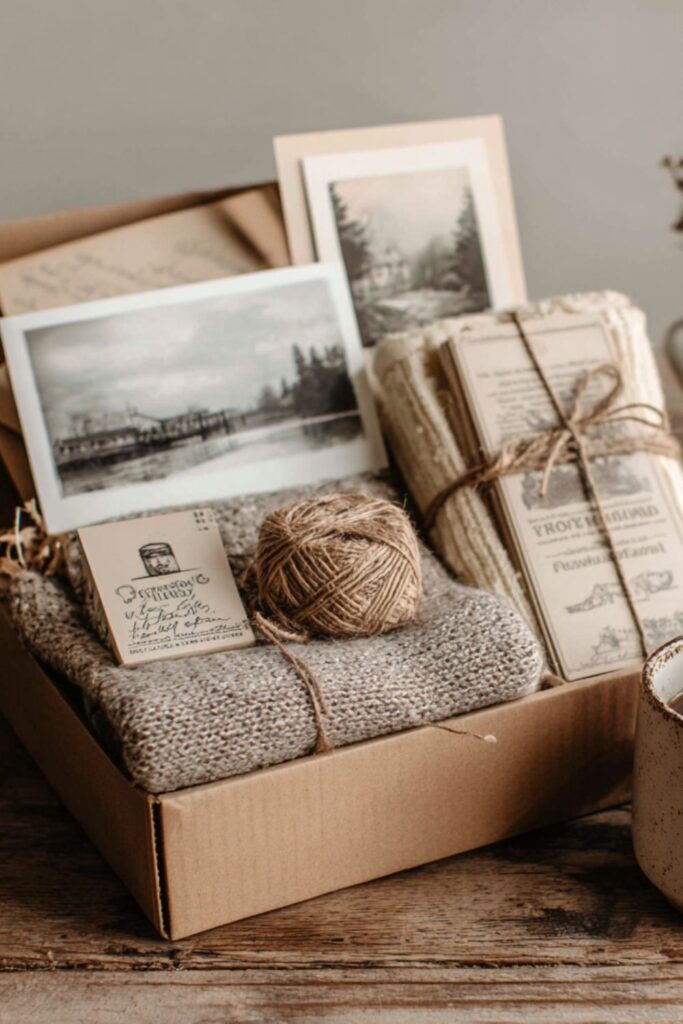
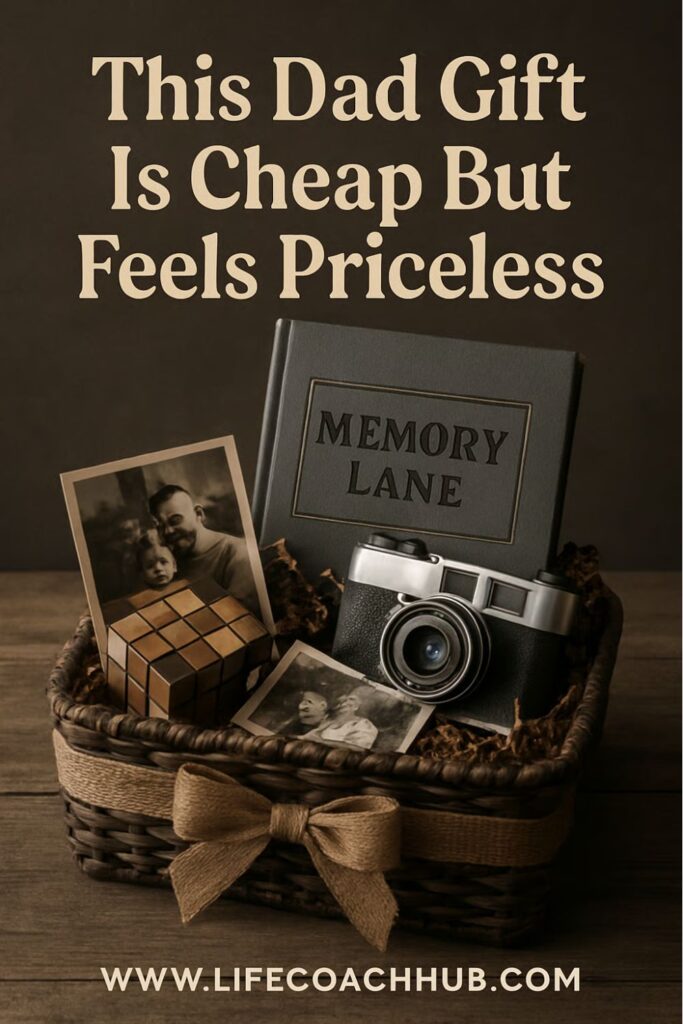
Maybe your dad is the type who saves old cards, brings up family stories at random, or acts casual about sentimental things while secretly loving them. A memory lane gift bundle is for that dad who does not need another gadget, but would absolutely pause over a photo, a note, or a little reminder of a moment everyone still remembers.
Great when you want the gift to feel personal, not pricey.
Perfect for kids, siblings, or the whole family to help with.
Sweet without becoming overly complicated.
The nice thing about this one is that it turns small things into something that feels lasting. A handwritten note, one old photo, or a tiny keepsake can feel more meaningful than a gift card when it is tied to a real memory.
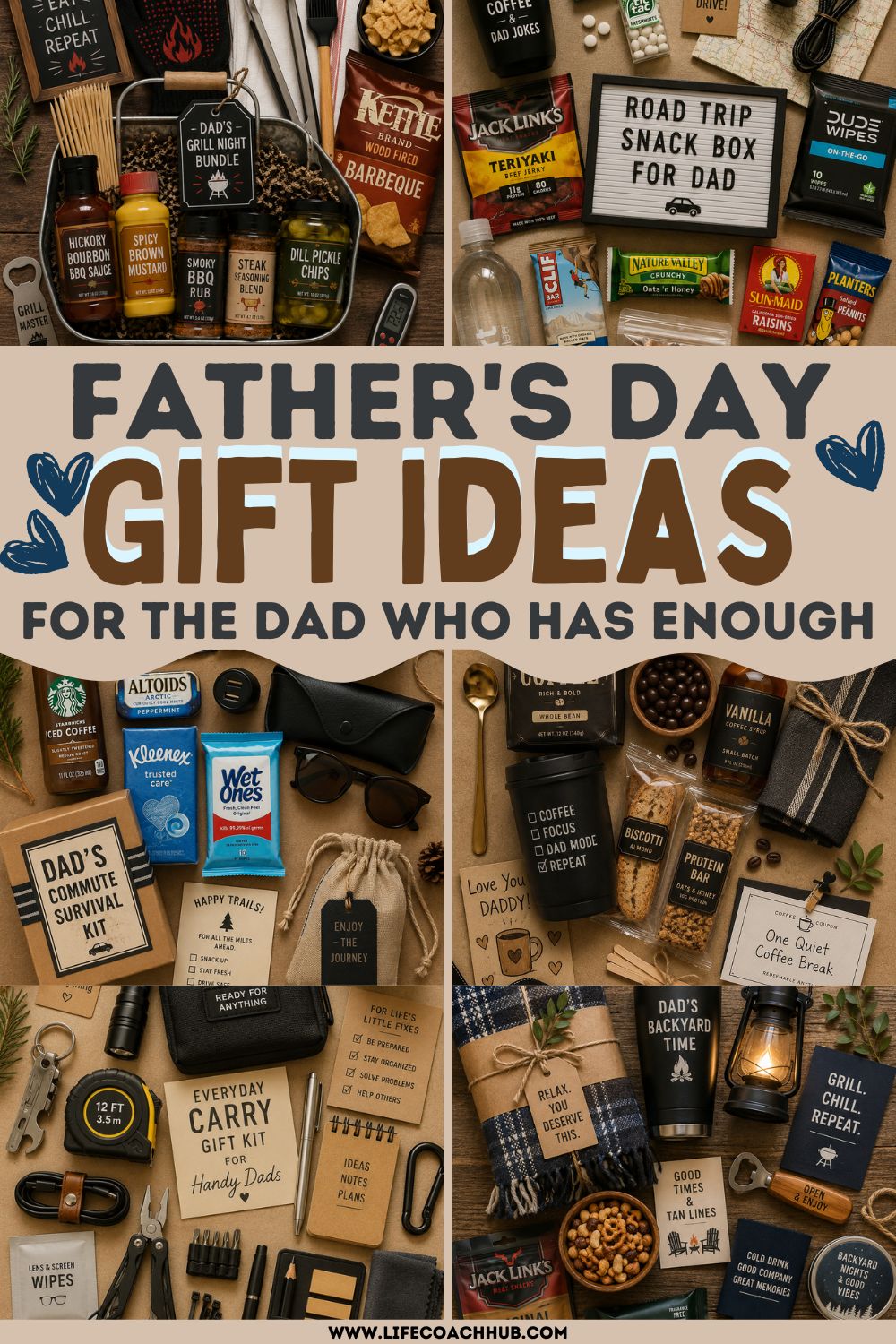
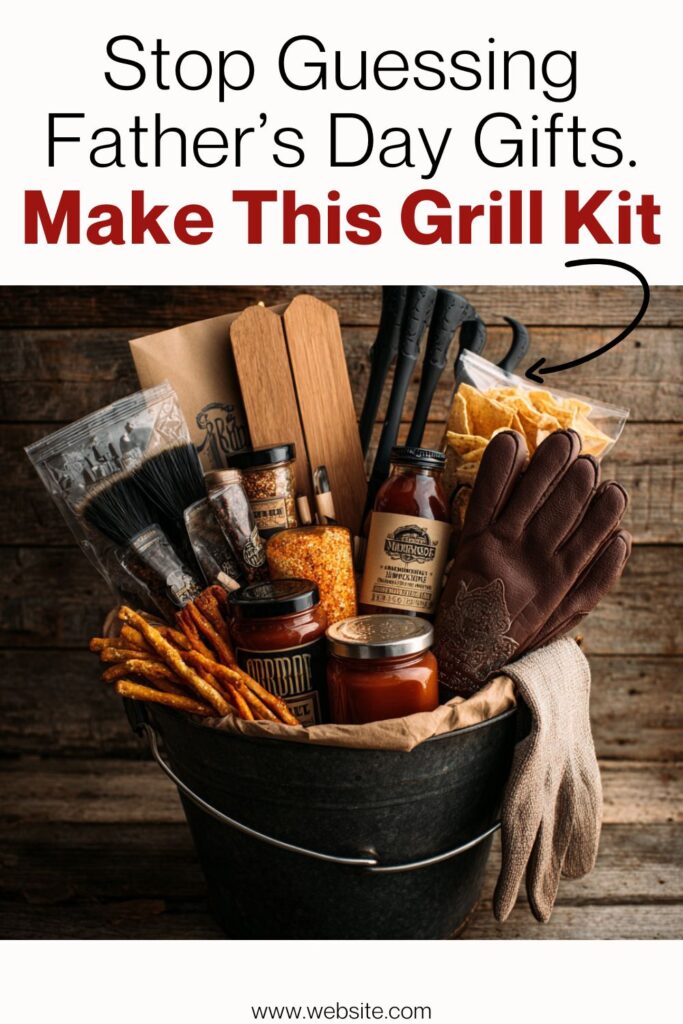
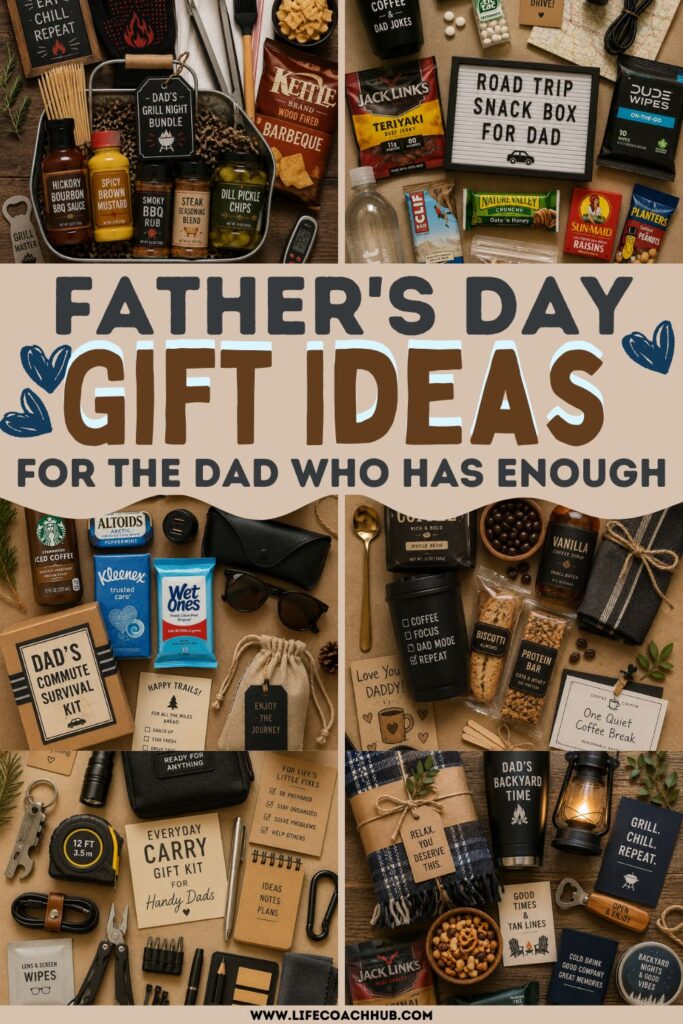
You know the dad who somehow becomes happiest when he is standing near a grill with a drink, a spatula, and a strong opinion about seasoning? This gift is for that exact backyard-dinner energy.
Works for burger dads, steak dads, barbecue dads, and spicy-sauce dads.
Feels useful because it starts with how he already grills.
Easy for kids to help assemble without needing a big craft project.
What makes this gift feel smart is that it avoids the random barbecue basket problem. Instead of grabbing five unrelated grill items, you build around one clear food theme, so the whole thing feels intentional and ready to use.
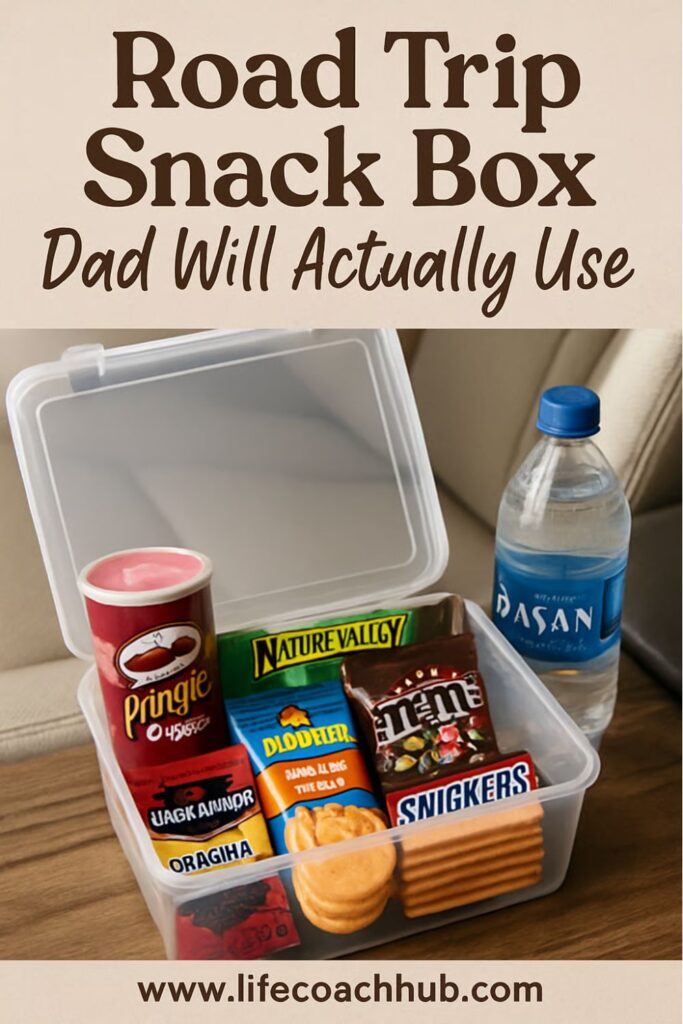
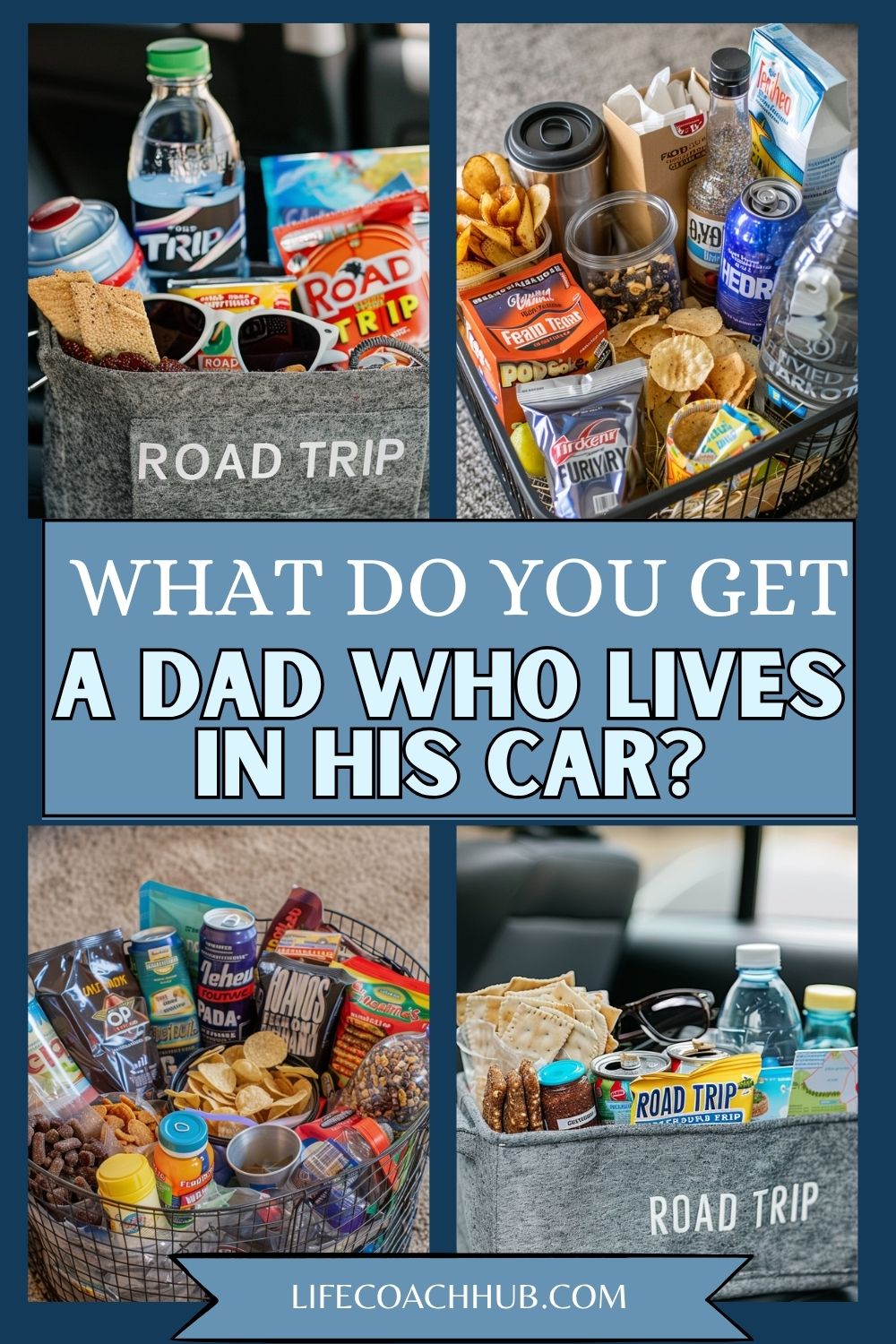
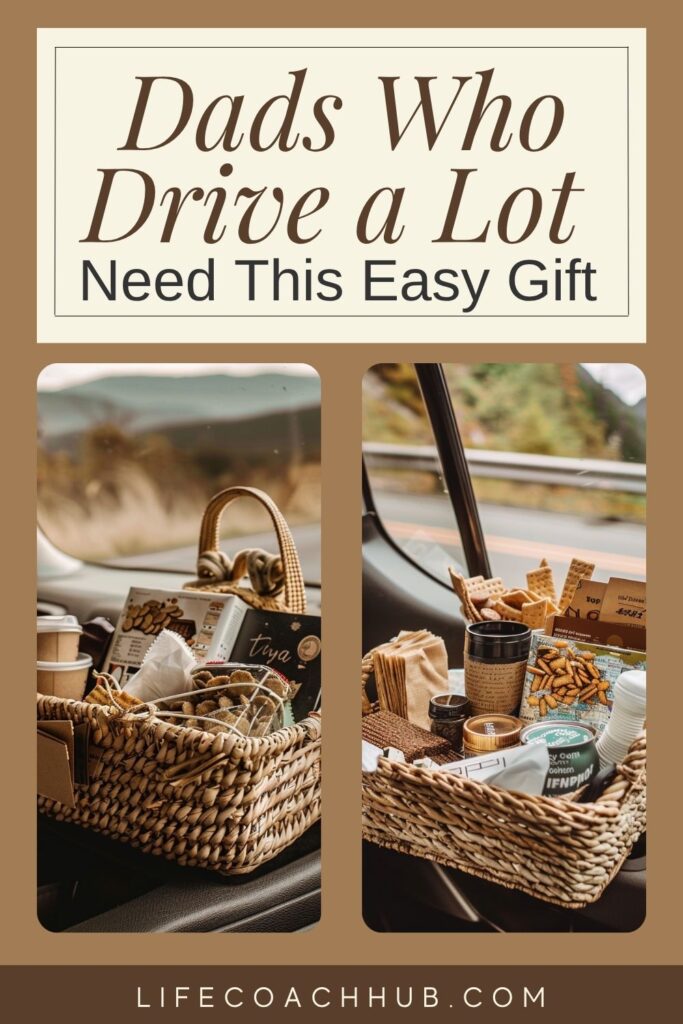
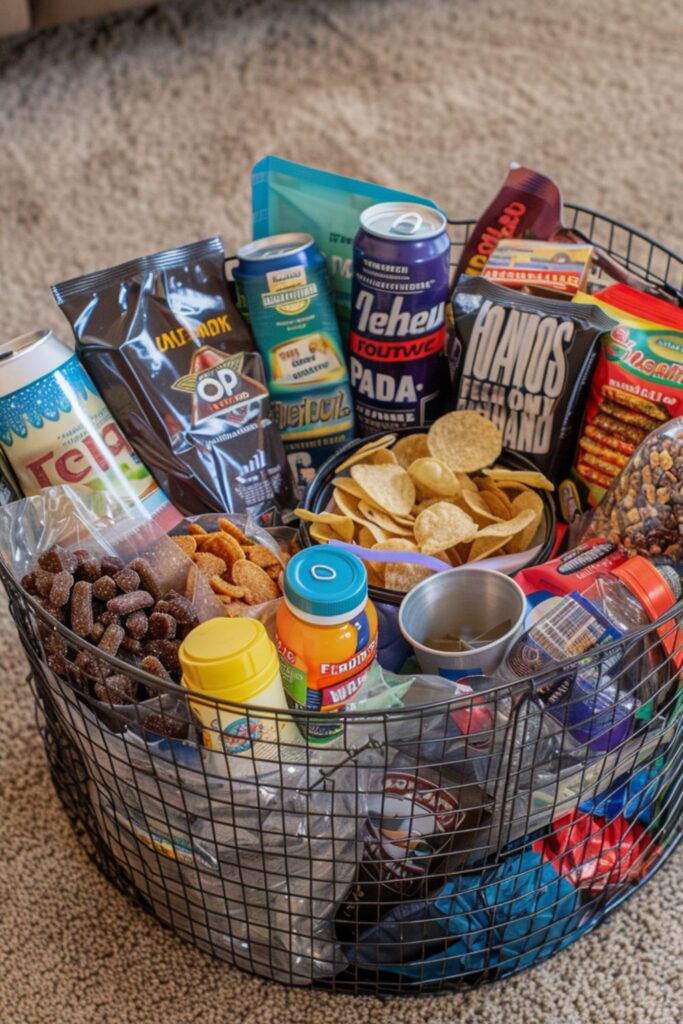
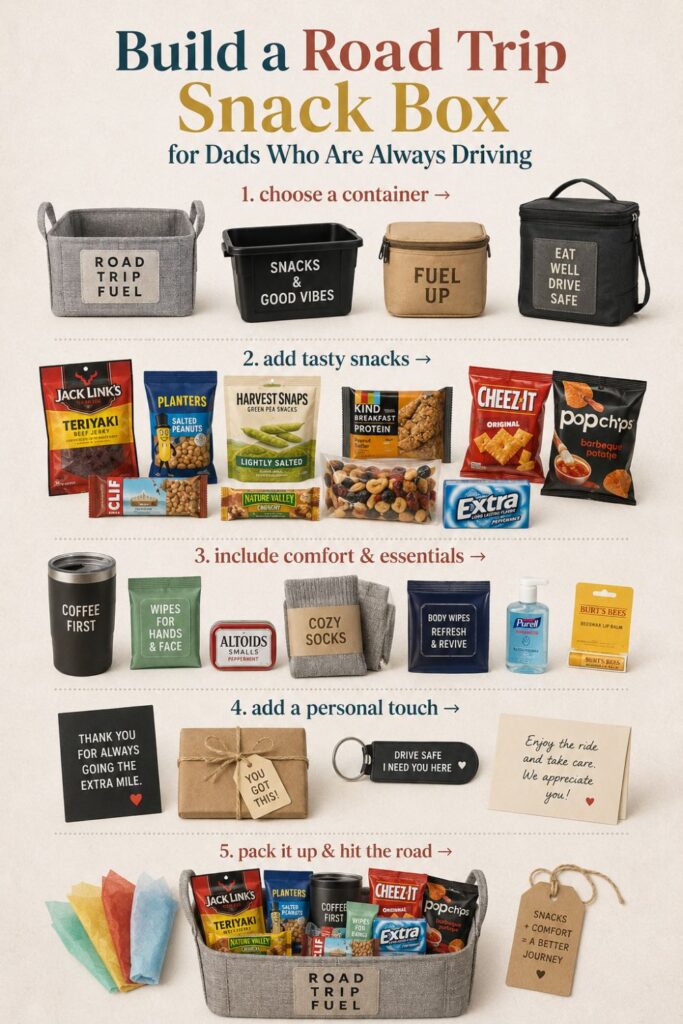
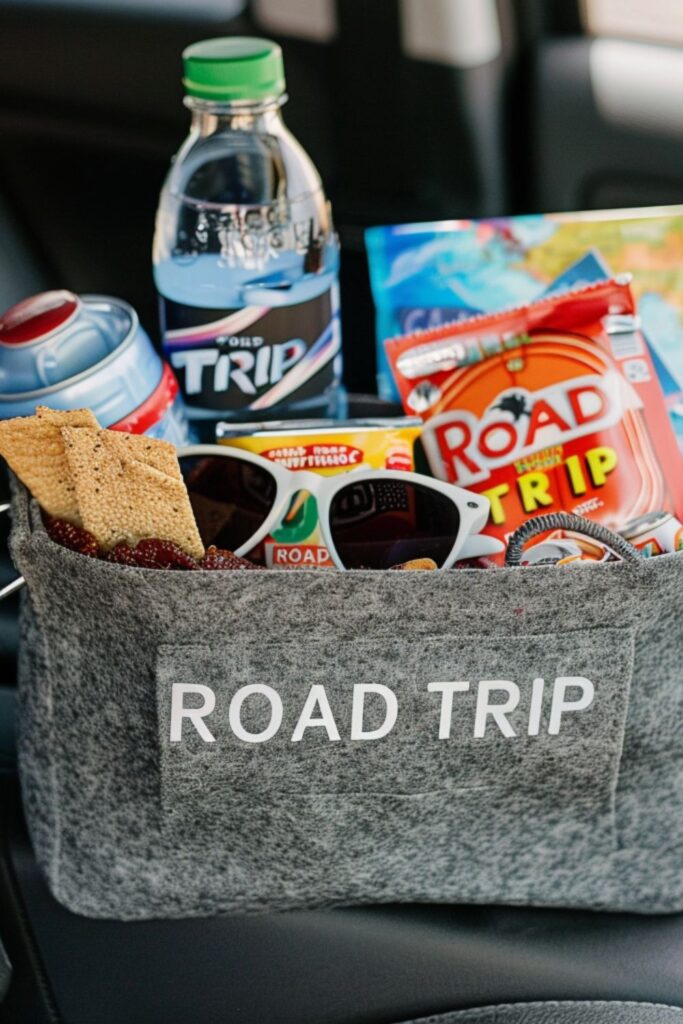
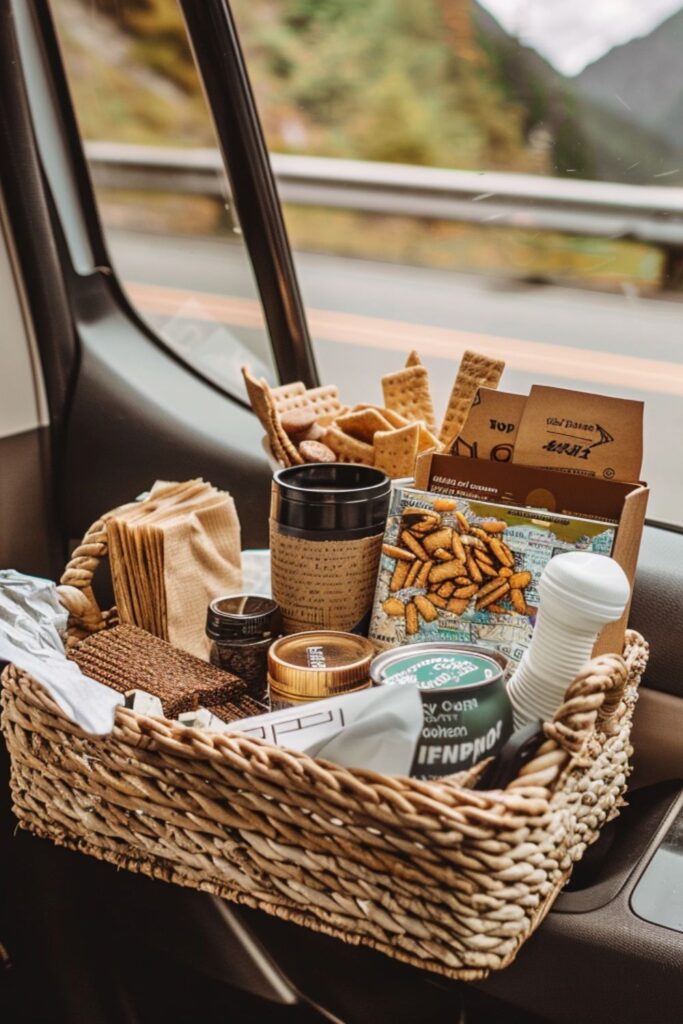
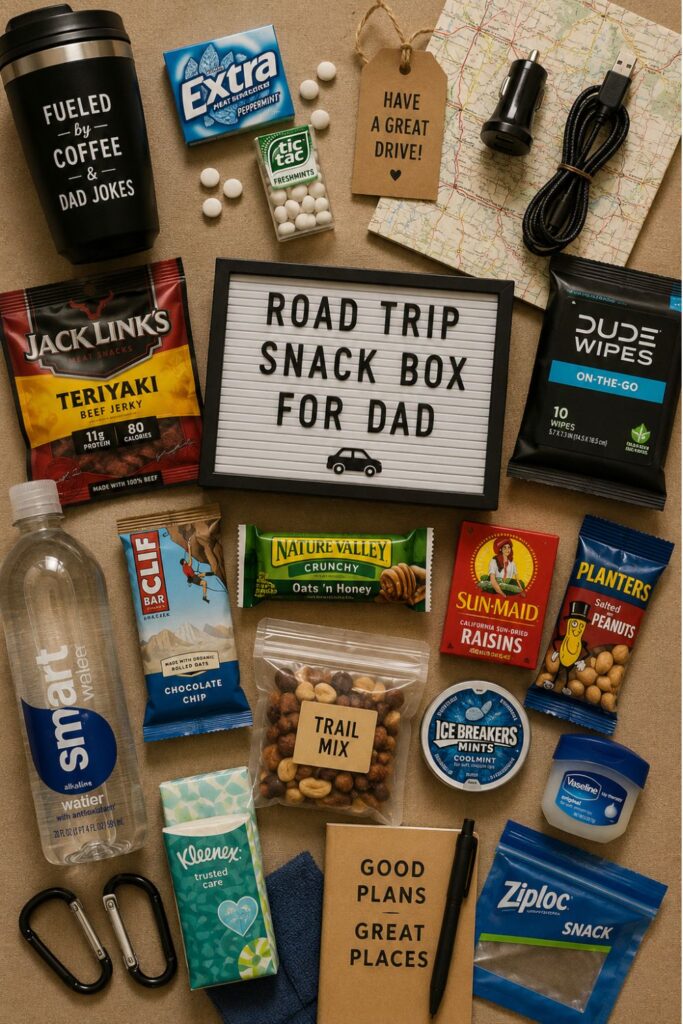
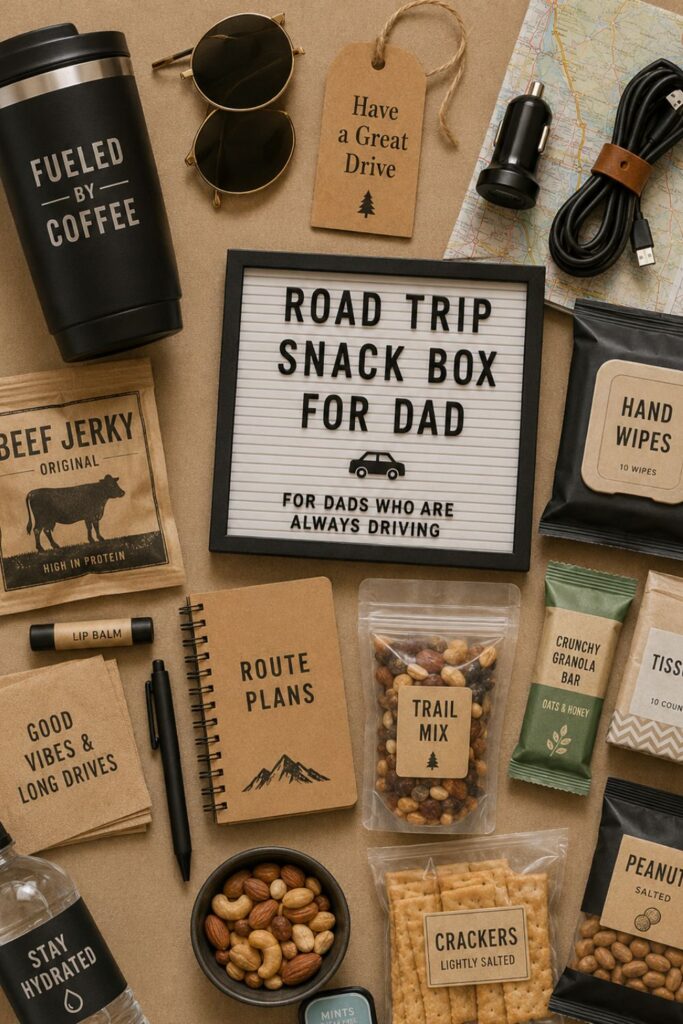
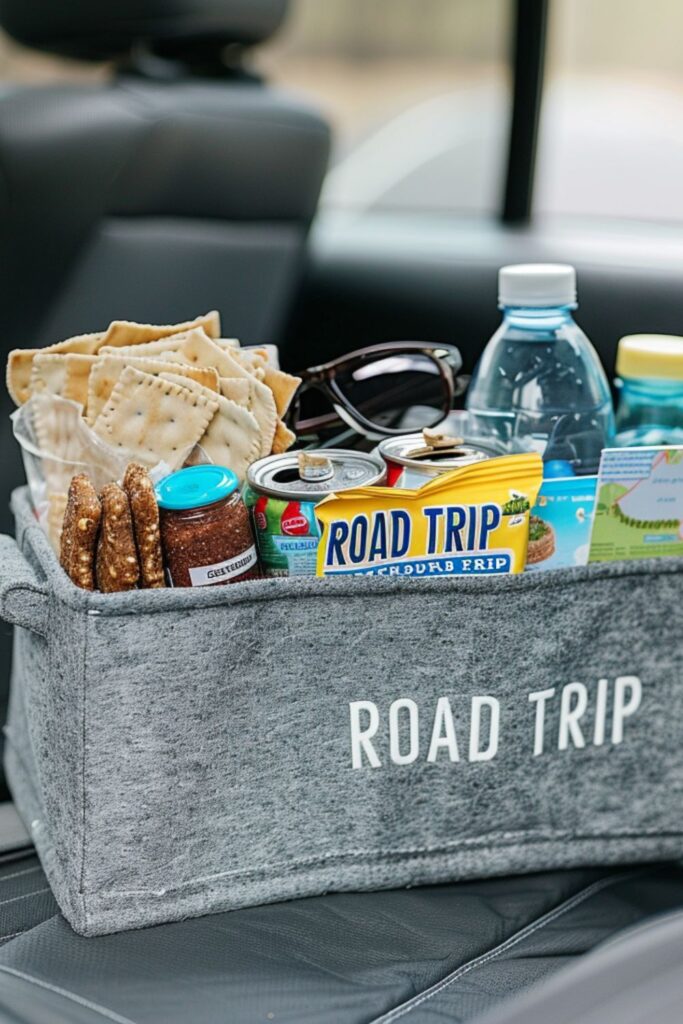
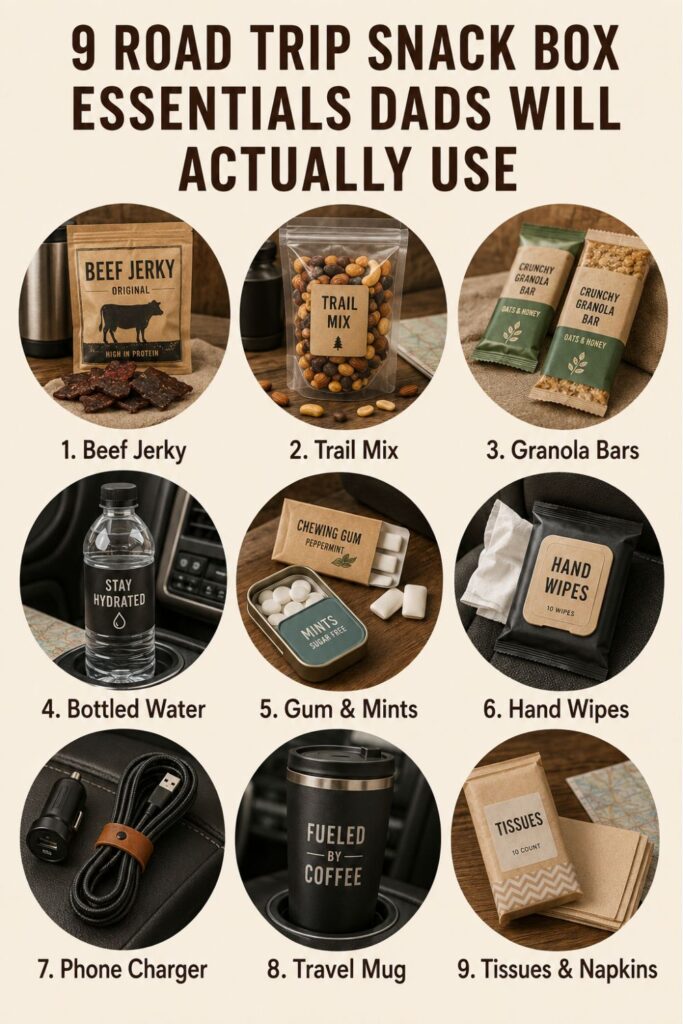
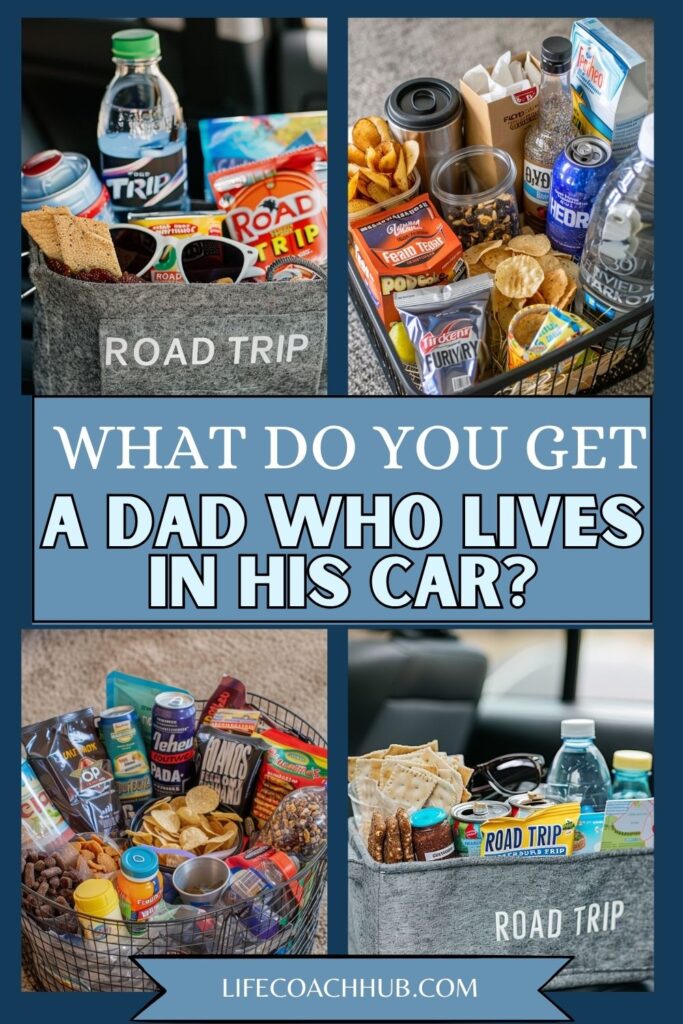
Some dads basically live part-time in their cars. Work drives, errands, school pickups, weekend sports, long commutes, last-minute hardware store runs. A road trip snack box is one of those gifts that sounds almost too simple until you realize he will probably use it all the time.
Best for commuter dads, road trip dads, and always-on-the-go dads.
Keeps snacks, wipes, mints, and small extras in one place.
Feels practical without feeling boring.
This one is especially good when Dad is hard to buy for because the gift solves a real little annoyance. No digging around for gum. No gas station snack stop. No messy glove compartment situation.
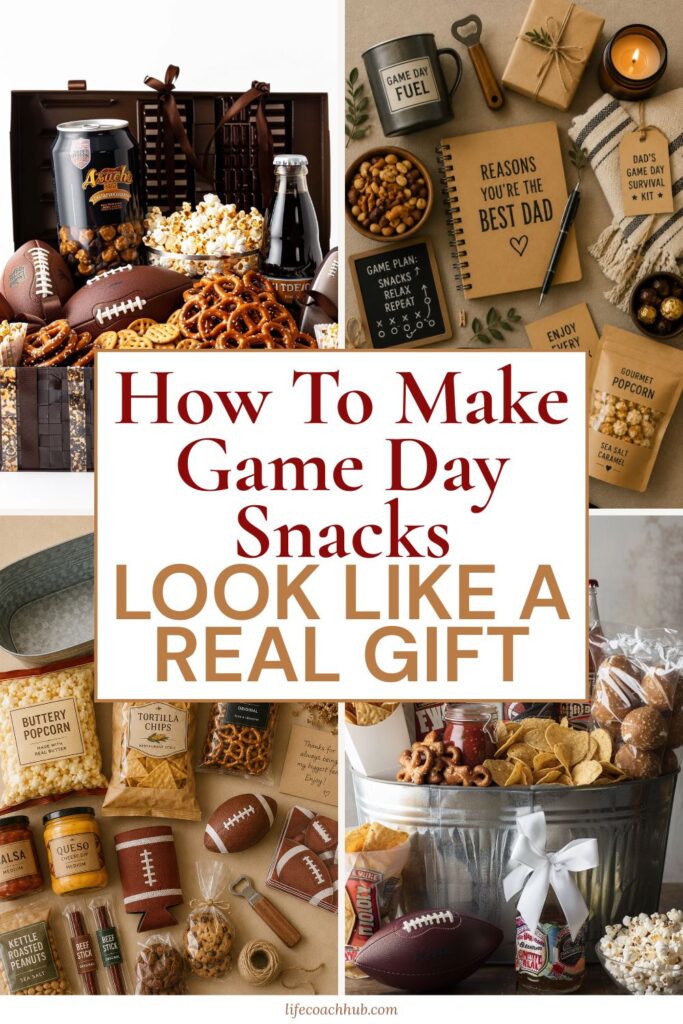
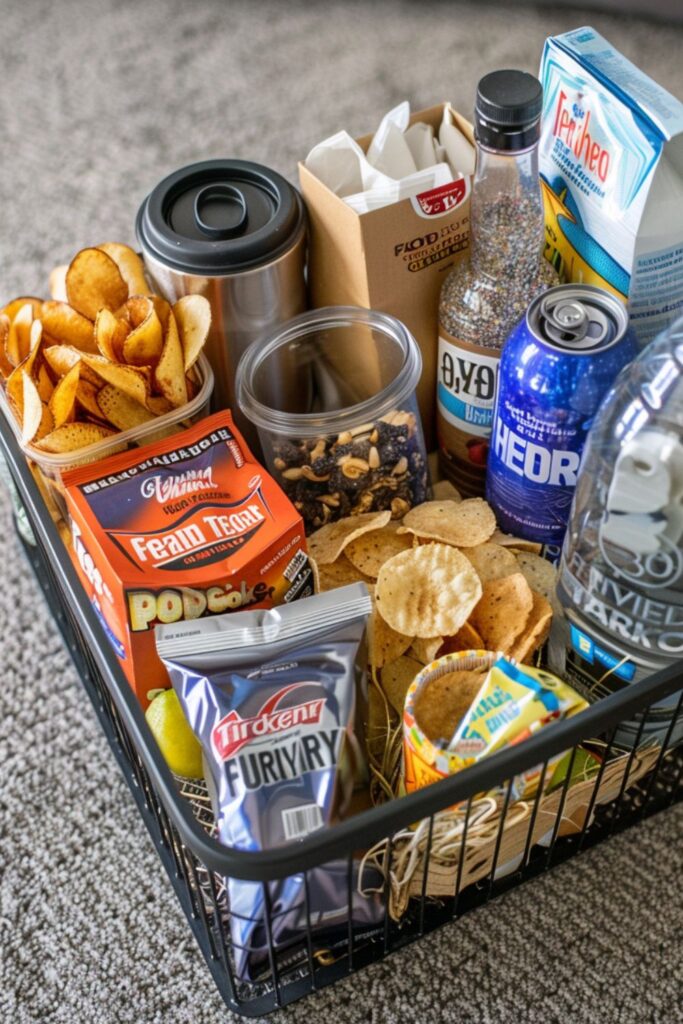
Maybe Dad’s ideal gift is not a thing. Maybe it is permission to sit down, watch the game, eat his favorite snacks, and not have to organize anything. A game day gift basket works because it turns something he already enjoys into a small event.
Great for dads who love sports but do not want fancy gifts.
Easy to personalize with team colors, favorite snacks, or inside jokes.
Makes grocery-store items feel more gift-worthy.
The refreshing part is that this does not need to be expensive to feel fun. When the snacks match his actual game day habits, the gift feels like someone paid attention instead of just buying “sports dad” stuff.
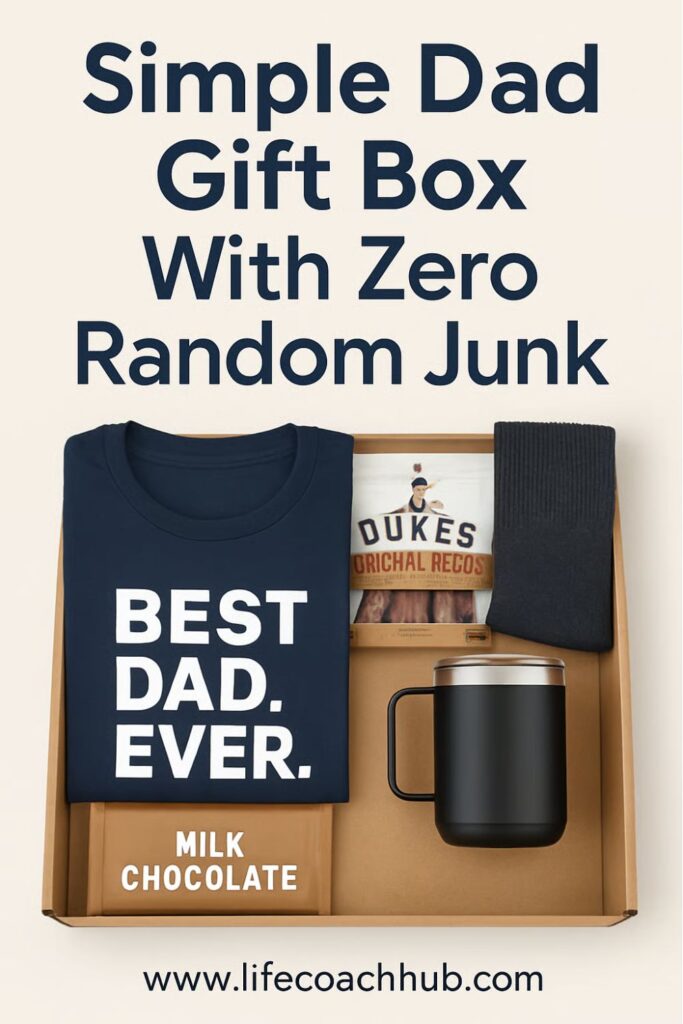
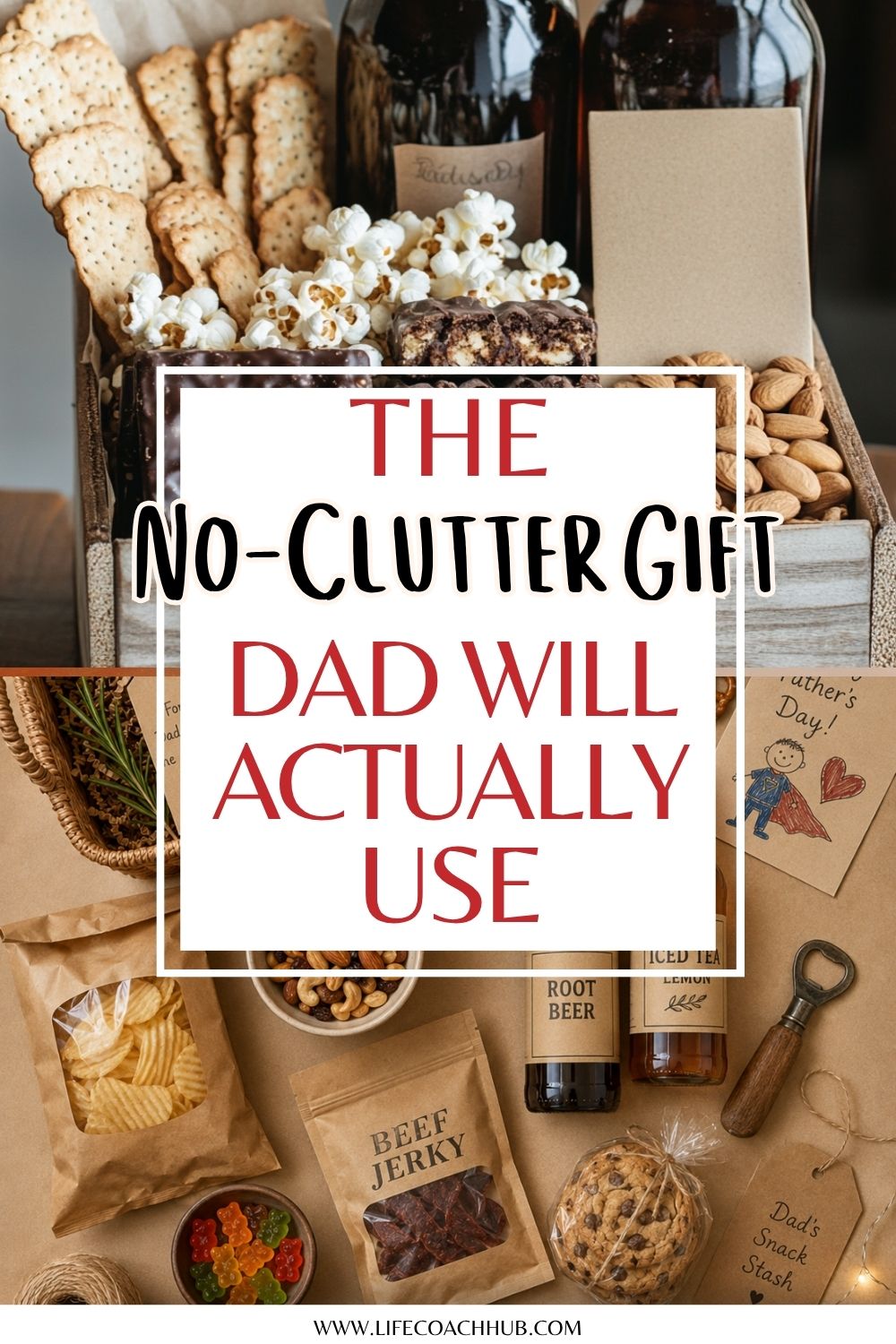
This is for the dad who says, “I don’t need anything,” and kind of means it. Not because he is impossible, but because he really does not want more random stuff taking up space.
Ideal for minimalist dads and practical dads.
Built around useful items that earn their spot.
Works for a desk, car, garage, travel bag, or bedside drawer.
What makes this one worth clicking is the no-filler mindset. Instead of trying to make the box look huge, you keep it small, useful, and specific. Honestly, that is probably exactly why a practical dad would like it.
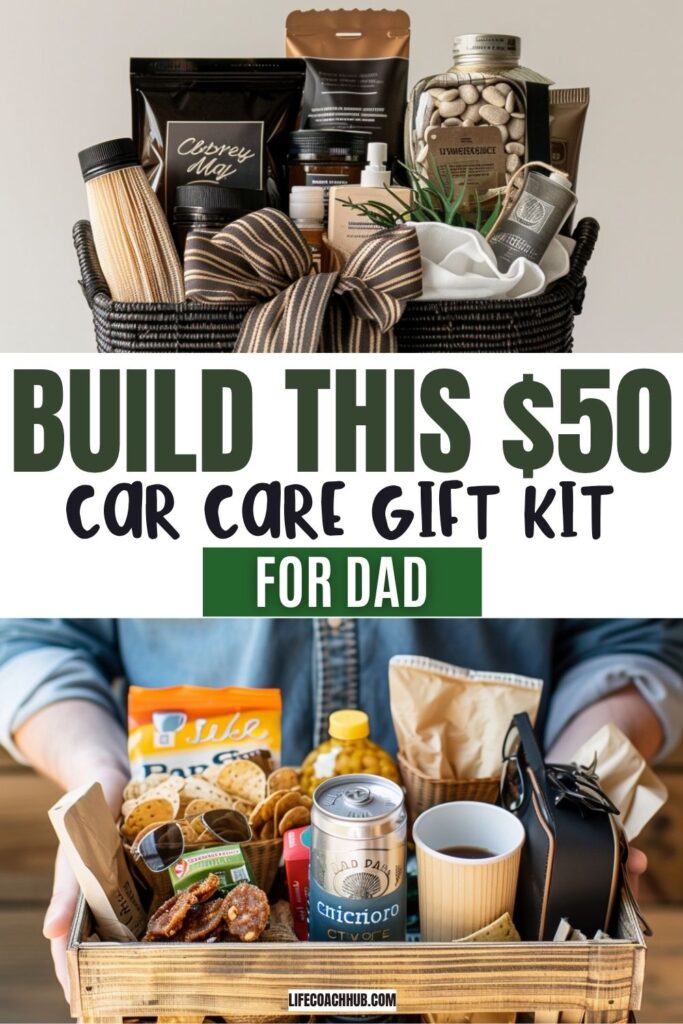
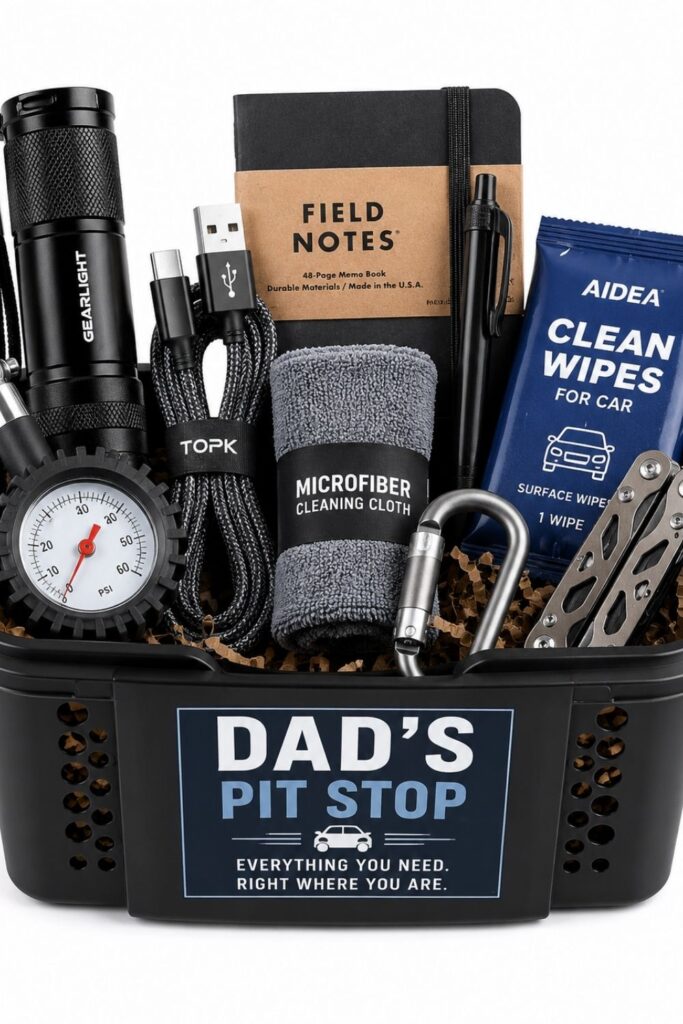
You know how a car can slowly become a second office, snack zone, storage closet, and weather shelter all at once? If Dad commutes or drives a lot, a small car care kit can feel weirdly thoughtful because it meets him in a part of life that probably gets annoying every single week.
Good for dads with long commutes or messy car routines.
Combines cleanup supplies, comfort items, and road essentials.
Easy to keep compact and under budget.
The best part is that this gift can be set up so he uses it immediately. Not someday. Not when he figures out where to put it. Right in the car, right where it helps.
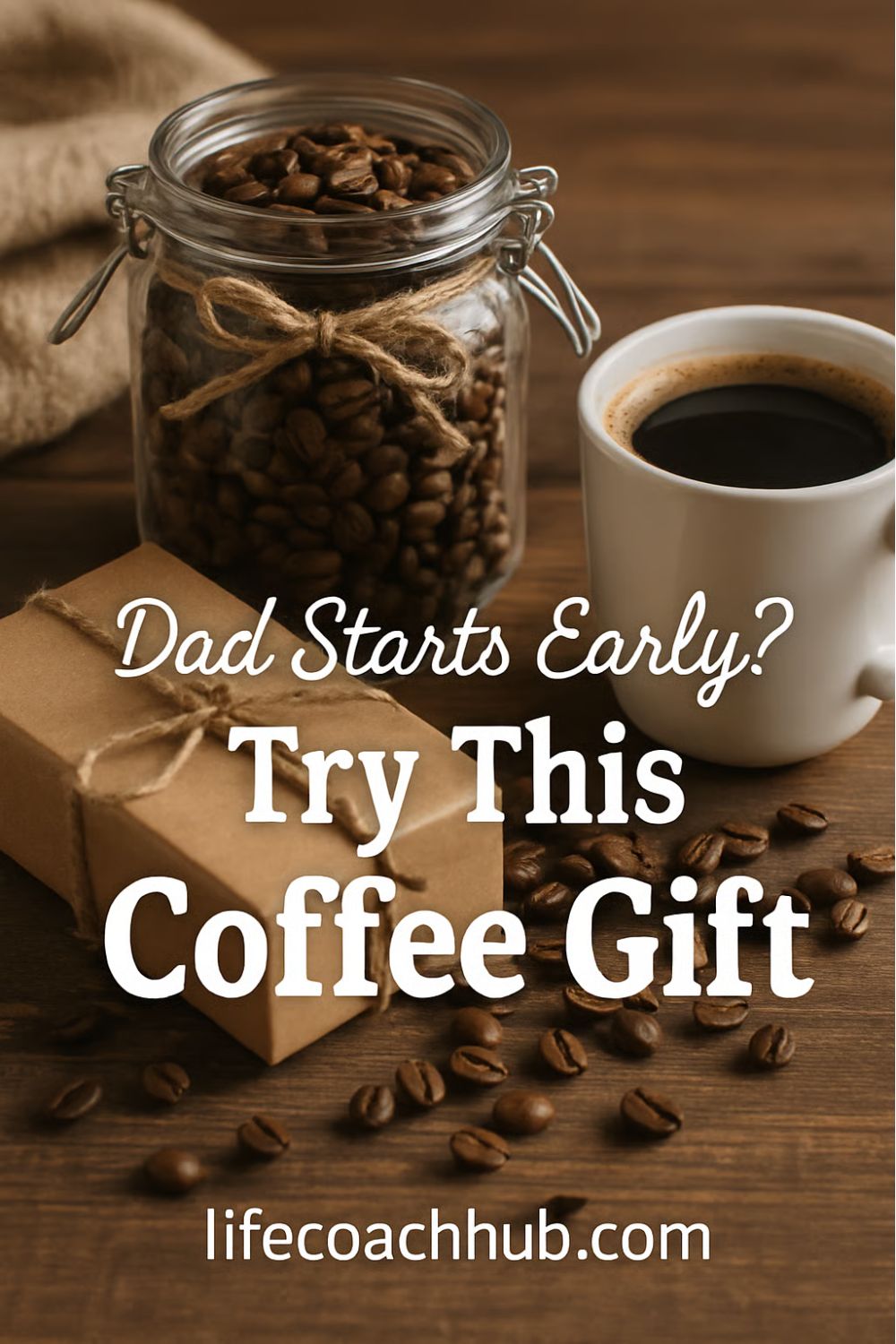
Some dads are up before everyone else, making coffee in the quiet, heading to work, or starting the day while the house still feels half-asleep. A coffee break gift kit is a small way to say, “We see that.”
Perfect for early risers and coffee routine dads.
Easy to build around coffee he already likes.
Kid-made touches fit naturally without taking over the gift.
This one feels especially sweet because it is not trying too hard. It takes a regular morning habit and makes it feel a little more noticed, which is often what dads appreciate most.
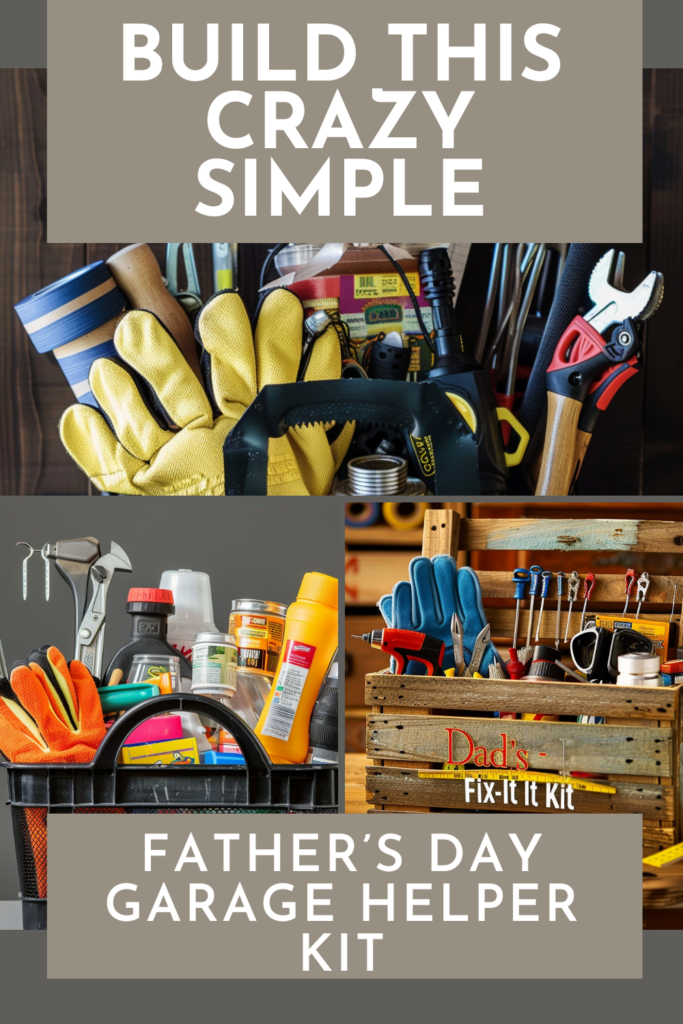
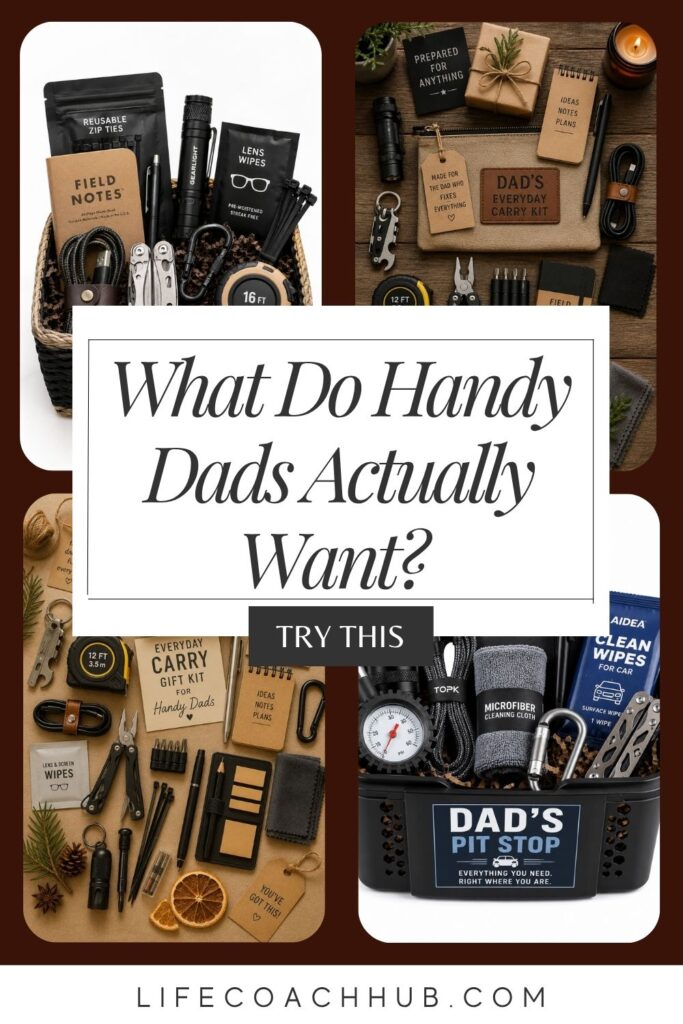
There is always one dad who somehow has the tool, the tape, the cleaner, the screw, the battery, or the random little part nobody else can find. A garage helper gift kit is for the dad who is always fixing, tightening, organizing, cleaning, or solving some tiny household problem.
Great for handy dads and project dads.
Practical enough for Father’s Day, birthdays, holidays, or just because.
Easy to customize based on what he actually does in the garage.
What makes this useful is that the gift can be built around real tasks instead of generic “dad tools.” Cleanup supplies, small repair items, one clever upgrade, and a reusable container can go a long way.
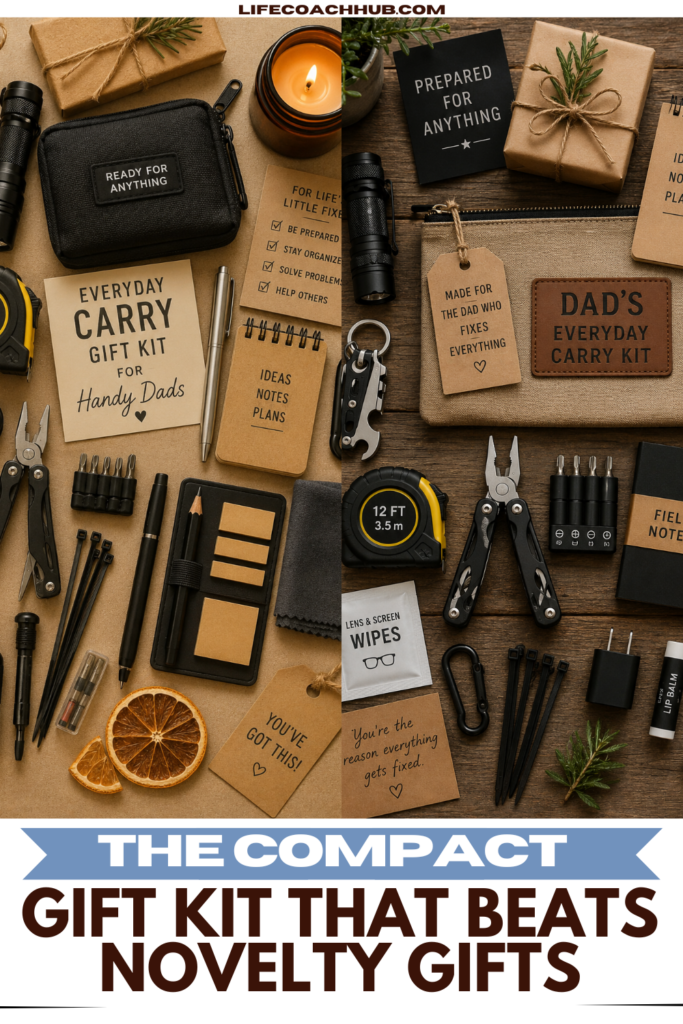
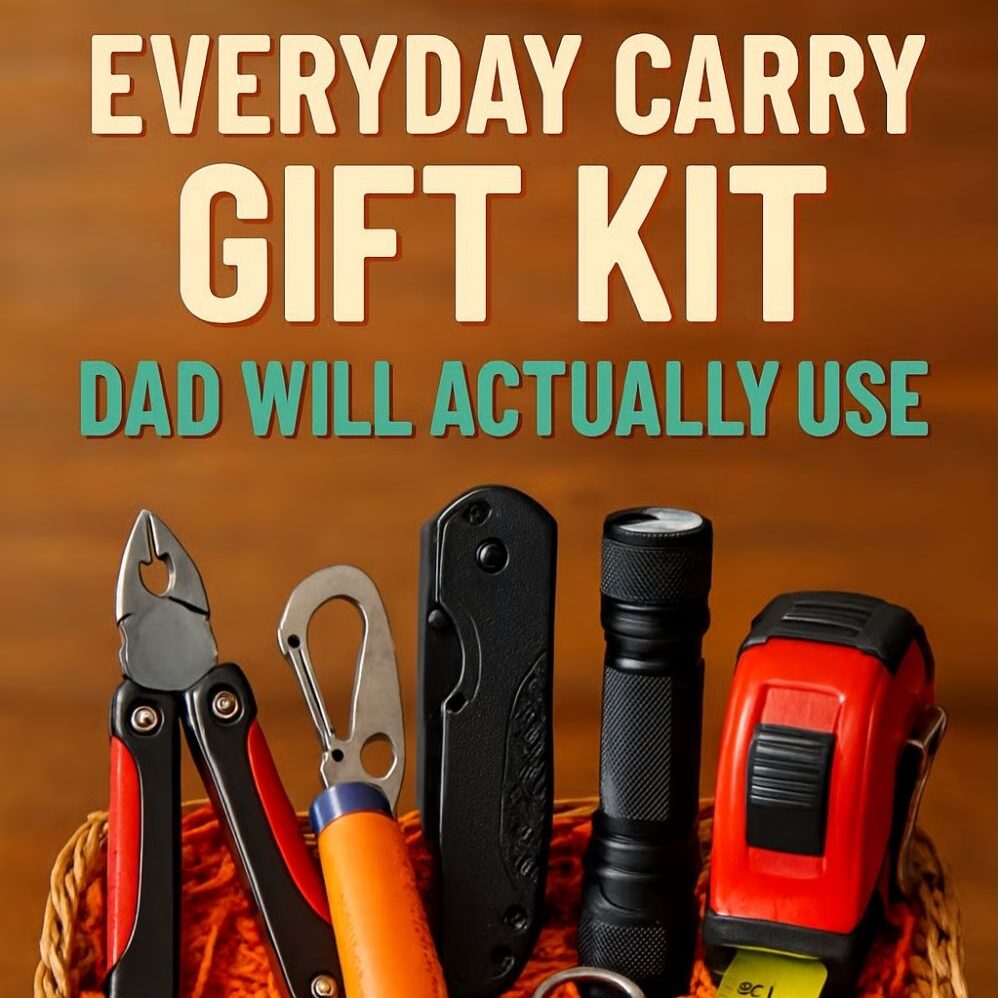
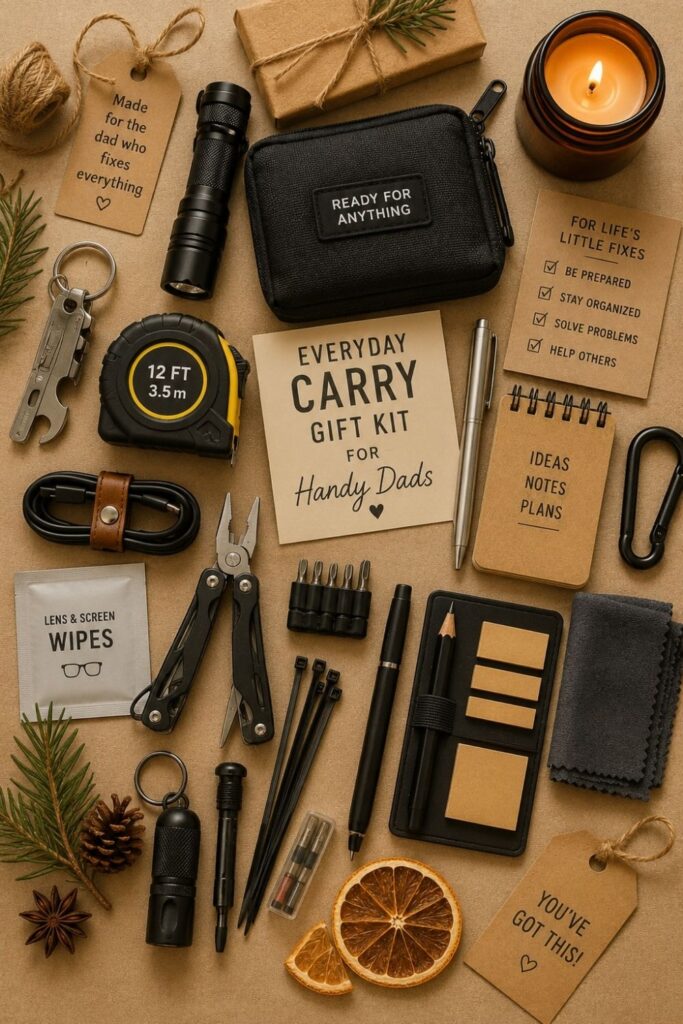
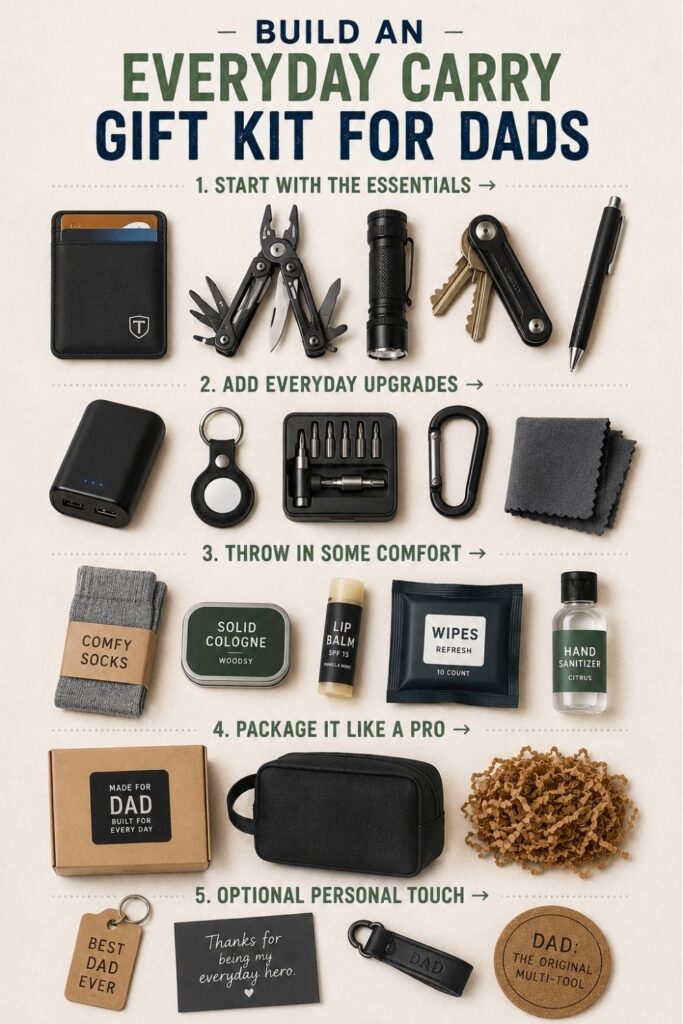
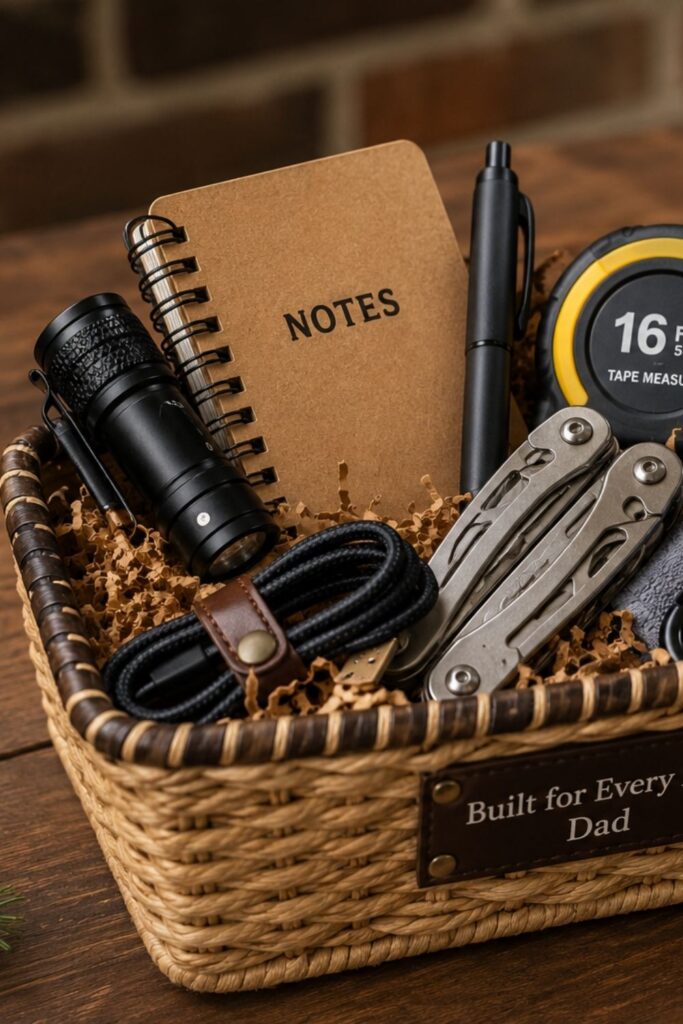
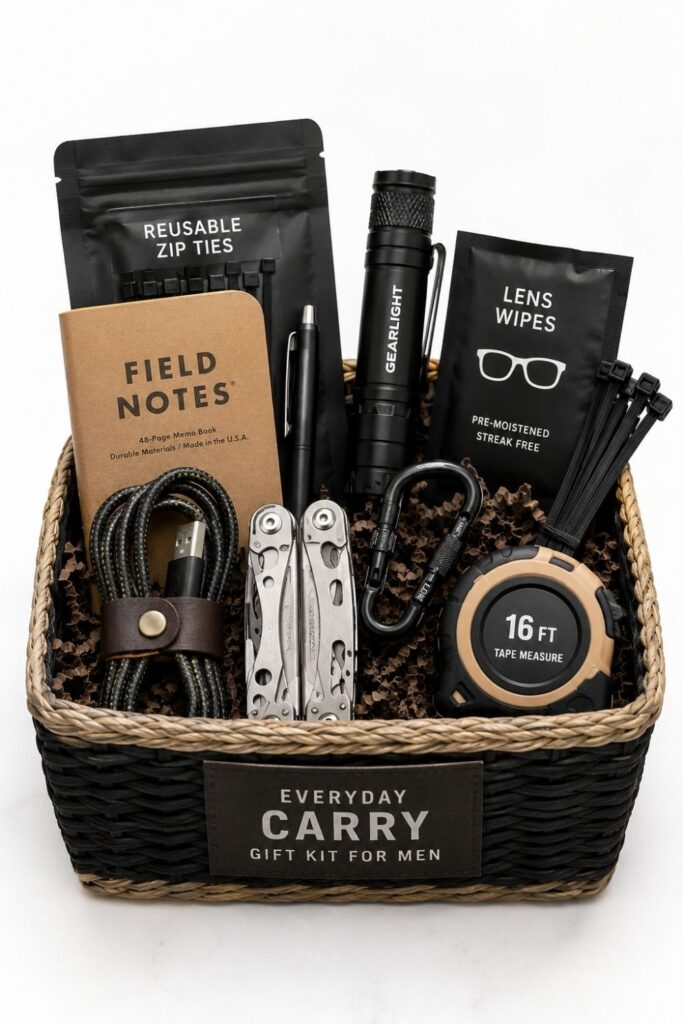
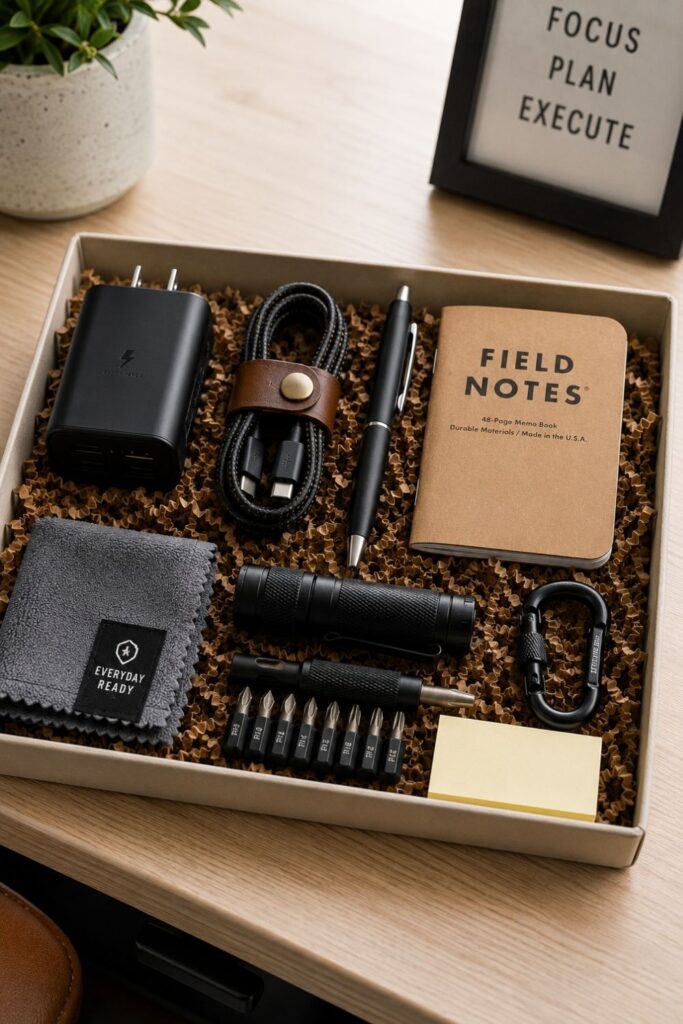
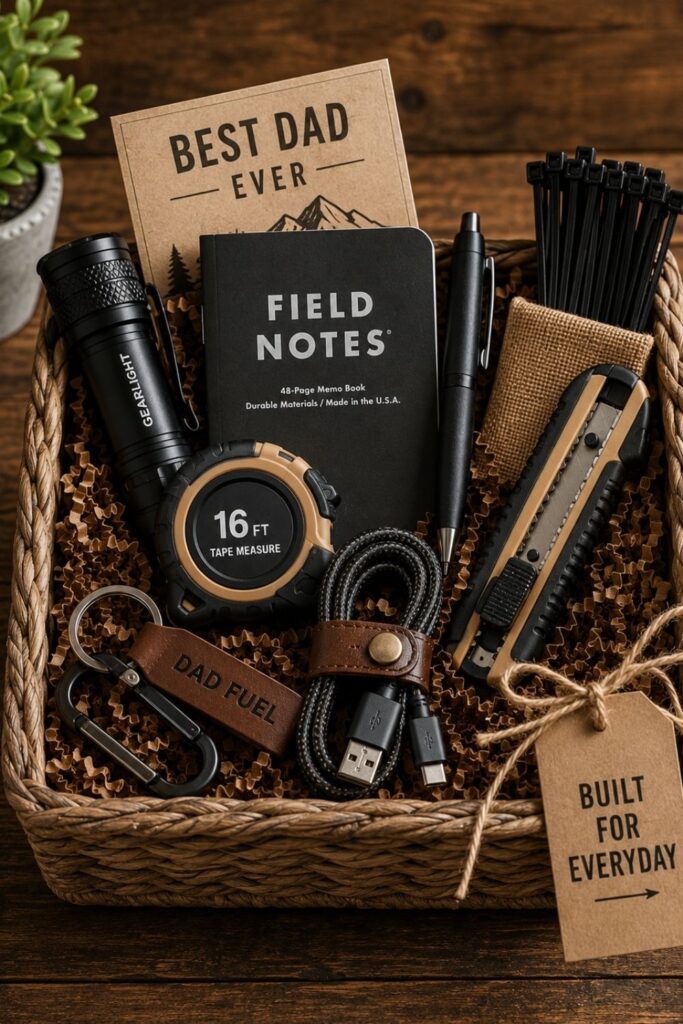
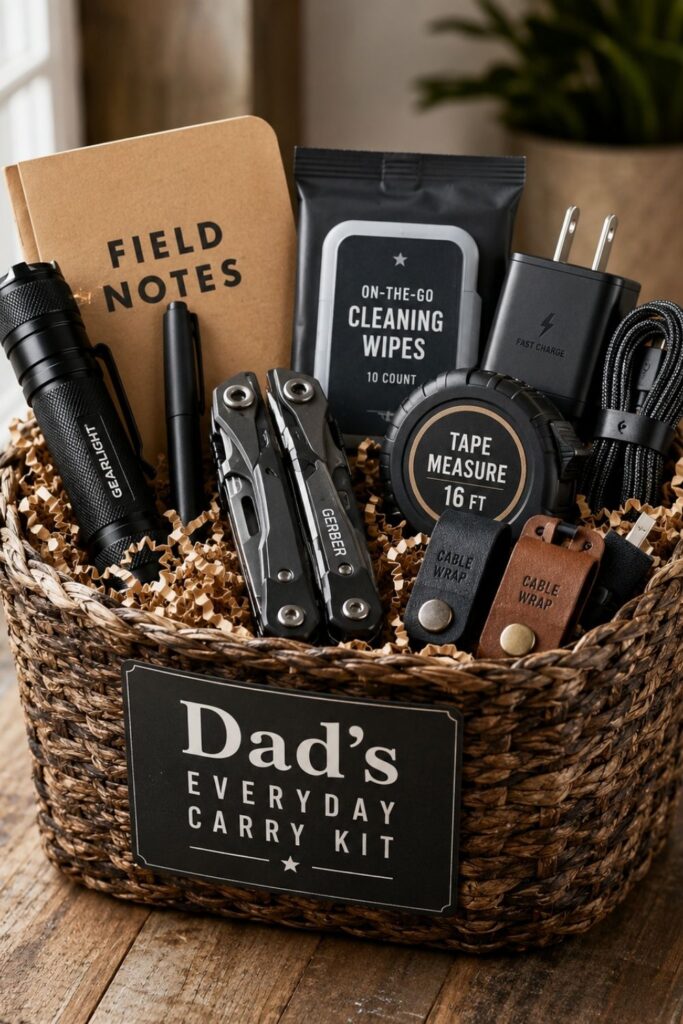
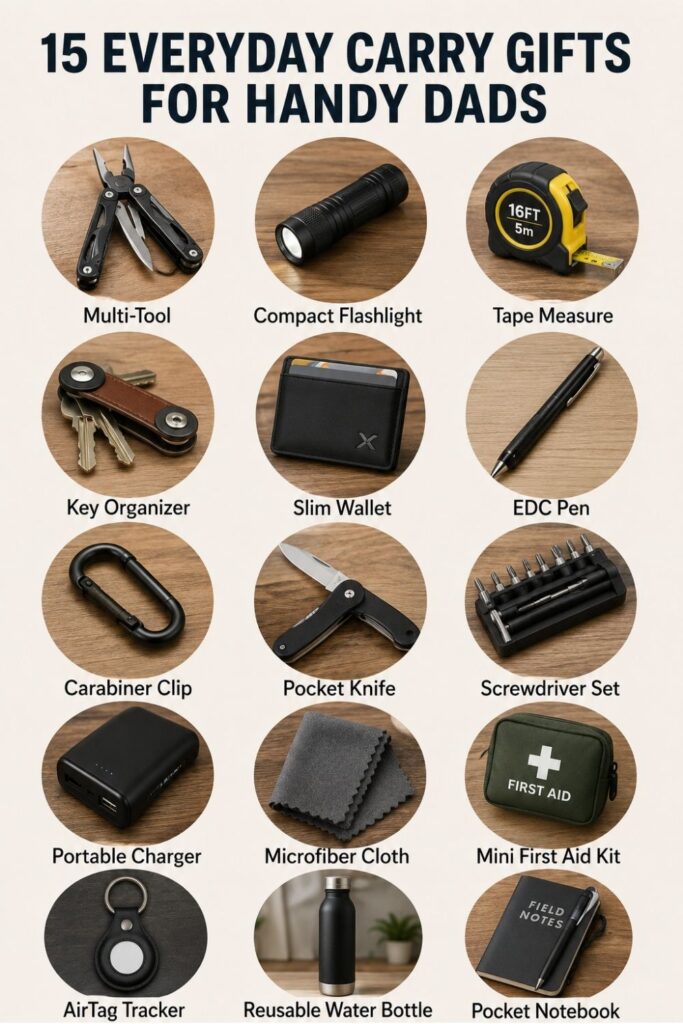
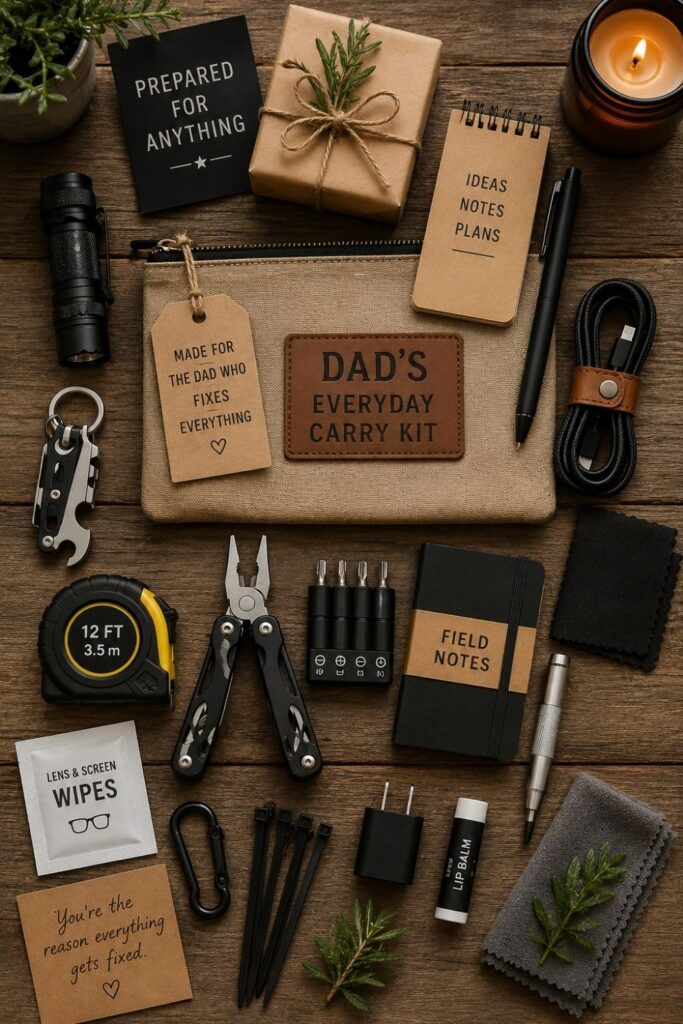
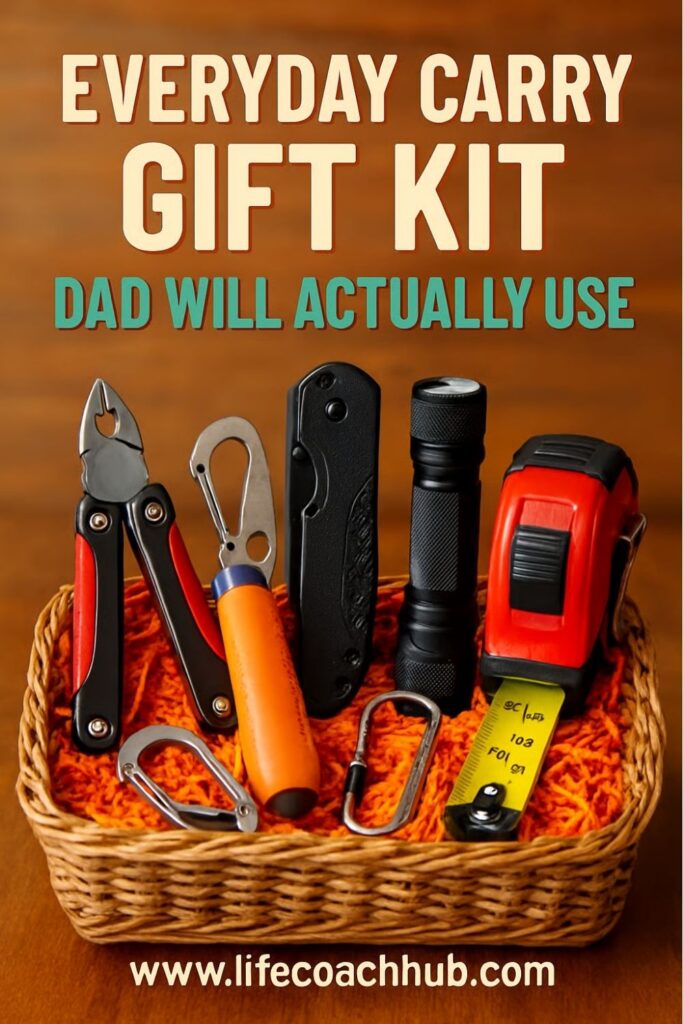
Maybe Dad does not need a huge tool set. Maybe what he actually needs is a few small problem-solvers he can keep close. A pen that works. A flashlight. A charging cable. A tiny notebook. A tape measure that is not missing when he needs it.
Smart for commuter dads, desk dads, and fix-it dads.
Small items feel more useful when they are grouped by routine.
Great when you want a compact gift that still feels complete.
The curiosity here is in how much better a gift feels when it is organized by real-life use. Instead of “here are some small items,” it becomes “here is a kit for the little problems Dad is always solving.”
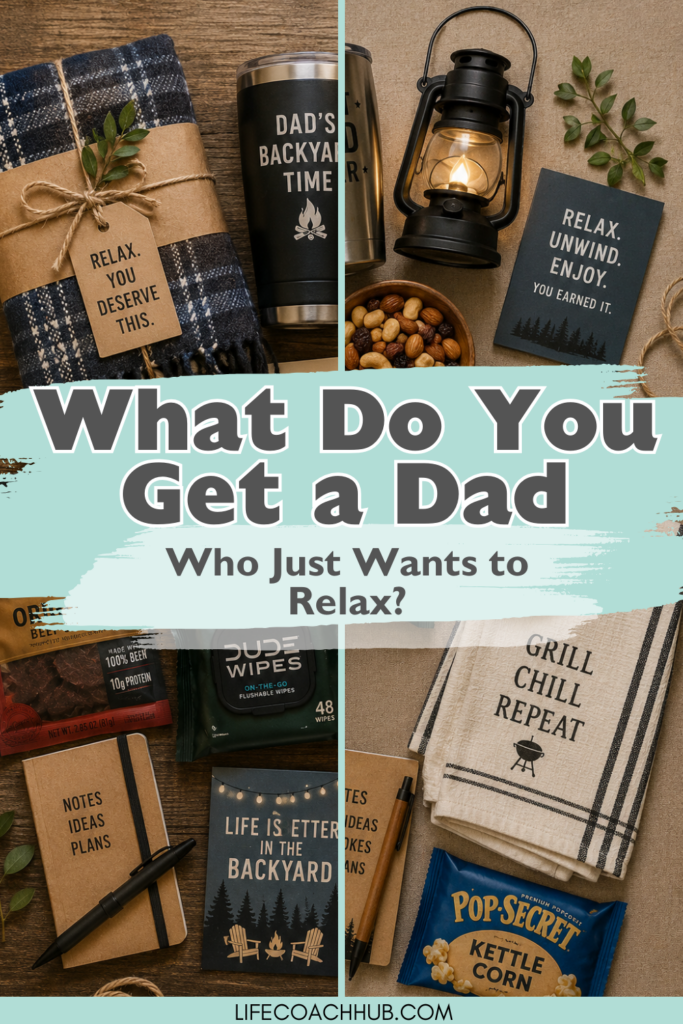
Some dads do not want a big outing. They want a chair outside, a snack, maybe a drink, maybe the grill nearby, maybe five quiet minutes where nobody asks where the tape measure is. A backyard wind-down bundle is for that kind of dad.
Great for patio dads, grilling dads, and quiet-evening dads.
Built around comfort, snacks, drinks, and evening-use extras.
Feels ready to enjoy right away.
The nice thing about this one is that it gives Dad an experience without making a big production out of it. It is simple, relaxed, and useful, which is exactly the point.
The Best Budget Dad Gifts Usually Start With His Real Routine
The easiest way to avoid a random gift is to stop asking, “What should I buy Dad?” and start asking, “Where does Dad already spend his time?”
That one shift makes the whole thing easier.
If he is always in the car, go with the road trip snack box or car care kit. If he loves being outside, the grill night bundle or backyard wind-down basket makes more sense. If he fixes everything, the garage helper kit or everyday carry kit probably feels more natural than another mug.
The gift does not need to be big. It just needs to feel like it belongs in his actual life.
Thoughtful Does Not Have to Mean Complicated
There is a lot of pressure to make dad gifts either impressive or sentimental, but most useful gifts live somewhere in the middle.
A practical gift can still feel personal. A snack box can include his favorite road trip candy. A coffee kit can include a note from the kids. A no-clutter box can include one small thing that quietly says, “I know what you actually use.”
That is the sweet spot. Not overdone. Not generic. Just specific enough that Dad can tell someone paid attention.
Next Steps
Pick the gift idea that sounds most like your dad’s everyday life. Start small, keep the theme clear, and do not worry about making it look perfect.
The best budget-friendly Father’s Day alternative is usually the one he will actually reach for again.
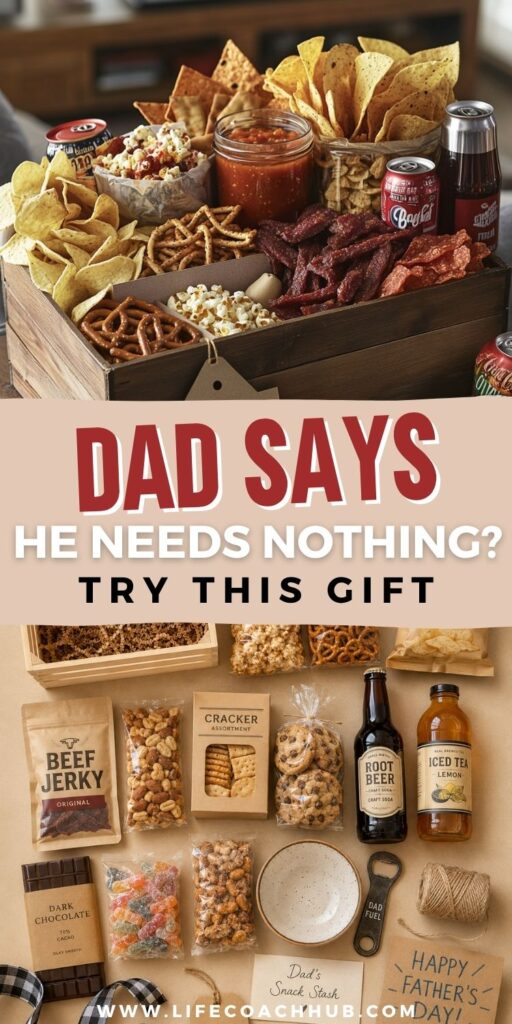
Some dads are easy to love but hard to shop for. They say they do not need anything, they shrug when asked what they want, and they may even insist that everyone save their money. That can make gift-giving feel tricky, especially when kids want to give something that feels thoughtful but not overdone.
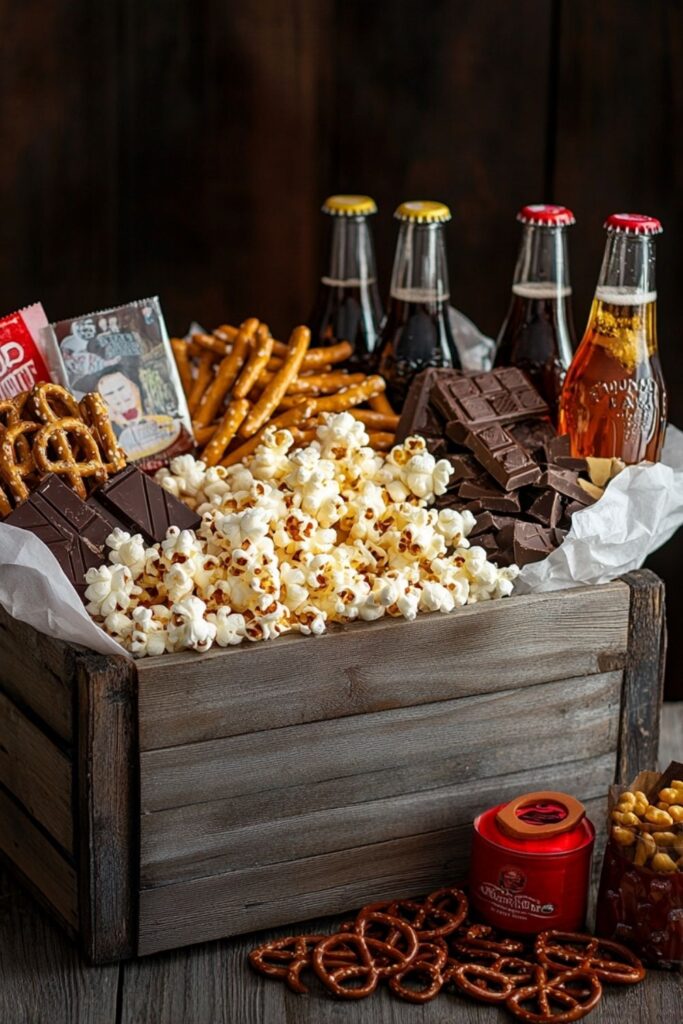
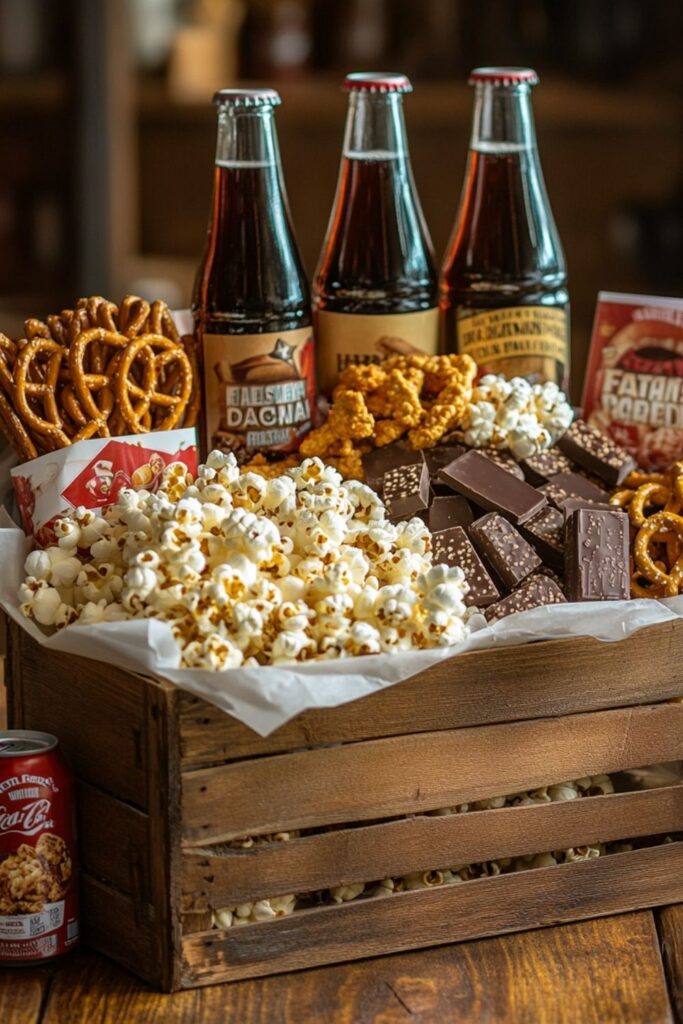
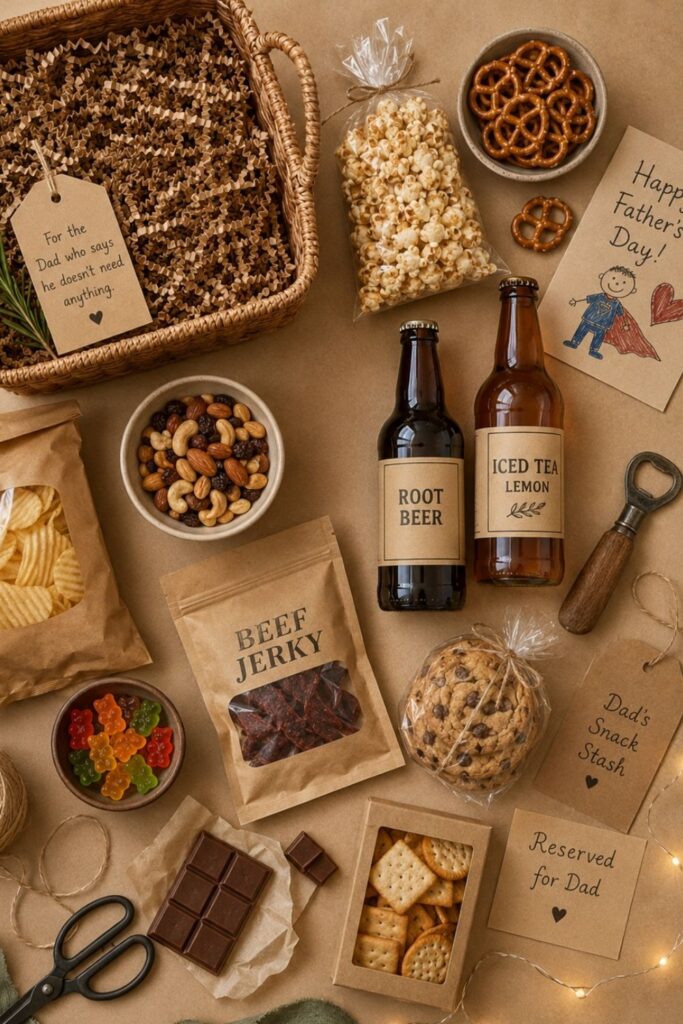
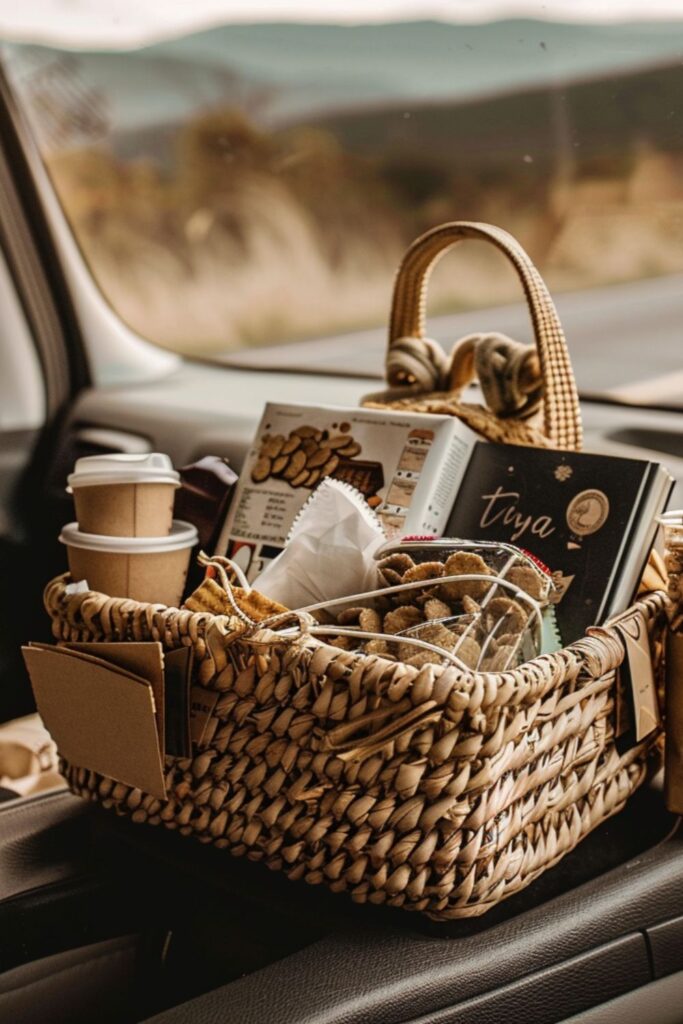
A snack basket is a good answer because it does not ask Dad to make space for a big gift. It is useful, personal, and easy to enjoy right away. Instead of guessing at a shirt size, gadget, or hobby item, you build the gift around what he already likes.
The key is to make it feel intentional. A snack basket should not look like someone emptied the pantry into a container. It should feel like a small treat break made just for him.
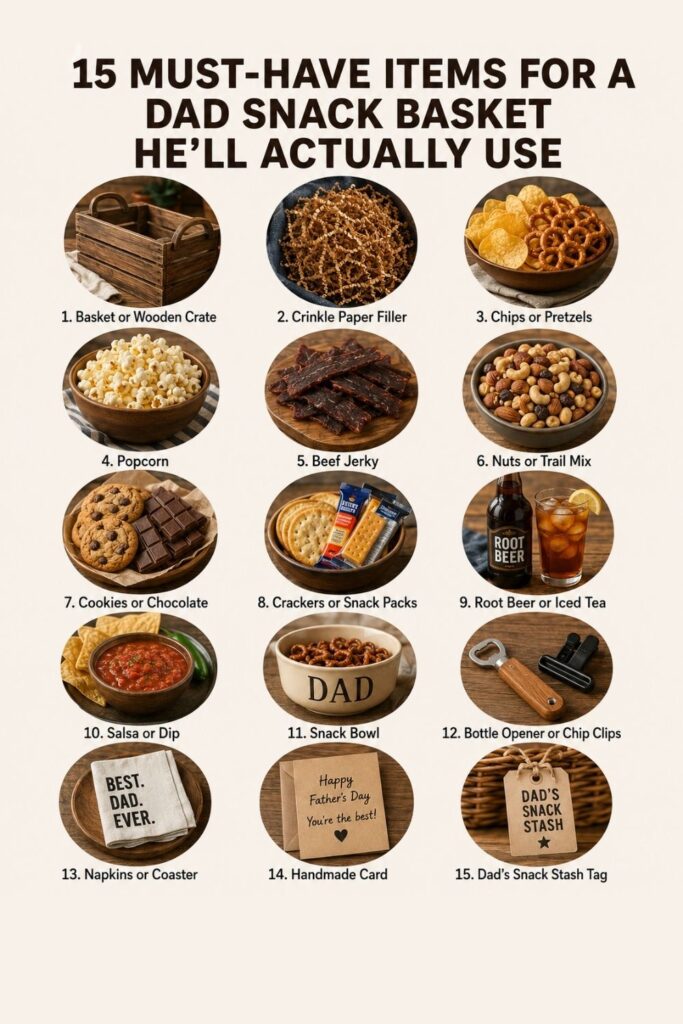
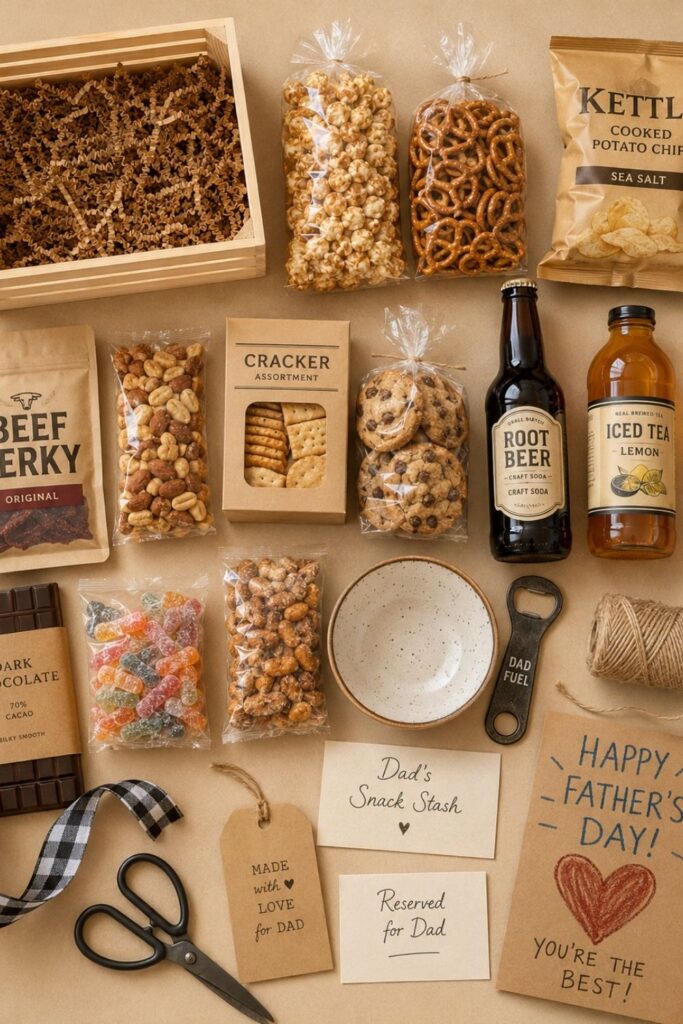
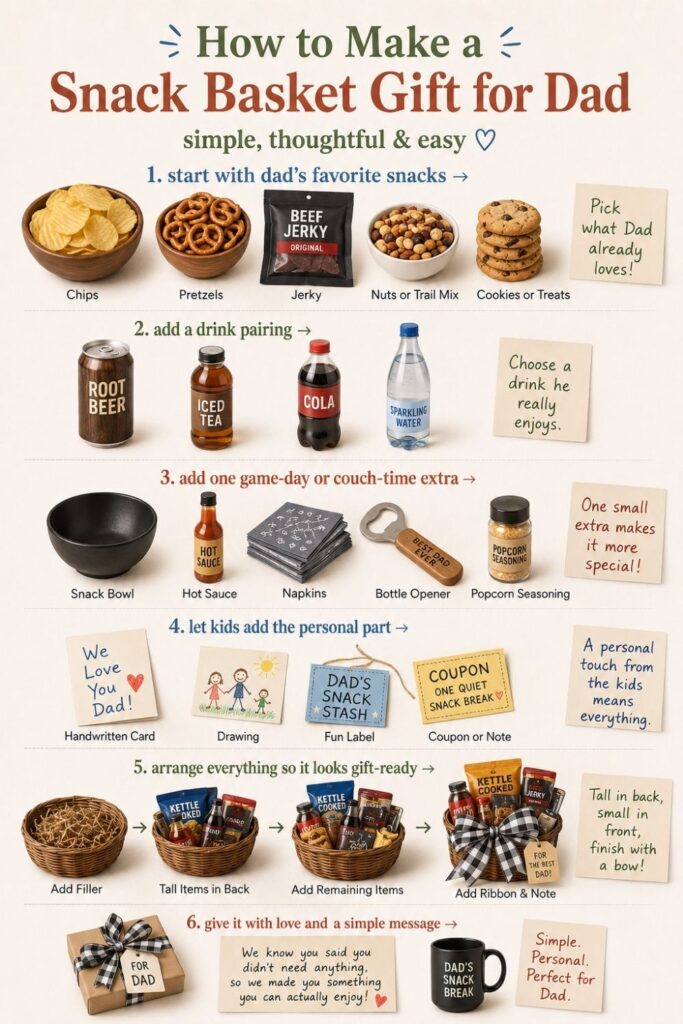
You can build it around:
His favorite salty snacks
A drink he likes
Something sweet
One game-day or movie-night extra
A handmade note from the kids
A simple basket, box, tray, or reusable bin
This kind of gift works especially well from kids because they can help at almost every step. Younger children can choose snacks, decorate tags, or arrange items. Older kids can write a funny label, pick a theme, or add a personal note.
The best part is that it does not need to be expensive. A small basket with three favorite snacks, one drink, and a handwritten card can feel more thoughtful than a big gift Dad never asked for.
Think of it as a “you deserve a break” gift. It gives Dad permission to sit down, watch the game, enjoy a movie, work in the garage with a snack nearby, or have a quiet moment after a long day.
For the dad who says he needs nothing, the goal is not to prove him wrong. The goal is to give him something simple, familiar, and genuinely enjoyable.
The easiest way to make a snack basket feel personal is to start with what Dad already eats. This is not the time to guess wildly or buy fancy treats just because they look giftable. A better basket usually comes from noticing the snacks he actually grabs when he is watching TV, packing for work, working outside, or standing in the kitchen after dinner.
Notice his usual favorites: Look at the pantry, grocery list, car console, desk drawer, garage shelf, or sports-watching setup. Pay attention to the flavors, textures, and brands he chooses again and again.
Some dads are salty snack people. Others want something sweet after dinner. Some like spicy chips, beef jerky, trail mix, nuts, cookies, chocolate, crackers, or popcorn. The more specific you can be, the more thoughtful the basket feels.
Instead of thinking, “What snack gift looks cute?” think, “What would Dad actually eat before anyone else gets to it?”
You can ask kids to help with this part by making a “Dad snack detective” list. Have them name the foods they see him enjoy most. This can make the gift feel more personal and give kids a fun job.
Good snack categories include:
Chips, pretzels, popcorn, or crackers
Jerky, meat sticks, nuts, or trail mix
Cookies, brownies, candy, or chocolate
Spicy snacks, hot sauce snacks, or flavored nuts
Granola bars, protein bars, or snack packs
Dips, salsa, cheese spreads, or shelf-stable spreads
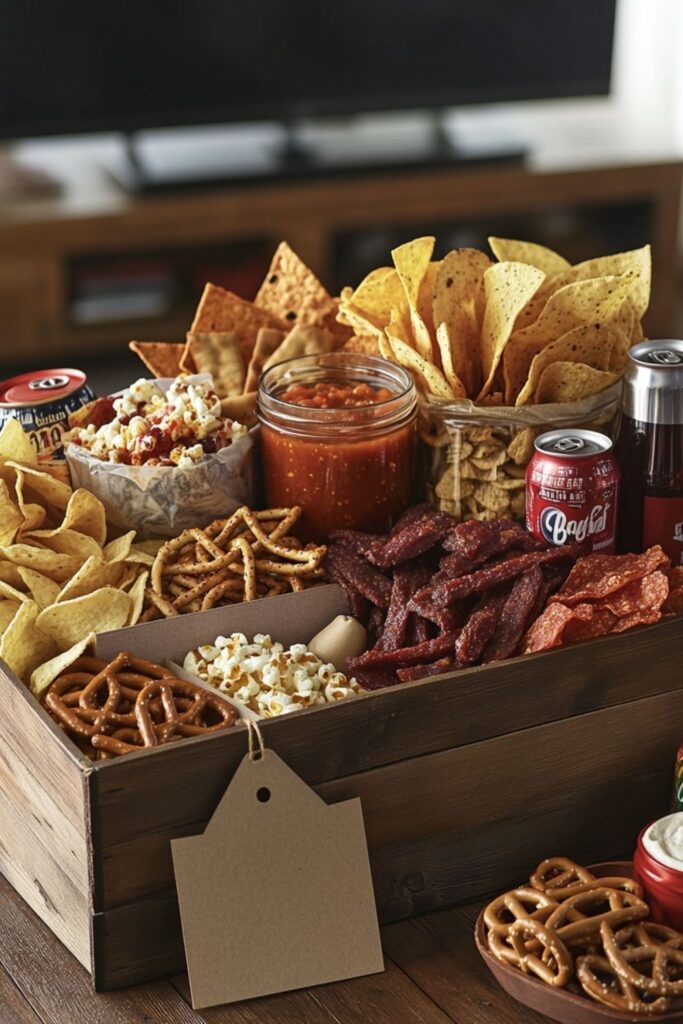
Build around a clear snack lane: Pick one main direction so the basket does not feel random. A sweet-and-salty basket could include popcorn, chocolate, pretzels, and nuts. A game-day basket could include chips, salsa, jerky, and a drink. A late-night snack basket could include cookies, trail mix, and root beer.
A clear snack lane also makes the basket easier to arrange. Similar colors, packages, and flavors naturally look better together.
Try not to overpack it. Five carefully chosen items can feel better than fifteen random ones. Dad does not need a mountain of snacks. He needs a basket that says, “We know what you like.”
Pick a Drink Pairing That Makes the Basket Feel Complete
A drink makes a snack basket feel finished. It turns the gift from “here are some snacks” into “here is a complete little break.” That matters because many dads will actually use the basket in a specific moment, such as watching a game, sitting outside, taking a garage break, or relaxing after work.
Match the drink to the snack style: Choose a drink that goes with the snacks and with Dad’s real habits. If he likes salty snacks, a cold soda, sparkling water, iced tea, lemonade, or root beer can work well. If he likes sweet snacks, coffee drinks, hot cocoa packets, or bottled cold brew may make more sense.
You do not need to make this complicated. The best drink is usually the one he already buys.
For example:
Popcorn, pretzels, and root beer
Jerky, nuts, and iced tea
Cookies, chocolate, and coffee
Chips, salsa, and soda
Trail mix, granola bars, and sparkling water
Crackers, cheese snacks, and lemonade
If kids are helping, let them choose between two or three realistic options. This keeps the gift child-led without turning the basket into a strange mix of everything they personally want to eat.
Add enough for one relaxed moment: One to three drinks is usually enough. A snack basket does not need to become a beverage case. The drink should support the theme and help Dad enjoy the gift right away.
If the basket is small, one special drink works nicely. If the basket is larger, two or three drinks can add height and make the whole gift look more substantial.
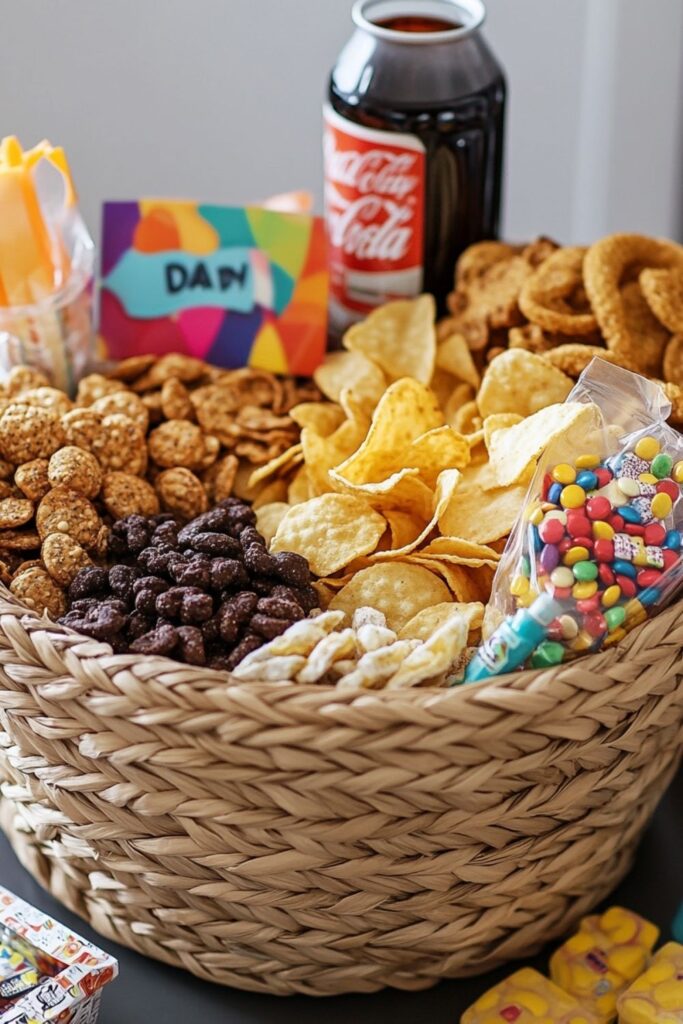
Place bottles or cans toward the back of the basket so they act like a backdrop. Then arrange snacks in front of them. This gives the basket a nice shape and makes it easier to see everything at once.
You can also add a small tag to the drink, especially if kids are involved. Something simple works best:
“For Dad’s next game.”
“Open during movie night.”
“Dad’s snack break drink.”
“Reserved for Dad only.”
That tiny label makes the drink feel less like an afterthought. It becomes part of the gift experience.
For a dad who claims he does not need anything, that matters. You are not just handing him food. You are creating a small, ready-to-enjoy moment.
Add One Game-Day or Couch-Time Extra
Once the snacks and drinks are chosen, add one small extra that makes the basket more useful. This is what keeps the gift from feeling like a grocery bag. The extra does not need to be expensive. It just needs to connect to how Dad actually relaxes.
Choose a small add-on he will actually use: Think practical first. A reusable snack bowl, napkins, coaster, bottle opener, chip clips, small cutting board, dip bowl, seasoning shaker, or hot sauce bottle can make the basket feel more complete.
The mistake is adding something just because it looks cute. If Dad will never use it, skip it. This gift works best when every item has a reason to be there.
Good add-ons include:
A reusable snack bowl
A small dip bowl
Napkins in a fun color
A bottle opener
A coaster
Chip clips
A bag sealer
Popcorn seasoning
Hot sauce
A small team-colored cup
Toothpicks
Wet wipes for messy snacks
You can also choose an add-on based on the setting. If Dad watches sports, a team-colored napkin set or game-day bowl can work. If he likes movies, popcorn seasoning makes sense. If he snacks while grilling, add barbecue rub, hot sauce, or a small towel.
Keep it connected to how he relaxes: Picture where Dad will actually use the basket. Is he on the couch watching a game? Sitting in the backyard? Working in the garage? Taking snacks on the road? That setting should guide the extra.
For a game-day dad, include chips, salsa, jerky, soda, and napkins. For a movie-night dad, choose popcorn, candy, cookies, and a popcorn bowl. For a garage dad, choose trail mix, nuts, meat sticks, bottled tea, and wipes. For a dad who likes quiet evenings outside, add mixed nuts, chocolate, sparkling water, and a coaster.
This is also a good place to make the basket feel visual. You can tuck the extra toward the front or side so it is easy to spot. A small bowl can hold wrapped candies. Napkins can line the bottom. A bottle opener can be tied to the handle with ribbon or twine.
The add-on should make Dad think, “I can actually use this.” That is exactly the point.
Let Kids Add the Personal Part
A snack basket becomes much more meaningful when kids add something handmade. The snacks make the gift useful. The handmade piece makes it feel personal. It does not have to be polished, perfect, or Pinterest-level. In fact, the simple kid-made touches are often the parts Dad remembers most.
Make the handmade piece simple: Choose one small personal detail kids can finish without frustration. A card, drawing, tag, basket label, coupon, or short message is enough. Younger kids may only write their name or draw a picture. Older kids can write a funny note, make a snack menu, or create a “Dad’s Favorites” label.
The goal is not to create a complicated craft. The goal is to make Dad feel seen.
Easy kid-made ideas include:
A card that says, “We love you, Dad”
A drawing of Dad watching a game
A label that says, “Dad’s Snack Stash”
A coupon for “one quiet snack break”
A list of “Dad’s top 5 snacks”
A small note tied to his favorite treat
A decorated paper band around the basket
A handmade snack menu
If multiple kids are involved, give each child one job. This keeps the process from getting chaotic and helps everyone feel included.
Give them a job they can finish proudly: Younger kids can place snacks in the basket, pick the tissue paper, add stickers, or hand Dad the gift. Older kids can arrange the basket, write the card, or help choose snacks that match his favorites. Teens can make the whole thing feel a little more personalized by adding a funny title or inside joke.
For example, the basket could be labeled:
“Dad’s Do Not Touch Snacks”
“For the Man Who Said He Needed Nothing”
“Dad’s Game-Day Survival Kit”
“Emergency Snack Supply”
“Best Dad Snack Break Basket”
Those little phrases make the gift feel made for him, not just assembled.
This section is also where the emotional value comes in. Dad may enjoy the snacks for a week, but the handwritten card may stay in a drawer for years.
So do not skip the note. Even if the basket is simple, a personal message turns it into a real gift from the kids.
Arrange the Basket So It Looks Gift-Ready
Presentation matters, especially with a simple gift like snacks. The items may be practical, but the basket should still feel fun to receive. A little arranging can make grocery-store snacks look like a thoughtful gift for Dad.
Create height before filling gaps: Start by placing taller items in the back. Bottles, chip bags, popcorn bags, or boxed snacks can create a backdrop. Put medium items in the center, then tuck smaller pieces near the front.
This gives the basket a layered look. Dad should be able to glance at it and see the main items right away.
A simple arrangement order looks like this:
Tall drinks or snack bags in the back
Medium boxes, jars, or pouches in the middle
Small candies, nuts, bars, or extras in the front
Card or handmade label at the top or front
Tissue paper or napkins filling empty spaces
If the basket is deep, add filler underneath. Otherwise, the snacks may sink down and look less full than they actually are.
You can use:
Tissue paper
Crinkle paper
A dish towel
Paper napkins
A folded reusable shopping bag
Brown kraft paper
A clean cloth napkin
Use simple filler to make it look full: Filler is not just decoration. It helps prop up the snacks so the basket looks generous without buying too much. This is especially helpful if you are working with a smaller budget.
Choose a container that fits the amount of snacks you have. A huge basket with five snacks can look empty. A smaller basket, tray, bin, or gift box will make the same items look much better.
Good container options include:
A small woven basket
A handled caddy
A reusable storage bin
A snack tray
A cardboard gift box
A metal pail
A small cooler bag
A popcorn bucket
A simple gift bag with tissue
Face labels outward when possible. Keep colors balanced by spreading similar packages around the basket instead of placing all bright items on one side.
Finally, add the handmade card where Dad will see it first. You can clip it to the front, tape it to a skewer, tuck it into the back, or tie it to the handle.
The basket does not need to look professional. It just needs to look cared for.
Keep It Practical Instead of Overdone
The whole reason this gift works for dads who say they do not need anything is that it does not create a burden. It is not a big item to store, display, return, or figure out. It is something Dad can enjoy and use up.
Avoid items that create clutter: Skip filler gifts that have no purpose. Gag items, oversized signs, random decorations, novelty tools, and themed objects may look fun in the moment, but they can make the basket feel less practical.
A snack basket should not become a pile of “stuff.” It should feel easy.
Before adding an item, ask:
Will Dad eat this?
Will Dad drink this?
Will Dad use this?
Does this match something he already likes?
Does this make the basket easier to enjoy?
Is this just taking up space?
If the answer is not clear, leave it out.
That does not mean the basket has to be boring. Practical can still feel fun. A favorite spicy snack, a special soda, a new popcorn seasoning, or a good dip can all feel exciting without becoming clutter.
Choose items he can enjoy right away: The best snack basket is ready to use. Dad should not need to cook, assemble, search for utensils, or make a plan. He should be able to open it, grab something, and enjoy it.
This is why individually packaged snacks can work well. They are easy to tuck into a lunch bag, desk drawer, car, garage, or couch-side table. Larger shared snacks work too, especially if the basket is meant for game day or movie night.
A practical mix could include:
One larger snack to share
Two smaller snacks just for Dad
One sweet item
One drink
One useful add-on
One handmade note
That formula keeps the gift balanced without overcomplicating it.
It also helps with budget. You do not need to buy every snack Dad has ever liked. Choose a few items that feel intentional and stop there.
For the dad who says, “Please do not get me anything,” a practical basket is a gentle compromise. It shows love without ignoring his preference for simple things.
How a Family or Organization Coach Could Help Make This Easier
Gift planning can become surprisingly stressful, especially in families where one person usually does all the remembering, shopping, wrapping, and organizing. A simple snack basket may not seem like something that needs a system, but having a small plan can make birthdays, holidays, and everyday gifting much easier.
Turn gift planning into a tiny family system: A coach who works with families, organization, or goal setting could help create a repeatable gift-planning routine. Instead of starting from zero every time Dad has a birthday or special occasion, the family could keep a simple list of favorite snacks, hobbies, sizes, stores, and gift ideas.
This is especially helpful for dads who say they do not need anything. When someone is hard to shop for, a running list can capture small details throughout the year.
A family gift list might include:
Favorite snacks
Favorite drinks
Favorite candy
Favorite teams
Favorite movies or shows
Things Dad uses often
Things he mentioned wanting once
Things he dislikes
Easy gifts kids can help make
The coach’s role would not be to make the gift fancy. It would be to make the process less rushed and more organized.
Assign roles based on age and strengths: A coach could also help families divide the work so one person is not carrying everything. Kids can be part of the process in age-appropriate ways. One child can choose the salty snack. Another can pick the sweet item. Another can make the card. An adult can handle the budget, shopping, and final assembly.
That kind of simple role assignment helps the gift feel shared. It also teaches kids that thoughtfulness is not about spending the most money. It is about noticing, planning, and following through.
For families who feel busy, a coach might suggest keeping a “gift basket bin” at home with basic supplies:
Tissue paper
Gift tags
Ribbon or twine
Blank cards
Small baskets or boxes
Stickers
Markers
Tape
A running gift idea list
Then when a gift moment comes around, the family is not scrambling.
This same idea can apply beyond Dad gifts. Once the system is in place, it can work for teacher gifts, thank-you gifts, holiday gifts, care packages, and simple “thinking of you” surprises.
A snack basket may be simple, but the planning habit behind it can make family celebrations feel much easier.
Make It Feel Like “Dad,” Not Just “Snacks”
The difference between a basic snack basket and a thoughtful gift for Dad is personalization. You do not need to add a lot. One or two specific details can make the whole basket feel like it was built around Dad, not copied from a store display.
Add one detail that shows you noticed him: This could be his favorite flavor, a snack from a place he likes, a team color, a drink he always chooses, or a note that connects the basket to one of his routines.
Think about the little things that make Dad Dad. Maybe he always eats barbecue chips during games. Maybe he likes peanut M&Ms in the car. Maybe he loves trail mix but picks out the raisins. Maybe he always drinks iced tea when he grills. Those small details make the basket feel personal.
You can build around moments like:
His Sunday game snack
His after-work treat
His garage snack stash
His movie-night favorite
His road trip snack
His backyard drink
His “do not share” candy
His favorite gas station treat
The more specific the detail, the better.
For example, “snacks for Dad” is fine. But “Dad’s baseball game snack kit” feels more personal. “Candy basket” is okay. But “Dad’s peanut butter chocolate stash” feels like someone paid attention.
Name the basket around his personality: A simple title can make the gift feel more fun. Write it on a card, gift tag, or paper label and attach it to the front.
Try names like:
“Dad’s Snack Stash”
“For the Dad Who Needed Nothing”
“Dad’s Game-Day Fuel”
“The Quiet Break Basket”
“Dad’s Couch Kit”
“Emergency Dad Snacks”
“Snack Supplies for the Best Dad”
“Dad’s Do Not Share Basket”
Kids can help choose the name. Funny names work especially well because they make the gift feel relaxed and personal.
You can also add a short note explaining when Dad should use it. For example, “Open this during the next game,” or “For your next quiet snack break.” That gives the basket a purpose and makes the gift feel like a small experience.
A snack basket does not need to be impressive to everyone. It needs to make Dad smile because it feels like his.
A Gift He Does Not Have to Pretend to Need
A snack basket is a smart gift for the dad who insists he does not need anything because it respects that preference. It is not too big, too complicated, or too permanent. It gives him something enjoyable without adding clutter or pressure.
The best version is simple: a few favorite snacks, a drink, one useful extra, and a personal note from the kids. That is enough. You do not need to turn it into a huge production.
Keep the final basket easy to enjoy: Before giving it to Dad, do a quick check. Can he see what is inside? Are the snacks things he actually likes? Is the note visible? Does the basket feel full but not stuffed? Is there one detail that makes it feel personal?
A final check might look like this:
Favorite salty snack included
Favorite sweet snack included
Drink pairing added
One useful extra tucked in
Handmade note or label attached
Items arranged with taller pieces in the back
Basket looks full but not overloaded
Nothing included just for clutter
Give it in a way that feels natural: You can set it by his chair before the game, place it on the kitchen counter with a card, have the kids carry it in together, or tuck it somewhere he will find it after work. The delivery does not need to be dramatic.
A simple line works:
“Dad, we know you said you didn’t need anything, so we made you something you can actually enjoy.”
That is the whole spirit of the gift.
For younger kids, the basket is also a sweet way to participate in giving. They may not be able to buy a big gift, but they can choose snacks, draw a card, and help arrange everything. That makes the gift feel shared.
For older kids or teens, it can be a low-pressure way to show thoughtfulness without getting overly sentimental.
In the end, the snack basket works because it is practical and personal at the same time. Dad gets treats he likes. The kids get to make something. And the whole gift says, “We know you. We love you. And we still wanted to celebrate you, even if you said you needed nothing.”
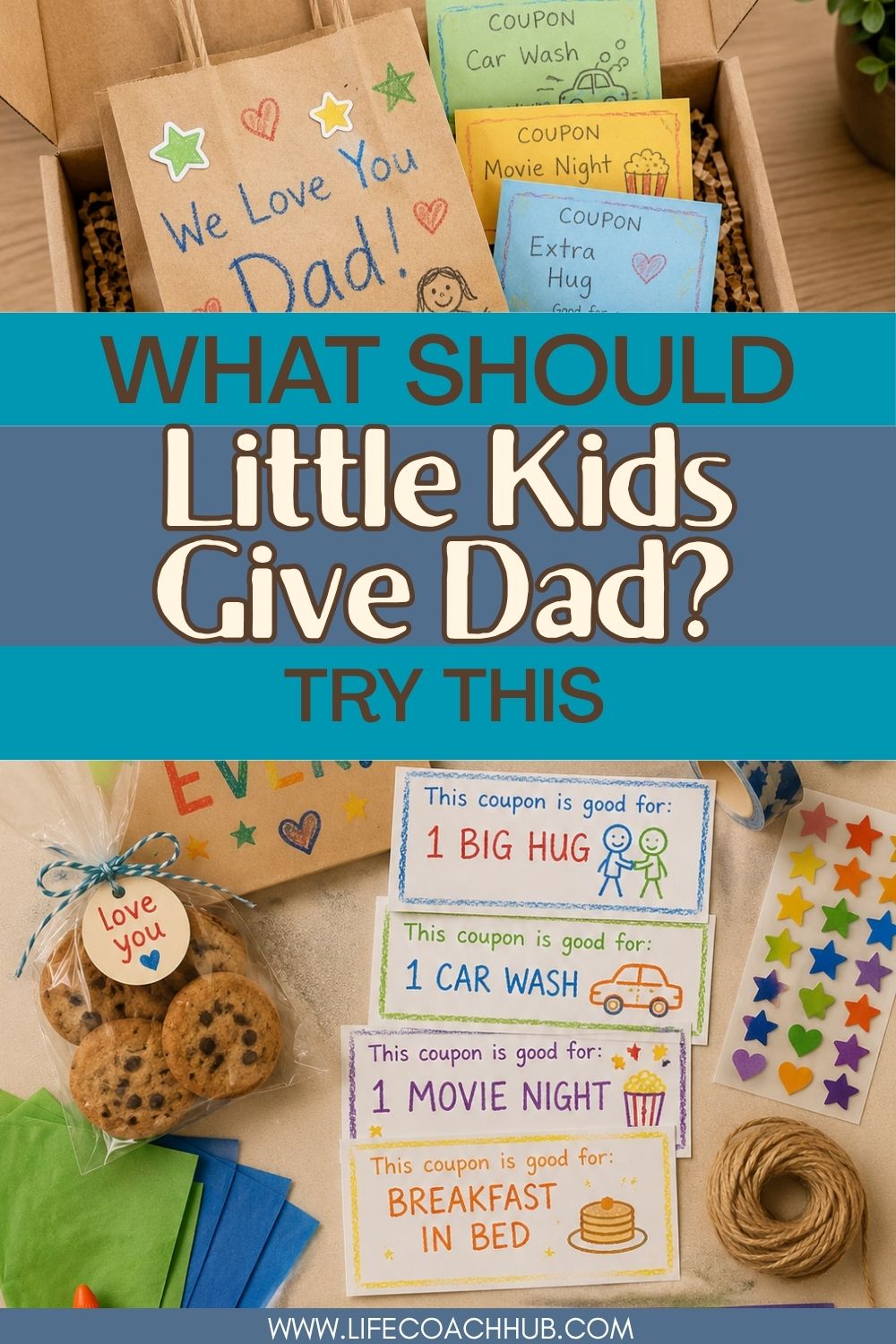
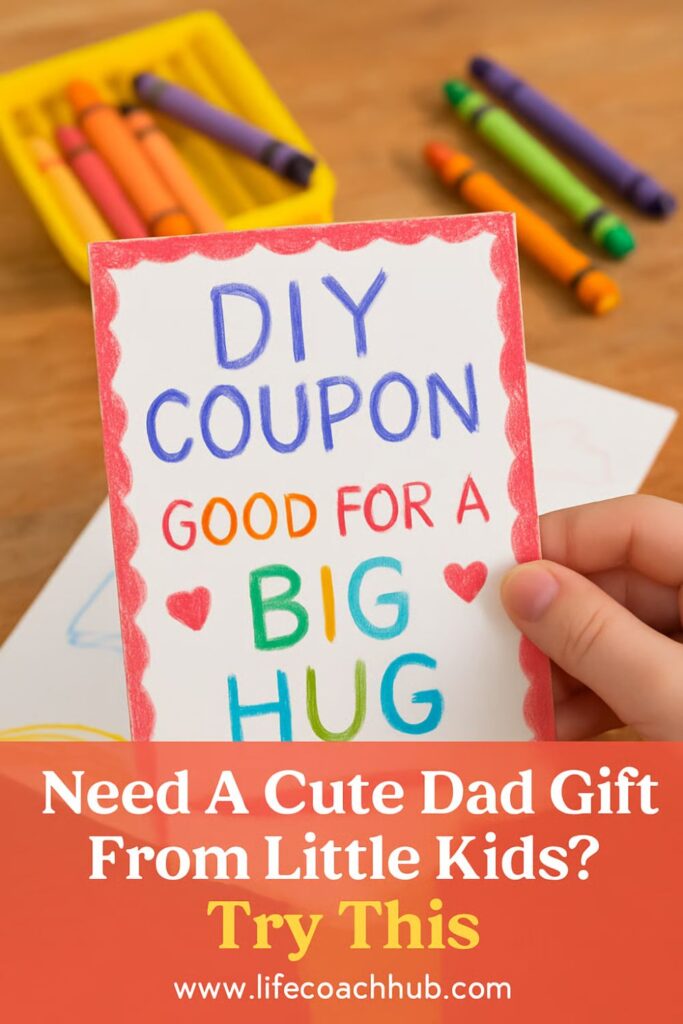
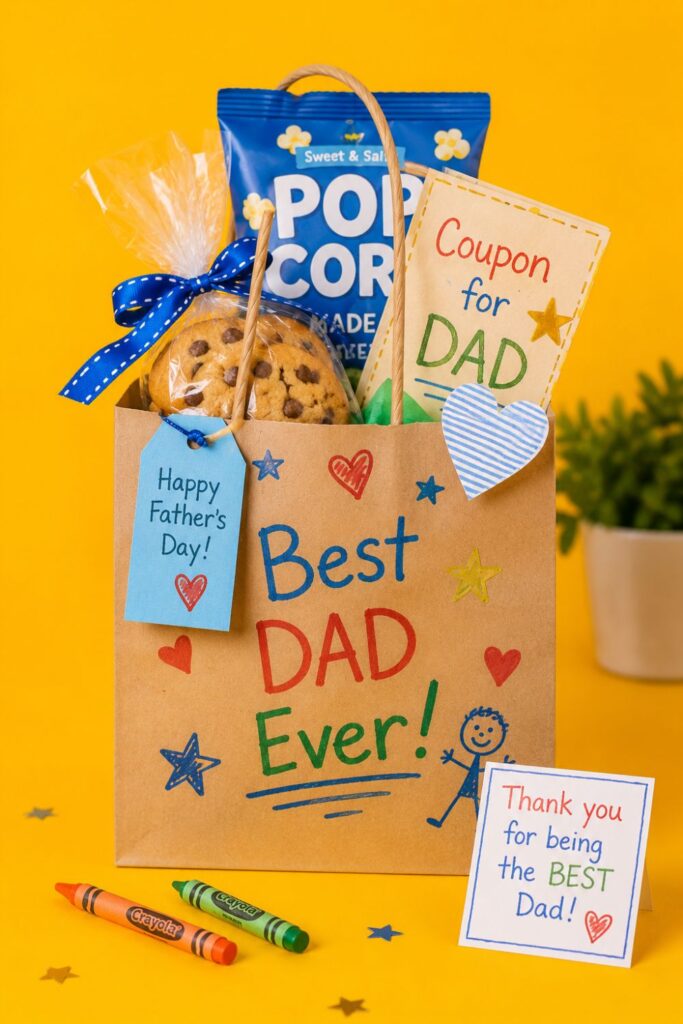
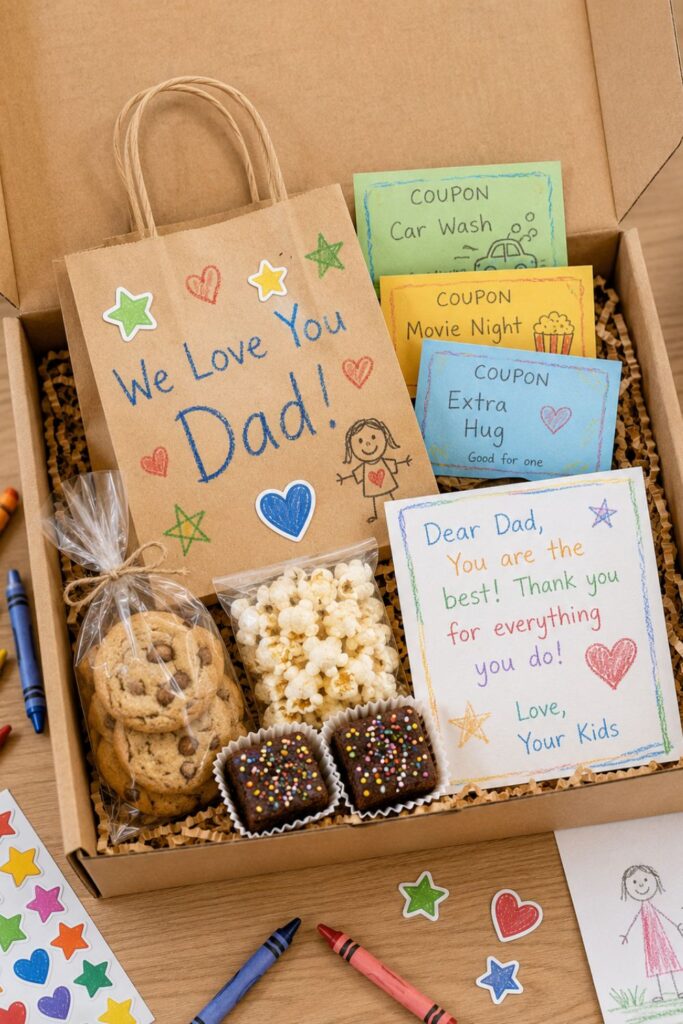
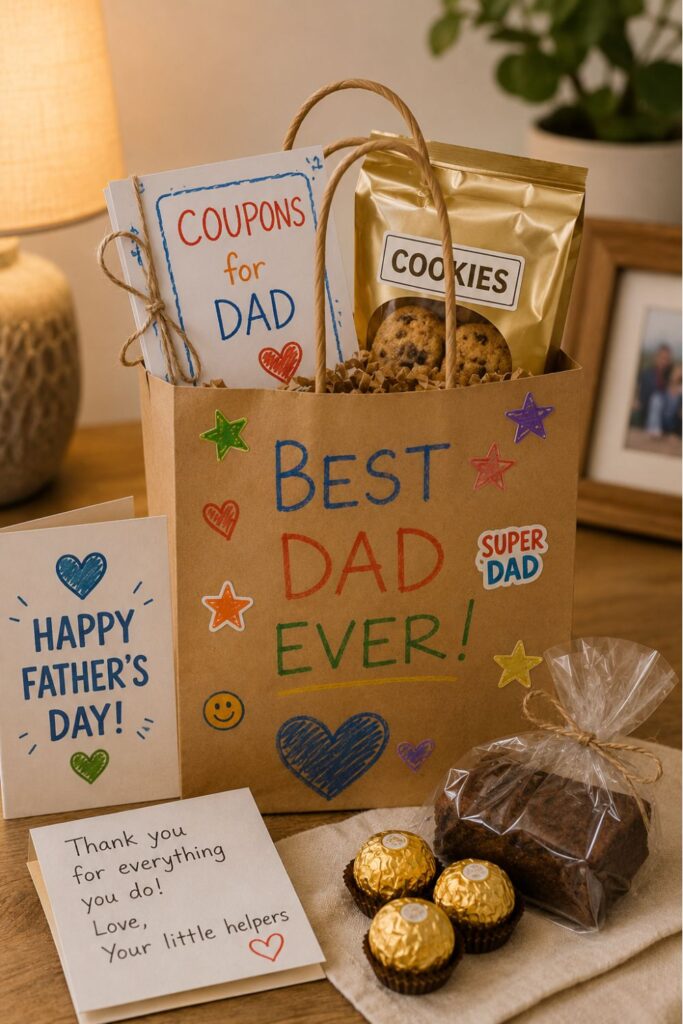
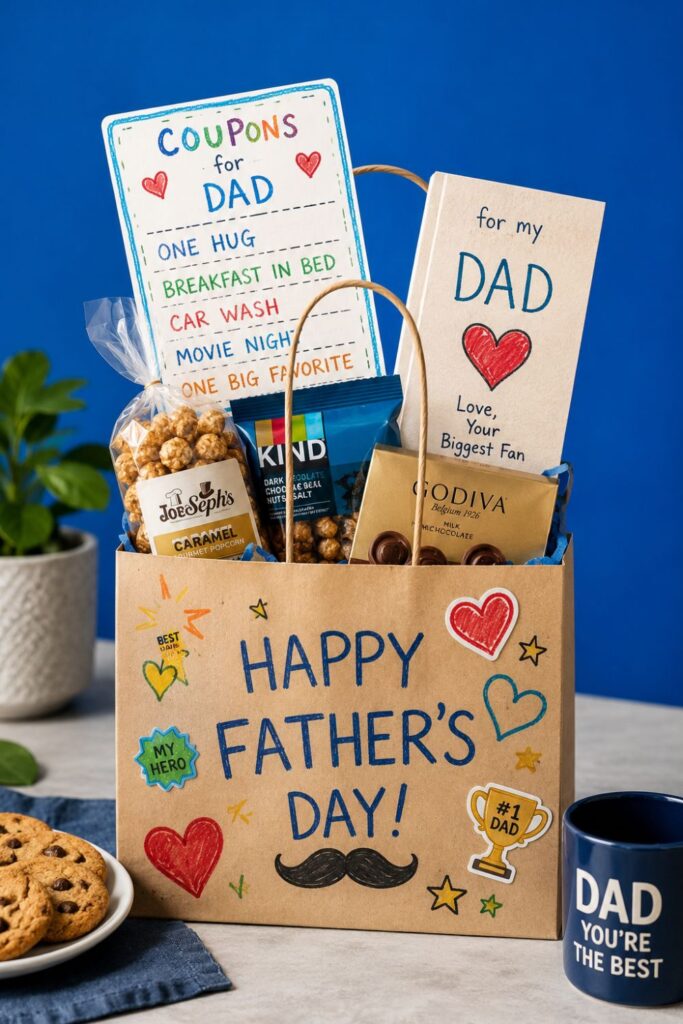
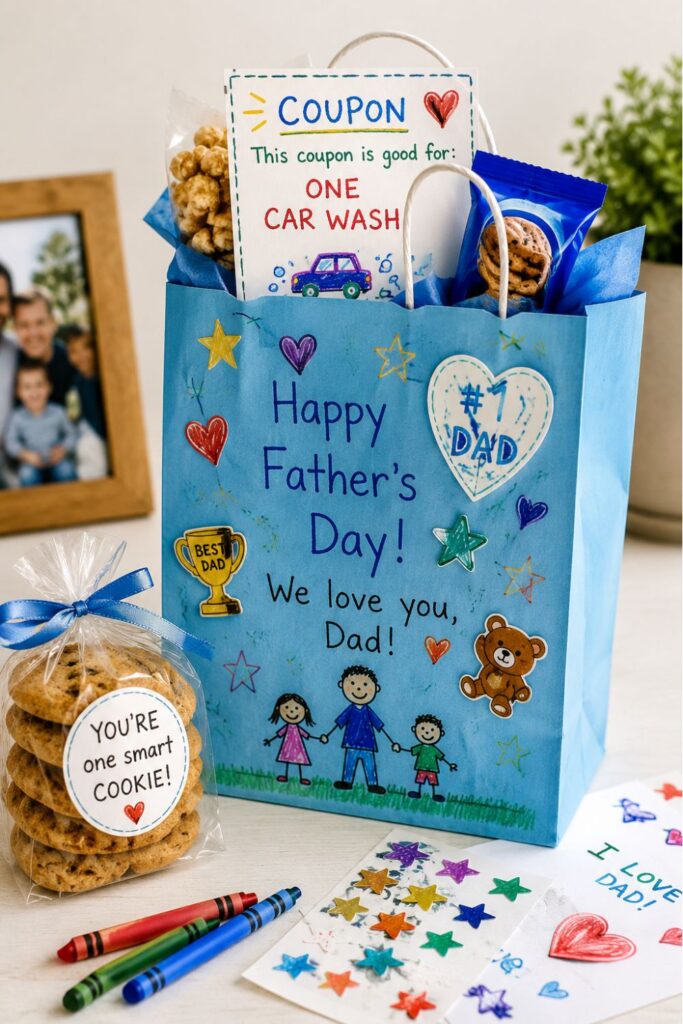
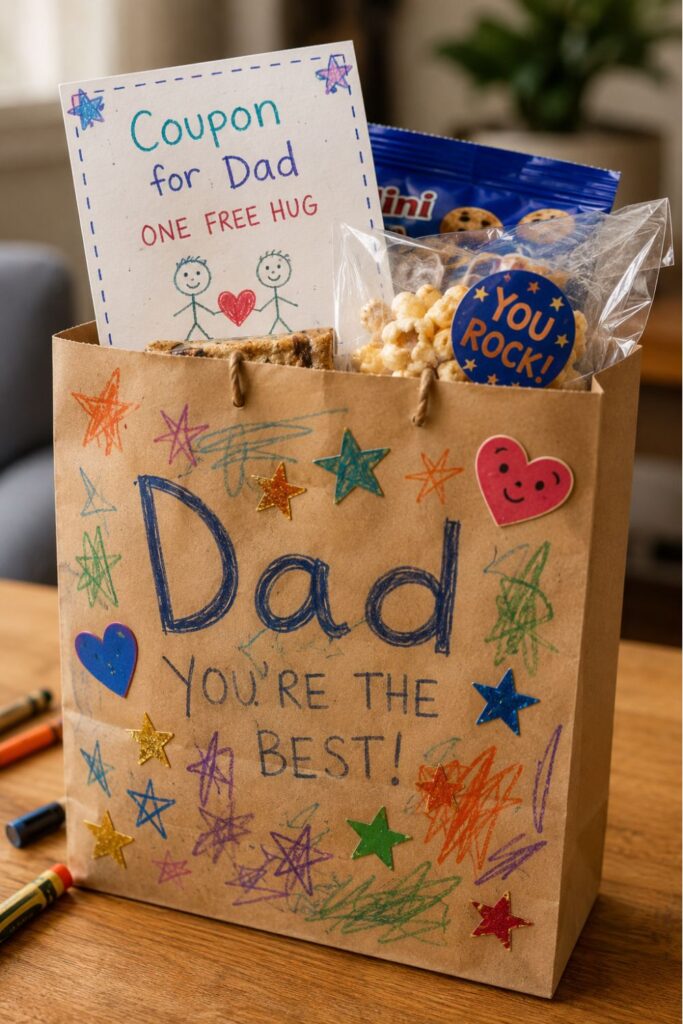
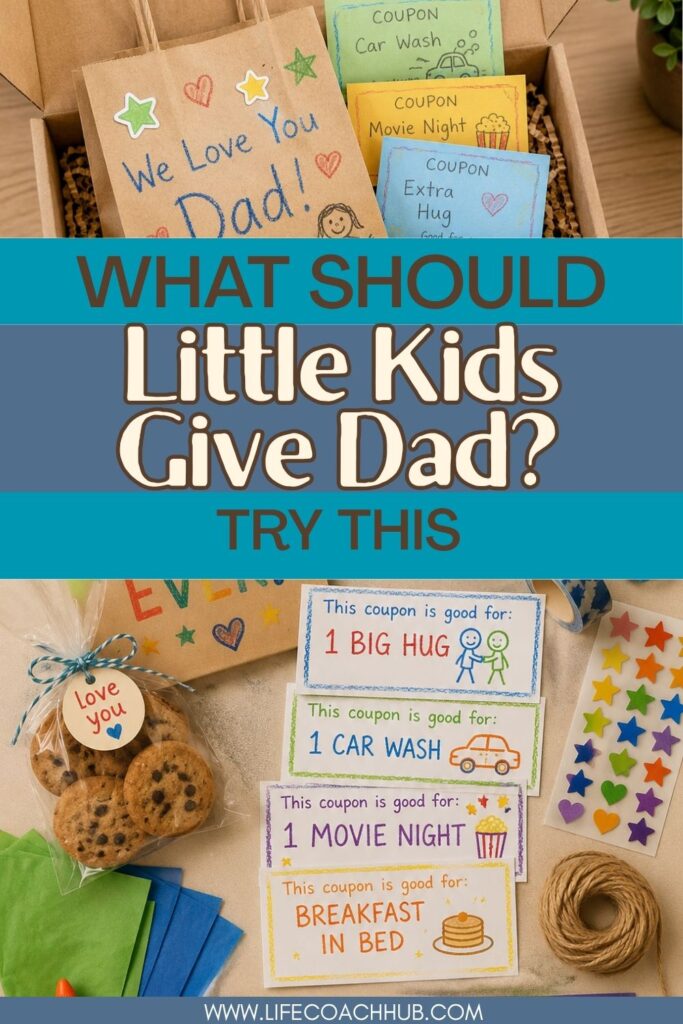
Younger kids often want to give Dad something special, but the best gift ideas for little hands are usually the simplest ones. A handmade coupon and treat gift bag gives them a real role in the gift without making the project too hard, too messy, or too expensive.
This kind of gift works because it combines three things Dad will actually notice. There is a small treat he can enjoy right away, a coupon that promises time or help, and a decorated bag that clearly shows the child made it with love.
For younger kids, the goal is not perfection. The wobbly letters, uneven stickers, and funny drawings are part of the charm. Those details make the gift feel personal in a way store-bought presents often do not.
This is also a great gift when you need something that can be made in one sitting. It does not require a long craft supply list or a complicated printable. You can use items you already have at home, then add one small treat Dad likes.
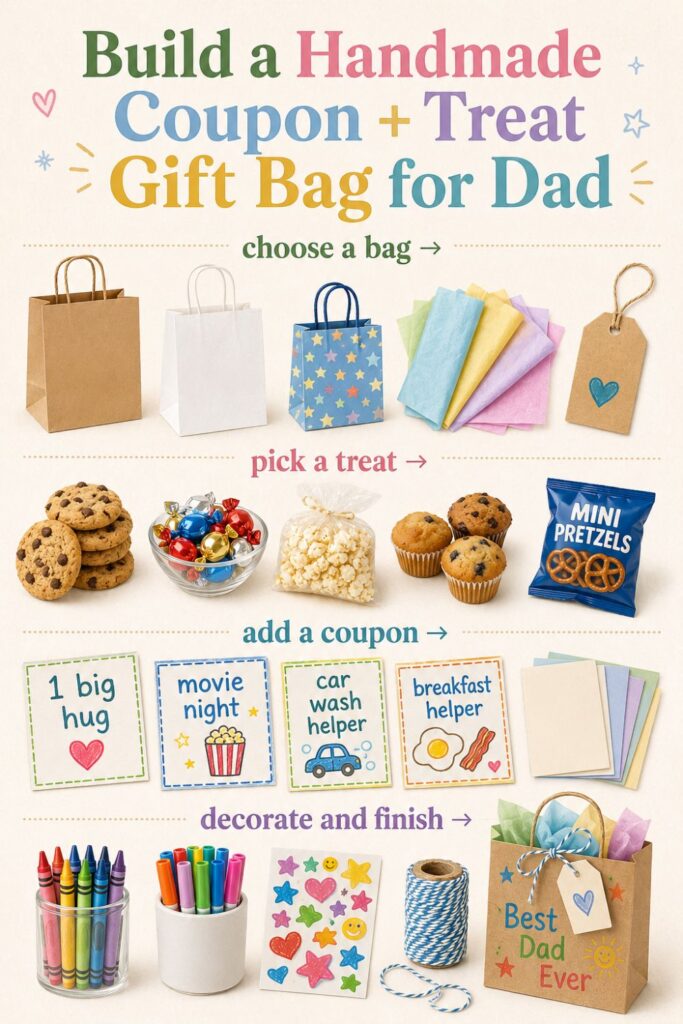
A basic version might include:
One snack or sweet treat
One handmade coupon
One decorated paper bag
One small note or drawing
Tissue paper, ribbon, or stickers for finishing
The gift can be adjusted for toddlers, preschoolers, or early elementary kids. Very young children can decorate the bag with stickers or scribbles, while older kids can write their own coupon and help choose the treat.
It also works for many kinds of dads. The coupon can be playful, helpful, relaxing, or sentimental. The treat can be simple, funny, or tied to something Dad enjoys.
The sweetest part is that the child gets to hand Dad something they helped create. It feels like a gift from them, not just a gift an adult assembled nearby.
Choose one easy treat: Pick something Dad already enjoys, such as wrapped cookies, chocolate, trail mix, popcorn, mini muffins, or a favorite candy. This keeps the gift simple while still making it feel thoughtful.
The treat does not need to be homemade to feel personal. For younger kids, store-bought treats are often easier and safer because the child can help choose, sort, and package them without needing to cook.
Think about what Dad reaches for when he has a quiet moment. Does he like salty snacks during a game? Does he grab chocolate after dinner? Does he love coffee-flavored candy, nuts, or cookies?
A good treat choice feels like the child noticed something about him. That is what makes a simple snack feel more meaningful.
Keep it kid-friendly to assemble: Use items that are easy for small hands to place into the bag. Wrapped treats are especially helpful because they stay neat and do not need extra containers.
You could use:
Two wrapped cookies
A small bag of popcorn
A few chocolate squares
A snack-size trail mix packet
A mini brownie or muffin in a wrapper
A sealed drink mix packet
Avoid anything too messy, sticky, or fragile if a young child is helping. The easier it is to handle, the more confident the child will feel.
Make the treat look intentional: Instead of tossing the snack into the bag, give it one small gift-like detail. Add a sticker, paper label, or handwritten note that says “Dad’s Treat,” “For Your Snack Break,” or “Open When You Need Something Sweet.”
This little label helps the treat feel like part of the gift, not just something added at the last second.
Keep the portion small: A small treat works better than an overstuffed bag. The goal is to make the coupon and handmade details stand out too.
A treat that fits neatly in the bag leaves room for the child’s coupon, drawing, and decorations. That balance makes the whole gift feel finished.
Make a Kid-Friendly Coupon Dad Can Redeem
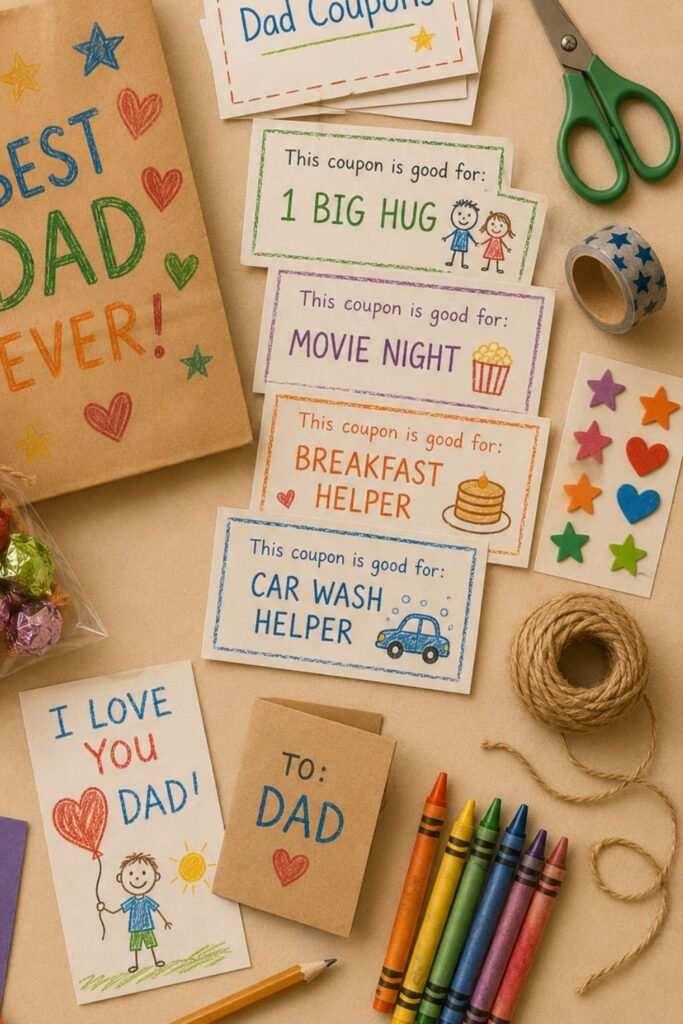
Choose one coupon promise: Help the child pick a simple promise Dad can actually use. The best coupon ideas are easy to understand, easy to redeem, and age-appropriate for the child.
For younger kids, avoid coupons that sound cute but are unrealistic. A toddler cannot promise to clean the garage, and a preschooler may not understand a big chore. Keep the action small and clear.
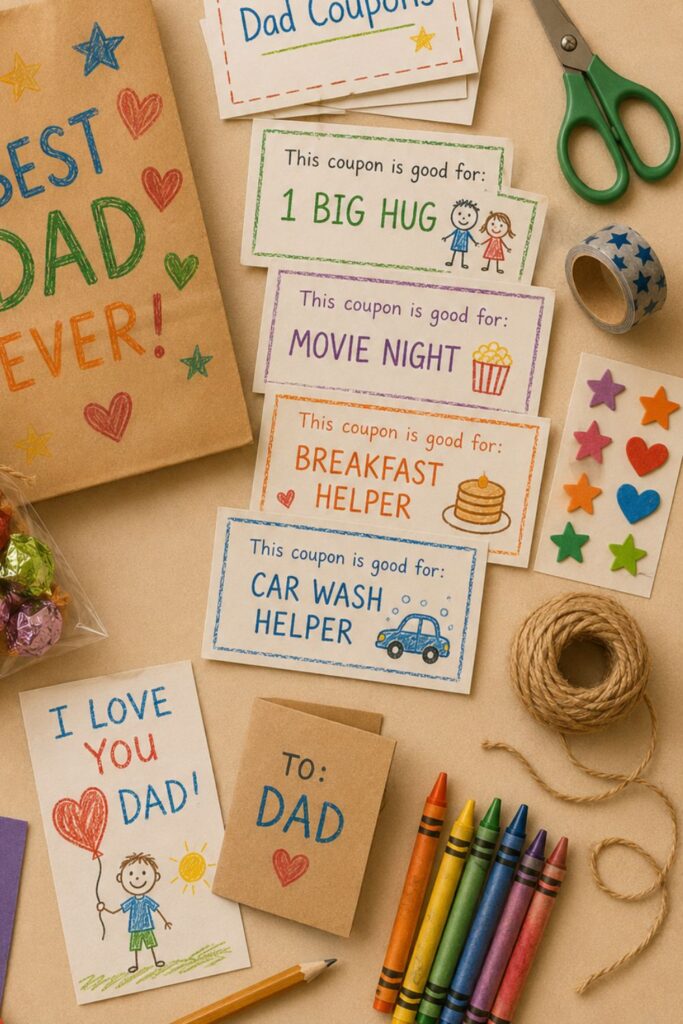
Good coupon ideas include:
One big hug
One silly dance show
Help pick up toys
Help wash the car
Movie time with me
One board game together
Breakfast helper
Ten minutes of quiet reading
One backyard walk together
Help set the table
The coupon can be sweet, useful, or playful. What matters most is that the child can understand what they are giving.
Write it in the child’s voice: The wording should sound simple and natural. Instead of making the coupon too polished, write something a child might actually say.
For example:
“I will give Dad one big hug.”
“I will help Dad clean up.”
“I will watch a movie with Dad.”
“I will help make breakfast.”
“I will play your favorite game.”
An adult can write the words if the child is too young, but the child can still choose the promise. That choice gives them ownership of the gift.
Make the coupon easy to read: Use a large index card, folded cardstock, or a simple rectangle cut from construction paper. Leave space around the words so the child can decorate it.
You can write “Dad Coupon” at the top, then add the promise in the middle. At the bottom, add “From” and the child’s name.
Add a redemption detail: A small detail makes the coupon feel real. You might write “Good for one time,” “Use anytime this week,” or “Dad gets to pick the day.”
This also helps Dad know how to use it. Instead of being just a cute card, the coupon becomes a little experience he can look forward to.
Decorate the Bag Without Making It Complicated
Use a plain base bag: Start with a simple paper bag, kraft lunch bag, white gift bag, or small treat bag. A plain surface gives younger kids room to decorate without needing a fancy setup.
You do not need a special craft bag. A lunch bag can look adorable once a child adds drawings, stickers, and a handwritten message.
The bag should be big enough to hold the treat and coupon, but not so big that it looks empty. A small or medium bag usually works best.
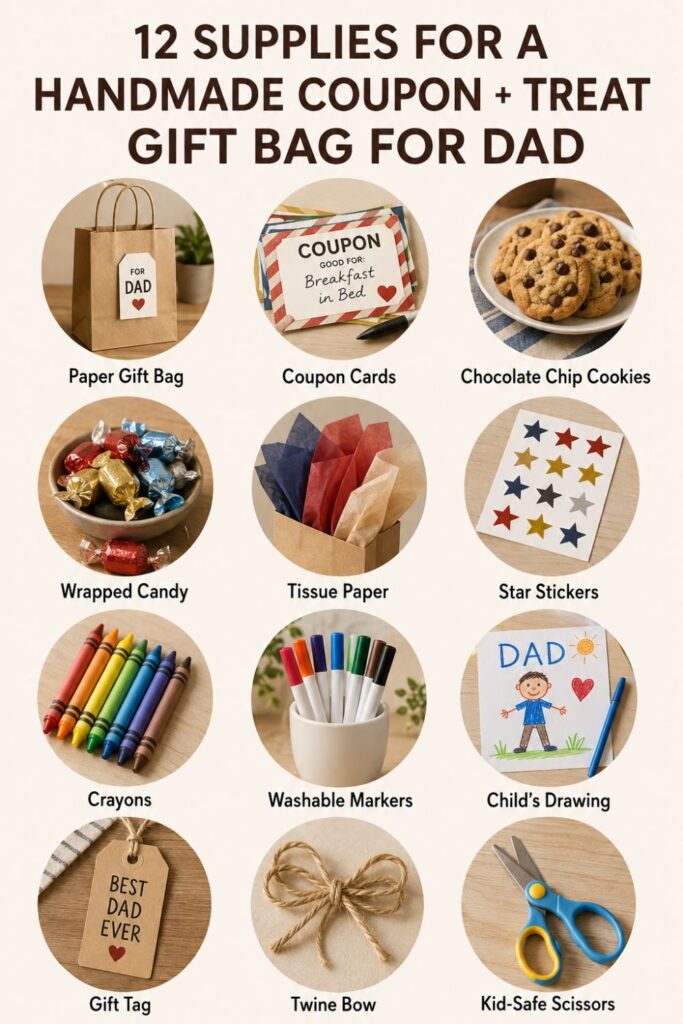
Give kids limited supplies: Too many craft supplies can make the project harder for younger kids. A small set of options helps them focus and keeps cleanup easier.
Try offering:
Crayons
Washable markers
Stickers
Foam shapes
Glue stick
Washi tape
Stamps
Construction paper scraps
For toddlers, stickers and crayons may be enough. Preschoolers may enjoy drawing Dad, coloring hearts, or adding simple shapes. Early elementary kids may want to write their own message or create a theme.
Create one main design area: Help the child decorate the front of the bag first. This gives the gift a clear focal point and makes it look more finished.
They could draw:
Dad’s face
A heart
A sun
A favorite activity with Dad
A trophy that says “Best Dad”
A picture of the treat inside
A big “I Love You Dad” message
This is also where the visual appeal comes in. A decorated bag with a child’s drawing on the front is instantly giftable and photo-friendly without needing extra styling.
Let imperfect details stay: Resist the urge to fix every crooked sticker or uneven letter. Those are the parts Dad will probably love most.
A handmade gift from a younger child should look handmade. The goal is not to create a perfect craft. The goal is to let the child’s personality show.
Add the child’s name clearly: Even if the rest of the writing is messy, make sure Dad can see who made it. A simple “From Mia” or “Love, Jack” makes the bag feel personal right away.
Put the Gift Bag Together So It Feels Finished
Layer the items neatly: Once the treat, coupon, and decorated bag are ready, help the child place everything inside in a way that feels special. The order matters because Dad should see the handmade coupon easily when he opens it.
Start with a little tissue paper, shredded paper, or a folded napkin at the bottom. This gives the bag some shape and helps the treat sit higher instead of sinking to the bottom.
Then add the treat. Place it upright if it has a label or front side. If it is wrapped in a small pouch, tuck it toward the back so the coupon can sit in front.
Finally, slide the coupon near the front of the bag. You want Dad to notice it right away.
Add one small extra if needed: If the bag feels too empty, include one more child-made detail. Keep it small so the gift still feels simple.
You could add:
A tiny drawing
A folded note
A photo
A paper heart
A “Best Dad” badge
A small joke card
A handprint cutout
Try not to add too much. This gift works best when the main pieces are clear: treat, coupon, and decorated bag.
Close it in a simple way: Fold the top of the bag over once or twice. Seal it with a sticker, ribbon, paperclip, clothespin, or washi tape.
Let the child help with this final step. Closing the bag makes the project feel complete, and younger kids often love being the one to “finish” the gift.
Add a name tag: A tag makes the bag feel more like a real present. You can use a scrap of cardstock, a sticky note, or a gift tag.
Write “To Dad, From ___” and let the child decorate around it. They can add hearts, stars, scribbles, or little drawings.
Set it up for giving: Place the bag somewhere the child can hand it to Dad themselves. That moment is part of the gift.
You can gently prompt them to say, “I made this for you,” or “Open the coupon first.” It gives them a sweet little sense of pride.
Make It Work for Different Ages
Give toddlers the decorating job: Toddlers may not understand the full gift, but they can still participate in a real way. Let them scribble on the bag, add stickers, choose between two treats, or press their hand onto paper for a handprint.
At this age, keep the project very short. A toddler may only want to decorate for a few minutes, and that is enough.
An adult can write the coupon, package the treat, and assemble the bag. The toddler’s contribution can be the drawing, stickers, or handprint.
Good toddler coupon ideas include:
One big hug
One high five
One cuddle
One silly song
One drawing for Dad
These simple promises are easy for Dad to enjoy and easy for a very young child to understand.
Let preschoolers choose the coupon: Preschoolers can usually make more choices. Offer two or three coupon ideas and let them pick the one they like best.
For example, ask, “Do you want to give Dad a movie coupon, a hug coupon, or a helper coupon?” Simple choices help them feel included without overwhelming them.
Preschoolers can also decorate with more intention. They may draw Dad, add hearts, or tell you what they want the coupon to say.
Give early elementary kids more ownership: Older young kids can take on most of the project with light help. They may be able to write the coupon, choose the treat, decorate the bag, and decide how everything should fit inside.
Let them make creative choices, even if the result is not perfectly neat. They might want to make a funny coupon, add a joke, or draw a scene of them doing something with Dad.
Keep the task short: Younger kids do best when the project is broken into small steps.
Try this order:
Decorate the bag
Choose the treat
Make the coupon
Add the items
Close the bag
Add the tag
This keeps the craft moving and helps the child stay engaged from start to finish.
How a Family or Parenting Coach Could Help Make Gifts More Meaningful
Use the gift as a connection activity: A family or parenting coach could help parents see this project as more than a craft. It can become a small way to teach appreciation, thoughtfulness, and follow-through.
Younger kids often need help turning love into action. They may know they love Dad, but they do not always know how to show it in a clear way. A simple coupon gives them a concrete action to offer.
The process also helps parents slow down and ask meaningful questions, such as:
“What does Dad like?”
“What do you love doing with Dad?”
“What could you help Dad with?”
“What would make Dad smile?”
“What should your coupon say?”
These questions guide the child without taking over the project.
Choose age-appropriate roles: A coach could help families divide the project based on what each child can actually do. This makes the gift less frustrating and more successful.
For example, a toddler can decorate, a preschooler can choose the coupon, and an older sibling can write the words. Everyone gets a real job.
This is especially helpful when multiple kids are making one gift together. Without simple roles, one child may take over while another feels left out.
Build confidence through giving: Handmade gifts help younger kids experience the pride of creating something for someone else. They learn that gifts are not only about buying things. They can also be about time, effort, and attention.
When Dad reacts warmly, the child sees that their small contribution mattered. That can build confidence in a quiet but powerful way.
Make it part of a family rhythm: A coach might suggest repeating small handmade gifts for birthdays, Father’s Day, holidays, or appreciation days. Over time, children learn to notice what others enjoy and think about how to make them feel cared for.
This kind of habit can support family connection in a very practical way. It gives kids a simple structure for showing love, and it gives parents an easy activity that does not require a big budget or complicated planning.
Small Ways to Make the Gift Feel More Personal
Match the treat to Dad’s routine: A basic treat becomes more meaningful when it connects to something Dad actually does. Instead of choosing any snack, think about when he might enjoy it.
For a dad who starts the day early, add coffee candy, biscotti, or a small muffin. For a dad who watches sports, add popcorn, pretzels, or a favorite game-day snack. For a dad who drives often, choose a wrapped snack he can keep in the car.
For a dad who loves quiet evenings, pick chocolate, cookies, or tea. For a dad who likes backyard time, add trail mix or a small pack of nuts.
The treat does not need to be fancy. It just needs to feel like it was chosen for him.
Tie the coupon to Dad’s personality: The coupon should also match what Dad would enjoy. A playful dad might love a silly dance show or joke coupon. A practical dad may appreciate a helper coupon. A sentimental dad might love a cuddle, story, or drawing coupon.
Here are a few pairings that work well:
Popcorn plus a movie night coupon
Coffee treat plus a breakfast helper coupon
Chocolate plus a quiet reading coupon
Trail mix plus a walk together coupon
Cookies plus a game night coupon
Favorite candy plus a big hug coupon
This makes the gift feel more complete because the treat and coupon support the same little moment.
Add one child-made detail: A small handmade extra can make the bag feel even sweeter. Keep it quick and simple.
Try adding:
A mini drawing of Dad
A heart with the child’s name
A handprint card
A tiny “Best Dad” award
A photo with a scribbled frame
A one-line note
Keep the message specific: Instead of only writing “I love you,” help the child add one reason. This turns the gift from sweet to memorable.
Examples include:
“I love you because you play cars with me.”
“I love you because you make pancakes.”
“I love you because you read stories.”
“I love you because you make me laugh.”
Those small details are often the ones Dad will remember most.
A Sweet Little Gift Dad Will Remember
A handmade coupon and treat gift bag works because it gives younger kids a gift they can actually help create. It is simple enough for little hands, but still meaningful enough to feel special when Dad opens it.
The treat gives him something fun to enjoy right away. The coupon gives him a small promise of time, help, or affection. The decorated bag brings it all together in a way that feels personal and child-made.
This is the kind of gift where the imperfections make it better. The crooked letters, extra stickers, crayon marks, and funny drawings all show that a child was part of the process.
It also keeps the focus in the right place. Instead of trying to create a big expensive present, the gift becomes about noticing Dad and giving him something connected to who he is.
To make the project easy, remember the basic formula:
Pick one treat Dad likes
Make one simple coupon
Decorate one small bag
Add one personal note or drawing
Let the child help present it
That is enough. You do not need a complicated craft, a huge basket, or a perfect printable for the gift to feel thoughtful.
For younger kids, the best handmade gifts are the ones they can understand. They know they picked a snack. They know they decorated the bag. They know the coupon means they are giving Dad something from themselves.
That sense of ownership is what makes the moment sweet. When they hand Dad the bag, they are not just giving him a treat. They are giving him their effort, their attention, and their little version of love.
And for many dads, that is the part worth keeping.
As a busy stay at home mom, finding ways to make extra money while balancing your family and personal life can be challenging to say the least.
That’s where side hustles come in handy! Side hustles are like small businesses or part-time jobs that you can do to make extra money. Side hustles for moms are ideal since they can be very flexible.
They offer opportunities for you to earn extra cash while still letting you be able to spend quality time with your family.
There are various stay at home mom side hustles that cater to different skill sets, interests, and available time commitments. There are definitely side hustles that don’t require a lot of time.
From online tasks like social media management to providing childcare for other families, you can find the perfect mom side hustle that fits into your unique lifestyle.
Whether you’re looking for a creative outlet or want to make use of your existing skills, trying a side hustle can be a rewarding way to grow financially and professionally.
Check out this list of side hustles for moms and find the perfect one for you!
Flexible Side Hustles for Stay-at-Home Moms
Virtual Assistant
As a mom, you might be looking for side hustles that allow for a flexible schedule to balance your responsibilities at home.
Becoming a virtual assistant could be a perfect fit. Virtual assistants typically help entrepreneurs, small business owners, or busy professionals with tasks like scheduling, social media management, and data entry.
With the ability to set your own hours, this hustle idea can help you earn some extra cash without compromising your family time.
To get started, you can join freelance platforms like Upwork where you can create a profile, apply for jobs, and start your virtual assistant journey.
If you have a knack for writing, starting a side hustle as a freelance writer could be a great option for you.
Freelance writing can include a lot of fields such as blog writing, copywriting, or content creation. With a flexible schedule and the ability to work anywhere, you can easily fit this into your daily routine, working when it suits you.
There are a ton of businesses and blogs out there looking for ghostwriters for their online content.
Again, platforms like Upwork can be a helpful starting point for finding clients and building a portfolio. Fiverr is another site where you can promote your freelance writing skills.
You can also try to connect with other freelance writers or join online communities for networking and support.
As a mom, using your creativity can be a great way to earn extra income while doing something you enjoy. Let’s explore some options in the fields of Art and Crafts, Fashion and Beauty, and Food and Meal Prep.
Art and Crafts
If you have a flair for arts and crafts, putting your skills to work can be a fantastic hustle opportunity.
Platforms like Etsy make it easy for you to showcase and sell your handmade products to a global audience. And, starting an Etsy shop is super easy.
Are you passionate about fashion and beauty? Leverage your knowledge and experience to generate extra money with these creative hustle ideas:
Start a fashion or beauty blog, sharing your tips and personal style, and monetize it with affiliate marketing or sponsored content.
Become a personal stylist or shopper, helping others buy clothes and develop their unique style.
Create and sell your own line of handmade jewelry or accessories on Etsy or other online marketplaces.
Food and Meal Prep
For those who love spending time in the kitchen, starting a food-related side hustle idea can be a tasty way to make money. Here are some food-related work from home ideas:
Offer meal prep services for busy families, designing and cooking multiple meals they can enjoy throughout the week.
Sell homemade baked goods, jams, or specialty food items at local farmers’ markets or online.
Start a food blog, sharing your favorite recipes and cooking tips. You can make money from it through sponsored content or affiliate marketing.
Remember, using social media is essential for promoting your side hustle and reaching your target audience. By exploring your passions and putting your unique skills to work, you can generate a fun, flexible, and profitable side hustle as a mom.
CIT Bank – Put your money in a high yield savings account that earns
Online Side Hustles for Stay at Home Moms
As a stay at home mom looking for ways to start making money, social media and websites offer a variety of ways to make money online that can fit your schedule and skills.
In this section, we will discuss three popular options of online jobs: YouTube, Blogging and Ghostwriting, and eBay and E-Commerce.
Creating your own YouTube channel is an excellent side business for moms who want to share their interests and experiences while making money.
To start, choose a niche or theme that aligns with your passions and expertise. Maybe it’s makeup tutorials, or parenting tips and tricks.
Once you’ve built an audience, you can monetize your YouTube channelthrough ads, sponsored content, or affiliate marketing. Focus on creating quality, engaging, and informative content to help grow your subscriber base.
Social Media Manager
I’m sure if you are like most stay at home moms, and actually like most of us period, you take a few minutes to browse social media during your day.
Why not make cash for it? Another excellent job for stay at home moms is to work as a social media manager.
You can manage any of the social media platforms out there for companies or bloggers who need help. Facebook, Instagram, or Pinterest just to name a few. You may need to create images and graphics or write posts. Or simply pin pins on Pinterest.
And you don’t actually have to be a graphic designer. You can use tools like Canva that work for anyone. You can make money on your own schedule managing other people’s social media.
Another way to start making money online is by selling printables. For whatever reason, this is big business now!
And, it is another way to make passive income. You create a digital file and then you sell that file over and over again.
Printables that you can sell can include things like planners, graphic design templates, or artwork. You can even sell downloadable scriptures for people to hang on their walls!
Blogging
Blogging is another online job that allows you to share your knowledge and earn extra income. It is however possibly one of the more challenging ways to make money on the side. It requires a lot of time and effort to get a blog making money.
Begin by choosing a niche and creating a visually attractive and user-friendly website. You can make money with your blog through advertising, sponsored content, or affiliate marketing. Consistently publish high-quality content to attract readers and boost your online presence.
Click here to start your blog the easy way by signing up with Blue Host and get your blog domain for free. Blue Host will take you step-by-step through the set-up.
Teaching Online
Another one of the best stay at home mom side hustles is online teaching. There are sites like VPKIDS where you can get paid to teach students and kids. You can also make money just for tutoring kids on sites like Tutor.
Or, you can create your own course or class and sell that. If you are good at Yoga, or had a career in marketing, these are things you can create and sell a course on.
This would be considered passive income too, since once you make the course you can sell it month after month without anymore work required! Plus, it can be consistent income!
Buying and selling items oneBay and other e-commerce platforms can be a lucrative side hustle for moms with a knack for finding deals and reselling items at a profit.
Start by searching for items with high resale value on digital marketplaces, thrift shops, or garage sales. Then, set up your online business with a store, list the items, and manage shipping and handling.
Sometimes on sites like NextDoor, you can even find items people are giving away for free. You can sell everything from clothes, to accessories or even furniture. Here are the top sites where you can sell furniture for cash is you decide to flip furniture.
For a more hands-off approach, consider starting a dropshipping business. That is when you sell products from suppliers without ever handling the inventory yourself.
Shopify, WooCommerce, and BigCommerce are popular platforms to create your own online store for this business model.
You can also start an Amazon by Fulfillment business of dropshipping and selling products. Any of these product selling businesses will allow you to make money on your own schedule.
If you have an online presence (like a blog or social media account), you can make money from sponsorships and ads. It is actually called Affiliate Marketing when companies pay you money from promoting their products.
Moms who enjoy blogging or social media posting can potentially earn an income through:
Sponsored posts
Affiliate marketing
Selling digital or physical products
Selling a service (e.g. freelance writing, or Pinterest management)
Collaborating with brands and advertisers, you’ll create content that promotes their products or services, and you’ll be paid for your efforts.
To succeed in earning money through sponsorships and ads, make sure to build your audience, focus on providing value, and be selective about the brands you partner with.
This is another challenging way to earn an income since you will need to have a large following and a lot of traffic to make it work.
As a mom looking for flexible ways to earn extra income, consider exploring service-based work that you can fit around your schedule. Here are some popular options you can try:
Pet Care Services
If you love animals, offering pet care services can be a great way to make extra money. Services like Rover and Wagallow you to create a profile to offer your services for dog walking or pet sitting.
You can set your prices and availability so it fits easily with your daily routine. And, walking dogs is even an activity you can share with your own kids. Not to mention that spending time with dogs can be therapeutic!
Provide dog walking for busy pet owners
Offer pet sitting services when owners are away
Provide care for a range of pets, not just dogs
House Sitting
If you find spending time in other people’s homes appealing, you can become a house sitter. As a house sitter, you will help homeowners feel secure while they are out of town by staying in their homes and taking care of the home.
Take care of plants, pets, or other needs while homeowners are away
Providing driving and car services is another flexible side gig for moms who love being behind the wheel.
Sign up for platforms like Uber or Lyft to get started as a rideshare driver. These platforms let you set your own hours, making it a convenient option for stay-at-home moms. You can even get paid to deliver food.
Plus, if you only want to work a few hours at a time, you can.
Drive for rideshare apps in your spare time
Offer food delivery services with apps such as DoorDash or Instacart
Provide chauffeur services for clients or events
By exploring these service-based income opportunities, you can find ways to earn extra income that works well with your schedule and interests. Give one (or more) of these options a try to see which one is best for you.
If you’re looking for ways to work remotely and make some extra cash, you can take online surveys.
Many companies are willing to pay you in the form of cash, check, or gift cards for your opinion on their products and services.
To get started, sign up for reputable survey websites like Survey Junkie, Swagbucks, and Pinecone Research. Once you’ve completed a few surveys, you can redeem your earnings for various rewards.
Branded Surveysis a great site where you can quickly earn for completing easy surveys.
Top Online Earners
Survey Junkie:Get an instant $10 sign up bonus and earn cash for simple online tasks.
Branded Surveys– Quickly earn extra money for completing easy surveys
Testing Products
Another interesting side hustle for moms involves testing products.
Some companies offer free products in exchange for your honest feedback. You can try out new items, ranging from beauty products to household essentials.
Websites like Toluna, Vindale Research, and BzzAgent can connect you with companies seeking product testers. Make sure to read and follow any guidelines provided by the websites, and always provide honest and constructive feedback.
Garage Sales and Secondhand Markets
Garage sales and secondhand markets offer a great opportunity to make some extra money while decluttering your home.
Go through your items and gather everything you no longer need or use. Organize a garage sale, or sell your items on platforms like eBay, Poshmark, or Facebook Marketplace.
Not only will you be able to earn some cash, but you’ll also create more space in your home. Additionally, you can visit garage sales and thrift stores to find items to resell for a profit online.
Balancing a side hustle with your full-time job and family can be challenging. Here are some tips to help you manage your time effectively and make the most of your side hustle opportunities.
Prioritize self-care
As a busy mom, it’s crucial to prioritize self-care. Ensure you’re getting enough sleep, eating well, and exercising regularly.
Remember, taking care of yourself is an investment in your ability to juggle multiple roles successfully.
Create a schedule
A clear schedule helps in allocating time for your side work, full-time job, and family.
Dedicate specific time slots to each aspect of your life, and make sure to follow the schedule as closely as possible. This way, you’ll know when it’s time to focus on work and when it’s time to be with your family.
Use productivity tools
Take advantage of productivity tools and apps like Trello or Asana to stay organized and keep track of tasks related to your side hustle. Having a systematic way of managing your tasks will save you time and prevent you from feeling overwhelmed.
Set boundaries
It’s essential to establish boundaries when you’re juggling a side hustle and being a mom. Be clear on when you’re available for work and when you need time for your family. Communicate these boundaries to your employer and clients to avoid conflicts.
Delegate tasks
Don’t be afraid to ask for help from your support system, whether it’s your spouse, family members, or friends. Delegating tasks like childcare or household chores to others can free up valuable time and energy for you to focus on your side hustle.
Look for flexible Side Hustles
Choose work that can be done from home or during flexible hours, allowing you to work around your family responsibilities. Options like proofreading, online tutoring, and freelance writing are popular among stay-at-home moms.
By following these tips, you’ll be better prepared to manage your time effectively and find balance between your side hustles, full-time job, and family life.
Remember that every mom’s situation is unique, so be patient with yourself and adjust your approach as needed.
Just because you are a mom and balancing a lot of responsibilities, doesn’t mean you can’t still set and meet some financial goals.
There are so many sides hustles for moms out there! Ways to earn extra cash that won’t affect the time you spend with your family. Just find the right one for you!
A dad who is always in the car usually has a routine that looks simple from the outside, but it can get tiring fast. Work drives, errands, school pickups, appointments, weekend projects, and last-minute store runs all add up. A practical road trip snack box gives him something easy to reach for when he is hungry, thirsty, tired, or stuck between stops.
This kind of gift works especially well because it does not ask him to find space for something decorative or complicated. It gives him useful items he can keep in the car, take into the office, or grab before heading out the door. It also feels more personal than a regular snack basket because it is built around the way he actually spends his day.
The goal is not to fill a box with random treats. The goal is to create a small driving kit that makes long days in the car a little easier. That means choosing snacks that will not melt everywhere, comfort items he will really use, and a container that will not turn into clutter.
A good road trip snack box can be simple, affordable, and still feel thoughtful. Under $50 is plenty if you choose the right mix of practical items and small treats. You can use multipacks, simple packaging, and one or two nicer items to make it feel giftable without overspending.
Think of this as a gift for the dad who says, “I don’t need anything,” but still ends up buying gas station snacks, forgetting water, or digging through the console for napkins. It is useful, personal, and easy to customize.
A good box might include:
Salty snacks
Sweet treats
Protein options
Drink packets
Gum or mints
Napkins or wipes
A small trash pouch
A personal note
The best part is that the box can keep working after the holiday or special occasion is over. Once he knows what he likes inside it, the family can refill it again and again.
Choose a sturdy portable box: Pick a container that can handle real car life, not just look nice for five minutes on a table. A small lidded plastic bin, divided organizer, soft lunch tote, or handled caddy can all work well. The best option is something he can move easily from the house to the car, or from the car to the office, without items spilling everywhere.
A road trip snack box should be easy to reach when parked, easy to close, and easy to store. If the container is too large, it may become annoying instead of useful. If it is too small, everything gets crammed together and he will stop using it.
Keep the size realistic: Think about where he might actually keep it. Some dads may place it on the passenger seat during long drives. Others may keep it in the trunk, back seat, center console area, or office bag. The box should fit his driving habits instead of forcing a new system that feels inconvenient.
A good container does not need to be fancy. In fact, something too decorative may make the gift less practical. A simple black, gray, clear, or neutral bin can feel more natural for the car.
Use compartments if possible: Dividers make the box easier to use because everything has a place. Snacks can go in one section, drink add-ons in another, and comfort items in a separate pouch. This keeps the box from turning into a pile of wrappers, bars, and loose packets.
Helpful container options include:
A small divided caddy
A plastic tackle-style organizer
A lunch tote with side pockets
A clear lidded storage box
A compact trunk organizer
A reusable snack box with compartments
Avoid anything too precious: This gift is going into a car, so it needs to tolerate crumbs, heat, dust, and daily handling. Skip delicate baskets, paper boxes, or containers with fragile decorations. A practical container makes the whole gift feel more useful and more likely to be kept.
Build The Snack Base Around What He Actually Eats
Choose his driving snack style: Before buying anything, think about what he naturally grabs when he is on the go. Some dads like salty snacks, like pretzels, nuts, crackers, and chips. Others want sweet treats, like cookies, chocolate-covered snacks, or granola bars. Some prefer protein-heavy options that feel more filling during a long workday.
This step matters because a snack box should not feel like a generic gift basket. It should feel like someone noticed what he actually likes. A dad who loves jerky and spicy snacks probably will not be excited by a box full of fruit bars and trail mix. A dad who prefers lighter snacks may not want heavy candy or greasy chips in the car.
Add shelf-stable favorites: The safest snacks are individually wrapped, shelf-stable, and easy to eat without making a mess. Think about snacks that can sit in a glove box, work bag, or desk drawer without needing much attention.
Good options include:
Trail mix packets
Beef jerky or turkey jerky
Granola bars
Protein bars
Crackers
Pretzels
Roasted nuts
Dried fruit
Mini cookies
Popcorn packs
Peanut butter crackers
Hard candy
Small packs of gummies
Skip messy foods: The car is not the place for anything that melts quickly, crumbles into the seat, leaves orange dust on fingers, or needs utensils. Chocolate can be nice, but only if the box will not sit in a hot car. If heat is an issue, choose chocolate-flavored protein bars or cookies instead of plain chocolate.
Also avoid snacks with strong smells. The goal is to make the car more comfortable, not leave it smelling like lunch for the rest of the day.
Think in single servings: Single-serving snacks help keep the box cleaner and more useful. He can grab one item, eat it when parked, and throw away one wrapper. Big bags of snacks are cheaper, but they are harder to manage in the car and can go stale faster once opened.
A strong snack base usually includes a mix of salty, sweet, and filling options. That gives him choices depending on the day, the time, and how long he has been driving.
Add A Practical Drink And Fresh-Breath Layer
Include simple drink support: A road trip snack box feels much more complete when it includes something for drinks. This does not have to mean packing full beverages, especially if the box might sit in the car. Drink add-ons are often easier, cheaper, and more practical.
You can include flavored water packets, electrolyte packets, instant coffee sticks, tea bags, or small powdered drink mixes. These are easy to store and can turn a basic bottle of water into something more useful. For dads who drive early in the morning, instant coffee packets or cold brew concentrate packets may feel especially thoughtful.
Make it easy to use anywhere: Anything in the box should be simple enough to use at a gas station, work break room, office desk, or rest stop. Avoid drinks that need a blender, fridge, bottle opener, or complicated prep. The easier it is, the more likely he is to use it.
Practical drink-related additions include:
Bottled water
Electrolyte powder sticks
Instant coffee packets
Tea bags
Flavored water packets
Powdered lemonade sticks
Reusable water bottle
Small insulated tumbler
Coffee shop gift card
Add gum or mints: Gum and mints are small, affordable, and perfect for dads who drive between meetings, errands, or appointments. They are also useful after coffee, fast food, or a long day. Choose a flavor he actually likes, whether that is peppermint, spearmint, cinnamon, or fruit.
Hard candies can also work if he prefers something simple to keep in the car. Just make sure they are individually wrapped so they do not get sticky inside the box.
Keep wrappers contained: A snack box can create clutter if there is nowhere for wrappers to go. Add a small resealable pouch, mini trash bags, or even a simple zip-top bag labeled “trash.” It may seem like a tiny detail, but it makes the gift more useful.
You can also add a small pack of napkins right beside the mints and drink packets. That way, the box supports the whole snack routine, not just the food part.
Make It Comfortable For Long Errands Or Work Drives
Add small comfort extras: The best road trip snack box is not just about snacks. It should also include the little items that make driving days easier. These are usually inexpensive, but they can make the gift feel much more thoughtful.
Think about what he reaches for when he is in the car and cannot find it. Napkins, hand wipes, tissues, lip balm, sanitizer, floss picks, and a phone charging cable are all simple add-ons that can save him from annoying little moments.
Think about his actual annoyances: This is where the gift becomes personal. Does he complain about dry hands? Add hand cream or balm. Does he always forget napkins? Add a thick stack. Does his phone battery run low during the day? Add a spare charger or cable. Does he eat in the car and hate crumbs? Add wipes and a small trash pouch.
Useful comfort items might include:
Hand wipes
Tissues
Napkins
Hand sanitizer
Lip balm
Floss picks
Toothpicks
Small hand lotion
Spare charging cable
Cable clip
Sunglasses cloth
Mini notebook
Pen
Small pack of pain reliever, if appropriate
Keep the comfort items separate: Non-food items should not float around with snacks. Put them in a small pouch, resealable bag, or side compartment. This keeps the box cleaner and prevents wipes, sanitizer, or lotion from getting mixed in with food.
A simple pouch also makes the gift feel more organized. He can pull out the comfort kit without searching through every snack.
Avoid overstuffing the box: It is tempting to keep adding small items because they all seem useful. But too much stuff can make the box harder to use. Choose a few thoughtful extras instead of filling every inch.
A good rule is to include three to five comfort items. That gives him real help without creating clutter. The goal is a gift box he reaches for often, not one he has to reorganize every week.
Keep The Gift Under $50 Without Making It Feel Cheap
Start with the container budget: The container does not need to take up most of the budget. Look for a simple bin, caddy, or lunch tote that costs less than $10 to $15. That leaves room for snacks, drink packets, and practical extras.
A cheaper container can still look good if it is clean, sturdy, and arranged well. Clear containers are especially helpful because the snacks create the visual interest. A plain container also feels more practical for a dad who may not want something too decorative.
Use multipacks wisely: Multipacks are one of the easiest ways to stay under $50. You can buy a box of granola bars, crackers, jerky sticks, or trail mix packets and use several in the gift. Then keep the extras for refills later.
This approach also helps if you are making more than one gift. For example, you could divide snacks across gifts for Dad, Grandpa, an uncle, or a father-in-law.
Smart budget choices include:
Multipack granola bars
Bulk snack crackers
Variety packs of nuts
Trail mix packets
Drink mix sticks
Gum multipacks
Mini tissue packs
Travel wipe packs
Choose one slightly nicer item: A budget gift feels more thoughtful when you include one small upgrade. This could be a better jerky brand, specialty nuts, a favorite coffee packet, a nice protein bar, or a small coffee shop gift card. One upgraded item can make the whole box feel intentional.
You do not need every snack to be premium. In fact, familiar favorites often get used faster than fancy items. The trick is mixing everyday basics with one small treat.
Balance filler with usefulness: Avoid decorative filler if the goal is practical. Tissue paper, shredded paper, and bows can look nice, but they do not help him once the gift is opened. Instead, fill empty space with napkins, wipes, drink packets, or extra snacks.
A practical under-$50 box might look like this:
$8 container
$12 snack multipacks
$8 jerky or protein snacks
$5 drink packets
$5 gum and mints
$7 wipes, tissues, and napkins
$5 upgraded treat or gift card
That creates a full, useful gift without feeling thrown together.
Personalize It For His Driving Routine
Match the box to his route: The best snack box matches how he actually spends time in the car. A dad with a long daily commute may need breakfast bars, coffee packets, and gum. A dad who runs errands all weekend may appreciate snacks, wipes, and a small trash pouch. A dad who drives to job sites may need more filling snacks and practical comfort items.
Think about the rhythm of his day. Does he leave early? Does he eat lunch late? Does he drive kids around after work? Does he spend time waiting in parking lots, school lines, or between appointments? The more specific you get, the better the box becomes.
Choose snacks for timing: Different driving routines call for different snack choices. Early morning drivers may appreciate breakfast-friendly items. Afternoon drivers may want something salty, crunchy, or energizing. Weekend road trip dads may like a bigger mix of treats.
For example:
Early mornings: breakfast bars, coffee packets, nuts, mints
Long commutes: protein bars, jerky, water packets, gum
Work driving: filling snacks, napkins, charger, hand wipes
Add a personal note: A short note makes the gift feel less like a supply kit and more like something made just for him. It does not need to be emotional or long. Keep it simple and specific.
You could write something like, “For the days you are stuck in the car and need a snack that is not from a gas station.” Or, “A little driving kit for the dad who always keeps things moving.”
Include a refill idea: Add a small card inside the lid with a list of refill favorites. This turns the gift into something he can keep using. You can write categories like salty, sweet, drinks, and comfort items, then leave space to add his favorites later.
This also helps the family keep the box going. Once something runs out, it is easy to refill without rebuilding the whole gift from scratch.
Make It Look Giftable Without Losing The Practical Feel
Arrange items by category: Presentation matters, even for a practical gift. When Dad opens the box, he should be able to understand it right away. Group salty snacks together, sweet snacks together, drink items together, and comfort extras in their own section.
This makes the box look intentional and helps him use it later. If everything is tossed in randomly, the gift can feel like leftover pantry items. If it is organized, it feels like a thoughtful driving kit.
Use small pouches or paper bands: You do not need expensive packaging. Simple touches can make the box look cleaner without making it fussy. Use small resealable bags, paper bands, kraft labels, or small pouches to group similar items.
You could make mini bundles like:
“Morning fuel” with coffee packets and a breakfast bar
“Long drive snacks” with jerky and nuts
“Sweet break” with cookies or candy
“Clean-up kit” with wipes, napkins, and tissues
“Freshen up” with gum, mints, and floss picks
Place the best item on top: Put his favorite snack, upgraded treat, or personal note where he will see it first. This gives the gift an immediate moment of recognition. It says, “This was made for you,” instead of “Here is a box of stuff.”
If you are including a gift card, tuck it into the note or clip it to the inside lid. That keeps it from getting lost among the snacks.
Keep the design clean: This type of gift should not feel too precious to use. Avoid overdoing ribbons, fragile tags, or packaging that makes him feel like he is ruining the gift by opening it. A simple label, clean arrangement, and one note are enough.
You can still make it look nice with practical choices. A black caddy with neatly stacked snacks can look sharp. A clear box with organized rows can look satisfying and easy to use. A soft lunch tote with labeled pouches can feel thoughtful and ready for real life.
The key is making the box giftable and usable at the same time.
How A Coach Could Help With Better Daily Routines
Turn the gift into a routine cue: A road trip snack box can be more than a one-time gift. It can also become a small reminder to prepare for the week instead of reacting to every busy day. That is where a coach, especially an organization, productivity, or life coach, could connect this idea to a bigger routine.
Many people lose time and energy because they do not have simple systems for repetitive moments. Driving is one of those moments. If Dad is always in the car, a small driving kit can reduce little decisions and make the day run more smoothly.
Identify the real friction points: A coach might help him notice where the same problems keep happening. Maybe he skips breakfast, buys random snacks, forgets water, loses receipts, or gets annoyed because the car is always messy. Those problems seem small, but they can drain energy when they repeat every week.
A coach could help turn those patterns into simple fixes. The snack box is one example. A car reset checklist, weekly refill routine, or errand planning system could be another.
Create a refill habit: The most useful version of this gift is one that stays stocked. A coach might suggest attaching the refill habit to something already happening, like Sunday night planning, grocery unloading, or Monday morning car cleanup.
A simple refill habit could include:
Check the box once a week
Toss old wrappers
Add two salty snacks
Add two sweet snacks
Restock wipes and napkins
Replace drink packets
Check for expired items
Connect it to bigger organization goals: A driving snack box may seem small, but it supports a larger idea: make daily life easier by preparing for predictable needs. If Dad is always driving, he will probably get hungry, need a napkin, want water, or look for gum. Planning for those moments saves time and frustration.
That is the kind of practical system a coach can help build in other areas too. Simple routines, clear supplies, and fewer last-minute decisions can make busy days feel more manageable.
Easy Refill Ideas For Later
Make a refill list: Once the box is built, write down the items he likes most. This can be a small card inside the lid, a note on the pantry shelf, or a list on the fridge. The goal is to make refilling easy instead of turning it into another guessing game.
A refill list is especially helpful if kids want to help. They can look at the list and add the right items without needing to ask what goes inside. It also keeps the box from slowly filling with random snacks nobody actually eats.
Store backup snacks at home: Create a small refill zone in the pantry with snacks and extras for the box. This does not need to be large. A small bin or basket can hold extra bars, crackers, nuts, drink packets, gum, and wipes.
Good refill staples include:
Granola bars
Crackers
Pretzels
Trail mix
Nuts
Jerky sticks
Drink packets
Gum
Mints
Napkins
Wipes
Mini trash bags
Refresh by season: The box can change depending on the weather. In warm months, focus on snacks that will not melt, plus hydration packets and lighter options. In colder months, add coffee packets, heartier snacks, or a small pack of tissues.
For summer, avoid chocolate, yogurt-coated snacks, and anything that gets sticky in heat. For winter, you may have more flexibility with richer treats.
Check expiration dates monthly: Car snacks can sit longer than expected, so it helps to check the box once a month. Toss anything stale, sticky, crushed, or expired. Move older snacks to the front and add fresh ones in the back.
This keeps the gift useful instead of forgotten. It also makes the box feel like a real system, not just a one-time present.
A refillable snack box is one of those gifts that becomes better with use. The first version shows thought. The refills show care again and again.
A Gift He Will Actually Reach For
A road trip snack box works because it is simple, personal, and useful. It meets Dad in the middle of his real routine, especially if he spends a lot of time driving for work, errands, family responsibilities, or weekend plans. Instead of giving him something that needs to be displayed, stored, or figured out, you are giving him something he can use right away.
The best version is not the biggest or most expensive one. It is the one that fits his day. A small container with his favorite snacks, a few drink options, fresh-breath items, napkins, wipes, and a personal note can feel more thoughtful than a gift that costs twice as much but does not solve anything.
This is also a great gift for families who want something kids can help assemble. Kids can choose snacks, tuck in a note, decorate a simple label, or help organize the box by category. That makes the gift feel personal without requiring a complicated craft or expensive supplies.
To keep it practical, remember the main rules:
Choose a sturdy container
Use single-serving snacks
Avoid messy or meltable foods
Add small comfort items
Keep it under $50 with multipacks
Personalize it to his driving routine
Make it easy to refill
A good road trip snack box says, “I know your days are busy, and I wanted to make them a little easier.” That is why it works so well for dads who claim they do not need anything. It is not just another gift. It is a small, useful backup plan for the many hours he spends on the road.
An everyday carry gift kit is perfect for the dad who always seems to have the thing someone needs. A pen, a flashlight, a small tool, a charger, a wipe, a clip, a tiny fix for an annoying problem. Instead of giving him one bigger gift he may or may not use, this kind of kit gives him a set of small, practical helpers he can actually reach for.
The key is to avoid turning it into a random pile of gadgets. A good everyday carry kit should feel compact, intentional, and easy to use. It should be built around the little problems Dad runs into during normal life, not around novelty items that look cool for five minutes and then disappear into a drawer.
This is also a great gift when you want something thoughtful but not too expensive. You can keep it under $50 by choosing one slightly nicer anchor item, then filling in with affordable basics that make the whole kit feel complete.
Think of it like a mini problem-solving station. It could live in his glove box, backpack, desk drawer, work bag, garage shelf, or entryway basket. The best version is the one that fits how he already moves through the day.
A few good everyday carry kit themes include:
A commuter kit for the car
A desk kit for work-from-home dads
A pocket repair kit for handy dads
A garage helper kit for small fixes
A tech-ready kit for chargers and cords
The goal is not to stuff in as many items as possible. The goal is to give him a small, useful set that feels like it was made for the way he already helps, fixes, organizes, and solves things.
The container sets the tone for the whole gift. Before choosing any small tools or add-ons, decide where Dad is most likely to keep the kit. This helps you avoid buying a pouch that is too bulky, too flimsy, or too awkward for everyday use.
Choose a compact base: Pick a small zip pouch, mini tool roll, hard case, drawer tray, or slim organizer that can hold several items without becoming bulky. A soft zip pouch works well if the kit will go in a backpack, glove box, or work bag. A hard case is better if the items include anything sharp, fragile, or likely to get crushed.
A small tray can work if Dad likes keeping useful things near his desk, nightstand, or entryway. This is a good choice for dads who do not actually carry much in their pockets but still like having everything in one place.
Match it to where he’ll use it: Choose a pocket-sized pouch for dads who like to carry things daily, a glove box case for commuting dads, or a drawer tray for dads who prefer keeping tools at home or work. The more naturally the kit fits into his routine, the more likely he is to use it.
A few container ideas to consider:
Small canvas zip pouch
Mini tackle box
Slim tech organizer
Compact tool roll
Hard-shell travel case
Shallow desk tray
Small metal tin
Clear zipper pouch
Try to keep the container small enough that it still feels easy to grab. If the base is too large, the kit may turn into storage instead of carry. Handy dads usually appreciate convenience, so the best container is one that makes the items easy to see, reach, and put back.
You can also choose a container based on his style. A rugged canvas pouch feels right for garage dads. A clean black case feels better for office or commuter dads. A clear pouch works well if kids are helping assemble the gift because the contents become part of the presentation.
Build Around Daily Mini Problems
The best everyday carry kits are built around real moments. Instead of starting with a shopping list, think about the small problems Dad solves again and again. These are the moments that make the gift useful.
Maybe he is always looking for a pen. Maybe he opens packages with his keys. Maybe he fixes loose screws, charges everyone’s phone, wipes fingerprints off his glasses, or measures little things around the house. Those small habits tell you exactly what belongs in the kit.
List the tiny problems he solves often: Think about loose screws, packages that need opening, phone batteries running low, glasses getting smudged, or small measurements he checks around the house. You can also notice where he gets interrupted during the day. Does someone ask him for scissors? A charger? Tape? A flashlight?
This step keeps the kit from becoming generic. A dad who works at a computer may need cord wraps and screen wipes more than a tiny level. A dad who spends time in the garage may appreciate a pencil, tape measure, and small bit holder. A dad who commutes may use a flashlight, phone cable, tire gauge, and stain wipe more than desk supplies.
Choose items for those moments: Add useful basics like a compact flashlight, small tape measure, microfiber cloth, mini notebook, pen, keychain tool, or cord organizer so every piece has a reason to be there. Each item should answer a simple question: “When would he actually use this?”
Helpful everyday carry items include:
Compact flashlight
Mini tape measure
Pocket notebook
Reliable pen
Microfiber cloth
Charging cable
Cord wrap
Small utility blade
Keychain bottle opener
Tiny screwdriver set
Reusable zip ties
Adhesive cable clips
Do not worry about making the kit look fancy at this stage. Focus on usefulness first. A gift like this becomes thoughtful when it feels specific to the person, not when it includes the most expensive items.
One simple way to plan it is to choose three daily problem categories. For example: fixing, cleaning, and charging. Then choose two or three items for each category. That gives the kit structure without making it feel overpacked.
Keep the Kit Practical Instead of Novelty-Heavy
Everyday carry gifts can go wrong when they lean too hard into novelty. Tiny gadgets, joke tools, oversized “survival” items, and complicated multi-use objects may look fun in a product photo, but they are not always useful in real life. A practical dad will usually appreciate simple things that work better than clever things that take effort to figure out.
Skip joke fillers: Avoid gag gifts, oversized multi-tools, or items that look fun but would be awkward to carry or rarely used. If something only makes sense because it is funny, it probably does not belong in an everyday carry kit. Save the joke item for the card, not the main gift.
This does not mean the kit has to feel boring. It can still feel personal, organized, and satisfying to open. The difference is that every item should have a job. A useful kit feels thoughtful because it respects his daily life.
Prioritize items with repeat use: Choose things he can reach for weekly, such as a magnetic bit holder, compact utility blade, small level, charging cable, or reusable cable ties. Items that solve repeat problems will make the gift feel valuable long after the first day.
A practical kit might include:
One cutting or opening tool
One writing item
One measuring item
One light source
One cleaning item
One cable or tech item
One small organizing item
This structure helps you avoid stuffing the kit with random pieces just to make it look fuller. A smaller kit with five genuinely useful items is better than a packed kit with fifteen things he will never touch.
Also think about comfort and safety. Avoid anything sharp if younger kids will be giving the gift unless an adult is handling the assembly. If you include a blade, small tool, or batteries, make sure they are secure inside the pouch.
Practical does not mean impersonal. You can still choose items in his favorite color, pick brands he likes, or include one little upgrade he would not buy for himself. The trick is to make the kit feel like a better version of things he already uses.
Stay Under $50 Without Making It Feel Cheap
An everyday carry gift kit is one of those gifts where a small budget can still go a long way. Because the items are compact, you can build something that feels full and useful without spending too much. The key is to choose where to spend a little more and where to save.
Pick one anchor item: Choose one slightly nicer item, like a strong mini flashlight, quality pocket notebook, compact multi-tool, or durable pouch. This gives the whole kit a more gift-worthy feeling. The anchor item should be something Dad will notice and use, not just something that looks impressive in the basket.
For a handy dad, a good anchor item might be a compact flashlight with a sturdy clip. For a desk dad, it might be a well-made notebook or a simple tech organizer. For a commuter dad, it might be a small tire pressure gauge or hard-shell glove box case.
Fill in with low-cost helpers: Add affordable but useful extras like replacement batteries, adhesive cable clips, lens wipes, zip ties, small carabiners, or a slim pen to make the kit feel complete. These items are inexpensive, but they make the gift more useful because they support the main theme.
A simple under-$50 budget could look like this:
$12 to $18 for the pouch or anchor item
$8 to $12 for a flashlight, tool, or charger
$5 to $8 for a notebook or pen
$5 to $8 for wipes, clips, ties, or small add-ons
$5 to $10 for packaging, card, or extra filler
You do not need every item to be brand new or fancy-looking. A clean, simple presentation can make affordable items feel intentional. Matching colors, grouped categories, and a handwritten note can do a lot of the work.
One smart budget trick is to buy multi-packs and split them into several gifts. A pack of microfiber cloths, cable ties, pens, or lens wipes can be divided into kits for Dad, Grandpa, uncles, or other practical gift recipients.
Also avoid buying too many versions of the same thing. One good pen is better than five random pens. One strong flashlight is better than three weak ones. A smaller, better-edited kit will feel more thoughtful than a crowded one.
Organize the Kit by Use Case
Once you have the items, the way you arrange them matters. A useful kit should be easy to understand as soon as Dad opens it. If everything is loose in a bag, the gift may feel more like a junk drawer than a helpful everyday carry set.
Group items into mini zones: Put tech items together, quick-fix items together, and personal comfort items together so the kit feels intentional instead of random. This makes the gift easier to use and also makes it look better when opened.
For example, a commuter kit could have one section for car items, one section for tech items, and one section for cleanup items. A desk kit could have writing tools, screen cleaning items, and cord organization in separate areas. A garage kit could group measuring tools, marking tools, and small repair helpers.
Make it easy to unpack: Use small envelopes, elastic loops, labeled compartments, or tiny zip bags so he can see what each item is for without digging. You can label the sections with simple phrases like “quick fixes,” “tech backup,” or “clean-up helpers.”
Possible mini zones include:
Quick fixes: mini screwdriver, zip ties, bit holder, small tape measure
Tech backup: charging cable, cord wrap, cable clip, USB adapter
Clean and polish: microfiber cloth, lens wipes, stain wipe
The organization does not need to be complicated. Even a simple pouch with three smaller bags inside can work. The point is to make the items easy to find when he needs them.
This is also where the gift becomes more visual. A neatly arranged kit feels satisfying to open because each piece has a place. If kids are helping, they can lay everything out by category before packing it. That turns the gift into a small project they can understand and take pride in.
Try not to overfill the container. Leave a little breathing room so Dad can add his own items later. A practical dad may want to customize it once he sees how useful it is, and that is actually a sign the gift worked.
Add a Personal Touch That Still Feels Useful
A practical gift can still feel personal. In fact, the personal touch is what keeps an everyday carry kit from feeling like a random shopping basket. The goal is to add something warm without making the kit less useful.
Include a simple note card: Write a short note explaining why you chose the items, such as “for the dad who always fixes the little things.” This gives the gift emotional meaning without turning it into something overly sentimental. It also helps Dad understand that the kit was built around what he actually does for the family.
You could also include a small card that lists what is inside and when he might use each item. This works especially well if kids are giving the gift because it makes the kit feel handmade and thoughtful.
Example note ideas:
“For all the little things you fix before anyone else notices.”
“For the car, the desk, the garage, and every small problem in between.”
“A tiny kit for the dad who is always prepared.”
“Because you somehow always have what everyone needs.”
Add one custom detail: Choose his favorite color, add a small label, include a tiny checklist, or pick a pouch that matches his car, garage, office, or everyday style. Custom does not have to mean expensive. It just means the kit feels like it belongs to him.
You can personalize it by adding:
A name label on the pouch
A favorite color zipper pull
A handwritten checklist
A photo tucked inside the case
A small “Dad’s Fix-It Kit” tag
A refill note for batteries, wipes, or pens
A card from the kids explaining their favorite item
The personal detail should not take over the gift. Keep it small and practical so it fits the everyday carry theme. A bulky keepsake may look sweet, but if it makes the pouch harder to use, it could get removed right away.
A good personal touch feels like a quiet reminder that the kit was made for him. It says, “We notice what you do,” without needing to be dramatic.
How an Organization Coach Could Help Make This Gift Better
An everyday carry kit is really a tiny organization system. That is why thinking like an organization coach can make the gift much better. Instead of just choosing useful objects, you are thinking about where the items should live, how they will be used, and what small frustrations they can remove from Dad’s day.
Think through his routines: An organization coach could help identify where small daily friction happens, like the car, work bag, garage bench, or entryway. For this gift, you can do the same thing by watching where Dad usually looks for things.
Does he search for a charger before leaving the house? Does he keep tools scattered in different drawers? Does he use his phone flashlight because there is never a real flashlight nearby? Does he keep receipts, notes, or measurements on random scraps of paper?
Those little patterns point to the best version of the kit.
Turn the kit into a usable system: Instead of giving random items, the coach-style approach would make the kit part of a simple habit, such as keeping one pouch in the car and restocking it monthly. This is what makes the gift continue working after the first week.
You can make the system easier by adding a small refill card. It could list items that may need replacing, such as batteries, wipes, bandages, or pens. That way Dad does not have to remember what belongs in the kit.
A coach-style kit might include:
A home base location
A short checklist of items
A refill reminder
A “return items here” label
A small empty pocket for Dad’s own additions
This approach is especially useful for practical dads because they often like gifts that solve a real problem. The kit becomes more than a present. It becomes a small tool for staying prepared.
You can also create different zones for different parts of life. One pouch can go in the car, while a small tray stays on the desk. Or the main kit can stay in his work bag, with a few duplicate items in the glove box. The more the setup matches his routine, the more useful it becomes.
Smart Add-On Ideas Based on His Personality
The easiest way to make an everyday carry kit feel thoughtful is to match it to Dad’s personality. Not every dad needs the same mini tools. A commuter dad, desk dad, and fix-it dad may all appreciate practical gifts, but their daily problems look different.
For the commuter dad: Add a phone cable, tire pressure gauge, compact flashlight, stain wipe, and small notepad. These items are useful for dads who spend time in the car, run errands, or like being prepared on the road.
A commuter kit could also include:
Carabiner clip
Travel tissue pack
Hand wipes
Parking meter change
Sunglasses cloth
Emergency contact card
Keep this version glove-box friendly. Avoid anything that could melt, leak, or get damaged in heat.
For the fix-it dad: Add a mini tape measure, pencil, bit holder, small level, zip ties, and pocket utility tool. This version is great for dads who are always adjusting, measuring, tightening, hanging, or repairing something around the house.
A fix-it kit could also include:
Small roll of electrical tape
Painter’s tape wrapped around a card
Mini screwdriver
Magnetic tray
Work gloves folded flat
Compact hardware envelope
This kit works best in a tool roll, small box, or sturdy pouch.
For the desk dad: Add a cable wrap, screen cloth, compact charger, sticky notes, pen, and mini screwdriver. This version is helpful for dads who spend time at a computer, work from home, manage paperwork, or like keeping their desk tidy.
A desk kit could also include:
Page flags
USB adapter
Lens wipes
Small notebook
Keyboard brush
Cable labels
The point is not to choose the most masculine or gadget-heavy items. The point is to choose the items that match the way he spends his time. That is what makes the gift feel personal.
You can also blend categories. A dad who commutes and works at a desk may need tech and car items. A dad who fixes things and grills outside may appreciate a flashlight, clips, pencil, and wipes. Use his actual habits as the guide.
Make It Feel Gift-Ready Without Overpacking
Presentation matters, especially when the gift is made from small practical items. Without thoughtful packaging, an everyday carry kit can look like a supply run. With simple presentation, it feels intentional and gift-worthy.
Use simple presentation: Place the pouch or case inside a small box, shallow basket, or gift bag with tissue paper so the kit still feels like a present. You do not need elaborate wrapping. A clean box, kraft paper tag, or folded note can make the whole thing feel finished.
If the container itself is attractive, leave it partly visible. For example, you can place a canvas pouch in a small basket with a note card tucked on top. If using a hard case, open it and arrange the items neatly before wrapping the outside with ribbon or twine.
Keep the layout visible: Arrange the items neatly before wrapping, because part of the appeal is seeing how many useful little pieces fit into one compact kit. This is especially true if the gift is from kids. The visual “look what we made for you” moment is part of the fun.
Ways to make it gift-ready:
Add a tag with the kit name
Use tissue paper in one color
Tie the pouch with string or ribbon
Include a contents card
Arrange items by size
Put smaller items in labeled envelopes
Add one handwritten note on top
Avoid overpacking the kit just to make it look fuller. If the zipper strains or the box will not close, remove a few items. A crowded kit is harder to use and less satisfying to open.
You can make a small kit feel substantial by arranging it well. Put the anchor item in the center, then group the smaller items around it. If using a basket, place taller items in the back and flatter items in front.
A practical dad will probably care more about usefulness than fancy packaging, but the presentation still shows effort. It makes the gift feel planned instead of thrown together.
Final Takeaway
An everyday carry gift kit works best when it feels like a dad-specific problem-solving set, not just a pile of small gadgets. The most useful version starts with a compact container, then adds items that fit the little problems Dad handles all the time.
Focus on what he actually uses: Choose items based on his routines, not just what looks interesting online. A dad who drives every day may use a glove box kit constantly. A dad who works at a desk may appreciate clean cables, a better pen, and a screen cloth. A dad who fixes things around the house may reach for a small tape measure, flashlight, and zip ties again and again.
Keep the kit simple enough to maintain: Do not make it so full that he has to reorganize it before using it. Leave space for him to add his own items, and include a small refill note if the kit has wipes, batteries, or other replaceable pieces.
The best part of this gift is that it can feel thoughtful without being expensive. You can build it under $50, tailor it to his personality, and make it feel personal with one simple note. It is practical, compact, and easy to customize.
A good everyday carry kit tells Dad that you notice the small ways he helps. It gives him tools for the little fixes, quick saves, and everyday moments where he likes being prepared. And because everything fits into one small pouch, case, or basket, it feels useful without adding clutter.
That is what makes this kind of gift work so well. It is not flashy. It is not complicated. It is just a smart, practical collection of things he can actually use.
A memory lane gift bundle is one of those gifts for Dad that does not need a big budget to feel special. Whether you are making it for Father’s Day, his birthday, a holiday, a milestone, or a just-because surprise, it works because it is personal instead of generic.
Instead of trying to find one perfect item, you are building a small collection of photos, notes, and meaningful details that remind Dad of the moments he may not realize everyone still remembers.
This kind of gift works especially well for sentimental dads, family-focused dads, grandpas, stepdads, or any dad who keeps old cards, saves school projects, or lights up when someone brings up a favorite story. It feels personal because it is not based on what is trending or expensive. It is based on shared history.
The best part is that the bundle can be as simple or as layered as you want. You can make it with printed photos, handwritten notes, a small memory jar, a few old keepsakes, and a basic box or basket. Most of the emotional value comes from the thought behind each piece, not the price tag.
A good memory lane bundle should feel easy to open and meaningful to revisit. Dad should be able to pull out one photo, read one note, or hold one keepsake and immediately understand why it was included.
The goal is not to create a perfect scrapbook or a polished craft project. The goal is to give him proof that the little things mattered.
You can include:
Photos from everyday family moments
Short handwritten memory cards
Notes from kids or grandkids
A small keepsake tied to a shared memory
A mini jar of appreciation slips
A simple letter for him to keep
When it is done well, the bundle becomes more than a one-day present. It becomes a small archive of love, humor, gratitude, and family history that he can come back to whenever he wants a reminder of what he means to everyone.
Choose the main story of the gift: Decide whether the bundle will focus on family memories, father-child moments, favorite trips, old traditions, funny everyday memories, or milestones he helped create.
Keep the theme narrow enough to feel intentional: Instead of trying to include every memory, pick one emotional thread so the bundle feels thoughtful and easy to understand when he opens it.
A memory lane gift bundle becomes much easier to build when you start with a theme. Without one, it can quickly turn into a random mix of old photos, notes, and objects that may be sweet, but not especially clear. A theme gives the whole gift a gentle structure.
For example, you might choose “Dad Through the Years” if you want the gift to show different seasons of his life as a father. You could include baby photos, school event photos, vacation pictures, and newer family moments. This makes the bundle feel like a timeline.
You could also choose a more specific theme, like “Things You Taught Us.” In that case, every note or photo would connect to a lesson Dad passed down, whether it was practical, funny, emotional, or completely accidental.
Other simple theme ideas include:
Favorite family adventures
The small things Dad always did
Our funniest memories with you
Reasons we are grateful for you
Dad’s best everyday moments
Lessons we learned from you
The traditions you gave us
The theme does not need to be written on the outside of the box, but it should guide what goes inside. If an item does not connect to the theme, leave it out or save it for another gift.
This is especially important if you are trying to keep the bundle low-cost. A clear theme helps you avoid buying extra filler just to make the gift look full. Instead, each piece feels like it belongs.
Once you choose the theme, write it at the top of a planning page. Then list the types of items you want to include under it. This keeps the gift focused while still giving you room to be creative.
A sentimental dad will usually care less about how much is inside and more about whether the pieces feel chosen with him in mind.
Gather Photos That Bring Back Specific Moments
Choose photos with a clear memory attached: Pick pictures that connect to a story, inside joke, vacation, holiday, old house, favorite meal, school moment, or ordinary day that still matters.
Mix old and recent photos for contrast: Use childhood photos, family snapshots, and newer pictures together so the bundle shows both history and what still continues today.
Photos are the heart of a memory lane gift bundle, but the best ones are not always the most polished. A blurry photo from a funny day can mean more than a perfect posed picture if it brings back a real memory. Look for photos that make someone immediately say, “Remember this?”
Start by checking phone albums, old printed photo boxes, family group chats, social media posts, and cloud storage. You do not need hundreds of options. You only need a small set that tells the right story.
A good bundle might include 8 to 15 photos, depending on the size of the box and how much writing you plan to add. If the gift is from young kids, even 5 photos with sweet captions can be enough.
Try to create variety. Include a mix of:
One old family photo
One funny candid photo
One holiday or birthday photo
One everyday moment at home
One photo of Dad helping, teaching, or showing up
One recent photo that shows the relationship today
If you have siblings, kids, or other family members involved, ask each person to choose one photo that reminds them of Dad. This makes the gift feel more complete and keeps one person from having to remember everything alone.
Once you choose the photos, print them in a consistent size. Standard 4×6 prints work well, but smaller square prints can also look nice in a keepsake box. If you want the bundle to feel more organized, group the photos by category and tie each group with ribbon, twine, or a simple paper band.
You can also write a short label on the back of each photo. Add the year, place, or memory in a few words. This gives Dad context and makes the photos feel more like a story than a stack of prints.
The goal is not just to show him what happened. It is to remind him that those moments stayed with you.
Add Handwritten Notes That Explain Why Each Memory Matters
Write short notes beside key photos: Add one or two sentences explaining what was happening, why the moment mattered, or what you remember about Dad in that season.
Make the notes specific instead of overly polished: A simple line like “This was the day you taught me how to keep going even when I was frustrated” will usually feel stronger than a generic thank-you message.
The notes are what turn this from a photo gift into a truly personal gift. Photos show the moment, but notes explain why the moment matters. They help Dad see the memory through your eyes.
You do not need long letters for every photo. In fact, short notes often work better because they are easier to read and feel more natural. Think of each note as a caption with heart.
Instead of writing something broad like “You are the best dad,” try to anchor the note in a detail. Specific memories feel more believable and more touching.
For example:
“You made this trip feel fun even when everything went wrong.”
“This was the year you never missed a game, even when work was busy.”
“I remember feeling so proud that you were there.”
“This picture reminds me how you always made ordinary days feel like family days.”
“You probably thought this was a small moment, but I still remember it.”
These notes do not need to be perfect. They should sound like something you would actually say. If you are writing on behalf of younger kids, let their wording stay simple and sweet. A child’s uneven sentence can be more meaningful than a polished adult rewrite.
You can attach notes to the back of photos, place them in small envelopes, or write them on separate cards. If the gift includes several people, give everyone the same prompt so the notes feel connected.
Helpful prompts include:
“My favorite memory with Dad is…”
“Something Dad taught me is…”
“I always remember when…”
“One thing I appreciate about Dad is…”
“Dad made me feel loved when…”
The key is to avoid making every note sound the same. Some can be funny. Some can be emotional. Some can be simple. That mix makes the bundle feel real.
When Dad opens the gift, these small notes give him something deeper than nostalgia. They show him the impact he had in moments he may have forgotten.
Include One Small Keepsake With Emotional Weight
Choose a keepsake that connects to the memory theme: Add something like a ticket stub, recipe card, keychain, copied map, old drawing, printed message, small tool, mini souvenir, or a recreated item from a shared routine.
Avoid adding random filler just to make the bundle bigger: The keepsake should make the story clearer, not clutter the gift with items that do not add meaning.
A memory lane bundle does not need many keepsakes. In most cases, one thoughtful object is more powerful than several unrelated extras. The keepsake should act like a small symbol of a shared memory.
For a dad who loved family road trips, you might include a printed map with a favorite route marked on it. For a dad who always made pancakes on Saturday mornings, you could add a handwritten recipe card. For a dad who coached sports, you might include a photo of the team, a whistle keychain, or a note about what those practices meant.
The keepsake does not have to be an original item. You can recreate or represent a memory in a low-cost way. A printed screenshot of an old message, a copied recipe, a small bag of his favorite candy from family movie nights, or a new keychain connected to an old inside joke can all work.
Here are a few meaningful keepsake ideas:
A copy of a family recipe he always made
A handwritten list of his classic sayings
A small item tied to a shared hobby
A ticket stub or printed event photo
A child’s old drawing or a scanned copy
A mini photo frame with one favorite picture
A printed map of a meaningful place
A small notebook filled with family memories
Before adding a keepsake, ask yourself one question: “Will Dad understand why this is here?” If the answer is yes, it belongs. If the answer is no, add a label or leave it out.
A short explanation card can help. Write something like, “This reminded us of all the mornings you made breakfast before school,” or “This is for every road trip where you somehow knew the best snack stop.”
That little explanation gives the object emotional context.
The keepsake should not overpower the gift. It should quietly support the story you are telling through the photos and notes.
Create a Memory Jar for Quick Emotional Moments
Write memory slips he can pull out one at a time: Add short notes with favorite things he has said, funny moments, lessons he taught, or tiny memories that might otherwise be forgotten.
Use categories to make the jar feel organized: Try labels like “Things You Taught Me,” “Funny Dad Moments,” “Favorite Memories,” or “Reasons We Appreciate You.”
A memory jar is a simple way to make the gift feel fuller without spending much money. It also gives Dad something he can return to later. Instead of reading everything at once, he can pull out one slip whenever he wants a reminder.
You can use a small mason jar, recycled glass jar, tin, pouch, envelope, or small box. The container does not need to be fancy. What matters is that the notes inside feel personal.
Cut paper into small strips or cards. Use one thought per slip so each one feels like a tiny moment. If several family members are contributing, give everyone a set number to write. This keeps the jar balanced and easier to finish.
You might include slips like:
“The time you fixed my bike and pretended it was a professional repair shop.”
“How you always knew when something was wrong, even when I said I was fine.”
“Your Sunday morning coffee routine.”
“When you taught me how to drive and only panicked a little.”
“How you always carried the heavy bags without making a big deal of it.”
“Your terrible jokes that somehow still make us laugh.”
To make the jar more organized, use different categories. You can write the category at the top of each slip or use different paper patterns for each type.
Good categories include:
Funny Dad Moments
Things You Taught Us
Everyday Things We Appreciate
Favorite Family Memories
Reasons You Matter
Tiny Moments We Never Forgot
This format is especially helpful when the gift includes kids. They do not have to write a long letter. They can write one sentence at a time, which feels much more manageable.
A memory jar also adds a nice visual element to the bundle. Rolled notes, folded slips, or color-coded cards make the box look thoughtful and full.
The best memory jar notes are specific, casual, and honest. They do not need to be overly emotional. Sometimes a funny little memory is exactly what makes Dad feel seen.
Package Everything So It Feels Like a Keepsake
Choose a container he will actually keep: Use a small wooden box, photo storage box, simple basket, tin, folder, or sturdy envelope that can live on a shelf or in a drawer.
Arrange the contents in discovery order: Place the main note on top, photos in small groups, memory slips in the jar, and the keepsake near the end so opening it feels like moving through a story.
The packaging matters because it shapes how Dad experiences the gift. You do not need anything expensive, but you do want the bundle to feel organized. If everything is loose or crowded, the emotional impact can get lost.
Start with a container that matches how he might keep it. A sentimental dad may appreciate a wooden box or photo storage case. A practical dad may prefer a simple tin, document box, or sturdy folder. If you are using a basket, choose one that can be reused instead of something flimsy.
The container should be large enough to hold the items without bending photos or crushing notes. It should also be easy to open and sort through. Think of this as a keepsake he can revisit, not just a gift presentation for one day.
Once you have the container, arrange the items in a thoughtful order. Put a short letter or “start here” card on top. This gives Dad a clear entry point and tells him what the gift is.
Then group the photos. You can sort them by:
Year
Person
Theme
Memory type
Family season
Funny versus meaningful moments
Use small envelopes or paper bands to keep groups together. Label each one with a simple phrase like “Early Memories,” “Family Adventures,” or “Things We Still Laugh About.”
Place the memory jar or note bundle where it is easy to see. If you include one special keepsake, tuck it near the end so it feels like a final discovery.
Small presentation touches can help, but keep them simple. Tissue paper, kraft paper, ribbon, twine, or plain note cards can make the bundle feel finished without adding much cost.
Avoid overdecorating. The star of the gift should be the memories, not the packaging.
When Dad opens it, the bundle should feel like someone took time to create an experience for him. That is what makes it feel lasting.
Keep It Under $50 Without Making It Feel Cheap
Spend money only where it adds lasting value: Put the budget toward photo prints, a sturdy box, nice paper, a simple frame, or one meaningful keepsake instead of lots of small extras.
Use free personal details to make the gift feel richer: Handwritten captions, family memories, copied recipes, printed texts, and old photos often carry more emotional weight than anything bought new.
One of the best things about a memory lane gift bundle is that it can feel deeply personal without costing much. In fact, spending too much can sometimes make the gift feel less intimate. The emotional value comes from the memories, not the price tag.
Start by setting a simple budget. If you want to stay under $50, divide the money into a few useful categories.
A sample budget might look like this:
Photo prints: $5 to $15
Keepsake box or basket: $10 to $20
Note cards or paper: $3 to $8
Small keepsake or frame: $5 to $15
Ribbon, tags, or envelopes: $3 to $5
You may already have many of these items at home. A clean shoebox covered in paper, a spare basket, an empty jar, or leftover stationery can work beautifully. Do not assume you need to buy everything new.
Photos are usually the best place to spend a little money. Printed photos feel more permanent than digital images, and they give Dad something physical to hold. If you are short on time, same-day photo printing can make this easy.
The next best investment is the container. Choose something sturdy enough to keep. Even a plain photo box can feel special when it is filled with personal notes and memories.
To make the gift feel rich without adding cost, focus on details that only your family could create. A copied recipe in someone’s handwriting, a child’s note, a list of Dad’s favorite sayings, or a printed screenshot of a sweet message can be priceless.
Avoid buying random filler items like generic mugs, novelty socks, or decorative pieces unless they connect directly to the memory theme. Extra items can dilute the emotional focus.
A low-cost gift does not feel cheap when every part has a reason. It feels thoughtful, careful, and personal.
Make It Easy for Kids or Family Members to Contribute
Give each person a simple prompt: Ask everyone to write one favorite memory, one thing Dad taught them, one funny moment, and one reason they appreciate him.
Collect the responses in a consistent format: Use matching cards, folded notes, or printed slips so the bundle feels unified even if several people contributed.
A memory lane bundle becomes even more meaningful when more than one person adds to it. Dad gets to see his impact from different angles, not just through one person’s memories. This is especially powerful for families with kids, adult children, grandkids, siblings, or close friends involved.
The easiest way to collect contributions is to give people clear prompts. Do not simply ask, “Can you write something for Dad?” That can feel too open-ended and may cause people to procrastinate.
Instead, send a short list of prompts and ask each person to answer one or two.
Helpful prompts include:
“My favorite memory with Dad is…”
“A funny thing Dad always does is…”
“One thing Dad taught me is…”
“I appreciate Dad because…”
“A moment I will never forget is…”
“Something Dad does that matters more than he knows is…”
For younger kids, you can ask the questions out loud and write down their exact answers. Try not to over-edit them. The natural wording is part of the charm.
For adult family members, ask for short notes rather than long letters. This keeps the project manageable and makes the final bundle easier to read. A few sincere sentences from each person can be more impactful than pages of writing.
To keep everything looking organized, use the same type of card or paper for every response. If people send their notes digitally, copy them onto matching cards or print them in the same format.
You can also create small sections in the box for each contributor. Label them with names like “From the Kids,” “From the Grandkids,” or “From All of Us.” This gives Dad a natural way to move through the bundle.
Family contributions also help avoid the pressure of making the gift perfect on your own. Everyone adds one small piece, and together those pieces become something much bigger.
That shared effort is often what makes the gift feel unforgettable.
How a Family or Life Coach Could Help With a Gift Like This
Use coaching-style prompts to uncover meaningful memories: A coach could help someone reflect on questions like “What did Dad make easier?” “What lesson stayed with you?” or “What moment still feels important years later?”
Turn scattered memories into a clear emotional message: This is helpful when someone wants the gift to feel personal but does not know how to organize their thoughts, especially for dads who value meaning more than expensive items.
A memory lane gift bundle may seem simple, but it can bring up a lot of reflection. Some people know they want to make a meaningful gift, but they do not know where to start. They may have scattered memories, old photos, and good intentions, but no clear structure.
This is where a coaching-style approach can help. A family coach, life coach, or even a naturally organized friend could help turn vague ideas into a focused gift. The process is similar to organizing a personal story. You are identifying what matters, choosing the clearest examples, and creating a simple way to share them.
A coach might begin with reflection questions such as:
“What are three moments when Dad showed up for you?”
“What did he teach through action, not words?”
“What family tradition exists because of him?”
“What do people rely on him for?”
“What memory still makes you laugh?”
“What would you want him to know but rarely say out loud?”
These questions can help uncover memories that might not come up through a regular brainstorming session. They also make the gift feel deeper without becoming overly formal.
A coach could also help organize the bundle into sections. For example, the final gift might be divided into “What You Taught Us,” “What We Still Laugh About,” and “What We Appreciate Most.” That structure makes the emotional message easier to follow.
This can be especially useful for adult children who want to create something meaningful but feel awkward writing sentimental notes. Coaching prompts make the process feel less intimidating.
The same approach can also help families who are creating the gift together. A coach or organizer could help assign prompts, collect responses, choose photos, and keep the project from becoming last-minute chaos.
At its heart, this kind of gift is about reflection. A coach simply helps people slow down long enough to notice what is already meaningful.
Add a Small “Open Later” Element
Create a future-facing note or envelope: Add a sealed letter labeled “Open When You Need a Reminder” or “Open On a Hard Day” so the gift continues to matter after the first moment.
Keep the message warm and simple: Use this space to remind him what he means to the family, what has lasted because of him, and what you hope he remembers.
An “open later” element gives the memory lane bundle a lasting quality. Instead of the entire gift being experienced in one sitting, Dad has something to save for another day. This can make the gift feel more personal and more useful emotionally.
You can create one sealed envelope or several. If you are keeping the gift simple, one letter is enough. Label it clearly so he knows when to open it.
Possible labels include:
Open When You Need a Reminder
Open On a Hard Day
Open When You Miss This Season
Open When You Need to Know You Matter
Open When You Want a Laugh
Open Later, When the House Is Quiet
The note inside does not need to be dramatic. It can be warm, direct, and grounded. Tell him what you appreciate, what you hope he remembers, or what his presence has meant in everyday life.
For example, you might write about how he made the family feel steady, how he showed love through small actions, or how certain memories still shape the people around him. The note can be from one person or from the whole family.
You can also make this element lighter. An “Open When You Want a Laugh” envelope might include a funny family memory, a silly photo, or a list of classic Dad phrases. Sentimental does not have to mean serious all the way through.
If kids are involved, let them decorate the envelope or add a tiny drawing. This makes the future note feel even more personal.
Place the envelope near the bottom of the box so Dad finds it after exploring the photos, memory jar, and keepsake. It can act like the emotional closing piece of the gift.
The beauty of an “open later” note is that it extends the gift beyond the day he receives it. It gives Dad something to return to when he needs encouragement, comfort, or a reminder that his role has mattered.
A Gift He Can Return To
A memory lane gift bundle does not need to be expensive, complicated, or perfectly crafted. Its power comes from being personal. When Dad opens it, he is not just seeing photos and notes. He is seeing proof that the little things he did were noticed.
That is what makes this type of gift different from a standard present. A shirt, tool, snack basket, or gadget might be useful, but a memory bundle holds emotional value. It reminds him of who he has been to the people around him.
The best version is simple and organized. It has a clear theme, a small collection of photos, a few handwritten notes, one meaningful keepsake, and maybe a memory jar or sealed letter. Each piece should have a reason for being there.
Before you finish the bundle, do one final review. Ask yourself:
Does every item connect to Dad?
Does the gift feel personal instead of random?
Is there enough context for each photo or keepsake?
Is the box easy to open and revisit?
Does the gift say something specific about what he means to the family?
If the answer is yes, the bundle is ready.
Do not worry if it looks handmade. That is part of the charm. Sentimental gifts are not supposed to feel like they came straight from a store shelf. They are supposed to feel like someone took the time to remember.
A dad who values meaning will likely appreciate the effort more than the presentation. He may read every note right away, or he may quietly save the box and come back to it later. Either way, the gift gives him something lasting.
In the end, a memory lane gift bundle is not about making a perfect tribute. It is about gathering the moments that still matter and giving them back to Dad in a way he can hold onto.
A breakfast-in-bed gift tray is one of those gifts for Dad that can feel sweet, personal, and doable all at once. Kids do not need to buy something expensive or make a complicated recipe for Dad to feel loved. A simple tray with his favorite breakfast, a handwritten note, and one small keepsake can turn an ordinary morning into a memory.
This gift works especially well for dads who like slow mornings. Maybe he enjoys coffee before everyone starts asking questions. Maybe he likes pancakes, toast, fruit, or a quiet few minutes before the day gets busy. The tray gives him a little pause, and the kids get to feel proud because they helped make something just for him.
It can work for Father’s Day, a birthday, a holiday morning, a thank-you gift, or any time the kids want to surprise Dad with something thoughtful. The idea is flexible because the heart of the gift stays the same: food he likes, a note he can read, and one little keepsake he can save.
The best version is not about creating a perfect hotel-style breakfast. It is about making the tray feel thoughtful and easy to enjoy. That means choosing foods that are not messy, using stable dishes, adding one drink he actually likes, and keeping the presentation simple enough that kids can help without feeling overwhelmed.
A good breakfast tray usually includes:
One main breakfast item
One small treat or side
One drink
A napkin and utensils
A handwritten note
One keepsake touch
That last part matters. Food gets eaten, but a note, drawing, mini coupon, or photo can be saved. It gives the tray a little extra heart and makes the gift feel more meaningful than just serving breakfast.
This guide walks through how to build the tray step by step, from choosing the food to arranging the keepsake. It also includes ways to let kids help, how to avoid spills, and how to prep the night before so the morning feels sweet instead of chaotic.
Pick one main food item: Choose something Dad already likes, such as pancakes, toast, muffins, waffles, fruit, yogurt, bagels, eggs, or a breakfast sandwich.
Keep the portion realistic: Make the serving generous enough to feel like a gift, but not so full that the tray becomes crowded, messy, or hard to carry.
The breakfast base is the anchor of the whole tray. It should be the first thing you choose because everything else will be built around it. If Dad loves a warm breakfast, pancakes, waffles, toast, or eggs may make sense. If he prefers lighter mornings, yogurt with fruit, a muffin, or a bagel might be better.
For kids helping with the gift, simple is usually best. A breakfast tray does not have to include several cooked dishes. One strong main item with a couple of small add-ons can look much nicer than a crowded tray full of things that are hard to eat in bed.
Good breakfast base ideas include:
Pancakes with syrup on the side
Toast with butter, jam, or honey
A toasted bagel with cream cheese
A muffin with fruit
Yogurt with berries and granola
A waffle with sliced bananas
A breakfast sandwich wrapped neatly
Croissants or pastries with coffee
Scrambled eggs with toast
Oatmeal with toppings in small bowls
Think about texture and mess, too. Foods that drip, crumble heavily, or need a lot of cutting can be harder to serve on a tray. If kids are carrying it, avoid anything that feels unstable or too full.
The food should also match the mood of the gift. Since this is for a dad who loves slow mornings, the tray should feel relaxed and comforting. A warm drink, soft breakfast item, and small treat will usually fit better than a rushed, overloaded plate.
The easiest way to make the tray feel thoughtful is to choose something specific to Dad. If he always orders blueberry pancakes, use blueberries. If he always chooses cinnamon toast, make that. If he loves a certain jam, add it in a tiny bowl.
The more familiar the breakfast feels, the more personal it becomes. This is not about surprising him with something unusual. It is about showing that the kids know what makes his morning better.
Add One Easy Treat Touch
Choose a small sweet add-on: Add berries, chocolate chips, cinnamon sugar toast, a mini pastry, jam, honey, or a favorite cookie on the side.
Make it feel like a gift, not just breakfast: Place the treat in a small bowl, ramekin, paper cup, napkin wrap, or tiny dish so it looks intentional.
The treat touch is what makes the tray feel fun. It does not need to be a big dessert, and it should not overpower the breakfast. It is just a little extra that makes Dad smile when he sees the tray.
This is also one of the easiest parts for kids to help with. They can choose the fruit, sprinkle toppings, place a cookie, arrange berries, or pick Dad’s favorite sweet bite. Even younger kids can help count out strawberries or put a few chocolate chips in a small bowl.
The key is to keep the treat small and neat. A giant sticky pastry might be delicious, but it can make the tray harder to carry and eat. A small treat served nicely often looks better and feels more thoughtful.
Easy treat ideas include:
A few strawberries or blueberries
A mini cinnamon roll
A small cookie
Chocolate chips in a tiny bowl
Honey or jam on the side
Banana slices with a little cinnamon
A mini muffin
A piece of chocolate
A few grapes
A small pastry
If the breakfast base is already sweet, choose a fresher treat touch. For example, pancakes with syrup might pair well with berries instead of another pastry. If the breakfast base is savory, like eggs or a breakfast sandwich, a cookie, muffin, or fruit cup can make the tray feel more balanced.
Presentation makes a big difference here. A treat tossed onto the plate can look like an afterthought, but the same treat in a tiny cup or bowl looks planned. Kids can help fold a napkin under it or draw a small label that says “Dad’s Treat.”
This is also a good place to bring in Dad’s personality. If he loves chocolate, add a chocolate square. If he likes fresh fruit, make a tiny fruit cup. If he always sneaks the last cookie, put one on the tray with a funny note.
The treat should say, “We know you.” That is what turns a simple breakfast tray into a gift that feels made for Dad.
Pick a Drink That Matches Dad’s Morning
Choose Dad’s usual morning drink: Use coffee, tea, juice, hot chocolate, smoothie, or a cold bottled drink if that is what he normally enjoys.
Make the drink easier to enjoy in bed: Use a stable mug or covered cup, avoid filling it too high, and place it where it is less likely to spill.
A breakfast tray does not feel complete without a drink. For many dads, the drink may be the most important part of the whole morning. Coffee, tea, juice, or a smoothie can make the tray feel like a real slow-morning moment instead of just a plate of food.
Start with what Dad actually drinks. This is not the time to introduce something new unless you know he will love it. If he always drinks black coffee, keep it simple. If he likes cream and sugar, add them the way he usually takes them. If he prefers iced coffee, make that instead of hot coffee.
Good drink options include:
Hot coffee
Iced coffee
Tea
Orange juice
Apple juice
Hot chocolate
Smoothie
Sparkling water
Flavored seltzer
A bottled cold brew
The drink needs a little extra planning because spills can ruin the tray quickly. If kids are involved, a covered cup may be better than an open mug. If you do use a mug, choose one with a wide base that feels steady.
Do not fill the drink all the way to the top. Leave enough space so it can move slightly without spilling. Place it toward the back or center of the tray, not right at the edge. If the tray has handles, make sure the cup does not block where someone needs to grip.
You can also make the drink feel more gift-like with one small detail. Tie a paper tag around the mug handle, add a straw with a note flag, or place a small napkin underneath. Kids can write something simple like “Dad Fuel” or “Slow Morning Coffee.”
If the drink is hot, an adult should handle that part. Kids can still help by choosing the mug, adding a napkin, or carrying the note. Safety matters more than letting kids do every step.
The drink should support the whole mood of the tray. For a slow morning, think cozy, familiar, and easy to enjoy. Dad should be able to take one sip and feel like the day started in the sweetest way.
Build the Tray in Safe, Kid-Friendly Layers
Start with the flat items first: Put the plate, napkin, utensils, and drink on the tray before adding smaller extras.
Keep heavy or spillable items secure: Place heavier items near the center, tuck utensils into the napkin, and use small bowls for toppings or sides.
A breakfast-in-bed tray needs to look nice, but it also needs to be practical. If the tray is hard to carry, too crowded, or full of loose items, the gift can become stressful fast. The best tray layout is simple, balanced, and easy for kids to help assemble.
Start with the tray itself. A tray with handles is ideal, but a large cutting board, serving platter, baking sheet, or shallow basket can work too. If the surface is slippery, place a dish towel, placemat, or napkin underneath the dishes to keep things from sliding.
Then build the tray in layers. Put the largest, flattest items down first. This usually means the main plate, napkin, and utensils. After that, add the drink, small bowls, treat, card, and keepsake.
A good tray order might look like this:
Plate in the center or slightly to one side
Drink toward the back corner
Napkin and utensils beside the plate
Small treat bowl near the front
Note or card tucked into a visible spot
Keepsake placed away from food
Balance matters. If everything heavy is on one side, the tray may tilt when carried. Keep the plate and drink close to the middle. Small notes, drawings, and lightweight decorations can go near the edges.
For kids, give clear jobs instead of vague instructions. One child can place the napkin. One can add the spoon. One can arrange fruit in a bowl. One can put the card in place. This helps the process feel organized and keeps little hands from reaching for the hot drink or heavy plate.
Small bowls are especially helpful. Use them for syrup, berries, jam, butter, nuts, granola, or toppings. They make the tray look neater and stop wet or sticky items from spreading.
Before serving, do a quick test lift. Pick up the tray and gently move it a few steps. If anything slides, spills, or feels unstable, adjust it before the kids help deliver it.
The tray should feel sweet, but it should also feel safe. Dad will enjoy it more if the delivery feels smooth and the kids feel proud instead of nervous.
Add a Handwritten Note
Write a simple message from the kids: Include the occasion if there is one, plus one specific thing they love, appreciate, or notice about Dad.
Make the note part of the tray design: Fold it like a card, tuck it under the napkin, clip it to a straw, or place it in a small envelope.
The handwritten note is one of the most meaningful parts of the tray. Breakfast is lovely, but the note is what Dad may keep long after the food is gone. It gives kids a chance to say something specific, sweet, funny, or honest in their own words.
The note can fit any occasion. For Father’s Day, it can say “Happy Father’s Day.” For a birthday, it can say “Happy Birthday, Dad.” For a thank-you gift, it can say “Thank you for everything you do.” For a just-because morning, it can simply say, “We love you.”
The message does not need to be long. In fact, short notes often feel more natural from kids. A few lines can be enough, especially if they include one detail that sounds like it came from the child.
Simple note ideas include:
“I love when you read to me.”
“Thank you for making me laugh.”
“You are the best pancake helper.”
“I love going on walks with you.”
“Thank you for playing games with me.”
“You make mornings more fun.”
“I love when we make breakfast together.”
“I hope this makes your morning better.”
If younger kids cannot write yet, they can draw a picture or dictate a sentence for an adult to write. Try to keep their wording as much as possible. The charm is in the way they naturally speak, even if it is simple or a little funny.
Older kids can write a slightly longer note. They might include a favorite memory, a thank-you message, or a short “Dad coupon” for later in the day. For example, “This coupon is good for one quiet coffee break” or “This coupon is good for one backyard game.”
The note can also become part of the visual presentation. Instead of placing it flat on the tray, fold it into a small card. Put it in a mini envelope. Clip it to the napkin. Tie it around the mug with string. Let kids decorate it with stickers, crayons, or a tiny drawing.
A breakfast tray with a handwritten note becomes more than a meal. It becomes a small record of how Dad is loved in everyday moments.
Include One Small Keepsake Touch
Choose a keepsake that feels personal: Add a drawing, tiny photo, handprint card, paper medal, mini coupon, or small memory note from each child.
Keep it separate from the food: Place the keepsake in a corner of the tray, inside a small envelope, or beside the card so Dad can save it.
A keepsake gives the tray lasting value. Since breakfast will be eaten, the keepsake is the part Dad can tuck into a drawer, place on his desk, or keep with other family mementos. It does not have to be expensive. It just needs to feel personal.
For a breakfast tray gift, the best keepsakes are usually small, flat, and easy to add to the tray. They should not take up too much space or get in the way of the food. Think paper-based, photo-based, or handmade.
Keepsake ideas include:
A small drawing of Dad
A printed family photo
A mini “Best Dad” medal
A handprint or fingerprint card
A coupon for a hug, game, or coffee break
A tiny envelope with one memory from each child
A bookmark made by the kids
A paper tie with a message on it
A decorated coaster
A small photo strip
The keepsake should connect to Dad, not just the occasion. If he loves reading, a handmade bookmark is a sweet fit. If he keeps photos at work, a small printed picture works well. If he enjoys jokes, a kid-written “Dad Award” can be funny and meaningful.
A memory note can be especially touching. Give each child a small piece of paper and ask them to write or dictate one favorite moment with Dad. Then fold the notes and place them in a small envelope labeled “Dad Memories.”
For younger kids, fingerprints or drawings may be easier than writing. A simple card with a handprint and the words “High five for Dad” can feel adorable without taking much effort. Kids can decorate it with crayons, stickers, or little hearts.
Keep the keepsake clean by placing it away from syrup, fruit, and drinks. If possible, tuck it into an envelope or stand it upright against the mug. This makes it feel like part of the gift and protects it from spills.
The keepsake touch is what turns the tray from a nice breakfast into something Dad can remember. It says, “We made this for you, and we wanted you to have something to keep.”
Make the Tray Look Thoughtful Without Overdoing It
Use one simple color or theme: Pick napkins, paper, ribbon, or a small decoration in Dad’s favorite color, team color, or a theme that fits the occasion.
Leave open space on the tray: Avoid packing in too many items so the tray looks neat and stays easy to carry.
A breakfast tray can look special without being fancy. In fact, too many decorations can make the tray harder to use. The goal is to make the breakfast feel gift-ready while still keeping it practical for Dad to eat and safe for kids to deliver.
Start with one simple visual idea. It might be Dad’s favorite color, a birthday theme, a Father’s Day theme, a sports theme, a coffee theme, or a handmade kid-art theme. Once you choose that, use small touches to pull it together.
Simple tray styling ideas include:
A folded napkin in Dad’s favorite color
A tiny paper flag on a straw
A handwritten food label
A small flower in a short cup
A ribbon tied around the mug handle
A mini “Dad’s Breakfast” sign
A paper heart or star
A placemat under the dishes
Try not to use anything tall, breakable, or messy. A large vase, loose glitter, confetti, or wobbly decorations can create problems. The tray will look better if everything feels useful or meaningful.
Open space matters more than people think. A tray that is packed edge to edge may look full, but it can feel cluttered and difficult to use. Dad needs room to pick up the mug, move the napkin, open the card, and eat without knocking things over.
A clean tray might include the breakfast plate, drink, treat cup, note, and one keepsake. That is enough. The visual charm comes from arrangement, not quantity.
Kids can help with this part by choosing the napkin, folding it, drawing a small sign, or arranging the keepsake. Let them make it sweet, but guide them toward simple choices. A tray can feel kid-made and still look neat.
If you want a more polished look, use matching dishes or repeat one color. For example, use a white plate, blue napkin, blue card, and blue ribbon. Repetition makes the tray feel planned even if everything came from home.
The final look should say slow, cozy, and personal. Dad should be able to glance at it and immediately know the kids made something thoughtful just for him.
Let Kids Take Ownership of One Part
Give each child a clear job: One child can draw the card, another can arrange fruit, another can fold the napkin, and another can place the keepsake.
Keep the tasks age-appropriate: Younger kids can decorate and sort, while older kids can help with simple prep, writing, or safe assembly.
A breakfast tray feels more meaningful when kids are involved in the making. The challenge is keeping their involvement helpful instead of chaotic. The easiest way to do that is to give each child one clear job they can own from start to finish.
Kids love feeling like they have an important role. Instead of saying, “Help me make breakfast,” give them a specific task. This makes the process calmer and helps them feel proud when Dad sees the tray.
Good jobs for younger kids include:
Choosing the napkin
Drawing a picture
Picking berries for the bowl
Placing a cookie on the plate
Adding stickers to the card
Folding a paper note
Carrying the keepsake
Saying the surprise message at delivery
Good jobs for older kids include:
Writing the card
Toasting bread with supervision
Spreading jam or butter
Arranging the tray
Pouring juice
Making a simple smoothie
Reading the note aloud
Helping younger siblings with drawings
If more than one child is involved, try to make each job feel equally important. One child should not get all the “fun” parts while another only cleans up. If needed, divide the tray into zones. One child handles food, one handles the note, one handles the keepsake, and one handles decorations.
For very young kids, it is fine if their part is imperfect. A wobbly drawing, uneven fruit arrangement, or misspelled note may actually make the gift sweeter. Dad will likely care more about the effort than the presentation.
That said, safety still matters. Adults should handle hot drinks, sharp knives, hot pans, and anything that could spill or burn. Kids can still be deeply involved without managing the risky parts.
You can also let the kids practice the delivery. They might decide who knocks on the door, who says the first line, and who hands Dad the card. This turns the gift into a little moment, not just a tray placed on a bed.
When kids have ownership, the tray becomes their gift. That pride is part of what makes it meaningful for Dad.
How a Family Coach Could Help Turn This Into a Better Tradition
Use the tray as a connection ritual: A family coach could help parents create small traditions where kids practice appreciation, planning, and follow-through.
Make the gift about more than the morning: The coach might suggest adding a gratitude prompt, a family memory, or a simple ritual the family can repeat for birthdays, holidays, or special mornings.
A breakfast-in-bed tray may seem like a small gift idea, but it can also become a meaningful family tradition. A family coach could help turn this kind of gift into a simple connection ritual that teaches kids how to show appreciation in a real, hands-on way.
Many families want to create meaningful moments, but they get stuck because special days can feel rushed. A coach might help the family simplify the plan, assign age-appropriate roles, and focus on the emotional purpose behind the gift. The goal is not to make the tray perfect. The goal is to help kids practice care, thoughtfulness, and follow-through.
For example, a coach might suggest asking the kids three simple questions before making the tray:
What does Dad enjoy in the morning?
What is one thing Dad does for us?
What can we make or write that would make him feel loved?
These questions help kids think beyond “What should we buy?” and move toward “How can we show we know him?” That shift matters. It teaches them that gifts are not only about objects. They can also be about attention, gratitude, and effort.
A coach could also help turn the tray into a repeatable tradition. Each year on Dad’s birthday, or each Father’s Day, the kids could add one small note, photo, or memory card. Over time, Dad might collect several little keepsakes that show how the children’s words, handwriting, and memories changed through the years.
The tradition could also include a “slow morning rule.” Maybe Dad gets breakfast, the kids give him their notes, and everyone spends ten minutes talking about favorite memories. It does not need to be formal. It just gives the family a shared pause.
For busy families, a coach might help make the tradition easier by creating a checklist, assigning prep tasks, or helping parents avoid overcomplicating the moment. Sometimes the most meaningful rituals are the ones simple enough to repeat.
A breakfast tray can be breakfast. It can also be a gentle way to teach kids how love looks in action.
Simple Add-Ons That Make the Tray Feel More Complete
Add one comfort item: Include a cozy napkin, favorite mug, folded newspaper, crossword, playlist card, small flower, or “do not disturb” sign.
Choose add-ons based on Dad’s personality: A sports-loving dad, coffee-loving dad, sentimental dad, or practical dad may each enjoy a different finishing touch.
Once the main tray is planned, one small add-on can make it feel more complete. This does not mean piling on extra gifts. It means choosing one thoughtful detail that fits Dad’s personality and makes the slow morning feel more enjoyable.
The best add-ons are small, useful, or meaningful. They should not crowd the tray or distract from the breakfast. Think of them as the finishing touch, not the main event.
Comfort add-ons could include:
Dad’s favorite mug
A soft napkin or cloth napkin
A folded newspaper
A crossword puzzle
A small book
A playlist card
A tiny flower
A “quiet coffee time” sign
A handwritten menu
A small photo
For a dad who loves coffee, the add-on might be a special mug, a note that says “Dad’s Coffee Break,” or a tiny bowl of cinnamon sugar for toast. For a dad who loves sports, kids could add a napkin in his team color or a handmade “MVP Dad” card. For a sentimental dad, a photo or memory note may matter most.
A practical dad might prefer something simple and usable, like a clean tray setup, a sturdy mug, and no extra clutter. That still counts as thoughtful. The point is to match the add-on to the kind of Dad he is, not to add decoration just for the sake of it.
A handwritten menu is a fun option for kids. It can list the food items in a cute way, such as “Dad’s Slow Morning Pancakes” or “Best Dad Coffee.” This makes the tray feel special without needing anything extra from the store.
A “do not disturb” sign can also be sweet, especially for dads who rarely get quiet time. Kids can decorate a small paper sign and place it on the tray. It can say, “Dad is having his slow morning” or “Coffee time in progress.”
One thoughtful add-on is enough. When chosen well, it makes the breakfast feel personal and gives Dad one more reason to smile before the day begins.
Prep the Night Before So the Morning Goes Smoothly
Gather the non-food pieces early: Set aside the tray, card, napkin, utensils, keepsake, and decorations the night before.
Save fresh food and drinks for last: Prepare only what will hold well overnight, then add warm food, cut fruit, and drinks in the morning.
The easiest way to make the morning feel sweet instead of stressful is to prep the tray pieces the night before. Kids may be excited, the kitchen may get busy, and Dad may wake up earlier than expected. A little planning helps the gift come together faster.
Start with everything that does not involve fresh food. Find the tray, plate, cup, napkin, utensils, small bowls, card, keepsake, and any decorations. Put them together in one spot so no one is searching for a spoon or envelope in the morning.
Night-before prep can include:
Writing the note
Drawing the keepsake
Choosing the tray
Picking the mug
Folding the napkin
Washing fruit
Setting out small bowls
Making a handwritten menu
Planning each child’s job
You can also decide the breakfast menu the night before. Keep it simple and choose foods that are realistic for the morning. If pancakes from scratch will make everyone frantic, use frozen waffles, muffins, toast, or yogurt instead. A peaceful morning is more important than an impressive recipe.
Some foods can be prepped early. Muffins, pastries, fruit that does not brown, and dry toppings can be ready ahead of time. Foods like toast, hot drinks, eggs, and cut bananas should wait until morning so they taste fresh.
If kids are helping, tell them their jobs before the morning begins. That way, they wake up knowing what they are responsible for. One child can get the card. Another can place the fruit bowl. Another can help arrange the napkin.
It also helps to plan the delivery. Will Dad stay in bed? Will the tray go to the couch? Will the kids knock first? Is an adult carrying the tray while kids walk beside it? These little details prevent spills and confusion.
Before bed, check that the keepsake is finished and the note is ready. Those are the parts that can easily get forgotten in the breakfast rush.
A smooth morning does not happen by accident. It comes from making the gift simple enough that everyone can enjoy giving it.
A Sweet Way to Celebrate Dad
Keep the final tray simple and sincere: Focus on one breakfast Dad will enjoy, one drink, one note, and one keepsake he can save.
Let the moment matter more than perfection: A slightly uneven card or imperfect tray can still become one of Dad’s favorite memories.
A breakfast-in-bed gift tray does not need to look like something from a magazine to feel special. The best trays are often the ones that feel personal, familiar, and full of kid-made effort. Dad is not looking for perfection. He is receiving a morning that says, “We thought about you.”
That is what makes this gift so sweet. It is small enough for kids to help create, but meaningful enough to feel like a real surprise. The food gives Dad something to enjoy right away. The note gives him words he can hold onto. The keepsake gives the morning a little lasting memory.
The simplest version might be toast, coffee, fruit, and a card. Another version might be pancakes, juice, a muffin, and a photo. Another might be a bagel, iced coffee, a cookie, and a handmade coupon. All of them can work if they are chosen with Dad in mind.
A strong tray usually comes back to the same few pieces:
Something Dad likes to eat
Something Dad likes to drink
Something the kids made
Something Dad can save
A setup that feels neat and easy to enjoy
The real magic is in the delivery. Kids carrying the note, whispering outside the door, grinning while Dad reads the card, or proudly explaining the fruit arrangement can matter more than the breakfast itself. Those are the moments Dad may remember.
This is also a gift that can grow with the family. Younger kids might make scribbly drawings and help place berries. Older kids might cook, write longer notes, or plan the whole tray themselves. Each year, birthday, holiday, or special morning can look a little different while still keeping the same heart.
For dads who love slow mornings, this kind of gift fits beautifully. It gives him a reason to pause, enjoy his favorite breakfast, and feel appreciated before the rest of the day begins.
A simple tray, a handwritten note, and a small keepsake can be more than enough. Sometimes that is exactly what makes it feel so meaningful.