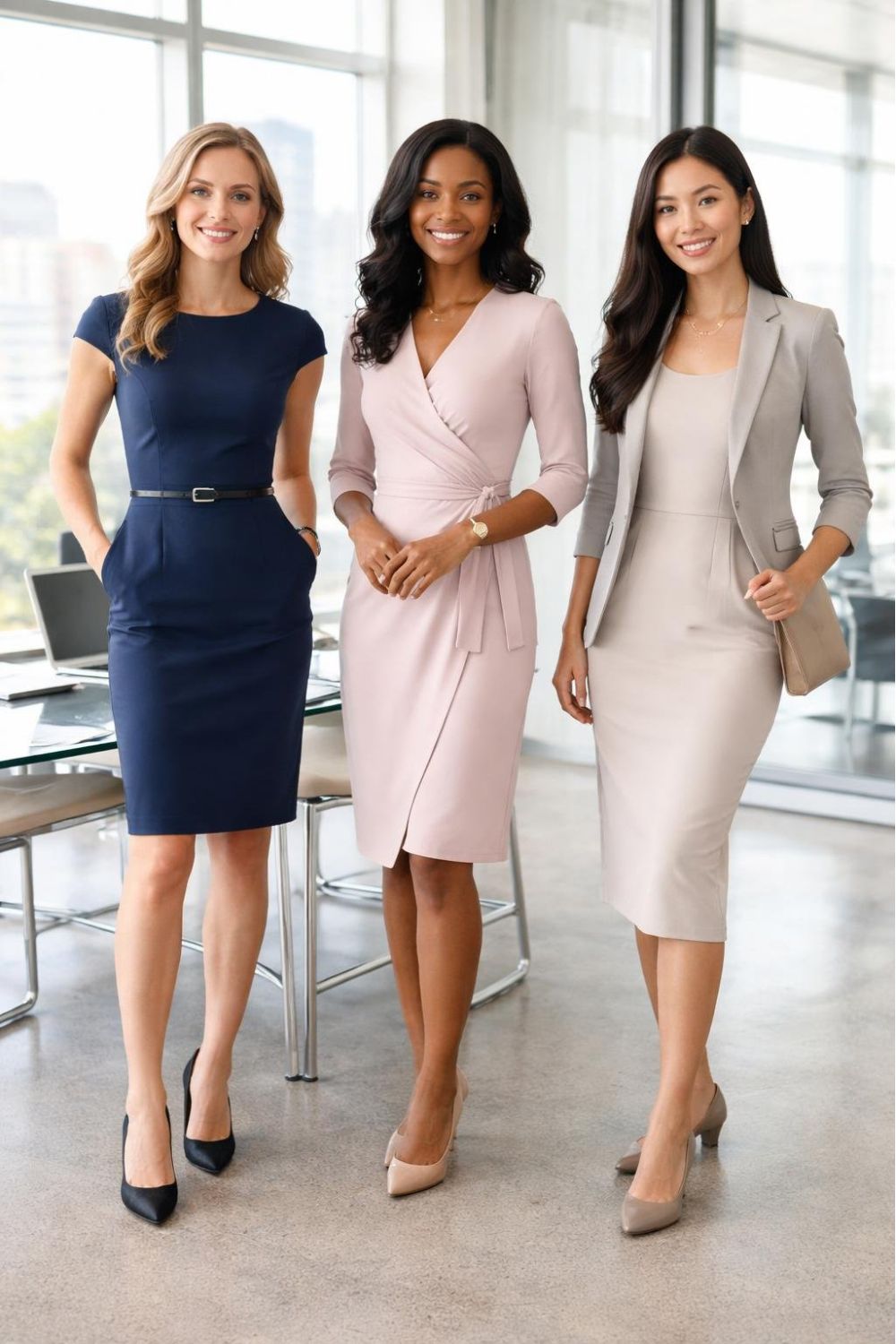
You want to wear a dress to your interview, but you also want to look sharp and serious. That balance can feel tricky.
A dress can look polished and confident when you choose the right shape, length, and layers. You can wear a dress to a job interview and still look fully professional when you focus on clean lines, modest cuts, and simple styling.
Need some style or career guidance? Drop on by our directories choc full of image coaches and career coaches to get your look and career on point. Or click here to have us match you to the best.

In this guide, you’ll see how different dress styles can work in your favor, from tailored shapes to easy midis that still mean business.
You’ll also see how small details like sleeves, hems, and fabric change the message your outfit sends.
1) Structured sheath dress with cap sleeves and a knee-length hem

Go for a structured sheath dress if you want a tailored vibe. It follows your shape without adding extra bulk.

Cap sleeves give your shoulders a bit of coverage. A knee-length hem keeps things professional—no guesswork needed.

Stick with neutral colors like navy, black, or gray. Closed-toe pumps and a simple tote work best here.


2) Wrap midi dress in a solid color with a belt

Pick a wrap midi dress in a solid, neutral color like navy, black, or deep green. These shades look clean and work well for interviews.

The wrap shape creates a neat line, and a simple belt defines your waist. Keep the fit modest, not tight.

Pair it with closed-toe heels and a structured bag. Keep jewelry minimal and simple.


3) A-line shirt dress in lightweight cotton with concealed buttons

An A-line shirt dress in lightweight cotton feels fresh and easy. The fabric breathes, which you’ll appreciate if interviews make you sweat.

Concealed buttons keep the front looking smooth. A soft flare at the waist adds a bit of shape but doesn’t cling.

Stick to navy, black, or soft gray. Low heels or flats and a structured bag finish it off—no need to overthink it.

4) Sleeveless shift dress layered under a tailored blazer

A sleeveless shift dress gives you a clean base for an interview. It looks simple and neat.

Add a tailored blazer for structure and coverage. Choose neutral colors like black, navy, or gray.

Keep the dress knee length and avoid bold prints. Closed-toe heels or flats finish the look.

5) Sleeve-detail midi dress (puff or cuff) paired with low pumps

Pick a midi dress with puff or cuff sleeves—just a bit of extra detail goes a long way. I’d keep the shape clean and let the hem fall below your knee.

Solid colors like navy, black, or deep green? Always a safe bet for interviews. You don’t want to overthink it, just keep it classic.

Slip on some low pumps—kitten heels or a tiny block heel both look polished without being fussy. I’d avoid anything too flashy.

Skip the statement jewelry, honestly. A structured bag ties it all together and feels grown-up.

How To Pick The Right Dress For Your Workplace

You need a dress that fits the company culture and still looks polished. Focus on dress code and fabric, since both affect how professional you look and feel.
Decoding Dress Codes
Start by researching the company. Check its website, social media, and employee photos to see what people wear day to day.
If the office is corporate or business professional, go for a knee-length sheath or tailored A-line dress. Stick with neutral colors like navy, black, gray, or deep green.
Pair it with closed-toe heels or flats and simple jewelry. For business casual settings, you have more freedom.
Try a structured wrap dress or a midi dress in a solid color or subtle print. Add a blazer if you want a sharper look.
Creative or tech offices may lean casual, but you should still dress one step above their usual style. Avoid bodycon fits, very bright prints, or short hemlines.
Your goal is to look prepared and serious about the role.
Fabrics That Work Well For Interviews
Fabric affects how neat your dress looks after hours of sitting and moving. Choose materials that hold their shape and resist wrinkles.
Good options include:
- Ponte knit – thick, smooth, and structured
- Wool blends – polished and breathable
- Cotton blends with stretch – comfortable but still firm
- Crepe – lightweight with a clean drape

Avoid thin jersey, clingy satin, or anything see-through. These fabrics can look too casual or shift out of place.
Before the interview, sit down and move around in the dress. Make sure it stays in place and doesn’t pull or wrinkle easily.
Styling Tips For A Polished Look

The right layers and accessories can turn a simple dress into a strong interview outfit. Focus on clean lines, simple colors, and small details that show you pay attention.
Layering With Blazers Or Cardigans
Add a structured layer to make your dress look more formal. A tailored blazer works best for corporate or office roles.
Choose neutral colors like black, navy, gray, or beige. These shades look professional and match almost any dress.
Make sure the blazer fits your shoulders well. Sleeves should end at your wrist bone.
If it pulls at the buttons or looks boxy, try another size. For less formal settings, wear a fitted cardigan.
Stick to solid colors and fine knits. Avoid chunky fabric or oversized styles since they can look too casual.
Keep these tips in mind:
- Blazer length should hit at your hip.
- Avoid loud prints or shiny fabric.
- Steam or iron your layer so it looks crisp.
- Keep it buttoned when you walk in, then unbutton when you sit.
Your layer should add structure, not distract from you.

Accessorizing Without Overdoing It
Need some style or career guidance? Drop on by our directories choc full of image coaches and career coaches to get your look and career on point. Or click here to have us match you to the best.
Keep accessories simple and neat. You want them to support your look, not grab all the attention.
Pick just one or two small pieces. For example:
- Stud earrings or small hoops
- A thin necklace
- A simple watch
- A structured leather bag
Skip the big statement jewelry. Stacked bracelets or anything noisy just feels distracting.
Bright colors and bold shapes? They tend to pull focus away from your face.
Shoes matter, too. Closed-toe flats, low heels, or simple pumps usually work best.
Stick with neutral tones like black, nude, or dark brown. Just make sure they’re clean and in good shape.
If you wear a belt, try to match it with your shoes. Small details like this really show you care.
The post Interview Outfits With a Dress That Still Feel Professional: 5 Easy, Polished Looks to Try appeared first on Life Coach Hub.
Leave a Reply