
Want to try this at home? No worries! Download a copy of our SMART Goals PDF Worksheet.
*****
Gamifying a goal sounds like a gimmick until you realize what it actually solves.
Most goals don’t fail because they’re unrealistic. They fail because they feel flat. There’s no feedback, no visible progress, and no reason for your brain to stay engaged once the novelty wears off.
That’s exactly why gamification works. It adds points, streaks, and rewards so progress feels immediate instead of distant. And that matters, because your brain is constantly scanning for something worth paying attention to.
When a goal feels like a game, you stop relying on motivation and start relying on structure.
In this guide, you’ll build a simple system that:
- turns effort into points
- turns consistency into streaks
- turns progress into something you can actually see
And most importantly, it gives you a reason to keep going when things start to feel repetitive.
Need some in depth help with goal settings, motivation or productivity ? Drop on by our directories choc full of productivity coaches, accountability coaches, and goal-setting coaches, and start reaching those goals! Or click here to have us match you to the best.
1. Turn one goal into a game you can actually play
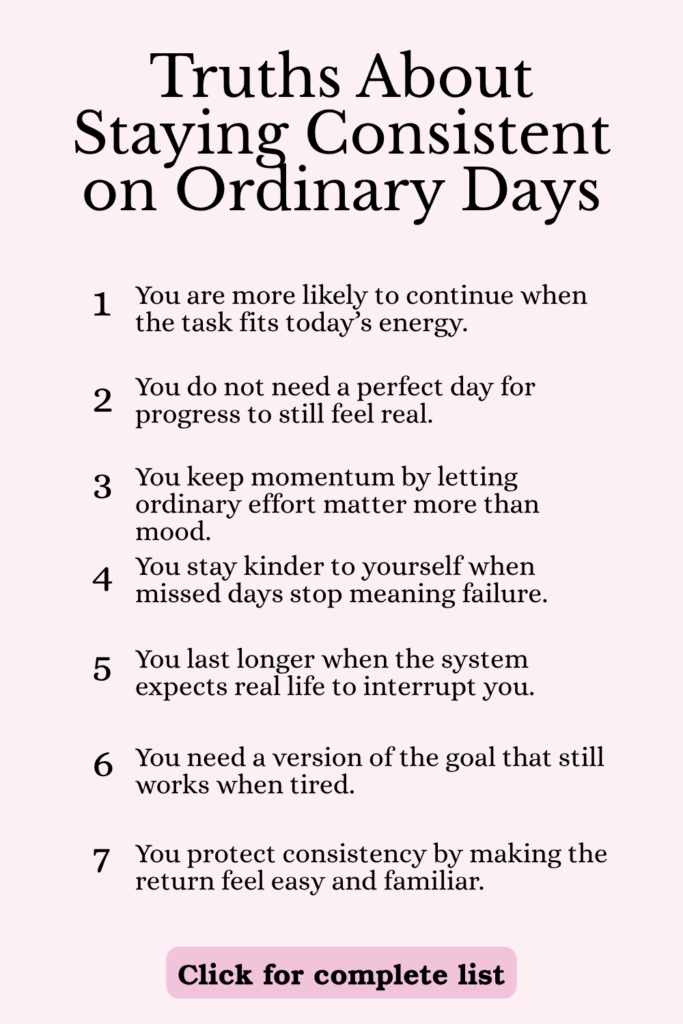
- Pick one goal that needs more follow-through: Choose something that matters but feels easy to avoid. If it already feels smooth and automatic, you don’t need a game yet.
- Define what counts as progress: Replace vague outcomes with clear actions. “Work on my business” becomes “send 3 outreach emails” or “write 300 words.”
- Shrink the first version: Your game should feel easy to enter. If it feels heavy, you won’t start.
- Make it fit your real life: Design it around your current schedule, not your ideal one.
Most people skip this step and go straight to “tracking,” but this is where the system either works or fails.
If the goal isn’t clear, your game has no rules.
And if your game has no rules, your brain loses interest fast.
A strong setup looks like this:
- clear action
- clear finish line
- clear definition of a “win”
This is especially important if you’re working toward something long-term.
Without a defined “win,” your brain treats effort like a chore instead of progress.
And that’s where boredom starts to creep in.
2. Choose game mechanics that make progress feel rewarding
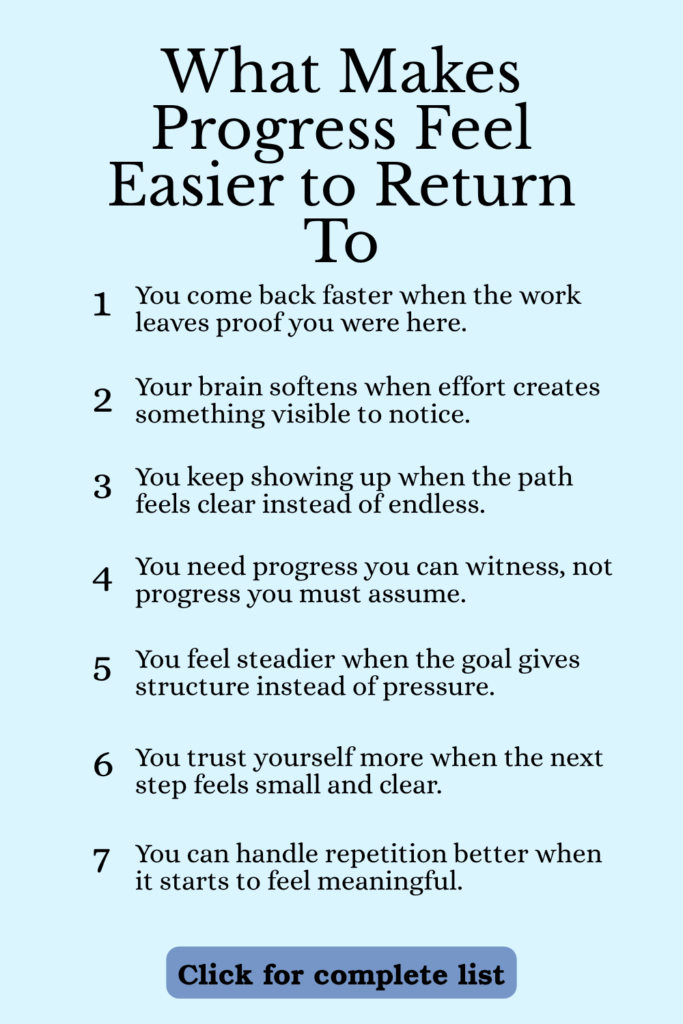
- Assign points to actions: Small tasks = small points. Bigger effort = more points. This creates instant feedback.
- Create a streak rule: Something simple like “one action per day” keeps momentum going.
- Add rewards that actually matter: Think real incentives, not random ones.
- Make it feel playful: Words like levels, checkpoints, and bonuses make repetition feel lighter.
The goal here isn’t to “trick” yourself.
It’s to give your brain what it naturally looks for:
visible reward for effort
When there’s no feedback, your brain starts asking:
“Why am I doing this?”
When there is feedback, it starts asking:
“How far can I take this?”
A simple system might look like:
- 1 point = small task
- 5 points = focused session
- 20 points = reward
That shift alone changes how the work feels.
Instead of waiting weeks to feel progress, you feel it immediately.
And that’s what keeps you coming back.
3. Build a scoreboard you’ll actually use
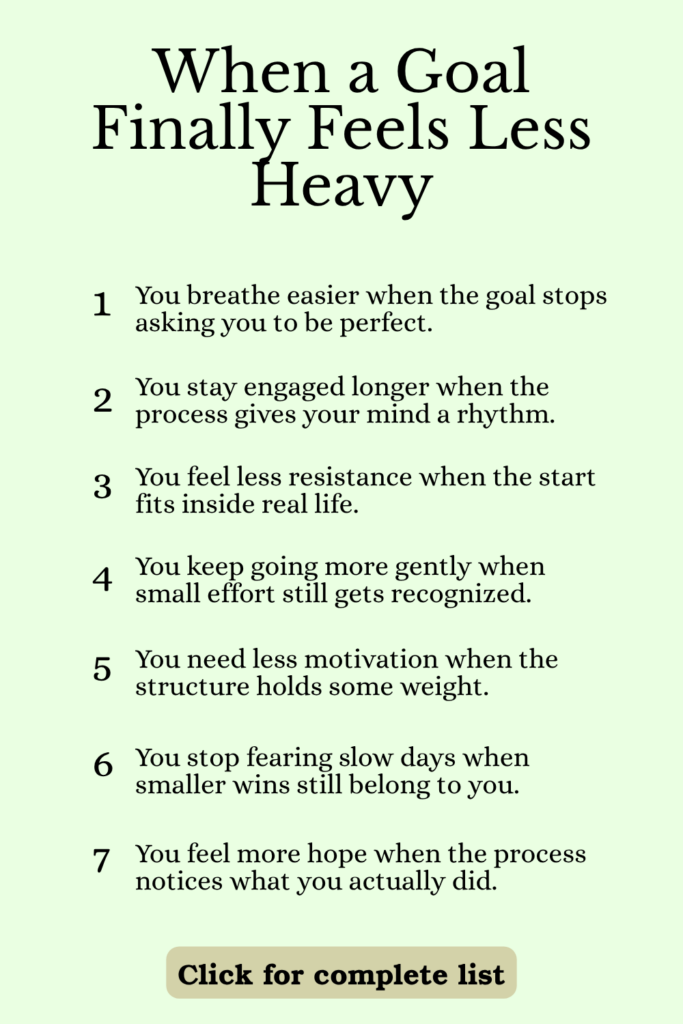
- Track only 1–3 metrics: Too many numbers = friction.
- Use a simple format: Notes app, paper, or spreadsheet.
- Make it visual: Checkmarks, totals, streaks.
- Update it daily or weekly: Tie it to an existing habit.
Your scoreboard is the most important part of this system.
Because this is what turns invisible effort into something real.
Without it, you’ll feel like you’re doing nothing… even when you’re making progress.
With it, you can see:
- what’s working
- what’s slipping
- what’s improving
That visibility is powerful.
It creates a feedback loop:
- you take action
- you record it
- you see progress
- you feel motivated to continue
Keep it simple enough that it takes under 30 seconds to update.
If it feels like work, you won’t use it.
And if you don’t use it, the system breaks.
4. Use habit stacking to make the game automatic
- Attach the goal to an existing habit: After coffee, after opening your laptop, after lunch.
- Create a clear start trigger: “When I sit down, I earn my first point.”
- Make the first step tiny: Lower friction = more consistency.
- Reward completion immediately: Close the loop fast.
This is where consistency gets easier.
Instead of asking yourself:
“Do I feel like doing this?”
You move to:
“This is just what happens after X.”
That shift removes decision fatigue.
And for anyone who struggles with focus or distraction, this is huge.
A good habit stack might look like:
- After opening laptop → do 5-minute task
- Earn 1 point → mark scoreboard
- Stop or continue based on energy
You’re not forcing long sessions.
You’re creating an easy entry point.
And once you start, it’s much easier to keep going.
5. Make the system flexible enough to survive real life
- Design for average days, not perfect ones
- Create a low-effort version of the task
- Refresh the system when it feels stale
- Treat missed days as data, not failure
This is where most systems break.
They’re too rigid.
The moment life gets messy, everything falls apart.
A better system assumes:
- you’ll have low-energy days
- you’ll miss things sometimes
- your motivation will fluctuate
So instead of aiming for perfection, you build in flexibility.
Examples:
- “Minimum version” of the task
- optional bonus points for extra effort
- rewards that can shift over time
This keeps the system alive.
Because the goal isn’t to be perfect.
The goal is to keep playing the game.
6. Use a simple template to set your system up in 15 minutes
- Define your goal: “My goal is…”
- Assign point values: “I earn 1 point for…”
- Set your streak rule: “My streak continues when…”
- Choose rewards: “At X points, I get…”
- Pick your tracker: “I will track this in…”
This is where everything comes together.
You don’t need a complicated system.
You need a clear one.
A quick example:
- Goal: Write consistently
- 1 point: 5 minutes writing
- 5 points: 30 minutes writing
- Streak: write daily
- Reward: 20 points = break or treat
Done.
The simpler it is, the more likely you are to use it.
And that’s what matters.
7. How a coach can make this system actually stick
- Refine your rules: Remove friction you don’t see
- Translate goals into trackable actions
- Spot patterns in your consistency
- Add real accountability
A coach isn’t there to “motivate” you.
They help you build a system that works even when motivation drops.
That includes:
- simplifying your setup
- adjusting your scoring
- catching patterns early
Most people don’t fail because they’re lazy.
They fail because their system quietly stops working… and they don’t notice.
A coach helps you see that sooner.
And that makes a big difference over time.
8. Keep the game going long enough to matter
- Focus on momentum, not intensity
- Update the system as you grow
- Use progress to fuel motivation
- Make consistency feel rewarding
At some point, the novelty fades.
That’s normal.
The difference is, now you have a system that:
- shows progress
- rewards effort
- keeps you engaged
So instead of quitting, you adjust.
That might mean:
- increasing the challenge
- changing rewards
- resetting your streak
The key is this:
You’re no longer relying on motivation.
You’re relying on a system that makes progress visible.
And once you can see progress, it’s much harder to walk away from it.
*****
Want to try this at home? No worries! Download a copy of our SMART Goals PDF Worksheet.
Need some in depth help with goal settings, motivation or productivity ? Drop on by our directories choc full of productivity coaches, accountability coaches, and goal-setting coaches, and start reaching those goals! Or click here to have us match you to the best.
The post How High Achievers Use Gamification to Make Progress Addictive appeared first on Life Coach Hub.
Leave a Reply