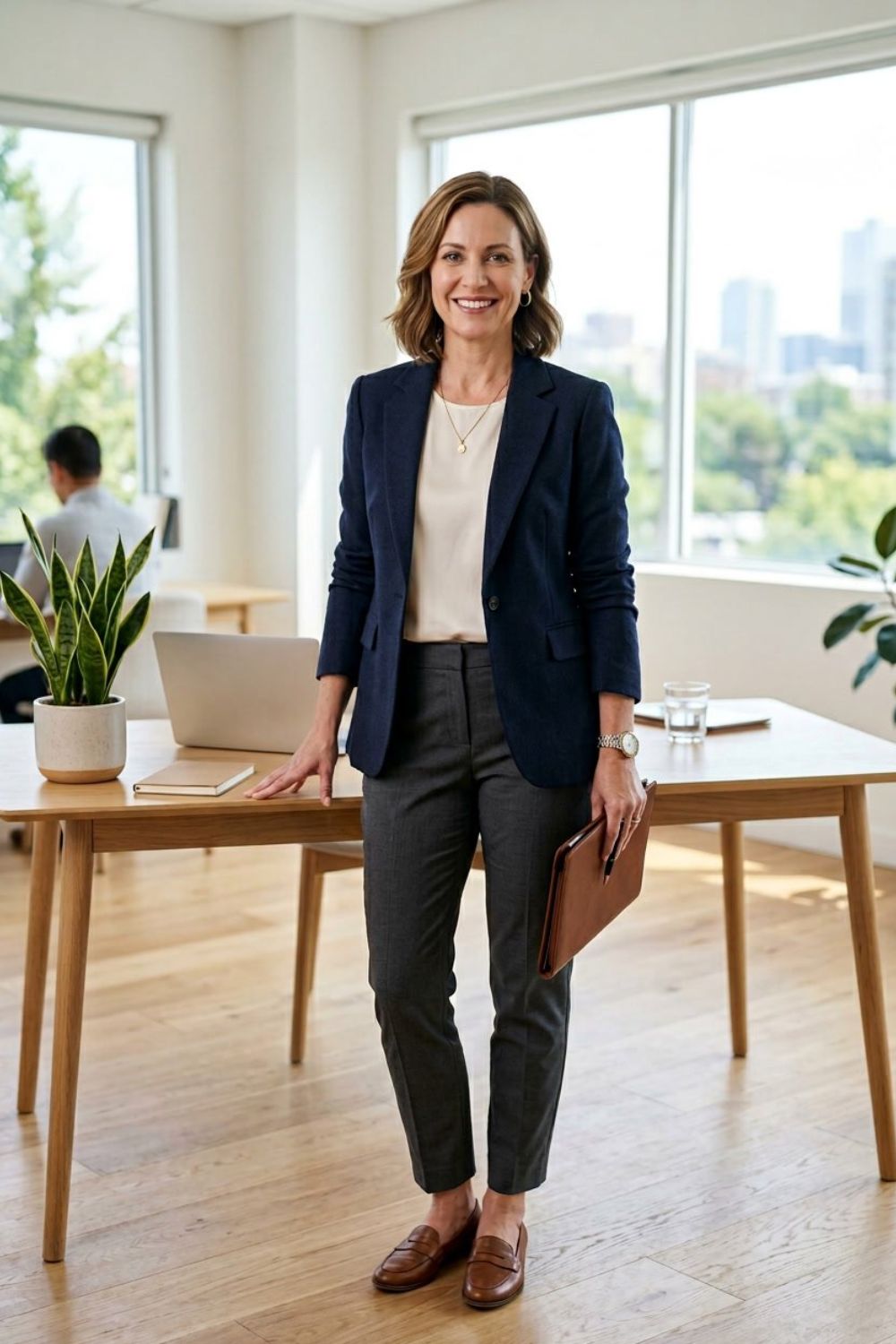
Dressing for an interview over 40 doesn’t mean you have to settle for bland clothes or chase after every trend aimed at twenty-somethings. You want to look polished and current, but not like you’re trying too hard.
The goal is to let your experience and skills shine, while still showing up as your best self.
Need some style or career guidance? Drop on by our directories choc full of image coaches and career coaches to get your look and career on point. Or click here to have us match you to the best.

The right interview outfit uses classic pieces with a modern touch, fits your body well, and leaves you feeling confident. You don’t need a whole new wardrobe.
Just a few smart pieces that work together can send the message that you’re ready, professional, and capable.
This guide helps you build outfits that feel right for where you are now. You’ll get ideas for what to invest in, what fits look best, and how to avoid mistakes that can age your look.
Whether your interview is in person or virtual, these tips will help you walk in feeling good about yourself.
Key Takeaways
- Pick well-fitted anchor pieces like blazers and tailored pants—they set a strong foundation for any interview outfit.
- Focus on modern proportions and thoughtful colors instead of chasing trends, so you look current but not like you’re trying too hard.
- Try your full outfit ahead of time and adjust for the interview format, so you feel comfortable and confident on the day.
Setting the Tone for Interview Success

Your outfit starts the conversation before you say anything. You want to look polished and professional, but not like you’re forcing it.
Consider what your clothes are saying. Show that you get the workplace culture and can fit in with the team—while still looking like yourself.
What your interview outfit should do:
- Show respect for the opportunity
- Demonstrate you understand the industry
- Make you feel confident and comfortable
- Look current without chasing trends
When you know you look appropriate, you can focus on answering questions instead of worrying about your appearance.
Your age is an asset, not something to hide. Let your clothing reflect your confidence and experience.
Key things to remember:
- Dress for the job you want
- Wear clothes that fit you now
- Choose colors that make you look energetic
- Keep accessories simple and professional
Start by checking out the company’s website and social media. See what people actually wear there, so you can match the vibe without guessing.

Choosing an Anchor Piece With Authority
Your anchor piece sets the stage for your whole look. It’s the item that makes you feel confident and pulled together.
A tailored blazer is a classic choice. Look for one with structured shoulders and clean lines. Navy, charcoal, or black are safe bets and go with almost anything.
Other strong anchor options:
- Sheath dress in a solid color
- Wide-leg trousers with a high waist
- Tailored jacket in a color like burgundy or emerald
Find something that fits your body now—not what you wore at 30, or hope to wear next year. Good fit instantly makes any piece look more expensive.
Your anchor should feel comfortable enough to forget about. If you’re tugging at sleeves or adjusting the waistband, it’s not the right piece.
Quality matters more than quantity. One well-made blazer is better than three cheap ones. Stick with natural fabrics like wool, cotton, or linen blends—they hold up and look fresh longer.
Build the rest of your outfit around this anchor. Keep tops simple, shoes neutral, and accessories minimal so nothing competes for attention.
Modern Proportions Over Trends

You don’t have to chase every trend you see online. It’s more important to find proportions that flatter your body as it is now.
Modern proportions are about balance. If you go for a loose blazer, pair it with fitted pants. Wide-leg trousers? Add a more tailored top. This way, you look polished without trying too hard.
Pairings that work:
- Relaxed blazer + slim trousers
- Wide-leg pants + fitted blouse
- Pencil skirt + structured jacket
- Straight-leg pants + tucked-in shirt
Avoid clothes that are too tight or too baggy. Aim for a fit that shows you put thought into your outfit.
Easy ways to update proportions:
- Try a slightly longer blazer (mid-hip instead of waist)
- Pick pants with a higher rise
- Choose sleeves that hit at the right spot
- Look for skirts that sit at your natural waist
You can skip trendy extremes like oversizing or ultra-cropped pieces. Stick with what feels comfortable and put-together. This approach works for any interview and won’t feel dated in a few months.
Confidence Begins With the Perfect Fit

Your clothes should help you, not hold you back. When your outfit fits well, you stand taller and feel more comfortable.
Tailoring makes a huge difference. A blazer that pulls or pants that bunch up will distract you. Spend a little extra on alterations—it really is worth it.
Key fit points to check:
- Shoulders: Jacket seams should line up with your shoulder edge
- Waist: Pants and skirts should sit comfortably, no pinching or gaping
- Length: Sleeves should end at your wrist bone, pants should just graze your shoes
- Bust: Blouse buttons shouldn’t pull or gap
Bodies change—what worked five years ago might not work now. Try everything on before your interview and move around in it. Sit, stand, reach forward.
If something feels off, pick another option. There’s enough to think about without your waistband digging in.
Well-fitted clothes look sharp and show you care about details. That’s the impression you want to leave.
Reliable Outfit Formulas for Any Interview

You don’t need a massive wardrobe to get your interview look right. These three formulas work for almost any setting.
Formula 1: The Tailored Blazer Base
Start with a well-fitted blazer in navy, black, or gray. Pair it with matching trousers or a pencil skirt. Add a simple blouse or shell top. This combo is perfect for corporate or traditional interviews.
Formula 2: The Modern Dress Approach
Pick a simple sheath dress in a solid color. Layer on a structured blazer if you need to dress it up. It’s easy, polished, and doesn’t require much fuss.
Formula 3: The Smart Separates
Go for tailored pants with a quality knit top or button-down shirt. Add a cardigan or blazer if you want. This one gives you flexibility for business casual settings.

Why these work:
- They fit your body well—neither too tight nor too loose
- Colors are neutral and professional
- You can mix and match the pieces later
- They look current, but not trendy
Keep accessories simple. A watch, small earrings, and a structured bag are enough. Shoes should be closed-toe and clean—no need to overthink it.
Selecting Sharp Yet Gentle Colors

The right colors make you look polished without trying too hard. Bright, harsh shades can look off under office lights or on camera—skip those.
Best color choices for interviews:
- Navy blue
- Charcoal gray
- Soft black
- Deep burgundy
- Forest green
- Warm taupe
These colors look professional and photograph well. Darker shades help you appear more confident and authoritative.
You don’t have to wear all black. Mix dark shades with softer neutrals for balance. A charcoal blazer with a cream blouse or navy pants with a light gray top both work beautifully.

Colors to avoid:
- Bright orange or red
- Neon shades
- Very light pastels that wash you out
- All-white outfits
Pick outfit colors that work with your skin tone. If burgundy and forest green make you look brighter, go for those. Cooler tones like navy and charcoal might be better if you have cool undertones.
You want your outfit to help people focus on what you say, not distract them. Looking put-together and professional always wins.
Polished Accessorizing With Intention

Accessories can really make or break your interview outfit. The trick is to pick pieces that add polish but don’t scream for attention.
Keep jewelry simple and professional. A nice watch, small earrings, or a delicate necklace usually does the job.
Avoid anything that jingles or makes noise when you move. Your accessories should support your look, not steal the show.
Your bag matters more than you might think. Go for a structured tote or portfolio in a neutral color like black, navy, or tan.
It should look professional and hold your resume and other materials without being bulky. If it feels awkward to carry, it probably looks awkward too.
Smart accessory choices:
- Belt: A quality leather belt in a classic color adds structure to your outfit
- Scarf: A silk scarf can add visual interest without being too loud
- Shoes: Closed-toe pumps or loafers in good condition
- Glasses: Clean, modern frames that suit your face shape
Think about what your accessories say about you. Each piece should look intentional and well cared-for.
Skip anything trendy or overly casual, like big statement pieces or fashion-forward items. Less really is more here.
Choose accessories that fit the setting but still feel like you. When everything works together, you’ll feel more confident and ready to focus on the conversation.
The Power of a Full Dress Rehearsal

Try on your entire interview outfit at least three days before your interview. This gives you a little breathing room to fix any issues without panicking last minute.
Here’s what to test during your rehearsal:
- Sit down in your outfit and check for pulling, gaping, or discomfort
- Walk around your house for 15 minutes to see if anything pinches
- Raise your arms and bend over to make sure nothing rides up
- Check all angles in a full-length mirror, not just the front view
Pay attention to how the outfit makes you feel. You want to feel confident and comfortable, not like you’re wearing a costume.
If something feels off, trust your gut. It’s not worth risking discomfort on the big day.
Take photos of yourself from different angles. Look at them on your phone like you’re meeting yourself for the first time.
This trick helps you see what the interviewer will actually notice. It’s surprising what jumps out in a photo that you might miss in the mirror.
Check these practical details while wearing everything:
- Can you easily reach into pockets if your outfit has them?
- Do your shoes make noise when you walk?
- Does jewelry catch on your clothing or make distracting sounds?
- Can you move freely without adjusting your clothes?
If anything needs altering, you still have time to see a tailor. Even small fixes like hemming pants or taking in a waist can make a huge difference in how polished you look.
Mistakes That Can Make You Look Outdated or Overdone

Some styling choices can unintentionally age your interview look. Knowing what to avoid helps you create a modern, polished appearance.
Common outdated mistakes include:
- Wearing overly safe, dull colors that wash you out
- Choosing outdated cuts or boxy silhouettes
- Relying on the same styling habits you’ve used for years
- Wearing pieces that don’t fit properly
Baggy or overly loose clothing can make you look frumpy, not professional. Clothes should skim your body, not drown it or squeeze it.
Watch out for these overdone choices:
- Head-to-toe trendy looks that try too hard
- Too many statement pieces at once
- Overly complicated outfits with too many layers
- Accessories that compete with each other
You don’t have to chase every fashion trend. Pick one modern element and keep the rest classic.
A simple shift dress with updated accessories usually works better than trying to look like you just stepped off a runway. Your outfit should feel fresh but still like you.
Stick to clean lines and quality fabrics. Those choices keep your look timeless without feeling dated.
Getting Professional Guidance to Match Your Ambition

Sometimes you just need expert help to nail your interview look. A professional stylist or image consultant can save you a lot of time and stress.
These experts know how to dress mature bodies in ways that feel current and polished. They understand which cuts and styles work best for women over 40.
You’ll get advice that fits your body type and career goals, not just generic tips. That personal touch makes a difference.
When to consider getting help:
- You’re changing industries and unsure of the dress code
- You haven’t interviewed in years and feel out of touch
- You want to look senior and experienced without appearing dated
- You’re struggling to find pieces that fit well
Many department stores offer free styling services. Personal shoppers can pull together professional outfits within your budget.
You can also work with independent stylists who specialize in professional women’s wardrobes. Virtual styling services have become more affordable too.
You can get outfit advice through video calls or photo consultations. Some services charge as little as $50 for a session.
What a stylist can do for you:
- Choose colors that complement your skin tone
- Find well-fitting pieces quickly
- Show you how to mix business pieces you already own
- Update your look without a complete wardrobe overhaul
Investing in professional guidance can really pay off. You’ll feel more confident walking into that interview room.
Adjusting Your Look for Different Interview Formats

The type of interview you’re attending should guide your outfit choice. A video interview calls for different considerations than an in-person meeting.
For video interviews, focus on what shows on camera. Wear solid colors that pop on screen like navy, burgundy, or emerald.
Avoid busy patterns that can look distracting through a webcam. Your top matters most, so put your effort there with a polished blouse or structured blazer.
In-person interviews let you showcase a complete outfit. This is when your tailored pants, skirt, and quality shoes come into play.
You can layer with confidence and add subtle accessories. Don’t overthink it—just make sure everything fits and feels right.
Panel interviews work best with classic, professional pieces. Think of a suit or coordinated separates in neutral tones.
You want to look polished without drawing attention away from your qualifications. It’s a balancing act, but it’s doable.
Here’s a quick reference guide:
| Interview Type | What to Wear | What to Skip |
|---|---|---|
| Video | Solid-color top, simple jewelry | Busy patterns, noisy bracelets |
| In-Person | Full coordinated outfit, closed-toe shoes | Overly casual pieces |
| Panel | Conservative suit or separates | Bold prints, flashy accessories |
| Second Round | Same style with subtle variations | Identical outfit from round one |
Second interviews let you show a bit more personality. Keep the same professional level but try a different color palette or a patterned blouse under your blazer.
Building a Versatile Interview Capsule Wardrobe

You don’t need a different outfit for every interview round. A smart capsule wardrobe gives you multiple polished looks without the stress or expense.
Start with these essential pieces:
- 2 blazers (one neutral, one in navy or charcoal)
- 3 tops (mix of shells, blouses, and knits)
- 2 bottoms (tailored pants and a pencil skirt or dress pants)
- 2 pairs of shoes (closed-toe pumps and loafers or flats)
- 1 dress or suit (works alone or mixed with other pieces)
This ten-piece foundation creates six to eight different outfits. You can mix and match everything to look fresh for each meeting.
Your capsule should fit your body now, not ten years ago. Choose pieces that work with your current shape and lifestyle.
Stick to classic cuts in quality fabrics that hold their shape. Focus on neutral colors like black, navy, gray, and cream.
These mix easily and look professional. Add one piece in a softer color like burgundy or forest green if it suits you.
Keep your accessories simple. A structured bag, simple jewelry, and a good watch finish any combination.
This approach saves time and money while keeping you looking put-together for every interview.
Focusing on Presence Instead of Perfection

You really don’t need a flawless outfit to make a strong impression. What matters way more is how you carry yourself—and how confident you actually feel in what you’re wearing.
If you start obsessing over every single detail, it shows. You might catch yourself fidgeting or worrying about your look instead of connecting with the interviewer.
That pulls your focus away from the conversation. It’s hard to be present if you’re tugging at your sleeves or second-guessing your shoes.
Need some style or career guidance? Drop on by our directories choc full of image coaches and career coaches to get your look and career on point. Or click here to have us match you to the best.
Choose clothes that let you forget about your outfit:
- Stuff that fits well and doesn’t need constant adjusting
- Fabrics that actually feel good on your skin
- Shoes you can walk in without thinking twice
- Colors that boost your confidence, not your nerves
Your clothes should back you up, not steal your attention. Outfits that feel intentional and professional can improve your posture and help you focus—there’s research on that, apparently.
You don’t need to look like you just stepped out of a magazine. Just look like someone who knows what they’re doing and feels good doing it.
Pick out your outfit the night before. Try it on, move around a bit, see how it feels.
If something’s off or uncomfortable, swap it out. You want to walk into that interview thinking about your skills and experience, not whether your blazer is bunching up in the back.1) Silk crew-neck blouse in ivory
Choose a silk crew-neck blouse in ivory for a clean, polished look.
You can tuck it into tailored trousers or a pencil skirt.
Add simple heels and minimal jewelry.

The post Interview Outfits for Women Over 40: Modern Looks That Strike the Perfect Balance appeared first on Life Coach Hub.
Leave a Reply