Are you all about style, decor and organization? Download a copy of our Decluttering Workbook.
*****
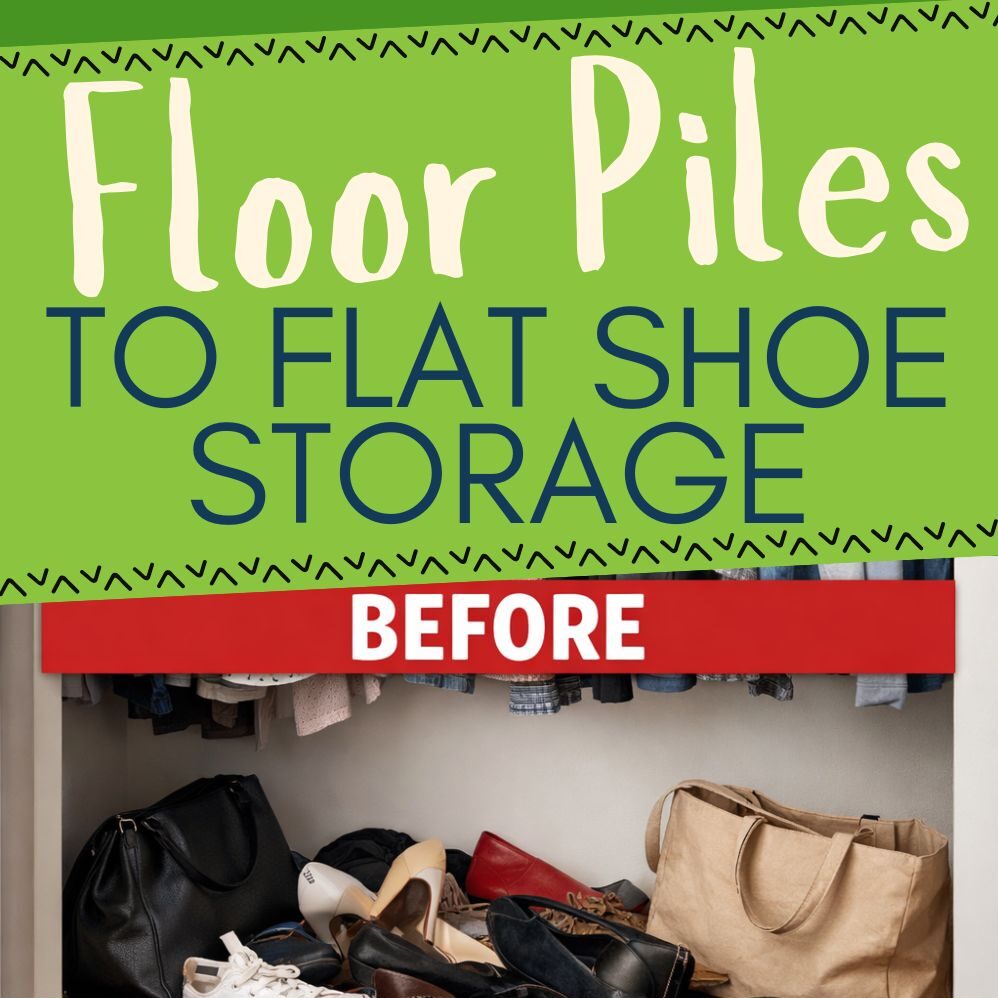
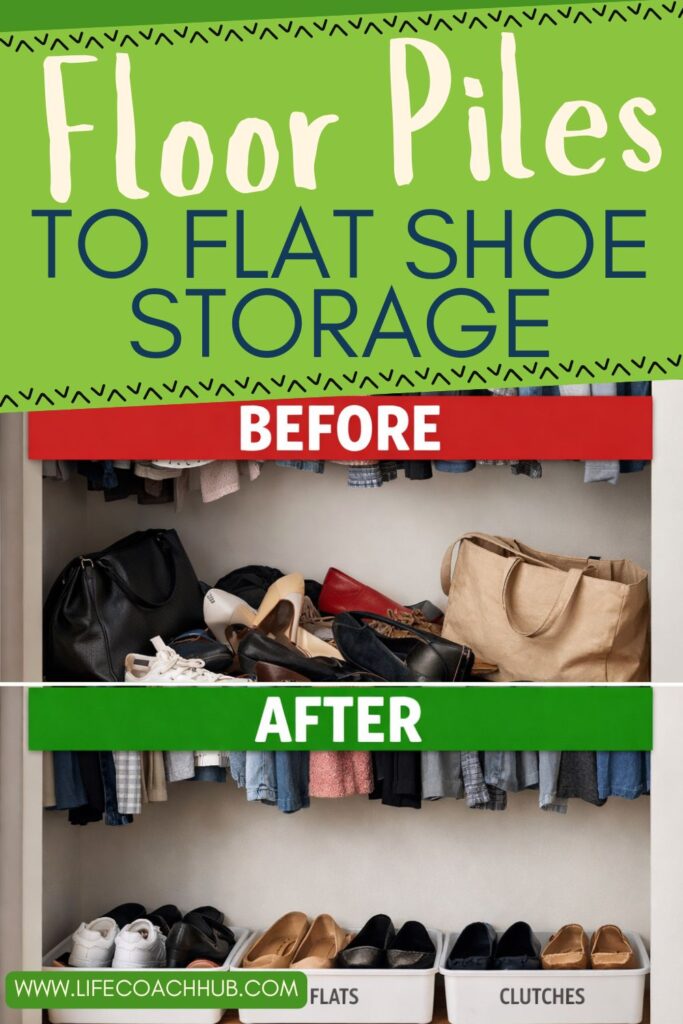
If your closet floor constantly turns into a landing zone for shoes and handbags, the problem isn’t that you own too much.
It’s that nothing has a flat, defined place to land.
When shoes and bags don’t have structure, they collapse into piles. Heels tangle. Totes slump. Sneakers stack unevenly. The floor disappears — and the entire closet feels smaller.
The solution isn’t taller shelves. It’s flatter systems.
Below is a step-by-step guide to storing shoes and bags in low-profile, contained ways that keep your floor mostly clear.
Need some in depth help with organization and productivity ? Drop on by our directories choc full of productivity coaches, minimalist coaches, and work/life balance coaches to get your life organized! Or click here to have us match you to the best.
1. Clear the Floor Completely Before Redesigning

You can’t create flat storage around an existing pile. The reset has to start from zero.
Remove every shoe and bag from the closet floor: Pull everything out so you can see the base of the closet clearly. This gives you a clean visual starting point instead of reorganizing around clutter.
Decide what truly belongs in this closet: Separate daily-use items from rarely worn or seasonal pieces. Not every pair needs to live in this space year-round.
When the floor is empty, you can design with intention instead of reacting to overflow.
2. Use Slim, Low-Profile Bins Under Hanging Clothes

The area beneath your hanging clothes often has shallow clearance that goes unused or becomes messy.
Measure the vertical clearance under your rod: Determine the distance from the floor to the hem of your longest garments. Choose bins that fit comfortably within that space without brushing against fabric.
Assign one category per bin and keep them aligned: Store sandals in one bin, flats in another, small clutches in another. Slide bins flush to the back wall and keep their fronts even so the space looks structured rather than crowded.
Slim bins create clean horizontal lines instead of chaotic stacks.
3. Add Vertical Dividers for Upright Bag Storage

Stacked handbags quickly collapse into slumped piles. Vertical dividers eliminate that issue.
Install shelf dividers on one designated shelf: Use acrylic, wood, or metal dividers spaced a few inches apart to create individual slots.
Store bags upright like books rather than stacked: Place structured bags between dividers so each one stands independently. Position heavier or larger bags at the ends for stability.
Upright storage protects shape and prevents sliding.
4. Use Under-Rod Shoe Trays for Daily Pairs

Daily shoes don’t need height — they need containment.
Choose a shallow tray that fits under your clothing hem: A flat tray 1–3 inches tall keeps shoes contained without blocking airflow or brushing garments.
Line shoes in a single, forward-facing row: Avoid stacking or overlapping pairs. Keeping them visible and aligned makes the tray feel intentional instead of crowded.
Under-rod trays turn “dead air” into structured, flat storage.
5. Add Low Shelf Risers Instead of Stacking

Stacking shoes vertically creates wobble and visual clutter. Low risers create layers without height bulk.
Place low-profile shelf risers on deeper shelves: Choose risers that add a second level while keeping overall height manageable.
Store lighter shoes on the upper tier and heavier ones below: This prevents instability and keeps pairs visible rather than hidden behind each other.
Layering flat surfaces is more stable than stacking pairs directly.
How to Keep the Floor Clear Long-Term
Flat systems only work if you maintain boundaries.
Set a maximum number of pairs for this closet: Decide how many shoes the bins and trays can comfortably hold. Once that limit is reached, something must rotate out before something new comes in.
Perform a weekly quick reset: Straighten trays, realign bins, and remove any shoes that have drifted outside their container. Five minutes of maintenance prevents another pile from forming.
Containment prevents clutter creep.
When to Move Shoes or Bags Outside the Closet
Sometimes the best solution is relocation, not rearrangement.
Identify overflow that exceeds flat capacity: If your bins are full and dividers are packed tightly, the closet may not be the right home for everything.
Create a secondary storage zone elsewhere: Use an entryway rack for daily sneakers or a slim cabinet in another room for off-season bags. Keep the closet focused on what you wear most frequently.
The closet should serve your daily routine — not store your entire collection.
When shoes and bags are stored flat, contained, and aligned, the floor stops feeling like a dumping zone.
Clear floor space doesn’t just look better.
It makes your small closet feel wider — without adding a single inch.
Are you all about style, decor and organization? Download a copy of our Decluttering Workbook.
*****
Need some in depth help with organization and productivity ? Drop on by our directories choc full of productivity coaches, minimalist coaches, and work/life balance coaches to get your life organized! Or click here to have us match you to the best.
The post Small Flat Storage Ideas for Shoes and Bags (Without Floor Piles) appeared first on Life Coach Hub.
Leave a Reply