Are you all about style, decor and organization? Download a copy of our Decluttering Workbook.
*****
When closet space feels maxed out, most people stare at the rod and shelves, wondering what else they can rearrange.
Almost no one looks at the back of the door.
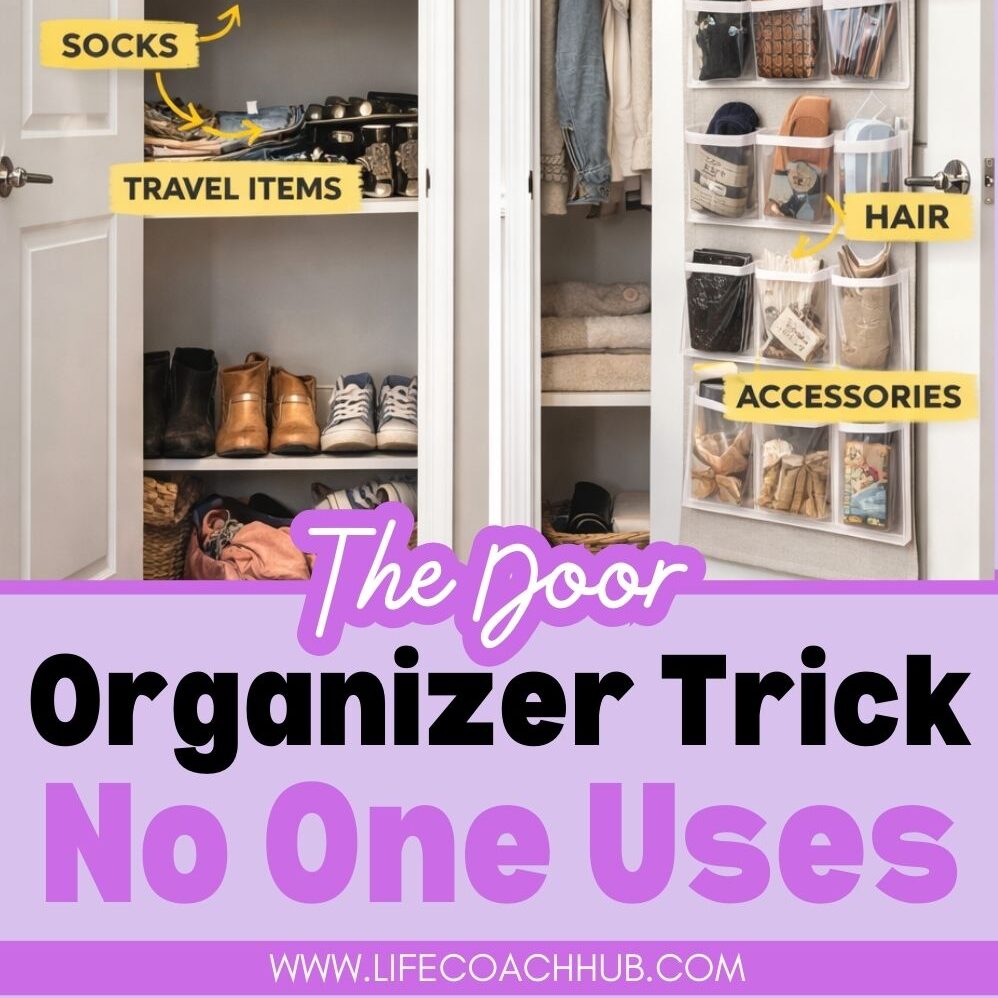
Yet your closet door is full-height, vertical storage that doesn’t take up floor space and doesn’t compete with hanging clothes. When used strategically, it can hold accessories, shoes, small items, and even mirror storage — all hidden when the door is closed.
In our small closet overview, we highlighted the back of the door as overlooked space — and now we’re detailing how to turn it into structured storage using hooks, racks, pocket organizers, and mirrors without overloading it.
Here’s how to turn that blank surface into a functional, intentional storage zone.
Need some in depth help with organization and productivity ? Drop on by our directories choc full of productivity coaches, minimalist coaches, and work/life balance coaches to get your life organized! Or click here to have us match you to the best.
1. Evaluate Your Door Before Adding Anything
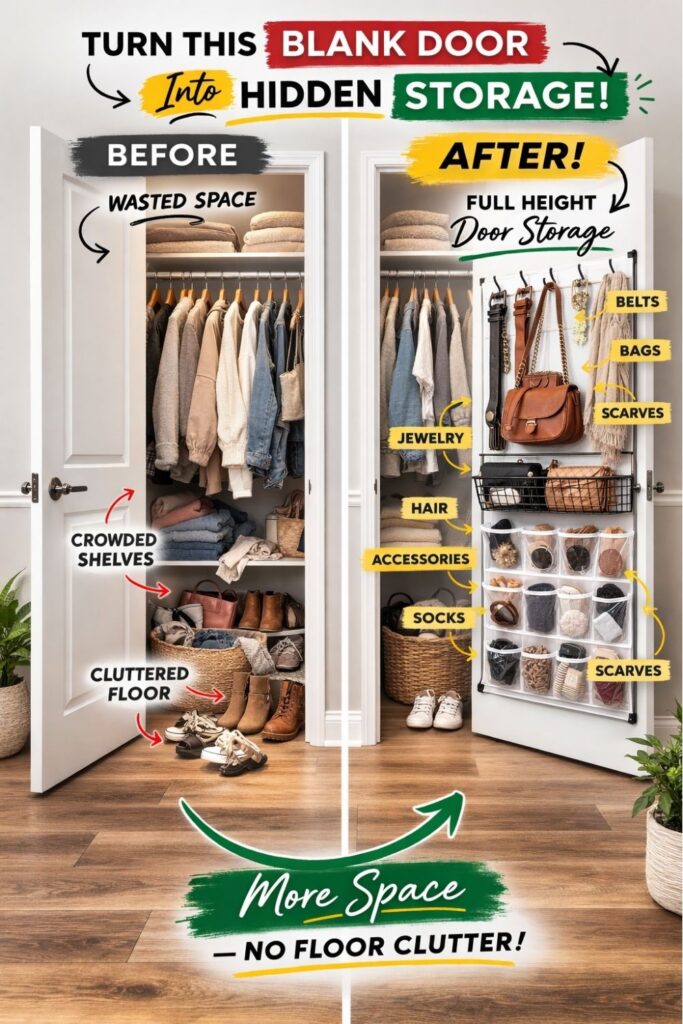
Before installing hooks or racks, you need to understand what your door can safely support. Not all closet doors are built the same.
Identify your door type and weight capacity: Determine whether the door is hollow-core or solid wood. Hollow-core doors are lighter and require lightweight solutions, while solid doors can handle more weight.
Measure usable interior space and clearance: Close the door slowly and note how much space exists between the door and the closet contents. Measure width and height so any organizer you install won’t block closing or rub against hanging clothes.
A door storage system only works if the door still closes smoothly.
2. Install Hooks for Vertical, Lightweight Storage
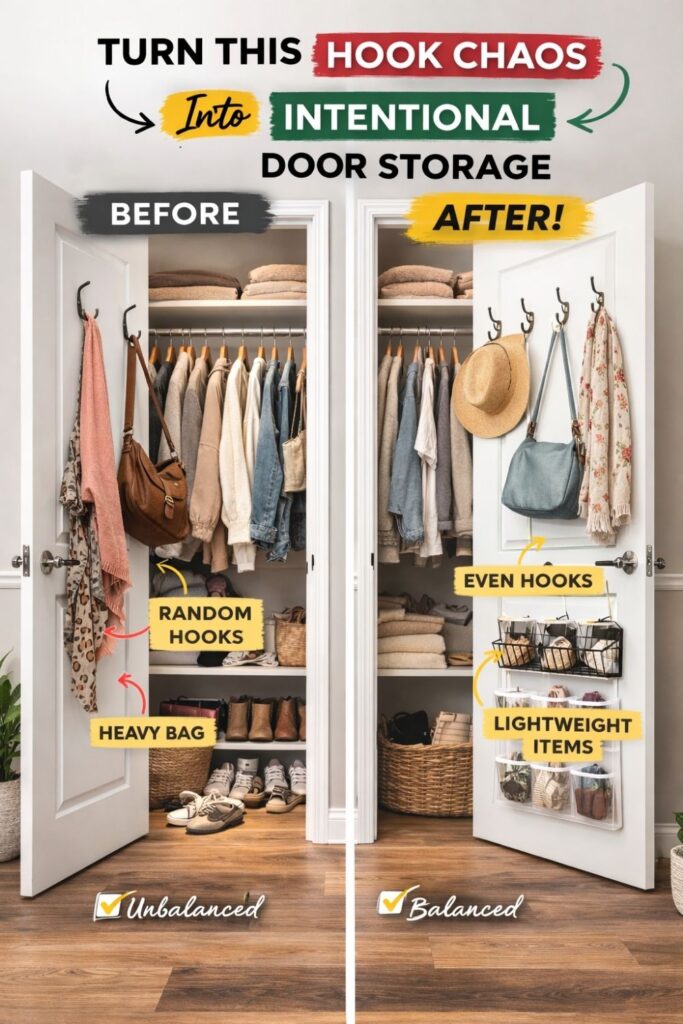
Hooks are the simplest way to activate the door — but placement matters.
Choose intentional hook placement rather than random spacing: Install hooks along the upper third or middle section of the door. Stagger heights slightly for layered storage without visual clutter.
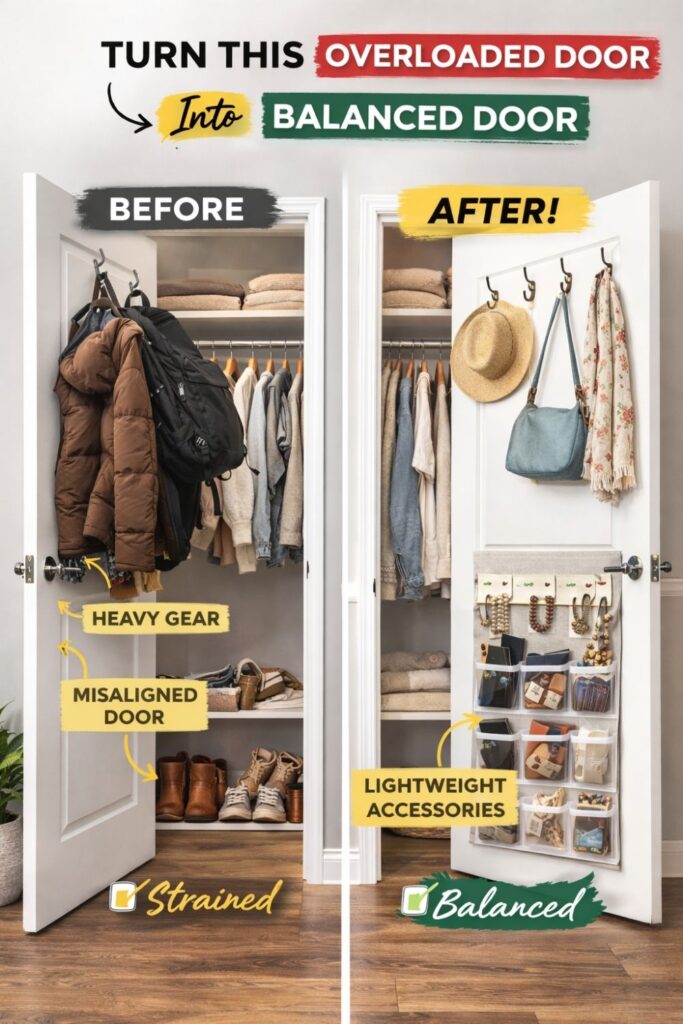
Limit hooks to lightweight items only: Use them for belts, hats, small bags, scarves, or robes. Avoid hanging heavy backpacks or thick winter coats, especially on hollow-core doors.
Hooks should feel balanced and purposeful, not overloaded.
3. Add Slim Over-the-Door Racks for Structured Storage
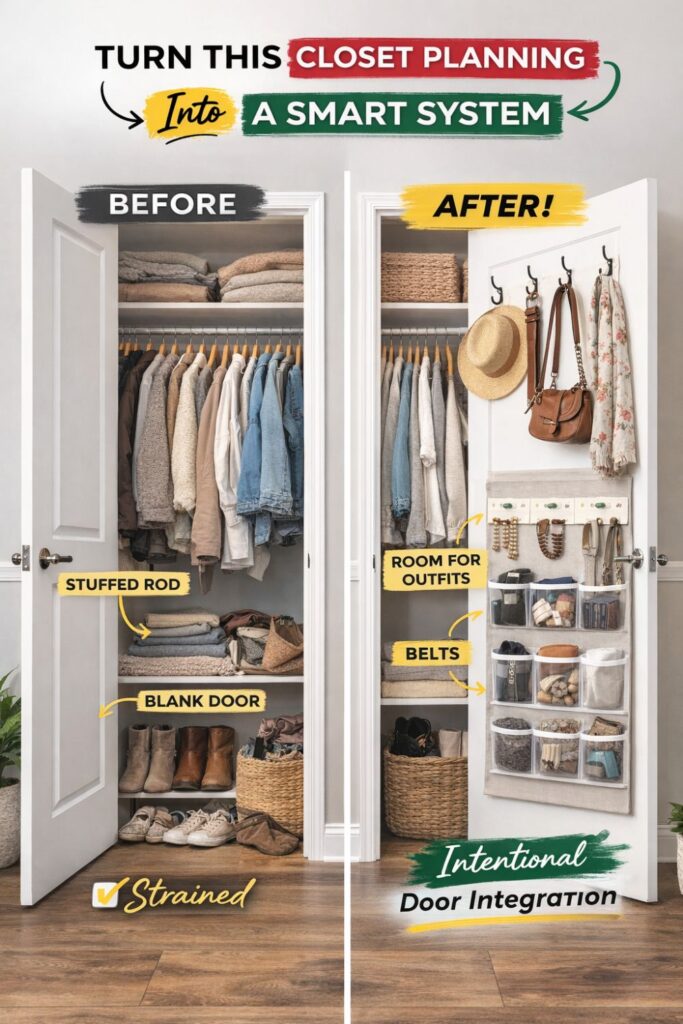
If you need more than a few hooks, slim racks can add shallow depth without crowding the closet.
Select a narrow-profile rack designed for interior doors: Choose racks no deeper than 2–4 inches so they don’t interfere with closing. Over-the-door metal racks or tiered hanging systems work well.
Distribute weight evenly from top to bottom: Place lighter items near the top and slightly heavier items lower down to reduce strain on hinges. Always test the door swing before fully loading.
A well-fitted rack adds storage without changing the closet footprint.
4. Use Pocket Organizers for Small Accessories
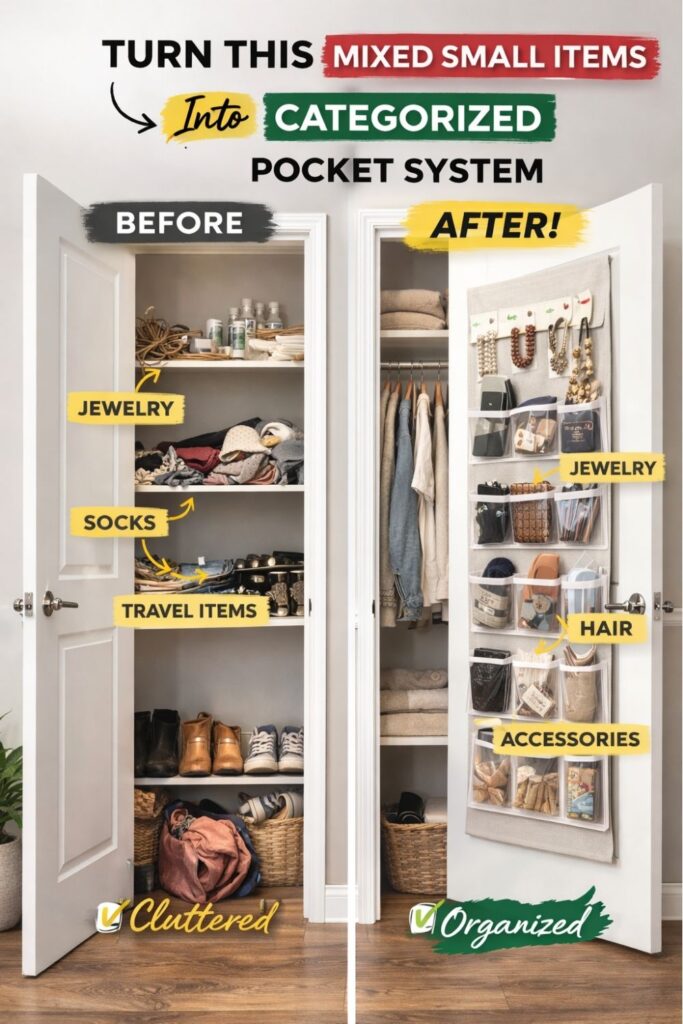
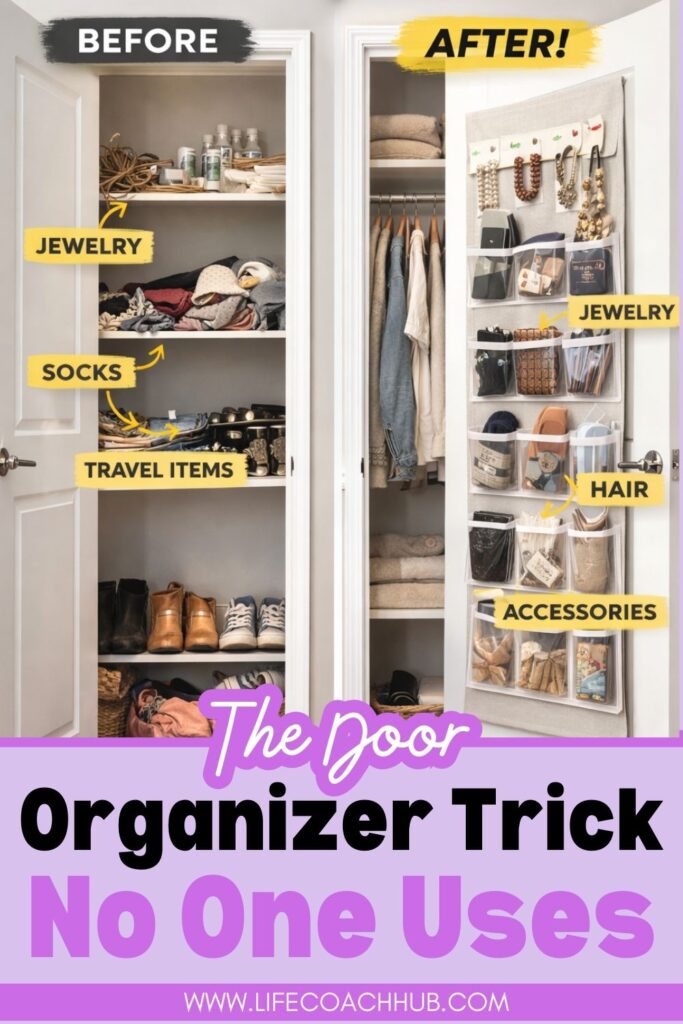
Pocket organizers turn vertical space into categorized compartments, which is especially useful for smaller items.
Choose a clear or neutral pocket organizer for visual simplicity: Clear pockets make items easy to find, while neutral fabric keeps the door looking tidy rather than busy.
Assign each row a defined category: Group similar items together — socks in one row, jewelry in another, travel items in another. Avoid stuffing pockets beyond their intended capacity to prevent sagging.
Organized rows create a hidden system instead of a cluttered wall.
5. Incorporate Mirror Storage for Dual Function
A mirror can double as concealed storage without visually crowding the closet.
Install an over-the-door mirror cabinet securely at eye level: Choose a slim mirror with shallow interior compartments. Ensure hardware is rated for the door’s weight limit.
Keep interior mirror storage minimal and lightweight: Store jewelry, small accessories, or daily-use items. Avoid heavy objects that could strain the mounting points.
Mirror storage gives you function without sacrificing simplicity.
What Not to Store on the Closet Door
Door storage works best when it remains lightweight and organized. Overloading it defeats the purpose.
Avoid storing bulky or heavy garments: Thick coats, heavy boots, or overfilled backpacks can stress hinges and warp the door over time.
Prevent overcrowding by limiting depth and density: If the door looks layered with multiple bulky systems, remove one. Leave some visible empty space to maintain balance.
Hidden storage should feel supportive — not strained.
How to Coordinate Door Storage With the Main Closet Layout
Door storage works best when it complements what’s inside the closet, not competes with it.
Use the door for accessories that pair with hanging clothes: Store belts, scarves, or small bags on the door if the rod holds daily outfits. This keeps styling pieces close but separate.
Adjust door storage seasonally as needed: Rotate lighter accessories in and out depending on the time of year, keeping the system aligned with what you’re currently wearing.
The door should function as an extension of your closet — not a random add-on.
The back of your closet door is more than a flat surface.
It’s vertical, hidden storage waiting to be used.
With hooks, racks, pockets, or mirror cabinets placed intentionally, you can expand capacity without adding floor clutter — and without touching your existing shelves or rod.
Are you all about style, decor and organization? Download a copy of our Decluttering Workbook.
*****
Need some in depth help with organization and productivity ? Drop on by our directories choc full of productivity coaches, minimalist coaches, and work/life balance coaches to get your life organized! Or click here to have us match you to the best.
The post How to Use the Closet Door for Hidden Storage appeared first on Life Coach Hub.
Leave a Reply