Are you all about style, decor and organization? Download a copy of our Decluttering Workbook.
*****
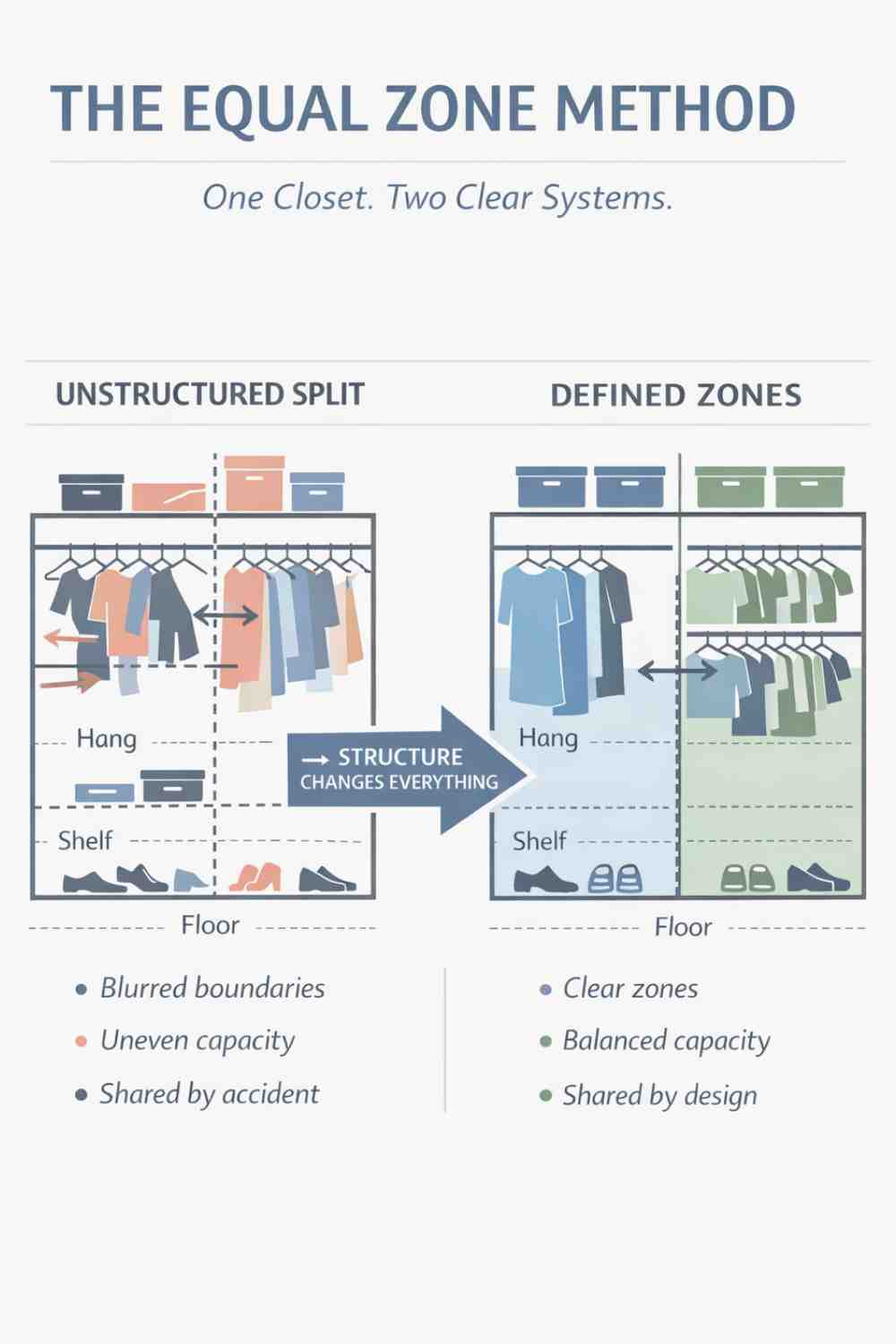
Sharing a small closet often feels frustrating, but the problem usually isn’t that two people are using the same space.
The real issue is lack of clear boundaries.
In many shared closets, space slowly shifts over time. One person adds a few extra hangers to the rod. Another stack of sweaters appears on a shelf. Shoes migrate to the floor. Gradually, one side expands while the other person feels squeezed.
Without a defined system, the closet becomes a quiet competition for space.
A well-divided closet prevents this tension by establishing clear zones and balanced storage. When each person knows exactly where their clothing belongs and how much space they have, the closet feels fair and functional.
The goal isn’t to create rigid rules. It’s to design a layout that distributes storage logically so both people can use the closet comfortably.
With a simple system of inventory, zone division, and storage parity, even a very small closet can support two wardrobes without feeling chaotic.
Need some in depth help with organization and productivity ? Drop on by our directories choc full of productivity coaches, minimalist coaches, and work/life balance coaches to get your life organized! Or click here to have us match you to the best.
Start With a True Inventory for Both People
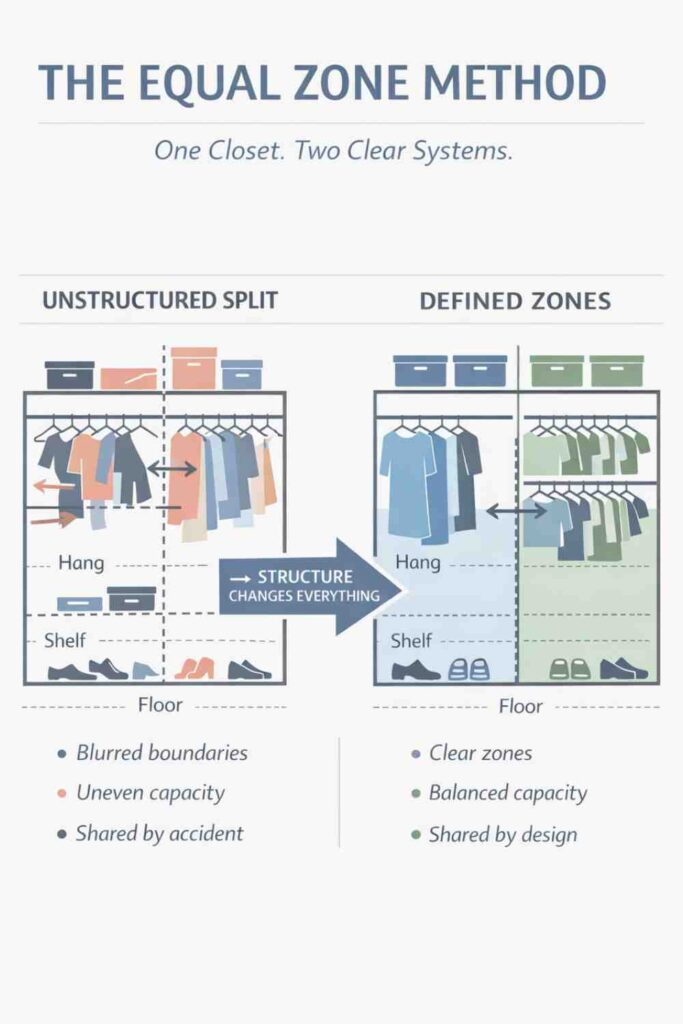
Before dividing the closet, it’s important to understand what each person actually needs to store.
Assumptions about wardrobe size often lead to uneven space distribution.
Count hanging and folded items for each person: Begin by reviewing each wardrobe and counting the types of clothing that require hanging. Note how many long garments there are — such as dresses, coats, or long jackets — as well as shorter items like shirts and pants.
Also consider folded items that may require shelf space.
Knowing the number of pieces helps determine how much rod space and shelving each person realistically needs.
This step creates a practical foundation for dividing the closet.
Identify any special storage requirements: Some wardrobes include items that need additional consideration. Workwear might require wrinkle-free hanging space, while casual clothing might fit comfortably in double-hang sections. Accessories, sports gear, or seasonal outerwear may also require separate storage.
Discuss these needs openly before planning the layout.
The goal is not perfect equality but fairness based on actual clothing volume.
When both people understand the true storage requirements, it becomes easier to design a system that feels balanced from the start.
Apply the Equal Zone Method
Once you know how much space each wardrobe requires, the next step is to establish clear visual boundaries inside the closet.
Without boundaries, space naturally drifts.
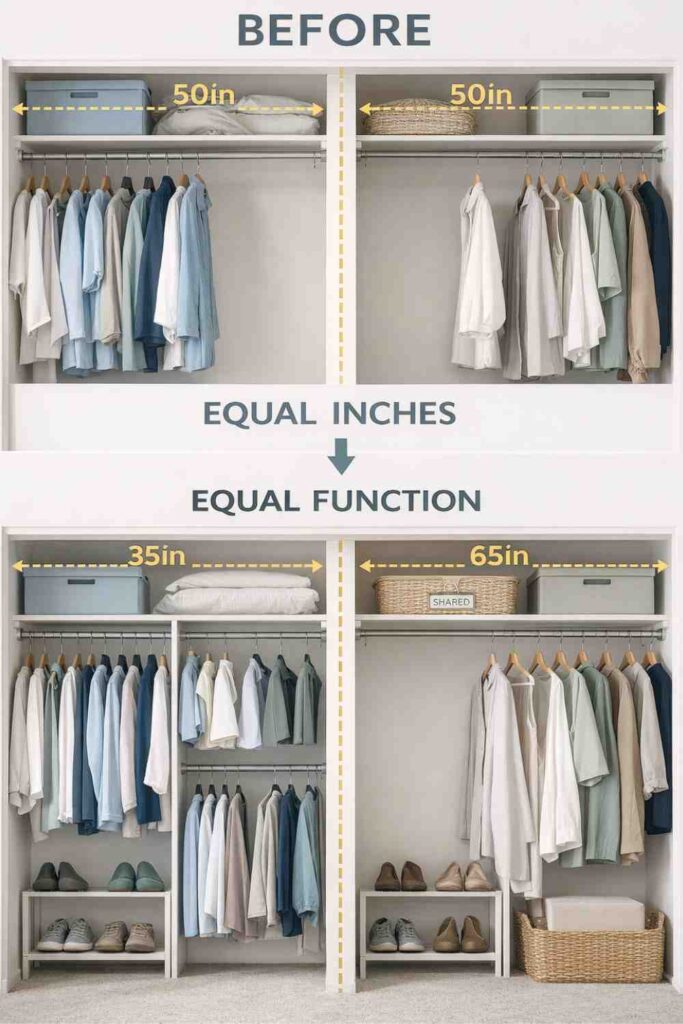
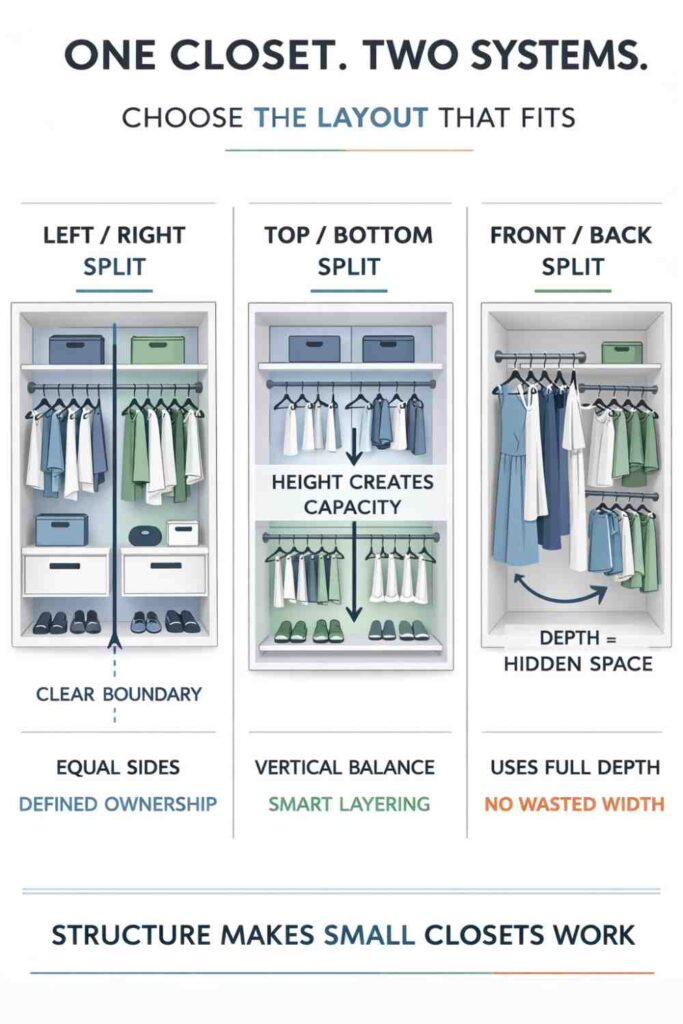
Divide the closet physically into two zones: The most common approach is a left-and-right split. One person receives the left side of the closet while the other uses the right. If the closet layout doesn’t allow this easily, you can divide the space front-to-back or top-to-bottom depending on the available structure.
The key is creating a clear line where one person’s storage ends and the other begins.
Installing separate rods or shelf dividers helps reinforce that boundary.
Mirror the structure wherever possible: When the closet layout allows, create a similar setup on both sides. This might include double rods on each side for shorter garments, matching shelf heights, and similar bin zones.
Symmetry makes the closet feel balanced.
Even when wardrobes differ slightly, mirrored structures help maintain visual fairness and reduce the chance that one side gradually expands into the other.
Clear zones turn a shared closet into two individual storage areas within the same space.
Create Storage Parity (Not Identical Space, But Equal Value)
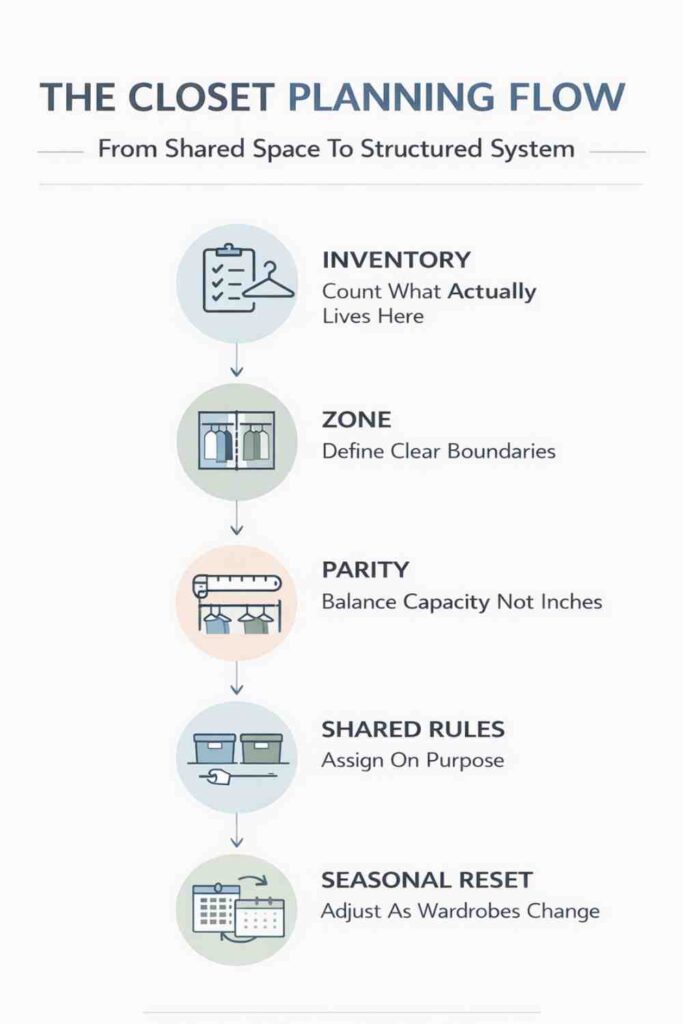
Fairness in a shared closet doesn’t always mean giving each person the exact same layout.
What matters more is equal usefulness.
Adjust rod configurations based on garment length: One person might own more long garments such as dresses or coats, while the other has mostly shirts and shorter items. Instead of forcing identical rod arrangements, adapt the layout to suit each wardrobe.
One side might include a tall hanging section, while the other uses two stacked rods.
Both sides can still offer comparable storage capacity even if the structures differ slightly.
Equalize shelf and bin access: Shelving and bins should also feel balanced. Each person should have access to a similar number of storage bins and shelf areas so accessories, folded items, and smaller clothing pieces can be stored easily.
Clear labeling helps maintain this balance.
When both wardrobes receive equivalent functional space, the closet feels fair even if the layouts aren’t identical.
This concept of storage parity helps prevent resentment while still allowing flexibility.
Define Shared Zones Clearly
Not every area of the closet needs to belong to one person.
Certain sections can function as shared storage if they’re clearly defined.
Assign a neutral top shelf for shared items: The highest shelf in the closet often works well as a communal zone. This space can store seasonal items, shared luggage, or off-season clothing that neither person uses regularly.
Using labeled bins keeps these items organized and prevents them from spilling into personal zones.
Shared storage should be purposeful, not accidental.
Create a shared floor area if necessary: The floor of the closet can also serve as a communal space when organized properly. A single shoe tray can divide footwear neatly, or separate hampers can be placed side by side for laundry.
The key is keeping the floor structured rather than cluttered.
When shared areas are intentional and clearly defined, they function smoothly without causing confusion or overlap.
Reinforce Boundaries With Visual Cues
Even with well-defined zones, visual cues can help maintain the division between wardrobes.
These cues reduce the chance that clothing slowly migrates across the closet.
Use different hanger colors for each person: Assigning one hanger color to each person creates an immediate visual distinction. For example, one side might use black hangers while the other uses white or gray.
This simple difference makes it easy to see if clothing drifts to the wrong side.
It also creates visual clarity when scanning the closet.
Label shelves or storage bins subtly: Adding small name labels to bins or shelf sections helps reinforce boundaries without making the closet feel overly rigid.
These labels act as gentle reminders of where items belong.
Over time, these visual cues help both people maintain the structure naturally.
The closet begins to function like two organized systems sharing one space.
Maintain the Closet With a Weekly Micro Reset
Even the best system can drift if it’s never maintained.
A short weekly reset prevents small issues from turning into major clutter problems.
Return misplaced items to the correct side: Spend a few minutes each week scanning the closet and returning any garments that migrated across the boundary.
Rehang items that may have been placed temporarily in the wrong section.
This keeps zones clear.
Rotate seasonal clothing and tidy shelves: As seasons change, redistribute coats, sweaters, or lighter clothing so the closet remains balanced. Straightening shelves and aligning bins also helps maintain the visual structure.
These small adjustments take only a few minutes.
But they prevent the slow creep that often leads to frustration in shared closets.
Consistent maintenance keeps the system working smoothly.
How to Divide a Very Narrow Closet
Some closets are too narrow for a traditional left-and-right split.
In these cases, a vertical layout can work better.
Divide the closet top-to-bottom: One person may use the upper rod and shelf while the other uses a lower double-rod section. This arrangement works well when vertical height is available.
Keep the floor clear for better flow: Narrow closets feel cramped when the floor fills with storage items. Keeping the floor mostly open preserves walking space and makes the closet easier to use.
Vertical organization allows narrow closets to function effectively for two people.
When One Person Truly Needs More Space
Sometimes one wardrobe simply requires more room than the other.
In these cases, fairness may involve adjusting storage beyond the closet.
Negotiate based on actual clothing volume: If one person has significantly more items, consider redistributing some storage to dressers, wardrobes, or under-bed containers elsewhere in the room.
Reevaluate the arrangement seasonally: Clothing needs change throughout the year. Revisiting the closet layout occasionally ensures both people continue to feel comfortable with the system.
Shared storage works best when it evolves with changing needs.
When a small closet is divided clearly and thoughtfully, it stops feeling like a source of tension.
Instead, it becomes a space where both people know exactly where their clothing belongs.
Boundaries are clear.
Storage feels fair.
And the closet finally works for two people instead of against them.
Are you all about style, decor and organization? Download a copy of our Decluttering Workbook.
*****
Need some in depth help with organization and productivity ? Drop on by our directories choc full of productivity coaches, minimalist coaches, and work/life balance coaches to get your life organized! Or click here to have us match you to the best.
The post How to Divide One Small Closet Between Two People appeared first on Life Coach Hub.
Leave a Reply