Author: salmankhattak642@gmail.com

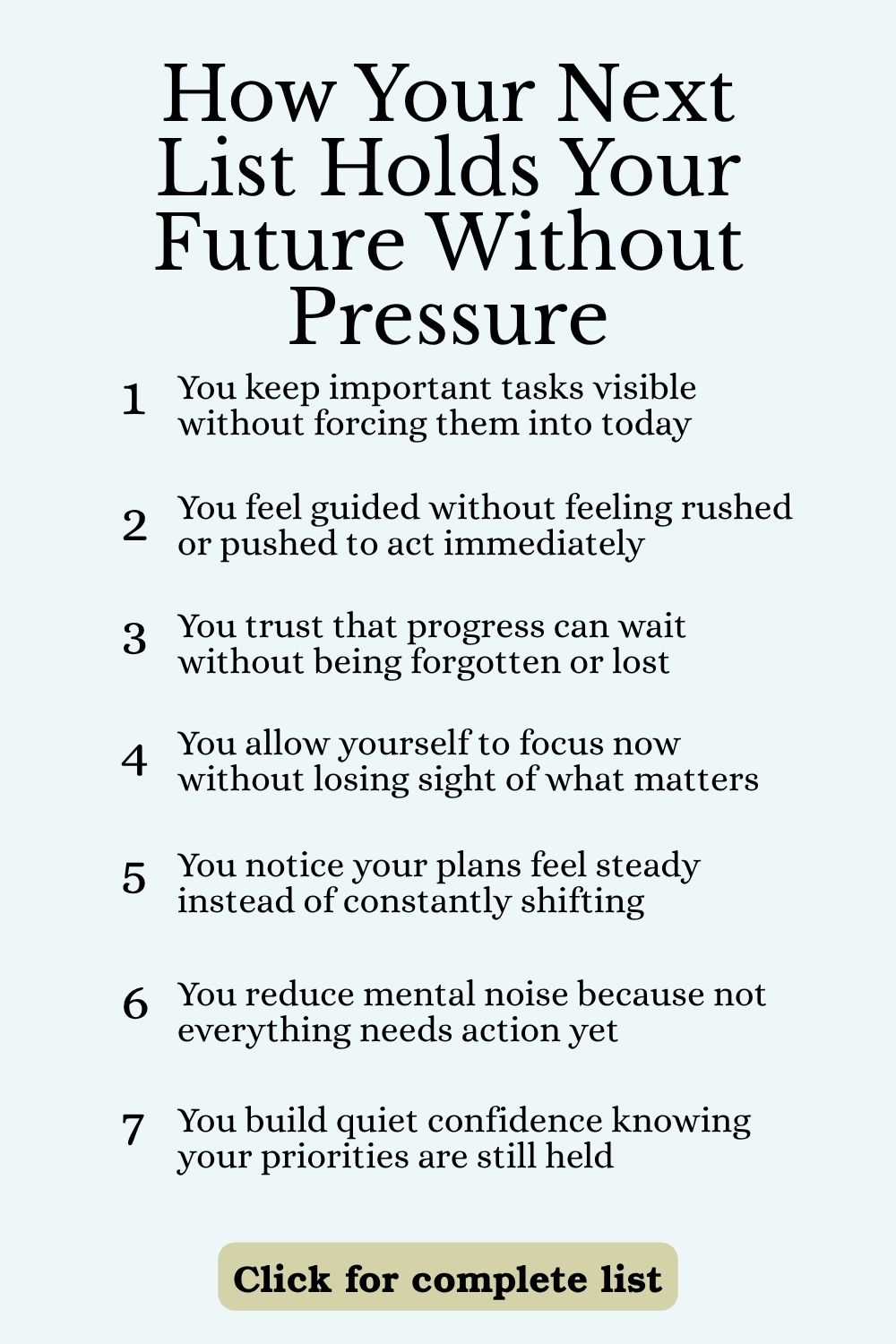
  • The “Now, Next, Later” Trick That Finally Gets You Out of Stuck Mode

    The “Now, Next, Later” Trick That Finally Gets You Out of Stuck Mode


    Want to try this at home? No worries! Download a copy of our SMART Goals PDF Worksheet.

    *****

    Most to-do lists don’t fail because they’re too long. They fail because everything on them feels equally important.

    When every task looks urgent, your brain doesn’t prioritize—it hesitates. You end up jumping between tasks, second-guessing what matters, or avoiding the list entirely.

    This is where task triage changes everything.

    Instead of treating your list like a single pile, you break it into three clear categories: Now, Next, and Later. This simple shift removes the pressure of figuring everything out at once.

    You’re no longer asking, “What should I do?” every five minutes. You’ve already decided.

    The goal isn’t to do more. It’s to reduce friction between deciding and acting.

    Task triage gives you a way to narrow your focus without losing track of everything else.

    Instead of carrying every responsibility at once, you can hold just a few.

    And that’s what creates momentum.

    Because clarity isn’t about having fewer tasks. It’s about knowing exactly where to start—and trusting that the rest will be handled at the right time.

    Need some in depth help with goal settings, motivation or productivity ? Drop on by our directories choc full ofproductivity coaches,accountability coaches,and goal-setting coaches,and start reaching those goals! Or click here to have us match you to the best.

    How to Sort Your Tasks Into Now, Next, and Later

    1. Start with a full task capture

    Write down every task currently pulling your attention, including small errands, ongoing projects, and things you keep mentally revisiting.

    This step matters more than it seems. If you skip it, your brain will keep reminding you of forgotten tasks, making it harder to trust your system.

    Once everything is visible, you can start making clean decisions.

    2. Define what “Now” actually means

    Limit this category to tasks that must be done today or have immediate consequences if delayed.

    This is where most people go wrong. “Now” is not everything you feel like doing—it’s what truly requires action today.

    If you overload this category, you recreate the same overwhelm you started with.

    3. Assign “Next” to important but non-urgent tasks

    These are the things that matter, but don’t need to be touched today.

    This category protects your future without overwhelming your present.

    It gives you direction without pressure.

    4. Move everything else to “Later”

    Place low-priority, optional, or idea-based tasks here without overthinking it.

    This is where you stop trying to hold everything at once.

    “Later” is not failure. It’s intentional delay.

    5. Sanity-check your “Now” list

    Reduce it to what you can realistically complete in a day.

    If your list still feels heavy, it’s too big.

    A smaller “Now” list doesn’t limit your progress—it increases your follow-through.

    How to Use the System Daily Without Re-Overthinking

    1. Start your day from the “Now” list only

    Ignore “Next” and “Later” until your current priorities are handled.

    This removes the need to constantly re-decide what matters.

    You’ve already done that work. Now you just execute.

    2. Pull from “Next” only when space opens

    Once a “Now” task is completed, promote one task from “Next” into “Now.”

    This creates a steady flow of progress without overwhelming your attention.

    You’re not juggling everything—you’re moving one step at a time.

    3. Avoid reshuffling constantly

    Stick with your original sorting unless something genuinely urgent changes.

    Reorganizing can feel productive, but it often becomes another form of avoidance.

    Trust your earlier decisions.

    4. Use time blocks or simple sequencing

    Decide when you’ll do each “Now” task instead of leaving it open-ended.

    Clarity about timing turns intention into action.

    Even a rough plan reduces hesitation.

    5. End the day with a quick reset

    Move unfinished “Now” tasks forward and reassign categories if needed.

    This keeps your system current and prevents backlog from building.

    Over time, this daily rhythm becomes automatic.

    You stop thinking about productivity—and start experiencing it.

    How to Prevent Your “Later” List From Becoming a Black Hole

    1. Review your “Later” list weekly

    Set a consistent time to revisit what you’ve postponed.

    Without this step, “Later” turns into a forgotten pile.

    With it, it becomes a controlled holding space.

    2. Promote selectively, not emotionally

    Only move tasks into “Next” if they truly matter right now.

    Just because something has been sitting there doesn’t mean it deserves attention.

    Relevance matters more than time.

    3. Delete what no longer fits

    Remove tasks that no longer align with your priorities or goals.

    Keeping everything just in case creates quiet pressure.

    Letting go creates space.

    4. Group similar “Later” tasks

    Organize them into categories like admin, ideas, or long-term projects.

    This makes it easier to act on them when the time comes.

    You reduce friction before it even appears.

    5. Treat “Later” as a holding space, not a commitment

    Not everything on this list needs to be completed.

    This mindset shift is what keeps the system from becoming overwhelming again.

    You’re not behind—you’re choosing.

    What This Makes Possible

    When your tasks are sorted clearly, your energy follows.

    You stop carrying everything at once and start focusing on what actually needs your attention now.

    That shift doesn’t just help you get more done. It helps your day feel calmer, lighter, and more manageable.

    Instead of reacting to whatever feels loudest, you move through your work with more intention.

    That’s what makes this system useful. It turns a messy list into a clear path forward.

    *****

    Want to try this at home? No worries! Download a copy of our SMART Goals PDF Worksheet.

    Need some in depth help with goal settings, motivation or productivity ? Drop on by our directories choc full of productivity coaches, accountability coaches, and goal-setting coaches, and start reaching those goals! Or click here to have us match you to the best.

    The post The “Now, Next, Later” Trick That Finally Gets You Out of Stuck Mode appeared first on Life Coach Hub.


    Source link

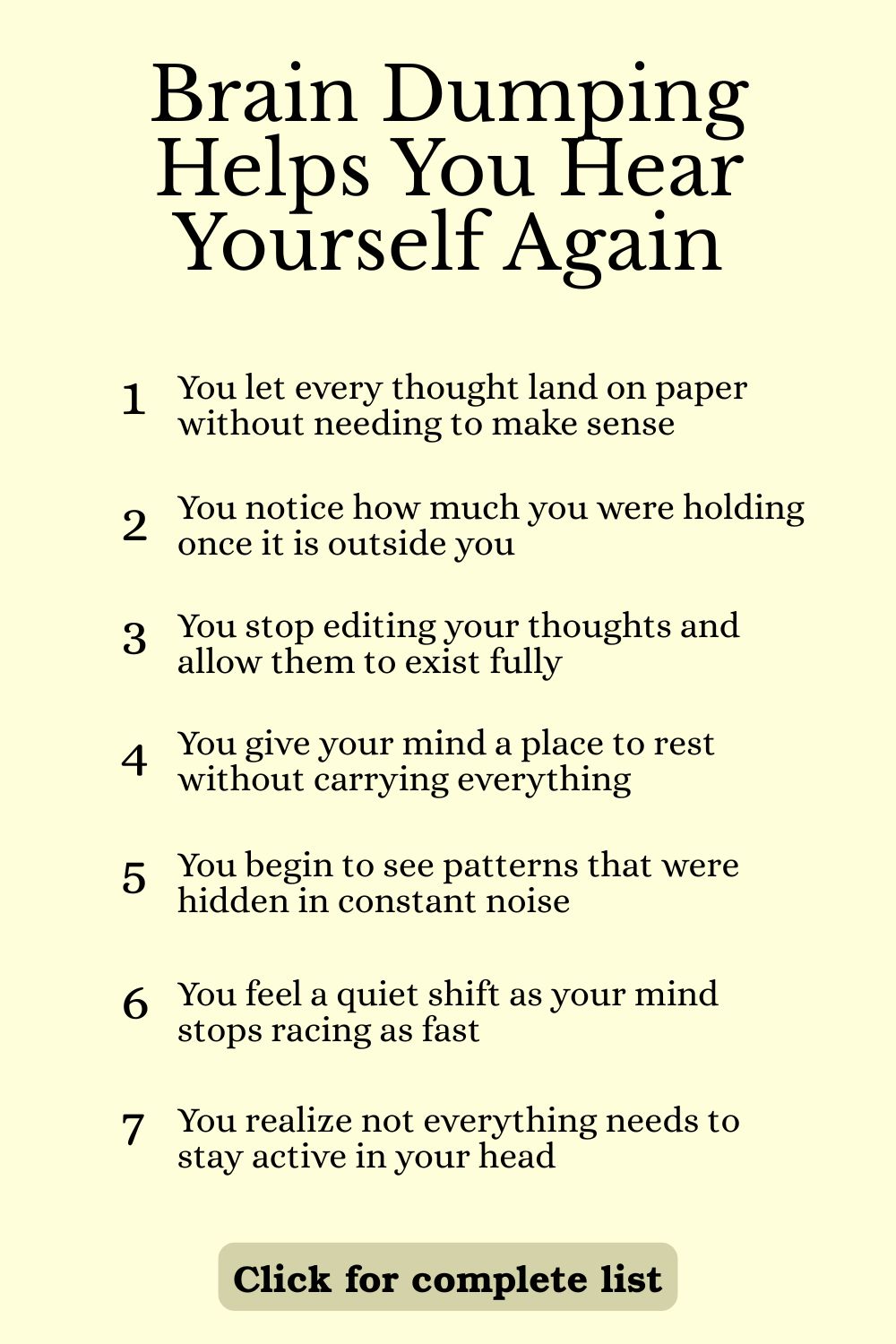
  • Stuck and Spinning? Try This “Brain Dump → Sort → Pick 1” Reset That Actually Works

    Stuck and Spinning? Try This “Brain Dump → Sort → Pick 1” Reset That Actually Works


    Want to try this at home? No worries! Download a copy of our SMART Goals PDF Worksheet.

    *****

    When everything feels important, nothing actually moves forward.
    Your mind keeps jumping between tasks, ideas, and unfinished thoughts.

    You sit down to work, but instead of starting, you hesitate.
    Not because you don’t care—but because everything feels equally urgent.

    That’s the real problem.

    Your brain is trying to hold too many open loops at once.
    So instead of choosing one thing, it keeps scanning all of them.

    This constant mental switching drains your energy.
    It makes even simple decisions feel heavier than they should.

    Most productivity advice tries to solve this with better planning.
    But planning doesn’t help if your mind is already overloaded.

    What you need first is space.

    That’s where this method comes in.

    Brain Dump → Sort → Pick 1 breaks the process into three simple stages.
    Each one removes a different kind of friction.

    First, you empty everything out of your head.
    Then, you organize what’s there so you can actually see it.
    Finally, you choose one priority so you can move forward clearly.

    You’re not trying to figure everything out at once.
    You’re just creating a single, obvious next step.

    This works because it separates thinking from deciding.
    And deciding from doing.

    Instead of forcing clarity, you let it emerge.

    And once you feel what it’s like to move forward with one clear priority,
    you’ll realize how much energy was being lost to indecision all along.

    Need some in depth help with goal settings, motivation or productivity ? Drop on by our directories choc full ofproductivity coaches,accountability coaches,and goal-setting coaches,and start reaching those goals! Or click here to have us match you to the best.

    Step 1: Brain Dump Everything Without Filtering

    Set a timer for 10–15 minutes:
    Give yourself a short window so you don’t overthink or slow down.

    The goal here is speed, not perfection.
    You’re not writing a list—you’re clearing your mind.

    Write everything that’s on your mind:
    Tasks, worries, reminders, ideas, loose thoughts—put it all down.

    If it’s taking up mental space, it belongs on the page.

    Don’t filter or judge what you’re writing.
    Even things that seem small or irrelevant matter here.

    Do not organize while writing:
    Let your list be messy on purpose.

    The moment you start sorting, your brain shifts into decision mode.
    That slows you down and keeps you stuck in the same mental loop.

    Stay in release mode instead.

    Include both work and personal items:
    Clarity doesn’t come from separating your life too early.

    It comes from seeing everything that’s competing for your attention at once.

    Keep going past the obvious tasks:
    The first few items are easy.

    But the real mental weight often shows up after that—
    the things you’ve been avoiding, postponing, or quietly carrying.

    This is where the process starts to work.

    Stop when your mind feels quieter:
    Not empty—just quieter.

    You’ll notice a shift.

    Less tension.
    Less urgency.
    More space.

    That’s your signal that you’ve moved the weight out of your head
    and into something you can actually work with.

    ✔ Result: Your thoughts are visible instead of overwhelming.

    Step 2: Sort Your List Into Clear Groups

    Read through your list once without changing anything:
    Take a moment to observe before organizing.

    This helps you see patterns instead of reacting to individual tasks.

    You’ll start to notice that certain types of items repeat.
    They naturally cluster together.

    Group similar items together:
    Create simple categories like work, home, admin, or ideas.

    Don’t overthink the labels.
    You’re not building a system—you’re reducing noise.

    Highlight repeated themes:
    Look for groups of tasks that point to the same underlying priority.

    For example, several small tasks might all relate to one project.
    Or multiple reminders might connect to a single area of your life.

    This is where clarity begins to form.

    Separate urgent from non-urgent:
    Not everything needs your attention right now.

    Seeing this clearly reduces pressure immediately.

    It reminds you that urgency is often perceived, not real.

    Move “someday” items aside:
    Some things matter—but not today.

    Create space for them without letting them compete for your focus.

    This simple shift makes your list feel lighter.

    Keep your system simple:
    The goal is visibility, not perfection.

    Over-complicating this step brings you back into overwhelm.

    By the end of this stage, your list should feel different.

    Not smaller—but clearer.

    You can look at it and understand what’s there.
    And that changes how it feels to move forward.

    Result: You can see what matters without mental clutter.

    Step 3: Pick One Priority That Moves Everything Forward

    Choose the group with the biggest impact:
    Ask yourself: what would make everything else feel easier?

    You’re not looking for the biggest task.
    You’re looking for the most meaningful one.

    The one that unlocks movement.

    Select one specific action:
    Not a category. Not a vague goal.

    One clear step you can complete.

    The more specific it is, the easier it is to start.

    Make sure it fits your current energy:
    This step should match your real day—not your ideal one.

    If it feels too big, break it down further.

    Clarity comes from simplicity.

    Resist choosing multiple tasks:
    This is where most people lose momentum.

    Picking more than one priority splits your attention.

    It brings back the same mental clutter you just cleared.

    One is enough.

    Define what “done” looks like:
    Vague tasks create hesitation.

    Clear endpoints create action.

    Know exactly what finishing this task means before you begin.

    Start immediately:
    Don’t wait.

    The faster you move from choosing to doing,
    the less time your brain has to question the decision.

    Action reinforces clarity.

    This is where everything shifts.

    You go from thinking about progress to actually creating it.

    Result: One clear focus and immediate forward movement.

    Step 4: Use This System Daily to Stay Clear

    Repeat the brain dump when things feel crowded:
    You don’t have to wait until you’re overwhelmed.

    Use it as a regular reset.

    Even a quick version can clear mental noise before it builds up.

    Let your categories evolve:
    Your priorities will change over time.

    Your system should reflect that.

    What matters now may not matter next week—and that’s okay.

    Track your “one priority” daily:
    This creates a rhythm of progress.

    Instead of trying to do everything, you build consistency by doing one thing well.

    That’s what builds momentum.

    Notice recurring tasks:
    Pay attention to what keeps showing up.

    These patterns reveal where your time and energy are really going.

    They also show you what might need a better system or boundary.

    Keep it flexible, not perfect:
    This isn’t about following rules.

    It’s about supporting your thinking.

    Some days will be messy.
    Some lists will be incomplete.

    That doesn’t mean the system isn’t working.

    Focus on progress, not perfection:
    Clarity improves through use.

    The more you practice this process,
    the faster you’ll move from overwhelm to action.

    Over time, something shifts.

    You stop trying to manage everything at once.
    And start trusting yourself to handle what matters now.

    Result: Steady, sustainable progress without overwhelm.

    The Core Shift

    You don’t need a better plan.
    You need less noise.

    When your mind is clear, your next step becomes obvious.
    And when your next step is obvious, action becomes easier.

    Not everything matters right now.

    Just one thing.

    And that’s enough to move forward.

    *****

    Want to try this at home? No worries! Download a copy of our SMART Goals PDF Worksheet.

    Need some in depth help with goal settings, motivation or productivity ? Drop on by our directories choc full of productivity coaches, accountability coaches, and goal-setting coaches, and start reaching those goals! Or click here to have us match you to the best.

    The post Stuck and Spinning? Try This “Brain Dump → Sort → Pick 1” Reset That Actually Works appeared first on Life Coach Hub.


    Source link

  • Vision Board Prompts to Use When You Know You Want Change but Not the Exact Goal

    Vision Board Prompts to Use When You Know You Want Change but Not the Exact Goal


    How to Make a Vision Board for One Goal Instead of Your Whole Life

    Want to try this at home? No worries! Download a copy of our SMART Goals PDF Worksheet.**** Most vision boards fail quietly. They look beautiful. They feel inspiring for a […]


    Read More


    Source link

  • Career Vision Board Ideas for People Who Want Clarity, Not Just Motivation

    Career Vision Board Ideas for People Who Want Clarity, Not Just Motivation


    Vision Board Prompts to Use When You Know You Want Change but Not the Exact Goal

    Want to try this at home? No worries! Download a copy of our SMART Goals PDF Worksheet.**** Most vision boards don’t fail because you lack motivation. They fail because you […]


    Read More


    Source link

  • How to Make a Vision Board for One Goal Instead of Your Whole Life

    How to Make a Vision Board for One Goal Instead of Your Whole Life


    Career Vision Board Ideas for People Who Want Clarity, Not Just Motivation

    Want to try this at home? No worries! Download a copy of our SMART Goals PDF Worksheet.**** Most career vision boards look inspiring… but don’t actually help you make a […]


    Read More


    Source link

  • Vision Board Categories That Keep Big Goals From Turning Into a Mess

    Vision Board Categories That Keep Big Goals From Turning Into a Mess


    Want to try this at home? No worries! Download a copy of our SMART Goals PDF Worksheet.
    ****

    Most vision boards don’t fail because you picked the wrong goals. They fail because everything is crammed together with no structure.

    Career goals sit next to health habits, money targets overlap with lifestyle dreams, and your brain ends up trying to focus on everything at once. That kind of visual noise doesn’t motivate you. It overwhelms you.

    When everything feels equally important, nothing actually moves forward.

    A well-organized vision board works differently. It gives your brain clear lanes to follow. It separates priorities so each area gets attention instead of competing for it.

    This is where categories change everything.

    Instead of asking your brain to process a chaotic mix of images and ideas, you’re creating a system. Each section has a purpose. Each goal has a place. Each glance at your board becomes easier to understand.

    You’re not just collecting inspiration. You’re designing clarity.

    And clarity is what turns a vision board from something you look at occasionally into something that quietly shapes your daily decisions.

    In this guide, you’ll learn how to break your board into clean, intentional categories so your goals stop competing and start working together.

    Need some in depth help with goal settings, motivation or productivity ? Drop on by our directories choc full of productivity coaches, accountability coaches, and goal-setting coaches, and start reaching those goals! Or click here to have us match you to the best.

    Build Clear Goal Categories Before You Add Anything

    • List your main life areas: Write down 3–5 core categories like career, health, finances, relationships, and personal growth so your board reflects your whole life—not just one priority.

    Start by zooming out. If you only focus on one area, your board becomes unbalanced, and other parts of your life get neglected without you noticing.

    Think in terms of life buckets. What areas actually shape your daily experience?

    • Limit categories to what you can focus on: Too many sections create the same chaos you’re trying to avoid, so keep it tight and realistic.

    Five strong categories will always outperform ten scattered ones. The goal is clarity, not coverage.

    If you hesitate when naming a category, it probably doesn’t need to be there.

    • Define what success looks like in each category: Add 1–2 specific outcomes per area so each section has direction instead of vague inspiration.

    “Be healthier” is too broad. “Work out three times a week” or “build a consistent morning routine” gives your brain something concrete to latch onto.

    Each category should answer one question: what does progress actually look like here?

    • Assign each goal to only one category: Avoid overlap so your brain knows exactly where to focus when you look at your board.

    If one image represents multiple goals, it creates confusion. Your brain has to interpret instead of act.

    Clear categories remove that friction. You instantly know what you’re looking at—and what it means.

    Design Your Vision Board Layout to Match Your Categories

    • Divide your board into clear sections: Physically or digitally split your board into zones so each category has its own space and doesn’t compete visually.

    Think of your board like a map. Each section should feel like its own area, not something bleeding into everything else.

    Even subtle spacing can make a big difference in how your brain processes it.

    • Keep each section visually consistent: Use similar colors, styles, or image types within each category to make it easy to scan and understand.

    When visuals feel cohesive, your brain groups them faster. That means less effort and more clarity every time you look.

    Consistency turns your board from random images into something structured and readable.

    • Balance space based on priority: Give more room to areas that matter most right now, instead of forcing equal sizing across everything.

    Not every category deserves equal weight all the time. If career is your focus this season, let it take up more space.

    Your board should reflect your current priorities, not an idealized version of balance.

    • Use labels or subtle markers: Add small headers or visual cues so each section is instantly recognizable at a glance.

    You don’t need bold titles everywhere, but a simple cue helps your brain orient quickly.

    The faster you understand your board, the more often you’ll actually use it.

    Add Goals Without Letting Categories Overlap

    • Choose visuals that clearly belong to one category: Avoid images that represent multiple goals to prevent mental confusion.

    A single image should tell a single story. If it tries to represent everything, it ends up meaning nothing.

    Clarity always beats creativity here.

    • Keep each section focused on one theme: Don’t mix habits, outcomes, and identities randomly—group similar types of goals together.

    For example, a health section might include routines, not just outcomes. A career section might focus on milestones, not vague success imagery.

    This creates a stronger internal logic your brain can follow.

    • Limit the number of items per category: Too many images dilute focus, so prioritize only what truly matters this season.

    If everything is on the board, nothing stands out.

    You want each item to feel intentional, not decorative.

    • Check for visual competition: Step back and make sure no section overwhelms the others or pulls attention away unintentionally.

    Your eye should move naturally across the board, not get stuck in one corner.

    If one section dominates visually, it may be pulling focus away from goals that still matter.

    Use Categories to Guide Weekly Focus and Action

    • Pick one category to focus on each week: Rotate attention so all areas progress instead of competing daily.

    Trying to work on everything every day leads to burnout. Focusing on one category at a time creates momentum.

    It gives your effort direction.

    • Translate each category into small actions: Turn visuals into 1–2 weekly steps so your board drives behavior, not just inspiration.

    A vision board without action stays decorative.

    Each category should connect to something you can actually do this week.

    • Review balance across categories regularly: Notice if one area is being ignored and adjust your focus accordingly.

    Your board helps you spot imbalance early.

    If one section hasn’t been touched in weeks, it’s a signal—not a failure.

    • Update categories as priorities change: Life shifts, so your board should evolve to reflect what matters now—not what mattered months ago.

    A static board becomes background noise.

    A living board stays relevant and keeps pulling your attention back in.

    How to Fix a Vision Board That Already Feels Cluttered

    • Audit your current board: Identify which items don’t clearly belong to a category and remove or reassign them.

    Clutter usually comes from unclear purpose.

    If you can’t explain why something is there, it’s probably not helping you.

    • Group similar goals together: Cluster items into natural categories before redesigning the layout.

    Start by organizing, not decorating.

    You’ll often see patterns emerge once everything is grouped.

    • Remove duplicate or competing goals: If two visuals represent the same idea, keep the strongest one.

    Repetition doesn’t strengthen clarity. It weakens it.

    Choose the image that creates the clearest reaction.

    • Rebuild using clean sections: Start fresh with defined zones instead of trying to tweak a messy layout.

    Sometimes small fixes aren’t enough.

    A clean reset can give you a structure that actually works.

    When to Combine Categories (And When Not To)

    Want to try this at home? No worries! Download a copy of our SMART Goals PDF Worksheet.

    Need some in depth help with goal settings, motivation or productivity ? Drop on by our directories choc full of productivity coaches, accountability coaches, and goal-setting coaches, and start reaching those goals! Or click here to have us match you to the best.

    • Combine categories only when they naturally overlap: For example, personal growth and mindset can live together if they support the same outcomes.

    Some areas reinforce each other. When they do, combining them can simplify your board without losing clarity.

    The key is alignment, not convenience.

    • Avoid combining high-effort areas: Career and health often need separate focus to prevent one from dominating.

    These areas demand different types of energy.

    When combined, one usually takes over.

    • Watch for hidden competition: If one category consistently pulls attention away, it likely needs its own space.

    Your behavior will tell you what your structure isn’t.

    Pay attention to where your focus naturally goes.

    • Adjust based on your current season of life: Simplify categories during busy periods and expand them when you have more capacity.

    Your board should support your life, not add pressure to it.

    The right structure is the one you can actually maintain.

    The post Vision Board Categories That Keep Big Goals From Turning Into a Mess appeared first on Life Coach Hub.


    Source link

  • Relationship Break Up Advice: Healing from a Break Up

    Relationship Break Up Advice: Healing from a Break Up


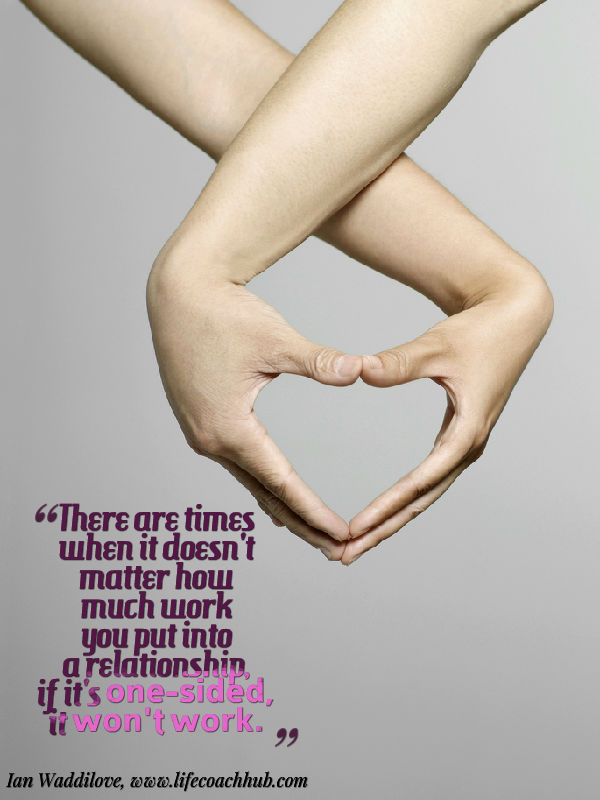
    If it's one sided, it won't work

    Need some help with your relationship or dating life? Drop on by our directories choc full of relationship coaches, dating coaches, breakup coaches and divorce coaches to help make your love life the best it can be.  Or click here to have us match you to the best.

    My own story of a Break up

    Before I get into the meat and potatoes of this article, let me tell you a bit about my journey, which is closely related to this topic of dealing with a breakup.

    My story started as a double-barrelled relationship breakdown. I was working for a company in Brighton, on a business trip to the Middle East. During this time, I was in a relationship that was far from perfect. In fact it was at its end, but I didn’t want to let it go. Especially since the girl i was with is the mother of my son, but there comes a time when things just don’t work and you must call it quits before things get worse, or so that is what I thought.

    Anyway, there I was in a hotel in Riyadh Saudi Arabia, when a message popped up on my Facebook messenger saying “hi stranger.” It turns out that this was from an ex-girlfriend. Way back in the early 80’s, we were dating, but hadn’t seen each other for over 20 years. Fast forwarding a little, it also turned out that we worked close to each other and lived nearby without knowing over the years.

    Immediately, we struck up a friendship and because this girl had been through a breakdown of her own marriage recently, she was aware of what I was going through. She was someone who shared my pain, understood and listened. 

    Once I got back, my relationship broke down and I ended up leaving the family home.

    This girl from my past was there to help, be an ear and we spent time together as friends supporting each other. Over time, we got closer and we had no secrets from each other, or so I thought, and we ended up getting married.

    Life was good again, in fact it was the best it has ever been. I had a beautiful wife, home, family. Although of course, there were challenges as with any family.

    Learning Self-awareness through the break up

    Through my experiences, I realized that if your relationship is in a stage of breakup, it’s for a reason, and part of that is down to you. I know you don’t want to hear that, but it’s the truth. Very rarely is one person to blame when a relationship fails.

    Going back to my story, this relationship, which sounds like a happily ever after, was doomed for failure, and I have to take full responsibility for that. Not all the blame, but the responsibility. You see, I got lazy in the relationship, I took my wife for granted, I didn’t do what I was supposed to do to ensure a strong relationship. We both suffered from depression, which was in part caused by my own personality.

    Self-evaluation and the break up

    And so, after church one Sunday, she told me she didn’t want us to be together anymore. It felt like my world had ended, much like some of you may be feeling now. This was where I started to take a long hard look at myself and found the failings in my character that were contributing factors to the breakdown of this once fabulous relationship.

    I moved out of the house and was miserable… deeply miserable because I didn’t know why she had given up on our marriage. Then, I started to learn about myself, what I was like as a person. And I found out that I was…

    • Lazy
    • Angry
    • Self-centred
    • Needy
    • Jealous
    • Resentful
    • Had no life purpose
    • Had no positive career

    Not a good basis for a relationship, I’m sure you will agree.

    This is why I urge you to find out what you are like, and what you need to work on to be the best you can be for you. Don’t do it for someone else, as that is a cop out. It has to be a self development process for you.

    Self-development towards a better you

    There we were, living apart, but finally talking and dating again. We are trying to work towards the future of being together. This girl gave me a list of what she needed me to do, so that we could be together again and she set a time that it had to be done in.

    Yes, it was a form of control, but I thought that I could deal with it and work with that situation. 

    Much to her surprise, I did everything she wanted me to do. I got a good job, stopped being lazy and focused on making her feel wanted. I loved her in a way that hadn’t been there for a long time. We even went away for a spa weekend and had a fabulous time together, but it wasn’t enough.

    As it turns out, there was something else that she wasn’t telling me, and the hard work I was putting in was all for nothing. She gave up a short time later and filed for divorce.

    It takes two

    So what’s the point of me telling you this story? 

    There are times, when it doesn’t matter how much work you put into a relationship, if it’s one-sided, it won’t work. Two people have to work at it and want the same thing. If you haven’t seen my article on relationships, check it out. Learn to see these signals and work on yourself to be the best you can be for you.

    Here is the biggest and what may be the hardest part of this process of dealing with a breakup. You will be saying the same as I did, that if she would just take me back it would all be ok. Well, I hate to say it, but it won’t. Whatever you do, don’t go back to your ex. If you do, you will undo all that hard work.

    You will slip back in to homeostasis (I’ll talk about that in another article). You will slip back to your old ways and won’t develop yourself. The relationship will fail again. Unless, you both work on improving yourselves together for each of your own benefit. Bit of a paradox, isn’t it?

    Some may be able to relate to this story and if you can, I know what you are going through and you’re not alone. Don’t let your relationship get to this state.

    The Relationship Homeostasis Loop

    You mentioned homeostasis earlier. This is where most people get stuck without realizing it.

    It’s not just “falling back into old ways.” It’s a loop.

    Here’s what it actually looks like:

    • Trigger: Something happens
    • Reaction: You respond in your usual way
    • Pattern: That response creates the same dynamic
    • Result: The relationship deteriorates in the same way
    • Reset: You promise to change… until the next trigger

    Example.

    Your partner becomes distant.
    You feel insecure.
    You become needy or controlling.
    They pull away even more.

    And just like that, you’re back where you started.

    This is exactly what I did. Different details, same loop.

    A relationship coach will often map this out with you step by step. Not theory. Actual moments from your past arguments. You start to see your patterns, not just your intentions.

    And once you see the loop clearly, you can finally interrupt it.

    Why Working Harder Didn’t Save It

    This is the part that hurts the most.

    You put the work in. You changed. You showed up differently.

    And it still ended.

    That’s because effort is not the same as alignment.

    There’s a simple test most people ignore.

    The 2-Sided Investment Test:

    • Are both people taking responsibility
    • Are both people changing behaviour, not just talking
    • Are both people investing consistently over time

    If one side is doing all the work, the outcome is already decided.

    In my case, I did everything she asked.

    Got the job.
    Changed my habits.
    Showed up better.

    But she had already emotionally checked out.

    No amount of effort fixes that.

    A relationship coach would call this out early. They don’t just look at what you’re doing. They look at what both people are doing. Week by week.

    The “Fix Yourself for Them” Trap

    When you change for someone else, it rarely sticks.

    Because you’re performing. Not transforming.

    You can force behaviour for a while.

    • You act more attentive
    • You try harder
    • You say the right things

    But underneath, nothing has really shifted.

    The resentment is still there.
    The insecurity is still there.
    The same reactions are waiting.

    Eventually, you slide back.

    That’s why people say, “I don’t know what happened, I was doing so well.”

    You were performing for a result. Not becoming someone new.

    A good coach will push you here. Not “what do you need to do to win them back?” but “who do you need to become so this pattern doesn’t repeat?”

    Big difference.

    The Signals You Miss When You’re Trying to Save It

    When you’re trying to hold a relationship together, you stop seeing clearly.

    You look for hope. You ignore signals.

    There are usually three signs the relationship is already ending.

    1. Decisions are made without you
    You’re no longer part of the process. You’re being informed, not included.

    2. Emotional withdrawal
    Less curiosity. Fewer questions. Even arguments disappear.

    Silence replaces tension.

    3. The future disappears
    No more “we.” No more plans. Everything becomes short-term.

    Looking back, these signs were there for me.

    But I was focused on fixing things. Not reading what was actually happening.

    A communication coach would often role-play these conversations with you. You hear your partner’s responses clearly, without emotion clouding it.

    And suddenly it’s obvious.

    How to Actually Evaluate Yourself

    Listing your flaws is easy.

    Lazy. Angry. Jealous.

    That’s not where the real work is.

    You need to go deeper.

    Use a simple 3-layer breakdown:

    • Behaviour: What did you do
    • Pattern: What keeps repeating
    • Driver: Why you react that way

    Example.

    • Behaviour: You get jealous
    • Pattern: You try to control when you feel uncertain
    • Driver: Fear of being abandoned or replaced

    Now you have something real to work with.

    A practical way to do this is journaling one situation at a time.

    Write it like this:

    “When this happened, I did this, because I believed this.”

    That last part is where the truth sits.

    A coach will challenge those beliefs directly. Not gently. Clearly. Because that’s where change actually happens.

    Why Going Back Resets Everything

    Going back feels like relief.

    Familiar voice. Familiar space. Familiar routines.

    But that familiarity is the problem.

    Because your patterns are tied to that environment.

    Same person. Same triggers. Same roles.

    You don’t start fresh. You pick up where you left off.

    Within weeks, you’ll often see:

    • The same arguments
    • The same reactions
    • The same emotional distance

    Nothing changed structurally.

    That’s the key word. Structure.

    If the structure doesn’t change, the outcome won’t either.

    Structure means:

    • How you communicate
    • How you handle conflict
    • What standards you hold
    • What behaviours are acceptable

    Without new structure, you’re just replaying the old relationship.

    A relationship coach will usually insist on new rules before any reconciliation. Not vague promises. Clear agreements and consistent check-ins.

    What Moving Forward Actually Looks Like

    “Move forward” sounds nice. It’s vague though.

    What does it actually look like in real life?

    It’s a process. Not a feeling.

    A simple way to approach it is in phases.

    Days 1–30: Stabilise

    • No contact
    • Basic routine (sleep, food, work)
    • Reduce emotional triggers

    This is about getting steady. Not solving everything.

    Days 30–60: Understand your patterns

    • Write down key moments from the relationship
    • Identify your repeated reactions
    • Start spotting your drivers

    Now you’re building awareness that actually leads somewhere.

    Days 60–90: Rebuild

    • Introduce new habits
    • Change your environment where needed
    • Focus on purpose, not just distraction

    This is where real change begins.

    Not dramatic. Not instant.

    But solid.

    A coach can be incredibly useful here for one reason. Accountability.

    Not just talking about change. Tracking it. Week by week. Making sure you don’t drift back into the same loop.

    Because that’s what most people do.

    They feel better. Then they repeat the pattern.

    And the cycle starts again.

    If you’re reading this either you have been through a breakup, or you are feeling that there is a challenge in your relationship. Tackle it now, talk to someone who will have some ideas on how to repair a less than perfect relationship. It’s not too late to take action and save it.

    So, be the best you can be for you, and move forward with a new outlook that will lead to a beautiful and happy life.

    Here’s to your eternal happiness.

    Cheers

    Ian
    Coach
    Partner To Success

    The post Relationship Break Up Advice: Healing from a Break Up appeared first on Life Coach Hub.


    Source link

  • 8 Mother’s Day Gifts Kids Can Make That Moms Keep Forever

    8 Mother’s Day Gifts Kids Can Make That Moms Keep Forever


    Mother’s Day gifts don’t have to be expensive to matter. The ones moms hold onto are the ones that feel thoughtful, personal, and made with care. These ideas show how kids can create something meaningful that lasts far beyond the day itself.

    How to Build a Rest & Recharge Mother’s Day Self Care Basket

    This idea focuses on creating a calm, intentional gift instead of a basket filled with random items. You’ll learn how to layer a few thoughtful pieces so it feels like a real moment of rest, not just more “stuff.”

    Want more ideas about creating a meaningful self care gift? → Read the whole guide

    Quick DIY Mother’s Day Gift Baskets You Can Make in One Hour

    Short on time? This shows how kids can still put together something that looks polished and thoughtful using simple items and a clear structure.

    Want more ideas about fast, thoughtful gift baskets? → Read the whole guide

    How to Create a Memory Lane Mother’s Day Gift Basket

    This one turns memories into the gift itself. Kids can create a simple timeline of moments that makes the basket deeply personal and something she’ll revisit again and again.

    Want more ideas about sentimental gifts that last? → Read the whole guide

    How to Build a Garden Themed Mother’s Day Gift Basket

    Perfect for moms who love being outside, this idea blends practical tools with small relaxing touches so the gift feels both useful and special.

    Want more ideas about garden-inspired gifts? → Read the whole guide

    DIY Baking Basket Ideas for Mother’s Day

    Instead of giving finished treats, this turns the gift into an experience she can enjoy later. Kids can assemble a simple recipe kit that feels thoughtful and interactive.

    Want more ideas about baking-themed gifts? → Read the whole guide

    How to Turn Any Hobby Into a Mother’s Day Gift Basket

    This approach keeps things simple by focusing on what she already loves. Kids can build a small, meaningful gift around one hobby so every item feels intentional.

    Want more ideas about hobby-based gift baskets? → Read the whole guide

    Breakfast In Bed Mother’s Day Gift Basket Kit

    This idea helps kids prepare everything ahead of time so the morning feels easy and special. It turns a classic tradition into something organized and memorable.

    Want more ideas about breakfast-in-bed setups? → Read the whole guide

    Experience Based Mother’s Day Gift Basket Ideas

    Instead of giving more items, this focuses on moments she can look forward to. Kids can create a gift filled with future plans, surprises, and shared experiences.

    Want more ideas about experience-based gifts? → Read the whole guide

    How to Make These Gifts Feel Even More Personal

    The difference between something she uses once and something she keeps is the personal touch. A short handwritten note, a shared memory, or even a small inside joke can turn a simple basket into something meaningful.

    Focus on what feels true to your relationship with her. That’s what she’ll remember most.

    Simple Ways Kids Can Help Create These Gifts

    Kids don’t need to do everything perfectly to make something meaningful. Let them choose colors, write notes, or help arrange items so the gift feels like it truly came from them.

    Even small contributions make the gift feel more real and more memorable.

    READ MORE

    How to Build a Rest & Recharge Mother’s Day Self Care Basket

    Quick DIY Mother’s Day Gift Baskets You Can Make in One Hour

    How to Create a Memory Lane Mother’s Day Gift Basket

    How to Build a Garden Themed Mother’s Day Gift Basket

    DIY Baking Basket Ideas for Mother’s Day

    How to Turn Any Hobby Into a Mother’s Day Gift Basket

    Breakfast In Bed Mother’s Day Gift Basket Kit

    Experience Based Mother’s Day Gift Basket Ideas

    The post 8 Mother’s Day Gifts Kids Can Make That Moms Keep Forever appeared first on Life Coach Hub.


    Source link

  • 8 DIY Mother’s Day Gifts That Feel Personal (Not Store-Bought)

    8 DIY Mother’s Day Gifts That Feel Personal (Not Store-Bought)


    Make meaningful Mother’s Day gifts fast with simple DIY.

    Skip the generic gifts this year. These DIY Mother’s Day ideas are designed to feel thoughtful, personal, and put-together—without taking all day. Each one gives you a simple way to create something she’ll actually remember.

    Quick DIY Mother’s Day Gift Baskets You Can Make in One Hour

    Short on time? This guide shows you how to build a complete, polished gift basket in just one hour using simple items and a clear formula. You’ll learn how to make it look intentional fast.

    Want more ideas about quick DIY gift baskets? → Read the whole guide

    How to Build a Rest & Recharge Mother’s Day Self Care Basket

    This one focuses on creating a calm, meaningful gift instead of a crowded basket. You’ll see how to layer items so it feels soothing, personal, and emotionally thoughtful.

    Want more ideas about self care gift baskets? → Read the whole guide

    How to Create a Memory Lane Mother’s Day Gift Basket

    Turn your gift into a timeline of memories she can revisit. This idea shows how to combine photos, notes, and small keepsakes into something deeply personal and lasting.

    Want more ideas about sentimental gift baskets? → Read the whole guide

    How to Build a Garden Themed Mother’s Day Gift Basket

    This basket blends practical gardening tools with relaxing extras so it feels like an experience, not just supplies. You’ll learn how to style it so it looks full and beautiful.

    Want more ideas about garden gift baskets? → Read the whole guide

    DIY Baking Basket Ideas for Mother’s Day

    Instead of giving finished treats, this idea lets her enjoy the experience twice. You’ll see how to create a layered recipe jar and build a clean, cohesive baking-themed gift.

    Want more ideas about baking gift baskets? → Read the whole guide

    How to Turn Any Hobby Into a Mother’s Day Gift Basket

    Not sure what to make? This method helps you turn any hobby she loves into a simple, curated basket. The structure keeps it thoughtful without overcomplicating it.

    Want more ideas about hobby-based gift baskets? → Read the whole guide
    https://lifecoachhub.com/how-to-build-a-gift-basket-that-turns-her-morning-coffee-into-a-treat/

    Breakfast In Bed Mother’s Day Gift Basket Kit

    Prep everything ahead so the morning feels easy and special. This idea shows how to turn breakfast in bed into a ready-to-go experience instead of a last-minute rush.

    Want more ideas about breakfast in bed gifts? → Read the whole guide
    https://lifecoachhub.com/the-breakfast-in-bed-mothers-day-basket-kit/

    Experience Based Mother’s Day Gift Basket Ideas

    Give her something she can look forward to. This approach turns a basket into a collection of future plans, experiences, and meaningful moments instead of just items.

    Want more ideas about experience gift baskets? → Read the whole guide

    How to Make Any DIY Gift Feel More Personal

    The difference isn’t the items—it’s the intention behind them. Choosing a clear theme, adding one meaningful detail, and keeping the design simple can instantly make your gift feel more thoughtful.

    Simple Ways to Make Your Gift Look Put-Together Fast

    Presentation matters more than price. Small changes like layering items, using neutral containers, and leaving space between pieces can make even simple items feel curated.

    READ MORE

    The post 8 DIY Mother’s Day Gifts That Feel Personal (Not Store-Bought) appeared first on Life Coach Hub.


    Source link

  • 8 Creative Mother’s Day Gifts That Don’t Feel Generic

    8 Creative Mother’s Day Gifts That Don’t Feel Generic


    Make creative Mother’s Day gifts easily

    If you’ve ever struggled to find something that feels thoughtful (not last-minute or random), this guide pulls together creative Mother’s Day gift ideas that actually feel personal.

    Each idea below gives you a simple starting point—without overcomplicating it.

    The 5 Theme Method for Creating Unique Mother’s Day Gift Baskets

    This method shows how to build a gift around one clear theme so everything feels intentional. You’ll learn how to structure a basket using anchor items, supporting pieces, and small details that tie everything together.

    It also walks through ready-made themes like tea, garden, baking, reading, and spa—so you don’t have to start from scratch.

    Want more ideas about themed gift baskets? Read the whole guide

    How to Create a Memory Lane Mother’s Day Gift Basket

    This idea turns a simple basket into a timeline of meaningful memories. You’ll see how to organize moments from childhood to now and pair them with small keepsakes that make each section feel personal.

    It’s one of those gifts that feels emotional, structured, and lasting—not something she’ll forget in a week.

    Want more ideas about sentimental gift baskets? Read the whole guide

    How to Build a Gift Basket That Turns Her Morning Coffee Into a Treat

    This formula keeps things simple while still feeling thoughtful. You’ll learn how to combine one premium item, a few treats, and a small experience element to create a gift she’ll actually use.

    The focus isn’t just the items—it’s turning her daily coffee into a small moment she looks forward to.

    Want more ideas about coffee-themed gifts? Read the whole guide

    How to Build a Garden Themed Mother’s Day Gift Basket

    This guide shows how to mix practical gardening tools with relaxing extras so the gift feels balanced. It’s not just about usefulness—it’s about creating an experience around something she already loves.

    You’ll also learn simple styling tricks that make the basket feel full and visually put together.

    Want more ideas about garden-themed gifts? Read the whole guide

    Luxury Mother’s Day Gift Baskets Without Overcrowding

    If you want something that looks high-end, this approach focuses on fewer, better items. You’ll see how limiting the basket actually makes it feel more curated and intentional.

    It also breaks down how to style everything so it looks clean, polished, and not overfilled.

    Want more ideas about luxury gift baskets? Read the whole guide

    The Cozy Night In Mother’s Day Gift Basket Guide

    This idea is built around creating a relaxing evening, not just giving items. You’ll learn how to combine a few simple pieces into a gift that feels like a planned moment of rest.

    The structure is simple, but the result feels thoughtful and comforting.

    Want more ideas about cozy gift baskets? Read the whole guide

    DIY Baking Basket Ideas for Mother’s Day

    This gift focuses on the experience of baking, not just the end result. You’ll see how to create a layered ingredient jar that looks good and turns into something she can enjoy later.

    It’s simple to put together but still feels creative and personal.

    Want more ideas about baking-themed gifts? Read the whole guide

    How to Turn Any Hobby Into a Mother’s Day Gift Basket

    This method shows how to build a gift around something she already enjoys. Instead of guessing, you use her hobbies as the foundation so everything feels relevant.

    It also gives you a simple structure to keep the basket balanced and not cluttered.

    Want more ideas about hobby-based gifts? Read the whole guide → https://lifecoachhub.com/how-to-build-a-gift-basket-that-turns-her-morning-coffee-into-a-treat/

    How to Make Any Mother’s Day Gift Feel More Personal

    Even simple gifts feel meaningful when they follow a clear idea. Choosing one theme or experience makes everything feel intentional instead of random.

    Small details—like color, layering, and a handwritten note—can completely change how the gift is received.

    Simple Ways to Avoid Generic Mother’s Day Gifts

    Most gifts feel generic when they’re filled with unrelated items. Sticking to a structure or formula keeps everything cohesive.

    Focusing on what she actually enjoys will always feel more thoughtful than trying to impress with more items.

    READ MORE

    The post 8 Creative Mother’s Day Gifts That Don’t Feel Generic appeared first on Life Coach Hub.



    Source link