
Are you all about style, decor and organization? Download a copy of our Decluttering Workbook.
*****
Having two closets in one room sounds like a dream. Until both slowly turn into half-organized, half-random storage zones that never quite feel finished.
If you’ve ever opened both doors and thought, “Why does this still feel crowded?”, the issue probably isn’t space. It’s purpose.
When each closet has a clear job, the entire room feels more intentional. Mornings move faster. Visual clutter drops. You stop shifting hangers around just to make things fit.
Below are three practical ways to assign purpose to each closet — plus two follow-up strategies that make the system stick.
Need some in depth help with organization and productivity ? Drop on by our directories choc full of productivity coaches, minimalist coaches, and work/life balance coaches to get your life organized! Or click here to have us match you to the best.
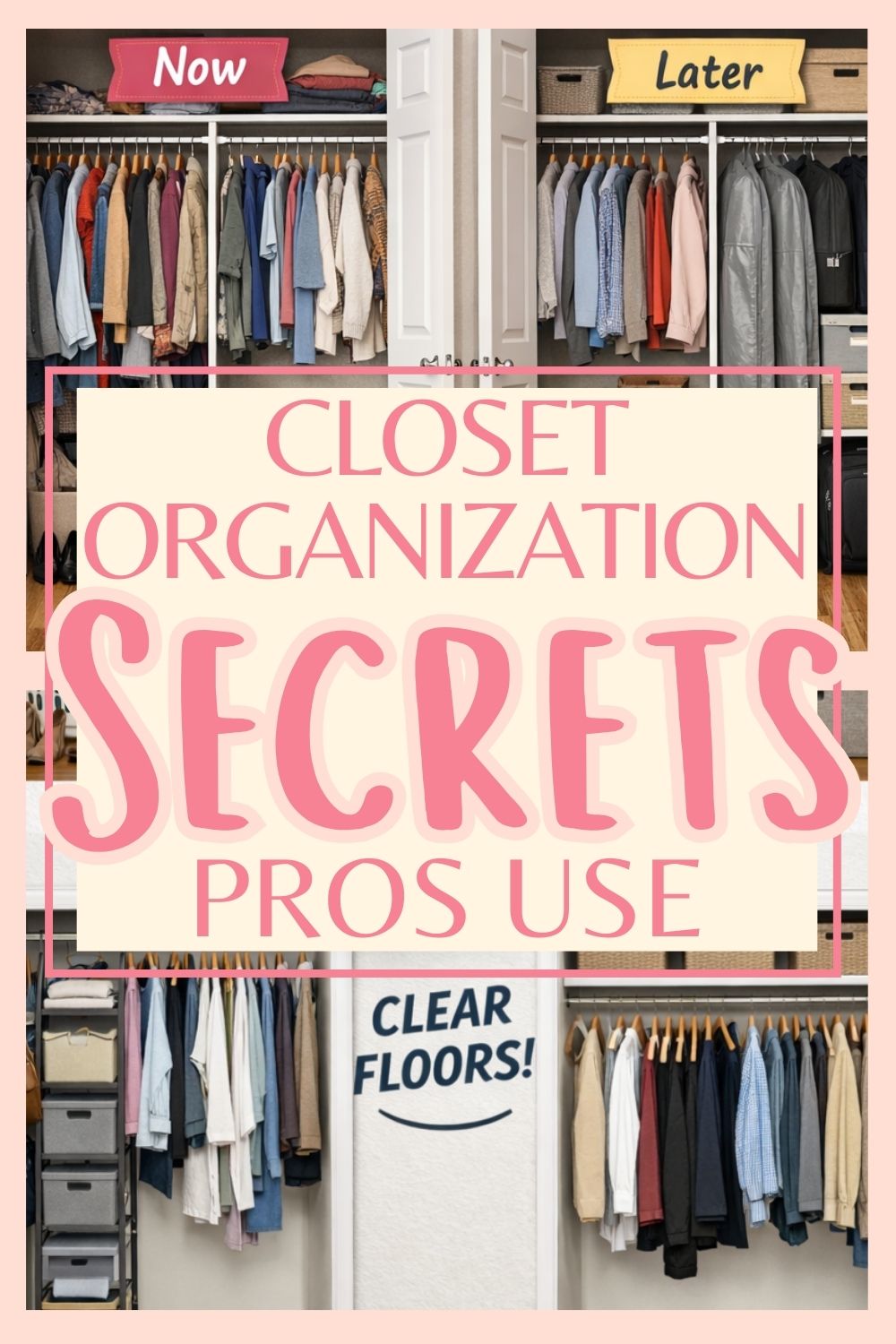
1. Split by Season: “Now” vs “Later”

This method is perfect if your biggest frustration is visual overload. Too many coats in summer. Too many sundresses in winter. When everything lives together year-round, your closet always feels overstuffed.
Separating by season instantly cuts what you see in half.
Decide which closet will hold the current season: Stand in the room and choose the more accessible or better-lit closet for daily wear. This becomes your “Now” closet. The other becomes your “Later” closet for off-season storage.
Move only in-season items into the daily closet: Pull out everything you’re actively wearing and hang it in the primary closet. Place off-season clothing in the second closet using garment bags, labeled bins, or upper shelves. Keep it organized, but don’t over-style it — this space is storage, not display.
Optional rotation tip: Set a calendar reminder every 3–6 months to swap closets. The reset feels like a mini wardrobe refresh without buying anything new.
2. Split by Person: Mine vs Theirs

If you share a room, shared closet space can quietly create tension. Hangers creep across rods. Shoes spill over. No one feels fully “settled.”
Assigning one closet per person creates immediate boundaries.
Assign full ownership of each closet: Choose which closet belongs to whom and commit to that division. Avoid splitting rods inside each closet; give one entire space to each person so there’s no confusion.
Customize each closet for that person’s needs: Adjust rod heights, add hooks, or use shelf dividers based on clothing type. One person may need more hanging space; the other may need shelves. Design each closet independently rather than trying to make them match.
If space feels uneven, compensate with vertical storage or door hooks — not by blurring the boundary.
This approach works especially well in kids’ rooms or guest rooms where clear ownership reduces daily friction.
3. Split by Clothing Type: Everyday vs Occasion

Sometimes both closets belong to one person, but they still feel chaotic. In that case, function-based zoning is the cleanest solution.
You’re not dividing by person or season — you’re dividing by purpose.
Define your “daily driver” closet: Choose one closet to hold everything you reach for weekly — workwear, lounge sets, jeans, school-run outfits. This closet should be easy to access and visually simple.
Use the second closet for specialty items: Move formalwear, seasonal coats, travel pieces, and rarely worn items into the second closet. Group them intentionally: occasion dresses together, heavy coats together, event bags together.
When daily wear isn’t competing with once-a-year outfits, your primary closet instantly feels more breathable.
If you struggle with decision fatigue in the mornings, this split alone can shave minutes off your routine.
4. The 30-Minute Purpose Reset Plan
If both closets currently feel mixed and messy, don’t overthink it. You can reset them quickly.
Empty one closet completely: Remove everything so you can see the space clearly. This forces a clean decision instead of reorganizing around old habits.
Assign its role before putting anything back: Decide in one sentence what this closet is for. For example: “This is my everyday closet” or “This is off-season storage.” Only return items that fit that description. Everything else goes to the second closet.
Repeat the process for the second space. Once each closet has a defined job, avoid crossing categories.
Clarity beats perfection here.
How to Visually Reinforce Each Closet’s Purpose

Assigning purpose is step one. Making it obvious is step two.
If both closets look identical, it’s easy to drift back into mixing.
Create visual cues for each closet: Use matching hangers in one closet and storage bins in the other. Or keep one closet minimalist and the other more utilitarian. Even small visual differences reinforce their roles.
Keep floors as clear as possible: Floor clutter blurs boundaries. Use upper shelves or slim baskets instead of letting overflow gather at the bottom. When each closet looks distinct at a glance, your brain remembers its function.
The goal is that you can open both doors and instantly tell which one serves what purpose.
What to Do If One Closet Is Bigger
Uneven closets are common, and they can make splitting feel awkward. The solution isn’t to abandon structure — it’s to assign roles strategically.
Give the larger closet the higher-volume category: If you’re splitting by season, the current season usually needs more space. If you’re splitting by person, assign the larger closet to the wardrobe with more hanging items.
Use vertical space in the smaller closet intentionally: Add a second rod, stackable bins, or upper shelves to maximize height. Smaller doesn’t mean useless — it just means more focused.
Remember, the goal isn’t symmetry. It’s clarity.
The Big Shift

Two closets in one room isn’t extra storage.
It’s an opportunity to reduce friction.
When each closet answers one clear question — “What is this for?” — the room starts working for you instead of against you.
Less overlap.
Less visual noise.
More intentional space.
Are you all about style, decor and organization? Download a copy of our Decluttering Workbook.
*****
Need some in depth help with organization and productivity ? Drop on by our directories choc full of productivity coaches, minimalist coaches, and work/life balance coaches to get your life organized! Or click here to have us match you to the best.
The post Two Closets in One Room: How to Assign Purpose to Each appeared first on Life Coach Hub.
Leave a Reply