Are you all about style, decor and organization? Download a copy of our Decluttering Workbook.
*****
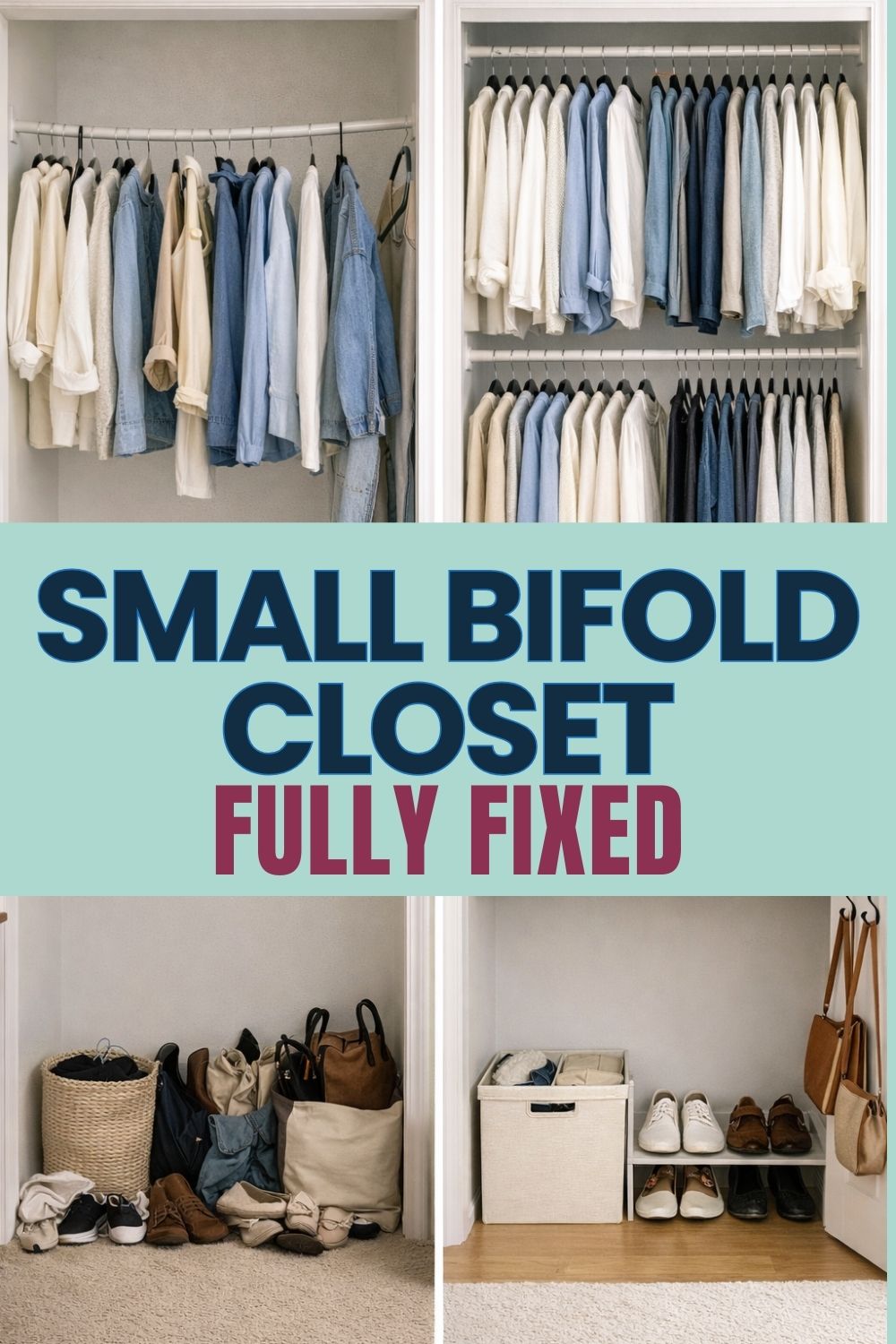
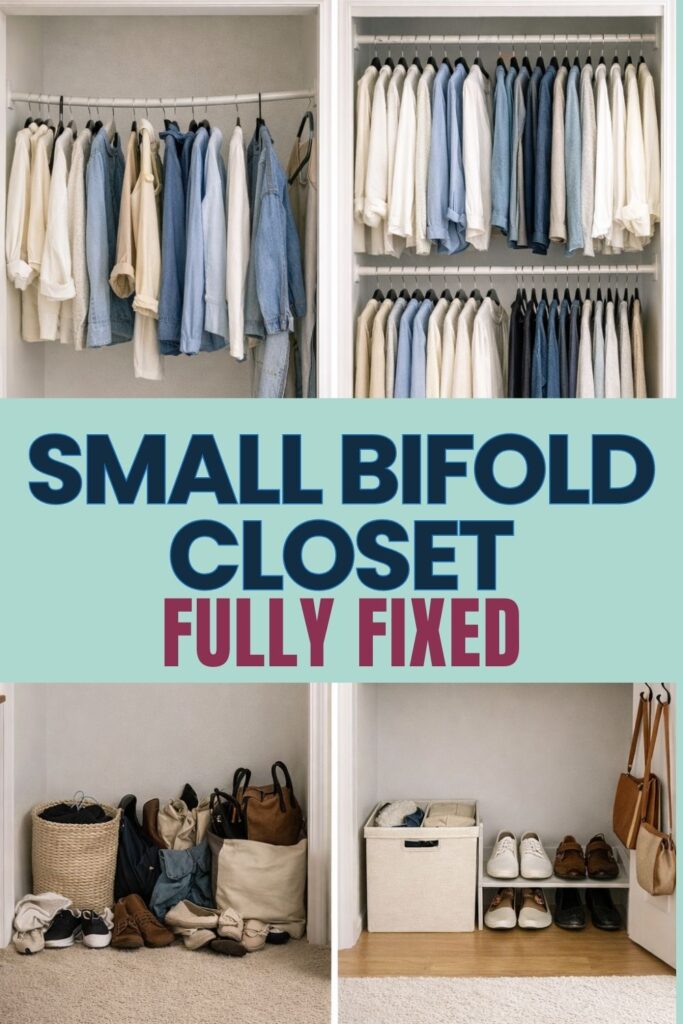
Small bifold closets can feel more frustrating than helpful. The doors fold awkwardly, block visibility, and make it harder to reach what you need. Inside, the layout is often basic: one rod, one shelf, and a lot of wasted vertical space.
But a bifold closet isn’t the problem. The structure inside it is.
With the right layout strategy, you can either remove the doors and create an open system — or keep them and optimize every inch behind them. Below is a step-by-step guide to turning a cramped bifold closet into a functional storage system that actually works.
Need some in depth help with organization and productivity ? Drop on by our directories choc full of productivity coaches, minimalist coaches, and work/life balance coaches to get your life organized! Or click here to have us match you to the best.
In our original roundup of closet transformation ideas, we touched on bifold closets as one of the most misunderstood spaces, and now we’re showing you exactly how to restructure the inside — with or without removing the doors.
Step 1: Decide Whether to Remove the Doors or Keep Them

Before you buy organizers or add shelves, you need to decide how the closet will function in the room. The door decision shapes everything else.
Some rooms benefit from an open concept. Others need visual concealment.
Evaluate your room layout and daily use: Stand in front of the closet and open the bifold doors fully to see how much floor space they consume and whether they block furniture or traffic flow.
Choose visibility or concealment intentionally: Remove the doors if you want easier access and better lighting, or keep them if you prefer a cleaner visual look and want to hide visual clutter.
If you remove the doors, you must design the interior to look intentional. If you keep them, you must maximize depth and vertical space inside.
If You Remove the Doors
Removing bifold doors creates instant openness — but it also exposes everything. That means your layout needs structure and visual consistency.
Step 2A: Build an Open-System Layout
An open closet needs to function like a built-in unit rather than a hidden storage box.
Plan the structure first.
Add adjustable shelves for folded items and bins: Create clear zones for sweaters, denim, and accessories so everything has a defined home rather than floating between rods and the floor.
When doors are removed, symmetry and clean lines matter. The goal is to make the closet feel designed — not unfinished.
Step 3A: Make the Open Closet Visually Controlled
Without doors, clutter becomes visible instantly. Styling becomes part of functionality.
Think in terms of uniformity.
Use matching slim hangers and coordinated bins: Replace mixed hangers and mismatched containers with consistent styles to reduce visual noise.
Limit what stays on display: Keep only daily-use items visible and store off-season or rarely used pieces in closed boxes on upper shelves.
An open bifold closet can feel larger and more breathable — but only if it’s intentionally curated.
If You Keep the Bifold Doors
Keeping the doors means the interior must work harder. Since access is slightly restricted, efficiency is essential.
Step 2B: Maximize Interior Height and Depth
Many bifold closets waste vertical air space. Fixing this is where most of the improvement happens.
Add a second rod or shelf riser system: Install a double-hang rod setup or use shelf risers to create layered storage within the same footprint.
Eliminate unused upper space: Add an extra shelf above the top rod for seasonal bins or infrequently used items instead of leaving empty space near the ceiling.
The key is vertical layering, not deeper stacking.
Step 3B: Turn the Doors into Storage

The doors themselves are valuable real estate.
Instead of seeing them as barriers, make them functional.
Install over-the-door organizers or hooks: Use slim hanging organizers for belts, scarves, hats, or small accessories.
Keep door storage lightweight and shallow: Avoid heavy items that strain hinges, and use thin organizers so doors still fold smoothly.
When the doors contribute to storage, they stop feeling like wasted space.
Step 4: Divide the Interior into Clear Functional Zones

Whether you remove the doors or keep them, zoning prevents clutter from creeping back in.
Zones create boundaries.
Assign a hanging zone, shelf zone, floor zone, and door zone: Define what belongs in each area so categories don’t overlap or migrate.
Give each item one permanent home: Avoid allowing items to float between zones; if something doesn’t clearly belong anywhere, reconsider whether it should stay.
A bifold closet becomes functional when every inch has a purpose.
How to Improve Lighting in a Small Bifold Closet

Lighting dramatically affects how usable your closet feels. Poor lighting makes even organized spaces seem chaotic.
A simple upgrade changes everything.
Add battery-powered LED strip lights or puck lights: Install motion-activated lighting along shelves or under rods to improve visibility without rewiring.
Choose bright, neutral light tones: Use cool or daylight bulbs so clothing colors appear accurate and shadows are minimized.
Better lighting makes both open and closed-door systems easier to maintain.
How to Prevent Bifold Closet Clutter from Returning

Even the best layout can fail without simple maintenance habits.
Prevention keeps your effort intact.
Schedule a monthly 10-minute reset: Review each zone and correct leaning stacks, crowded rods, or misplaced items before clutter compounds.
Limit seasonal overflow: Store off-season clothing elsewhere instead of squeezing everything into one closet year-round.
A small bifold closet doesn’t need to feel restrictive. With intentional layout decisions — and a clear choice about how the doors function — it can become one of the most efficient storage systems in your home.
It’s not about more bins.
It’s about better structure.
Are you all about style, decor and organization? Download a copy of our Decluttering Workbook.
*****
Need some in depth help with organization and productivity ? Drop on by our directories choc full of productivity coaches, minimalist coaches, and work/life balance coaches to get your life organized! Or click here to have us match you to the best.
The post How to Turn a Small Bifold Closet into a Functional Storage System appeared first on Life Coach Hub.
Leave a Reply